IMPROVEMENT IN SEAL-LOCKS
Security by shame: a keyless lock that makes the seal itself the tumbler
Keyless tamper-evident seal-lock for freight-car doors
⚿ How it works
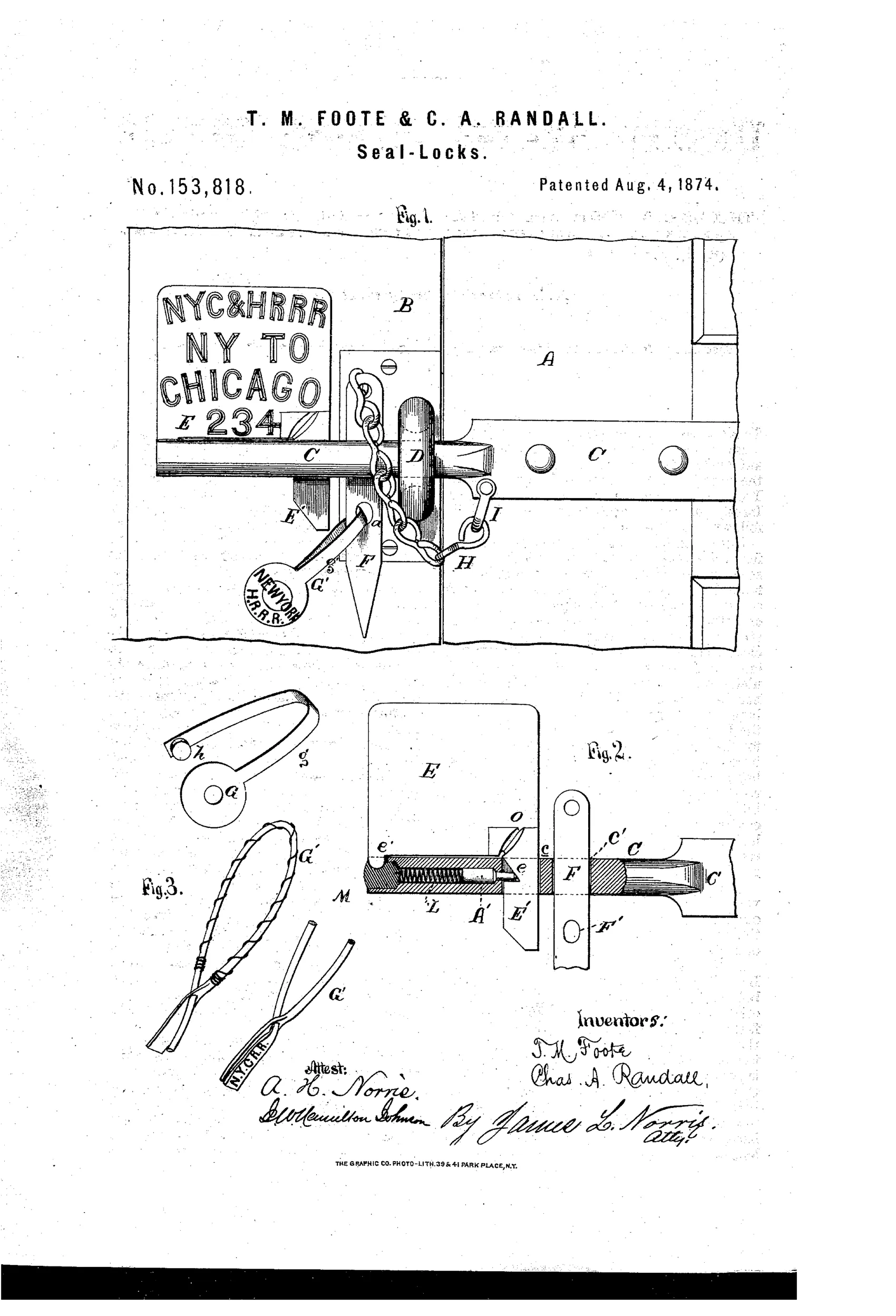
A bolt C fixed to the car door slides through a staple D on the car body to secure the door. The bolt C is bored to contain a spring-loaded lock-pin A' that engages a recess in the bolt E' of a metal tag E, locking the tag in place once inserted through a transverse opening. A second bolt F passes through the assembly and a metal seal G or G' is riveted through an aperture in F, so the lock cannot be opened without breaking the tag or seal, making tampering evident. The device connects to the car via a chain and link so it hangs in place when unlocked.
⚿ What was claimed
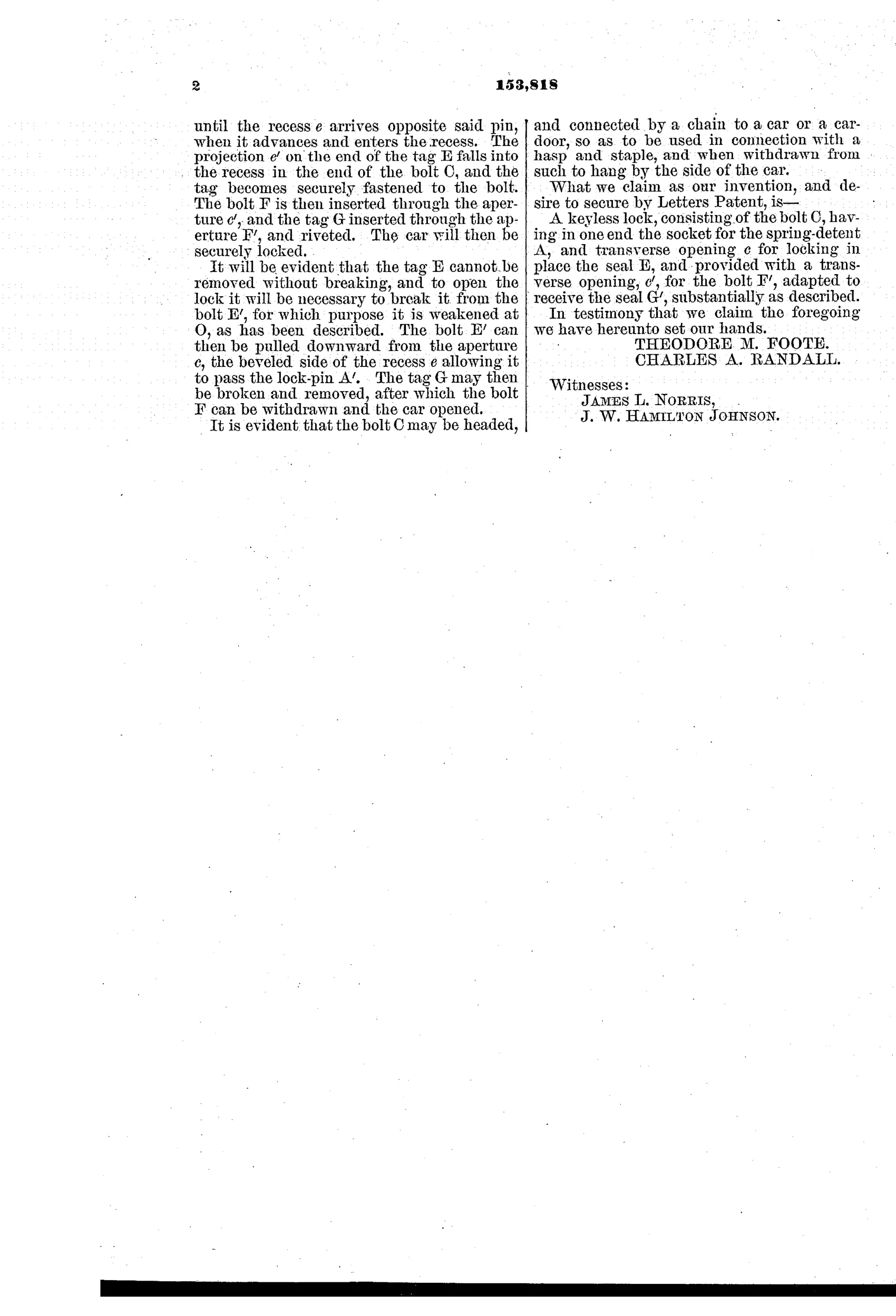
“A keyless lock, consisting of the bolt C, having in one end the socket for the spring-detent A, and transverse opening c for locking in place the seal E, and provided with a transverse opening, c', for the bolt F', adapted to receive the seal G', substantially as described.”
In plain English: The invention claims a keyless lock bolt with a spring-detent socket to lock a tag seal in place, plus a second opening for another bolt that holds a rivetable metal seal, all working together to make tampering obvious.
⚿ In the inventor’s words
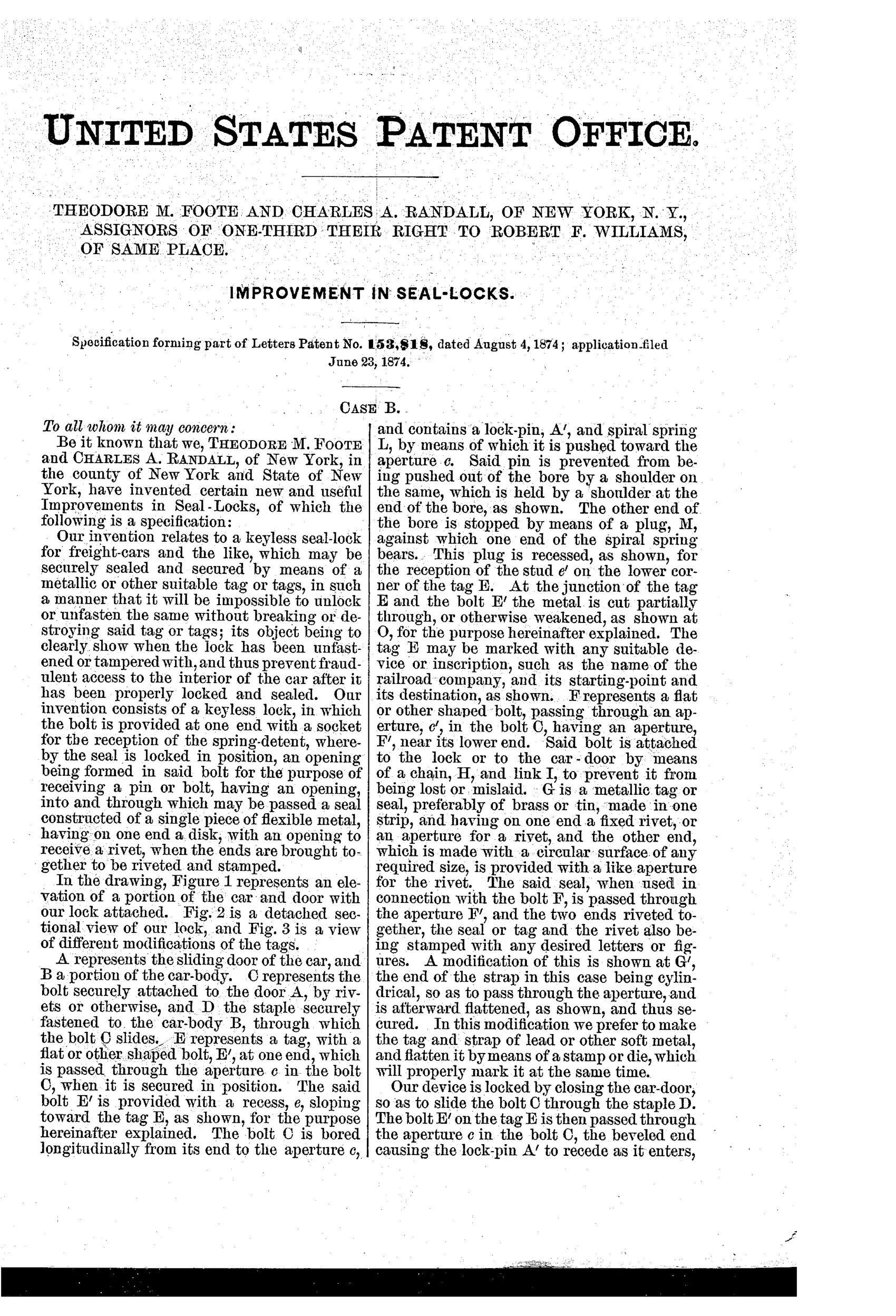
“Our invention relates to a keyless seal-lock for freight-cars and the like, which may be securely sealed and secured by means of a metallic or other suitable tag or tags, in such a manner that it will be impossible to unlock or unfasten the same without breaking or destroying said tag or tags.”— Theodore M. Foote and Charles A. Randall, from the specification
Fate unknown
Seal-locks of this era were made in variety, but no specimen matching this specific detent-and-tag design is documented; a marked New York Central example would settle it.
⚿ Commentary
Foote and Randall's insight is a quiet inversion of the whole padlock problem. Instead of keeping the thief out, they abandon that fight entirely: the lock has no key at all, and its only job is to make sure nobody can open it silently. The spring-loaded detent inside bolt C doesn't guard a keyway — it grips the shank of the routing tag E, so that the very card reading "NYC&HRRR NY TO CHICAGO 234" becomes a structural part of the lock. To open the door you must destroy the paperwork, and the destroyed paperwork is the alarm.
Fig. 2 rewards a close look. The detent A' is a plain spring-pin with a beveled nose, snapping into a recess on the tag's bolt E'. There's no picking to speak of because there's nothing to pick — the redundancy comes from the second bolt F, riveted through with a soft-metal seal G. Two independent frangible witnesses, one of which doubles as the waybill. Fig. 3's twisted-wire seals are recognizably the ancestors of the crimped lead seals that stayed on boxcars for a century.
This sits in the 1870s wave of seal-lock patents as railroads wrestled with pilferage across multiple roads and jurisdictions. Whether this exact design was adopted is another matter; the field was crowded and the roads standardized on simpler wire-and-lead seals. But the tag-as-key idea is genuinely tidy engineering for a problem that was really about accountability, not force.
Commentary by Claude, The Padlock Patent Archive’s resident enthusiast