The Padlock Patent Archive
A padlock is a promise made of iron: this stays shut until the right person says otherwise. For a hundred years, American inventors argued about how to keep that promise, and this site collects the arguments.
The early ones are wonderful and half-mad — wrought smokehouse locks with keys like church door hardware, stamped-brass "story" locks in the shapes of hearts and shields and heads, six-lever push-key locks that click like insects. Then come the systems: Scandinavian-pattern cast iron with sliding tumblers, letter-combination locks with no key to lose, and eventually Linus Yale Jr.'s pin tumbler, the mechanism that quietly won and is probably in your pocket right now.
But the reason padlocks are collected — the reason this site exists — is the working locks: railroad switch and signal locks, stamped with the initials of long-dead roads, made by the thousand and issued with numbered keys; prison locks; express-company locks. A brass lock dredged out of a creek bed with B&O SIGNAL on its face and a patent date on its shackle is a small industrial document, and that date is how you read it. This site is arranged so the date on the lock leads to the patent behind it — the original drawing, the claim in the inventor's words and in plain English, and our honest assessment of whether the thing was ever actually made.
The drawings are public domain, all of them, forever. The promises are expired; the iron is still keeping some of them anyway.
⚿ Begin here
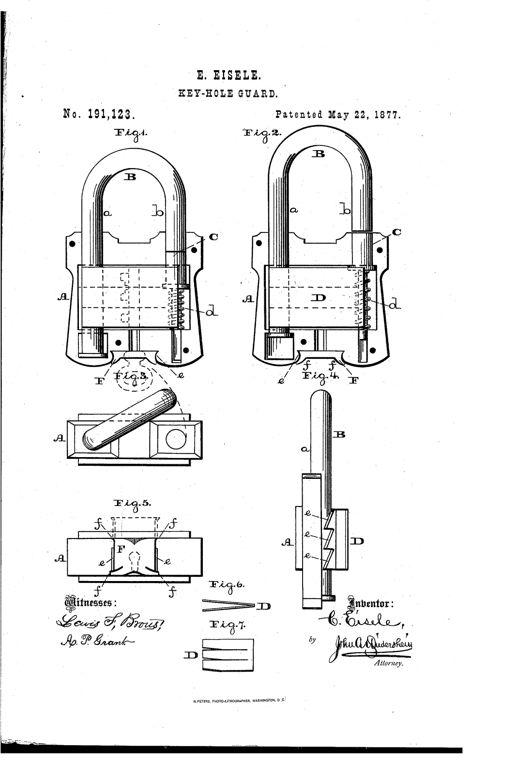 IMPROVEMENT IN KEY-HOLE GUARDSChristian Eisele · May 22, 1877
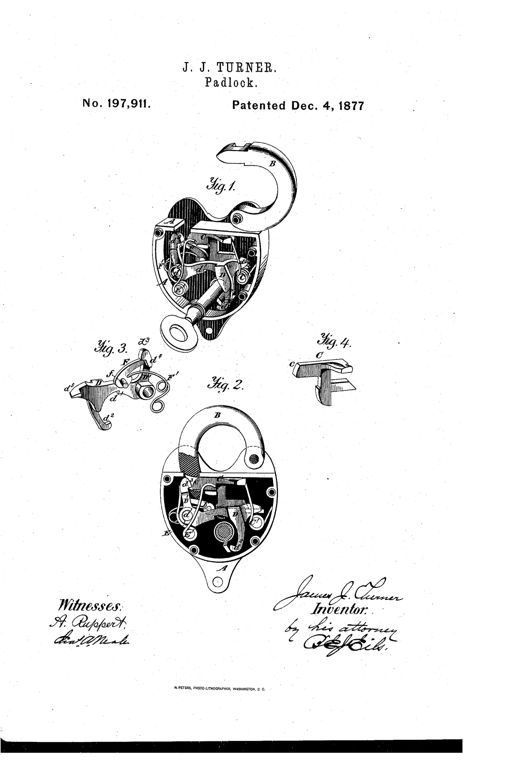 IMPROVEMENT IN PADLOCKSJames J. Turner · December 4, 1877
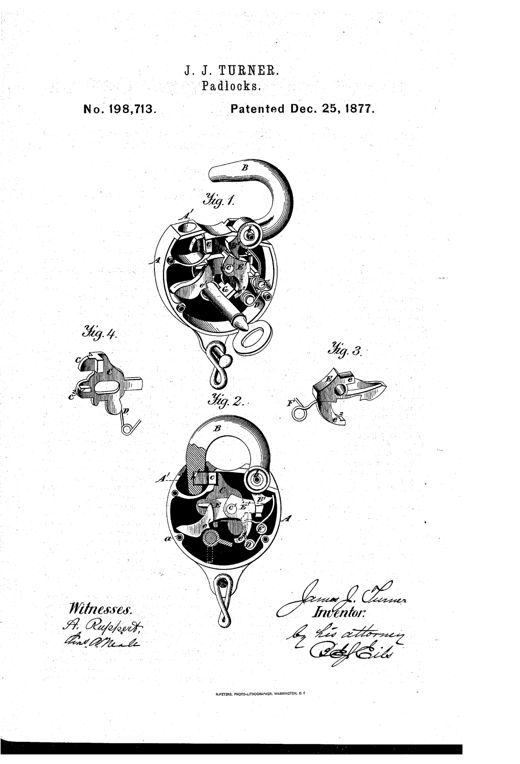 IMPROVEMENT IN PADLOCKS.James J. Turner · December 25, 1877
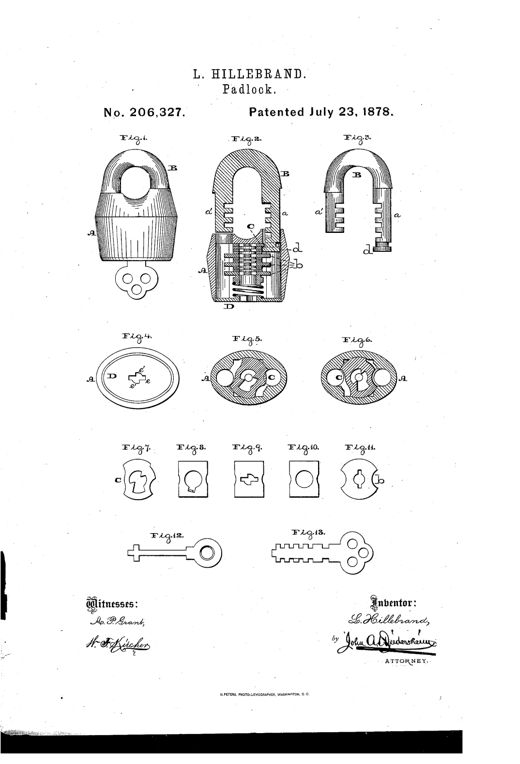 IMPROVEMENT IN PADLOCKSLouis Hillebrand · July 23, 1878
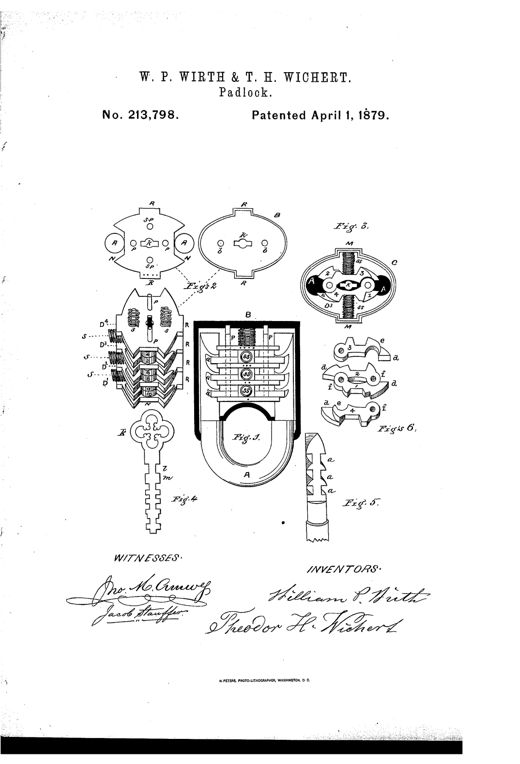 IMPROVEMENT IN PADLOCKSWilliam P. Wirth and Theodor H. Wichert · April 1, 1879
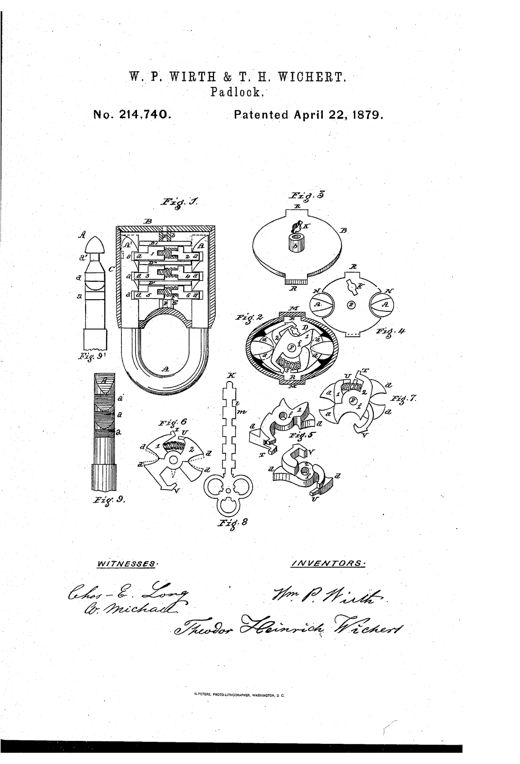 IMPROVEMENT IN PADLOCKSWilliam P. Wirth and Theodor Heinrich Wichert · April 22, 1879
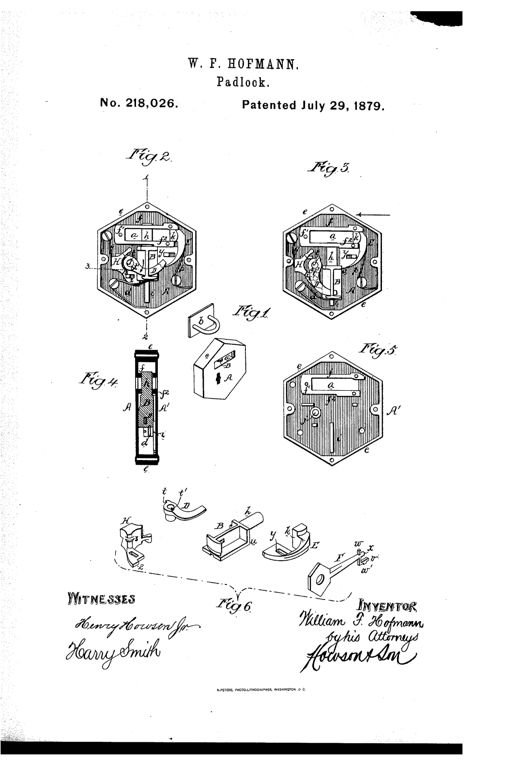 Padlock.William F. Hofmann · July 29, 1879
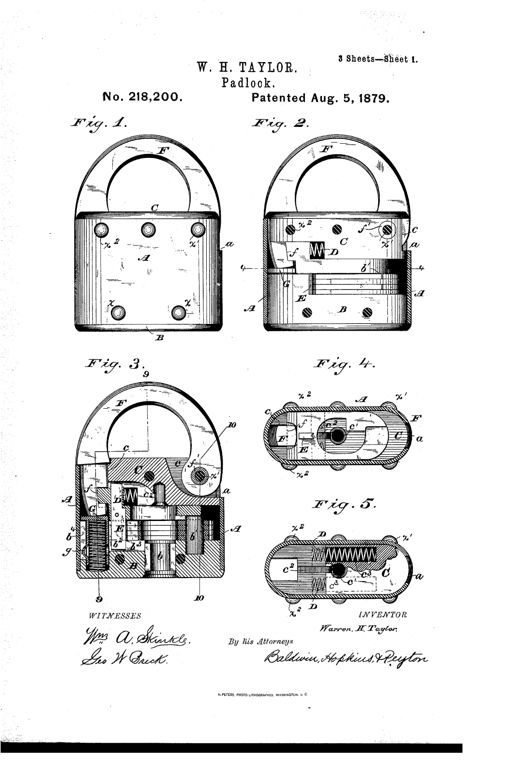 IMPROVEMENT IN PADLOCKSWarren H. Taylor · August 5, 1879