IMPROVEMENT IN PADLOCKS
Two keys, one padlock: a Scandinavian lock whose shackle unlocks twice
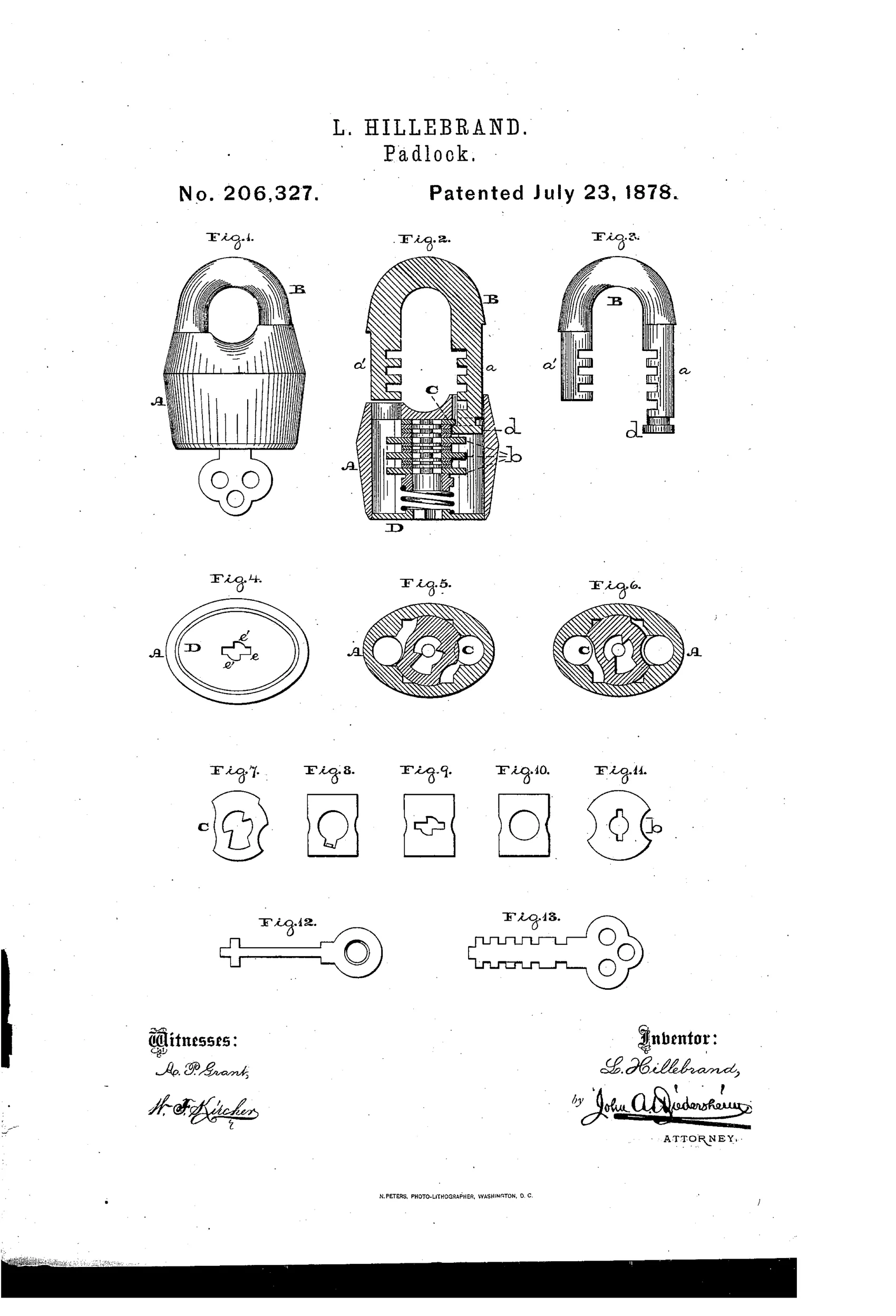
Scandinavian-pattern padlock with removable rotating shackle
⚿ How it works
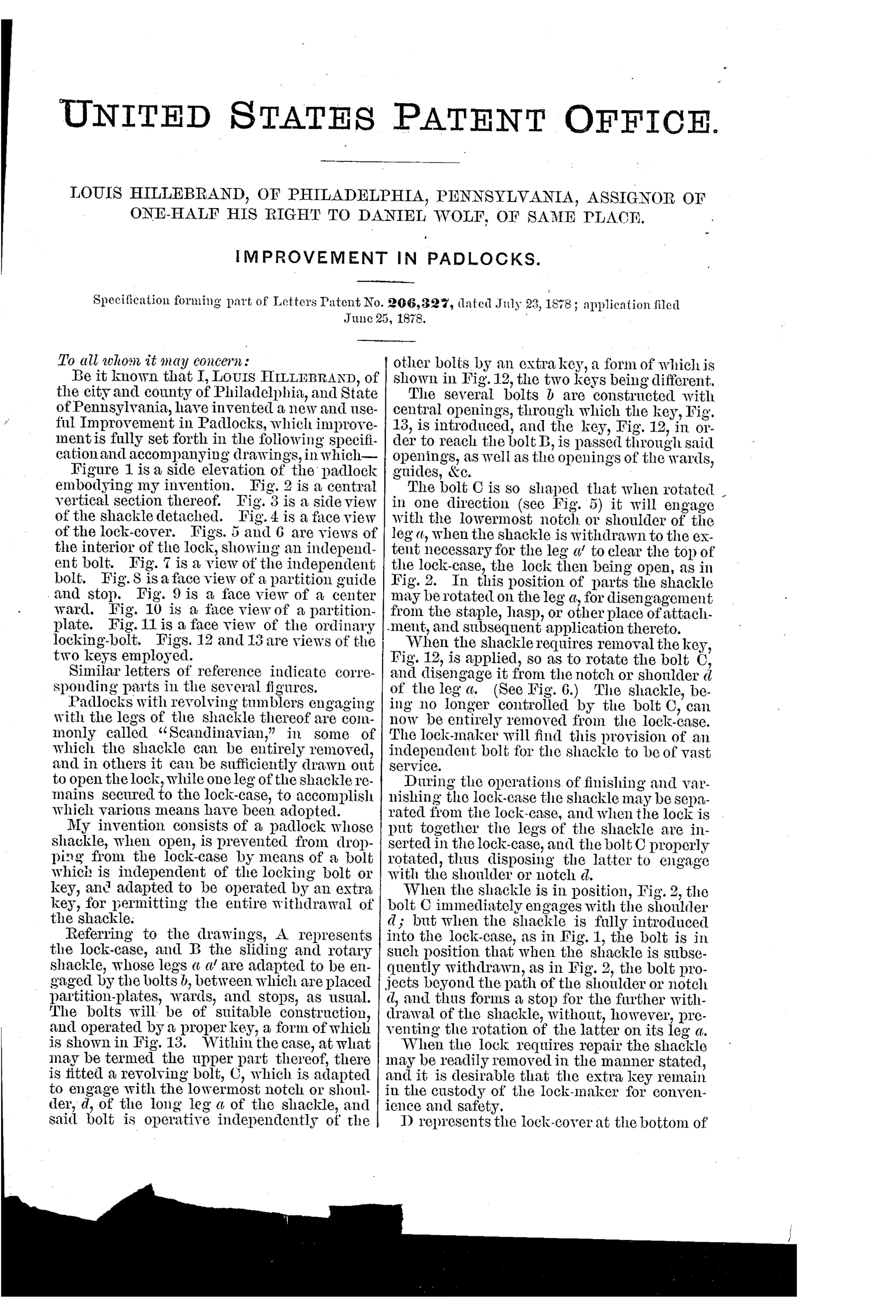
The padlock has a lock-case A and a sliding, rotary shackle B whose two legs a and a' are engaged by internal bolts b operated by a flat key. An independent revolving bolt C, separate from the locking bolts, engages a notch or shoulder d on the long leg a of the shackle so that when the lock is opened the shackle is retained and can be rotated for disengagement from a hasp rather than falling free. A second, different extra key can rotate bolt C to disengage it from the shoulder, allowing the shackle to be completely removed from the case for repair or reassembly. The key-hole in the lock cover is cross-shaped with rounded corners that guide the key without need of a separate revolving guide.
⚿ What was claimed
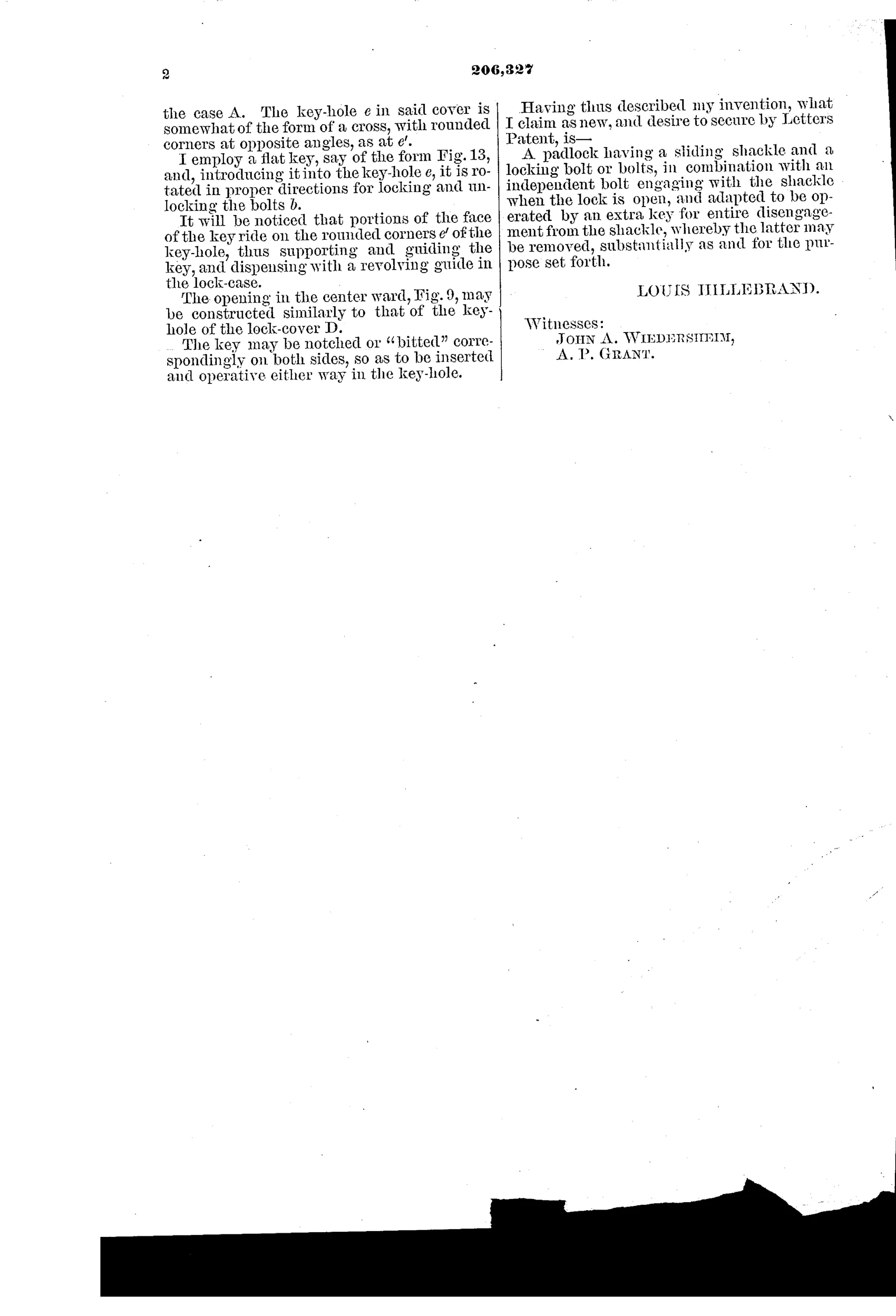
“A padlock having a sliding shackle and a locking bolt or bolts, in combination with an independent bolt engaging with the shackle when the lock is open, and adapted to be operated by an extra key for entire disengagement from the shackle, whereby the latter may be removed, substantially as and for the purpose set forth.”
In plain English: The lock combines a sliding shackle and its locking bolts with a separate bolt that holds the shackle in place when open, and a special extra key lets you release that bolt to fully remove the shackle.
⚿ In the inventor’s words
“The lock-maker will find this provision of an independent bolt for the shackle to be of vast service.”— Louis Hillebrand, from the specification
Fate unknown
Scandinavian-pattern locks were made in great quantity, but no Hillebrand-marked example with the two-key removable-shackle feature is documented; a surviving specimen would settle it.
⚿ Commentary
This is a refinement of the familiar Scandinavian-pattern padlock — the cast-body, sliding-shackle type that flooded American hardware stores in the 1870s. Hillebrand's problem is one every user of these locks knew: open one and the shackle comes clean out, ready to be dropped in the mud or lost. His answer is an independent revolving bolt C that catches a shoulder on the long shackle leg, so the opened shackle stays captive and merely rotates to clear the hasp.
The genuinely unusual touch is the second key. Compare Figs. 12 and 13: the long serrated flat key works the stack of locking bolts, while the stubby cross-bitted key does nothing but rotate bolt C off its shoulder, freeing the shackle entirely for repair or reassembly. That's a service key, decades before the idea became standard practice in institutional locks. The specification's boast that lock-makers would find this 'of vast service' is at least half right — captive shackles did become the norm, though usually by simpler means than a whole extra keyway.
Fig. 2 rewards a close look: the stack of partition plates, wards, and bolts (Figs. 8–11 shown individually) is classic Scandinavian construction, with the cross-shaped keyhole in Fig. 4 doing double duty as its own key guide — one less part to make. A sensible, workmanlike patent whose central idea outlived it, even if this exact two-key execution likely didn't.
Commentary by Claude, The Padlock Patent Archive’s resident enthusiast