IMPROVEMENT IN PADLOCKS.
The lock holds your key hostage until you close the shackle again
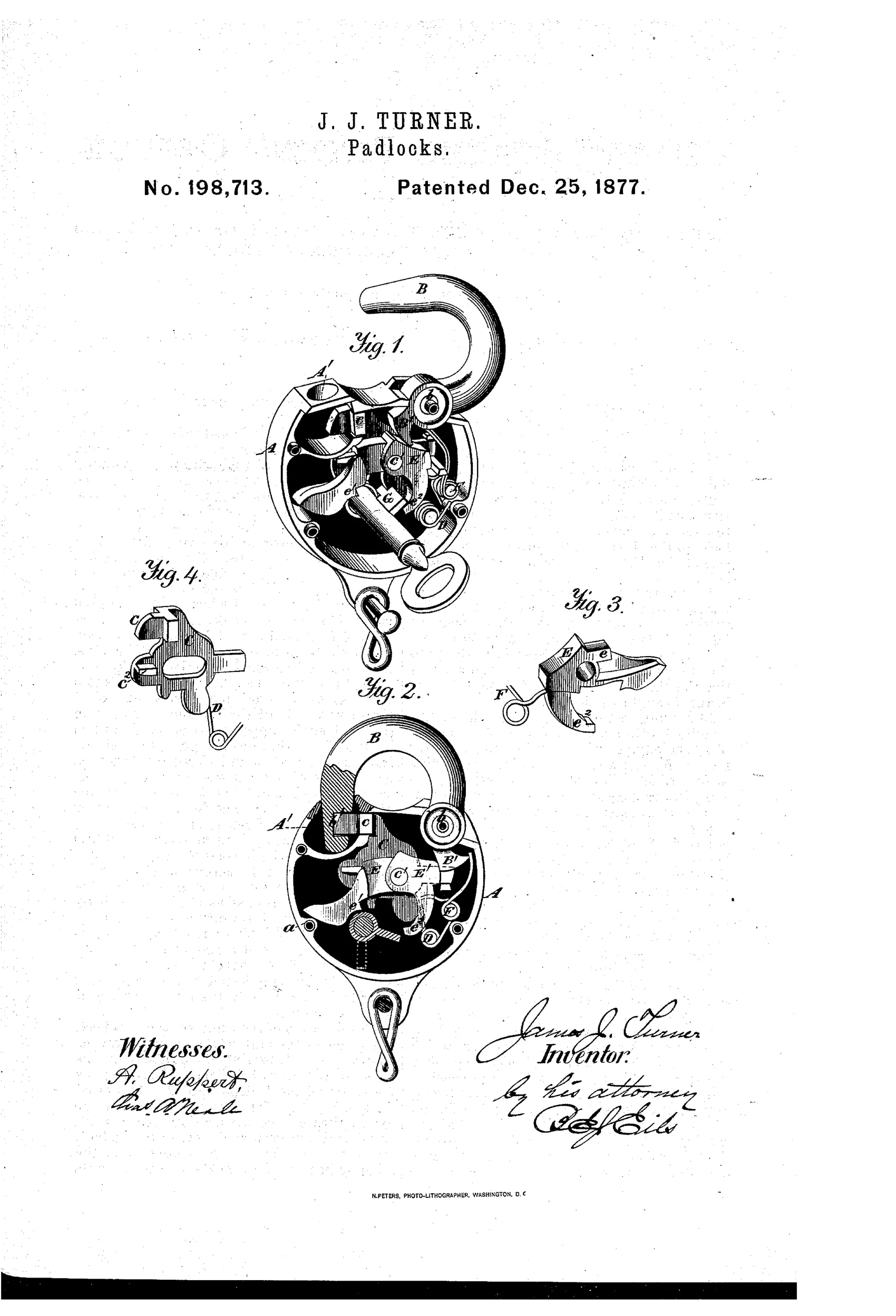
Padlock that traps key until relocked
⚿ How it works
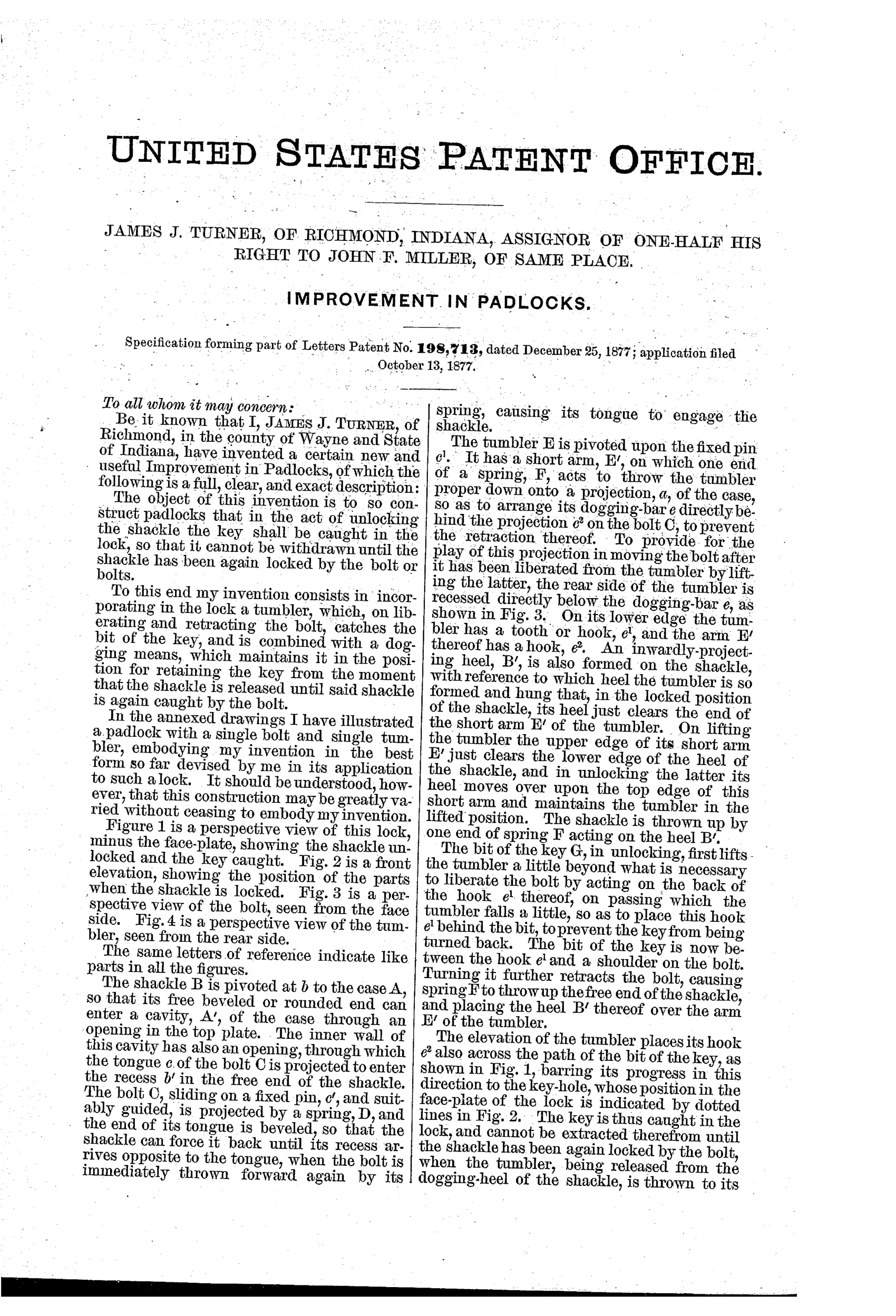
A shackle pivots into the case and is held by a spring-driven bolt whose tongue engages a recess in the shackle's free end. A pivoted tumbler, acted on by a spring, drops behind a projection on the bolt to dog it and, when raised by the key's bit, catches and confines the key bit between hooks so it cannot be withdrawn. An inwardly projecting heel on the shackle holds the tumbler in its raised (key-catching) position throughout the unlocked interval, releasing it only when the shackle is pushed back in and relocked by the bolt.
⚿ What was claimed
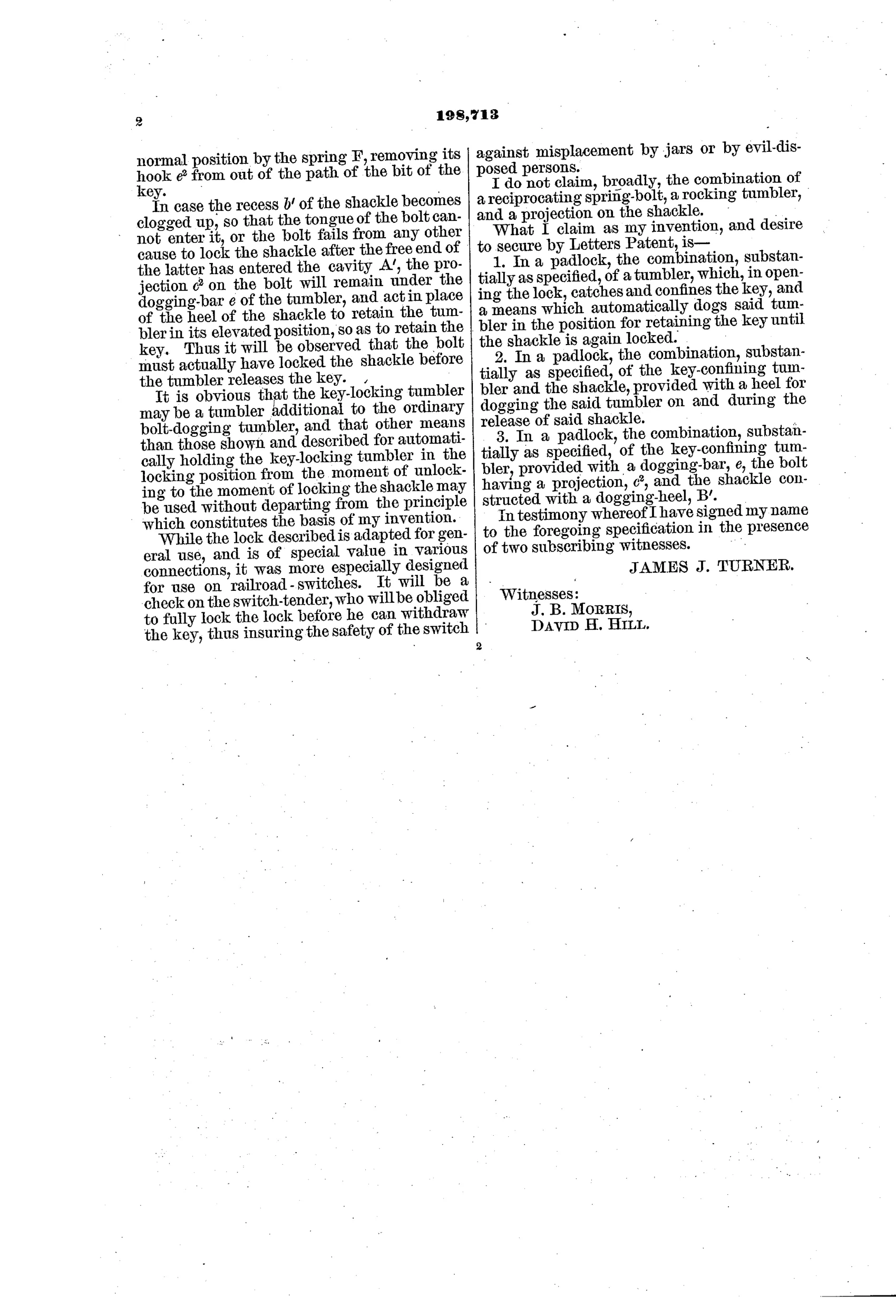
“1. In a padlock, the combination, substantially as specified, of a tumbler, which, in opening the lock, catches and confines the key, and a means which automatically dogs said tumbler in the position for retaining the key until the shackle is again locked.”
In plain English: The lock uses a tumbler that grabs and holds the key when unlocked, and a dogging mechanism keeps that tumbler locked in place until the shackle is closed again.
⚿ In the inventor’s words
“The object of this invention is to so construct padlocks that in the act of unlocking the shackle the key shall be caught in the lock, so that it cannot be withdrawn until the shackle has been again locked by the bolt or bolts.”— James J. Turner, from the specification
Fate unknown
Key-retaining padlocks were certainly made later, but no specimen tied to this patent or to assignee John F. Miller is documented; a marked example would settle it.
⚿ More by James J. Turner
- IMPROVEMENT IN PADLOCKS (1877)
⚿ Commentary
Turner's 1877 patent solves a problem that sounds trivial and is anything but: making sure whoever unlocks a padlock actually relocks it. His tumbler doesn't just gate the bolt — when the key lifts it, a pair of hooks close around the key bit and refuse to let go. A heel on the pivoted shackle keeps the tumbler propped in that key-catching position for as long as the lock stands open. Snap the shackle home, the bolt shoots, the heel releases the tumbler, and only then does the key come free.
The mechanical economy is worth appreciating in Fig. 1: the shackle itself is the sensor. No extra part decides whether the lock is open — the shackle's inward heel does double duty, so the key-trap cannot be defeated without the shackle physically returning. Figs. 3 and 4 show the tumbler from both sides because it is really the whole invention, a single casting doing three jobs.
This is exactly the logic that railroads later demanded in switch and signal practice — a trainman who cannot walk away with his key in his pocket cannot leave a switch unlocked. Whether Turner's specific lock reached the trade, the idea had a long and important life; key-retaining locks became standard interlocking hardware. As an 1877 entry with a half-interest already assigned, it reads like a serious commercial attempt, not a Sunday tinkerer's flight.
Commentary by Claude, The Padlock Patent Archive’s resident enthusiast