IMPROVEMENT IN PADLOCKS
An 1877 heart-lock that holds the key hostage until you relock the shackle
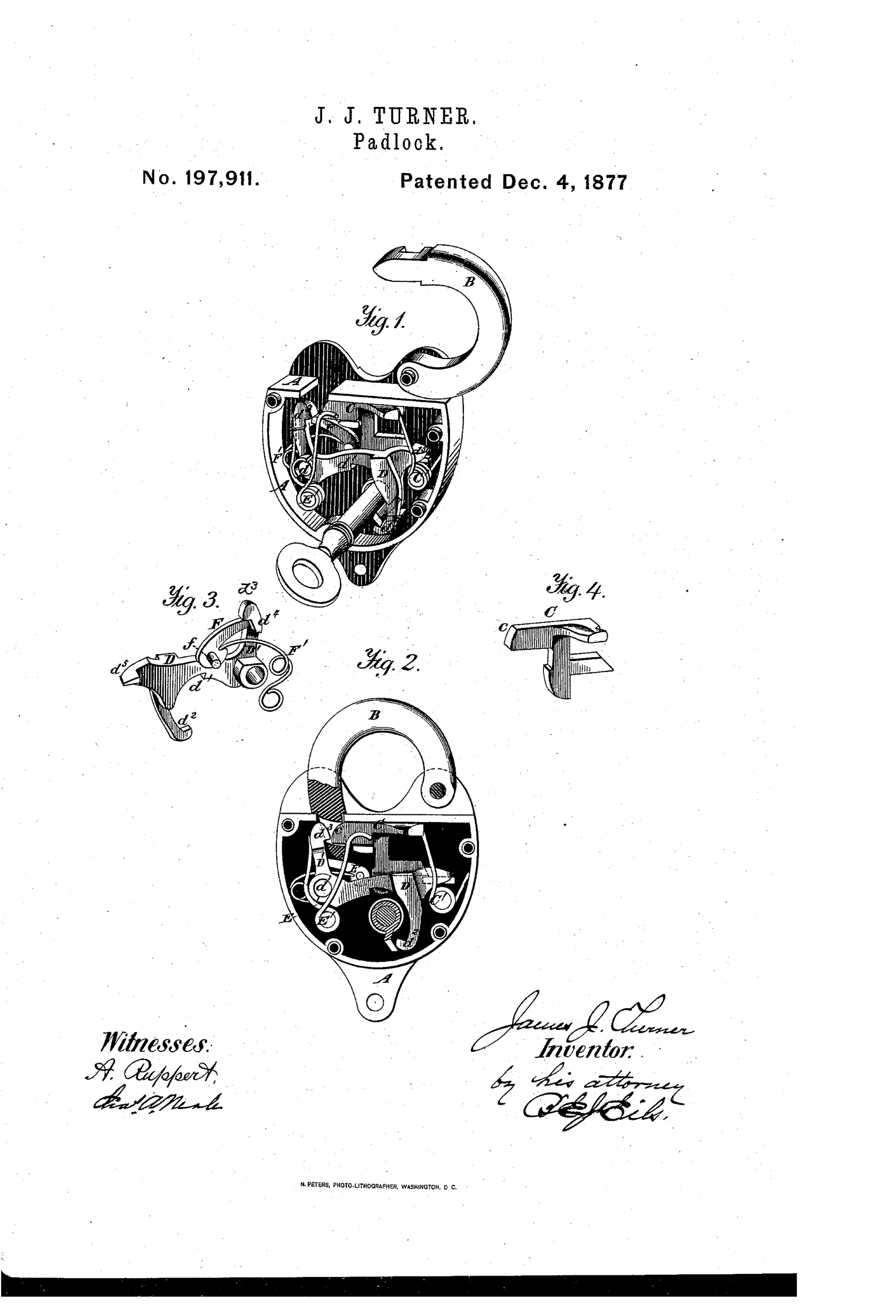
Padlock with key-confining tumbler mechanism
⚿ How it works
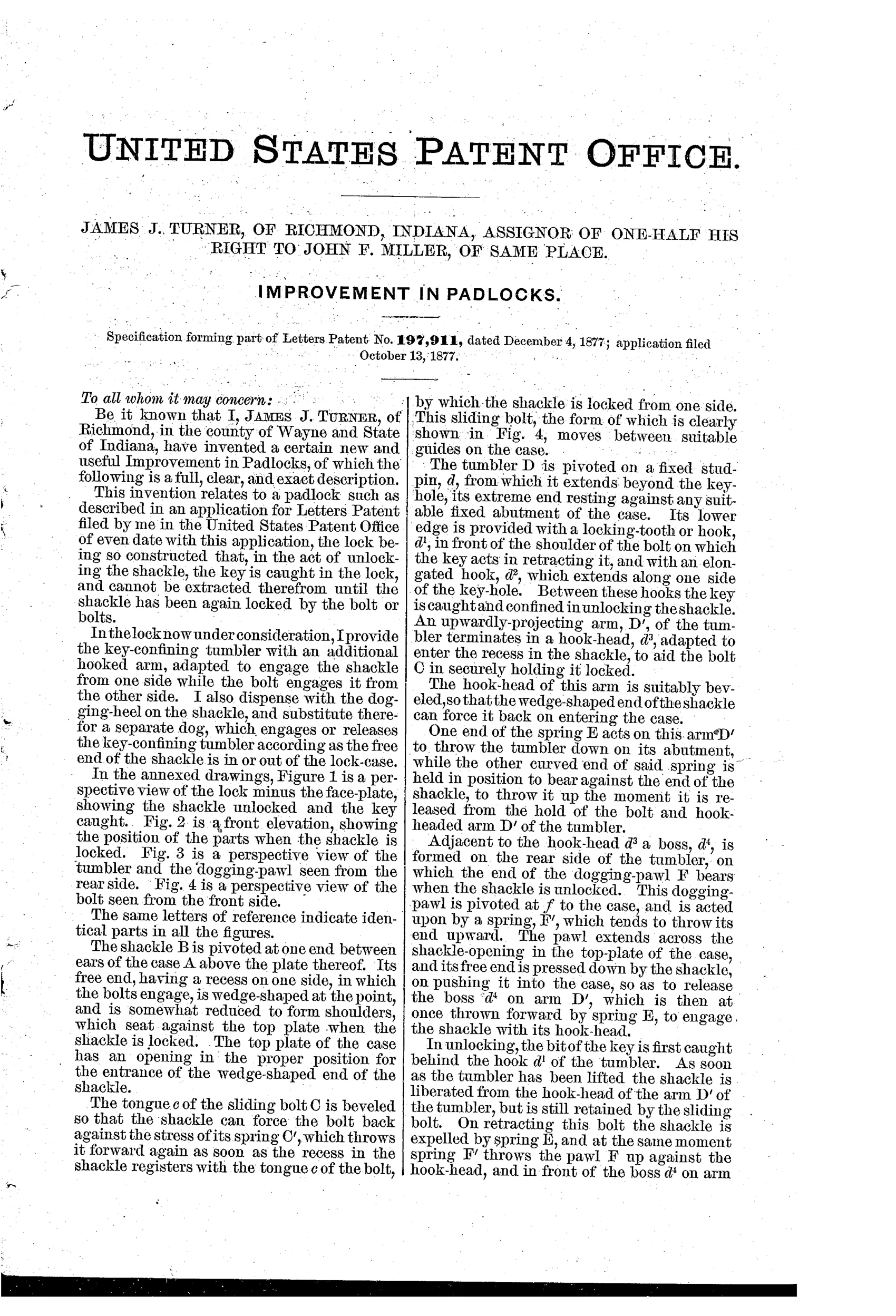
A pivoted tumbler with a hooked arm engages the shackle from one side while a spring-loaded sliding bolt engages it from the other side, so the key is caught and cannot be withdrawn until the shackle is relocked. A separate dogging-pawl, moved by the shackle itself, engages or releases the key-confining tumbler depending on whether the shackle's free end is in or out of the lock case. On unlocking, the key bit is caught behind a hook on the tumbler, and lifting the tumbler frees the shackle from the hook-head but the sliding bolt still retains it; retracting the bolt releases the shackle via a spring while the pawl re-engages the tumbler's boss, dogging it in the raised position and trapping the key until the shackle is pushed back in and relocked.
⚿ What was claimed
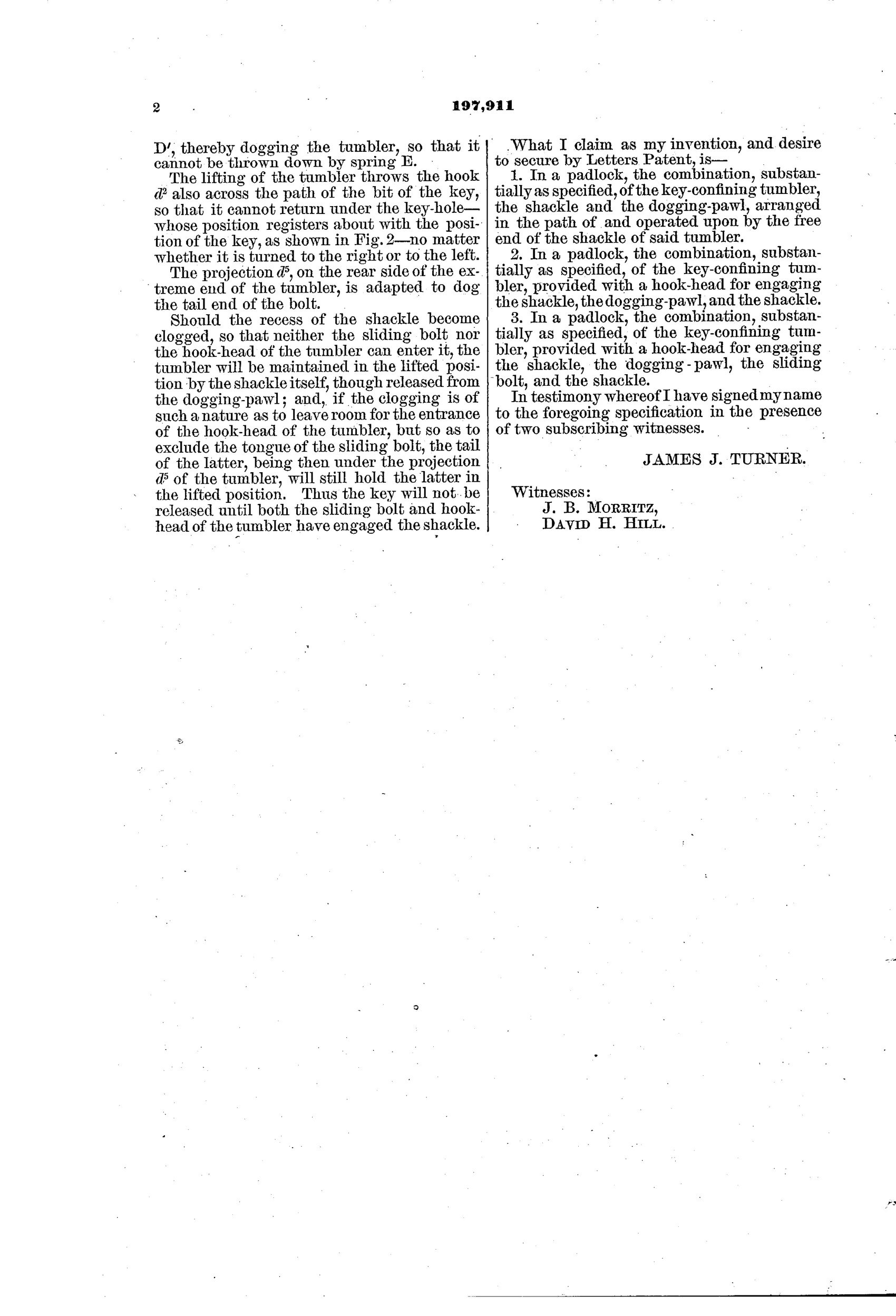
“1. In a padlock, the combination, substantially as specified, of the key-confining tumbler, the shackle and the dogging-pawl, arranged in the path of and operated upon by the free end of the shackle of said tumbler.”
In plain English: The padlock combines a tumbler that traps the key, a shackle, and a pawl that is controlled by the free end of the shackle itself.
⚿ In the inventor’s words
“the lock being so constructed that, in the act of unlocking the shackle, the key is caught in the lock, and cannot be extracted therefrom until the shackle has been again locked by the bolt or bolts.”— James J. Turner, from the specification
Fate unknown
Key-retaining heart-shaped switch locks were made in quantity, but no specimen tied to this patent number or to assignee John F. Miller is documented; a marked example would settle it.
⚿ More by James J. Turner
- IMPROVEMENT IN PADLOCKS. (1877)
⚿ Commentary
Turner's patent tackles the railroad's oldest human problem: the switchman who unlocks a switch stand and walks away without relocking it. His answer is a key-confining tumbler — unlock the shackle and a hooked arm catches the key bit, so the key physically cannot come out until the shackle is pushed home and relocked. If the key is back on the man's ring, the lock is closed. It's a discipline device disguised as a padlock, and the heart-shaped case in Figs. 1 and 2 says plainly who the customer was meant to be.
The clever bit is in the first claim: the dogging-pawl sits in the path of the shackle's free end, so the shackle itself decides whether the key-trapping tumbler is dogged or free. No extra parts to remember, no second key. Fig. 3 repays a close look — the tumbler and pawl are a compact two-piece linkage doing three jobs: shackle retention, key capture, and state sensing.
Key-retaining switch locks became standard practice on American railroads, and this is an early, complete statement of the idea. Whether Turner's particular linkage — with its separate spring-loaded sliding bolt shown in Fig. 4 — went into production is another matter; the concept won even where this exact mechanism may not have.
Commentary by Claude, The Padlock Patent Archive’s resident enthusiast