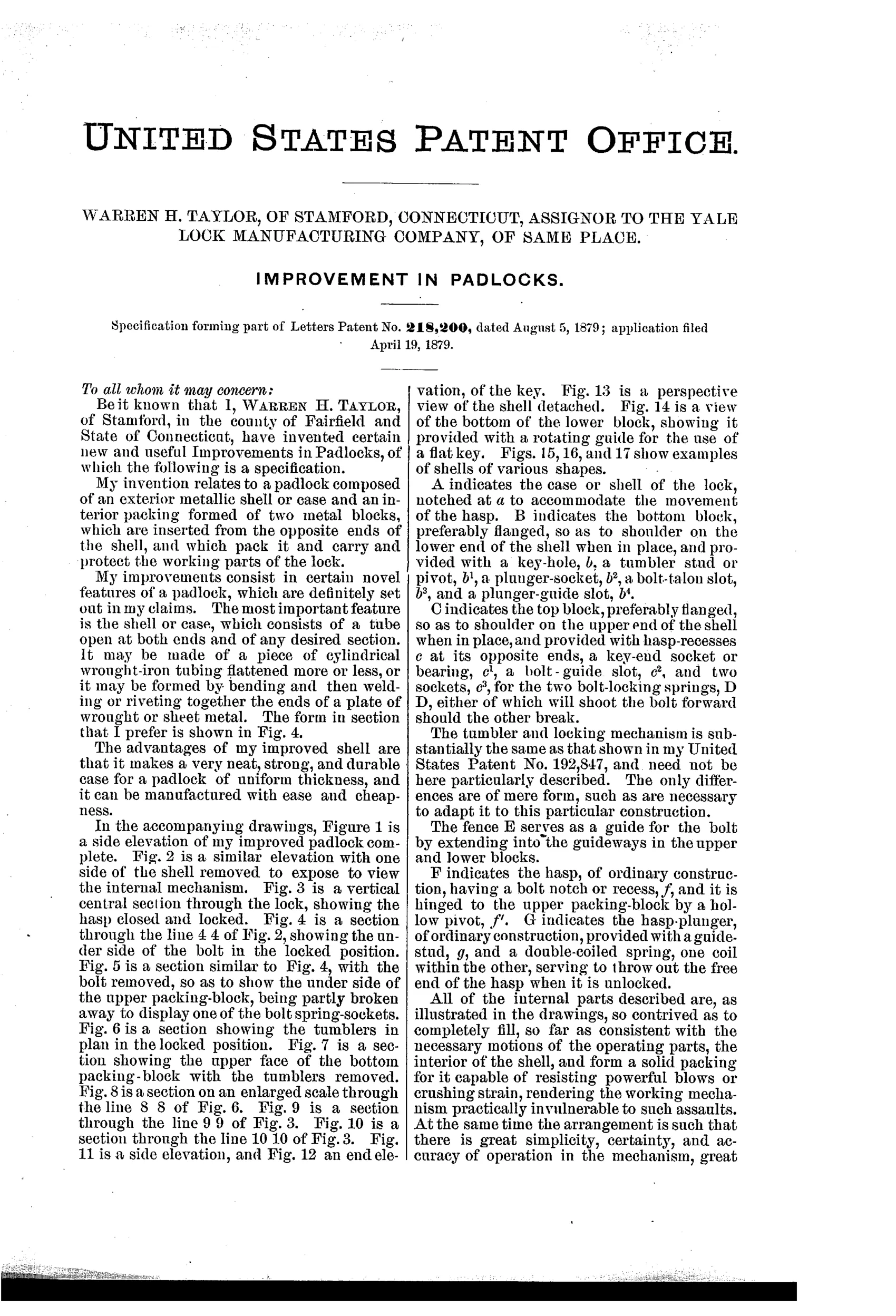
IMPROVEMENT IN PADLOCKS
Yale builds a padlock like a pipe: one seamless tube, packed from both ends
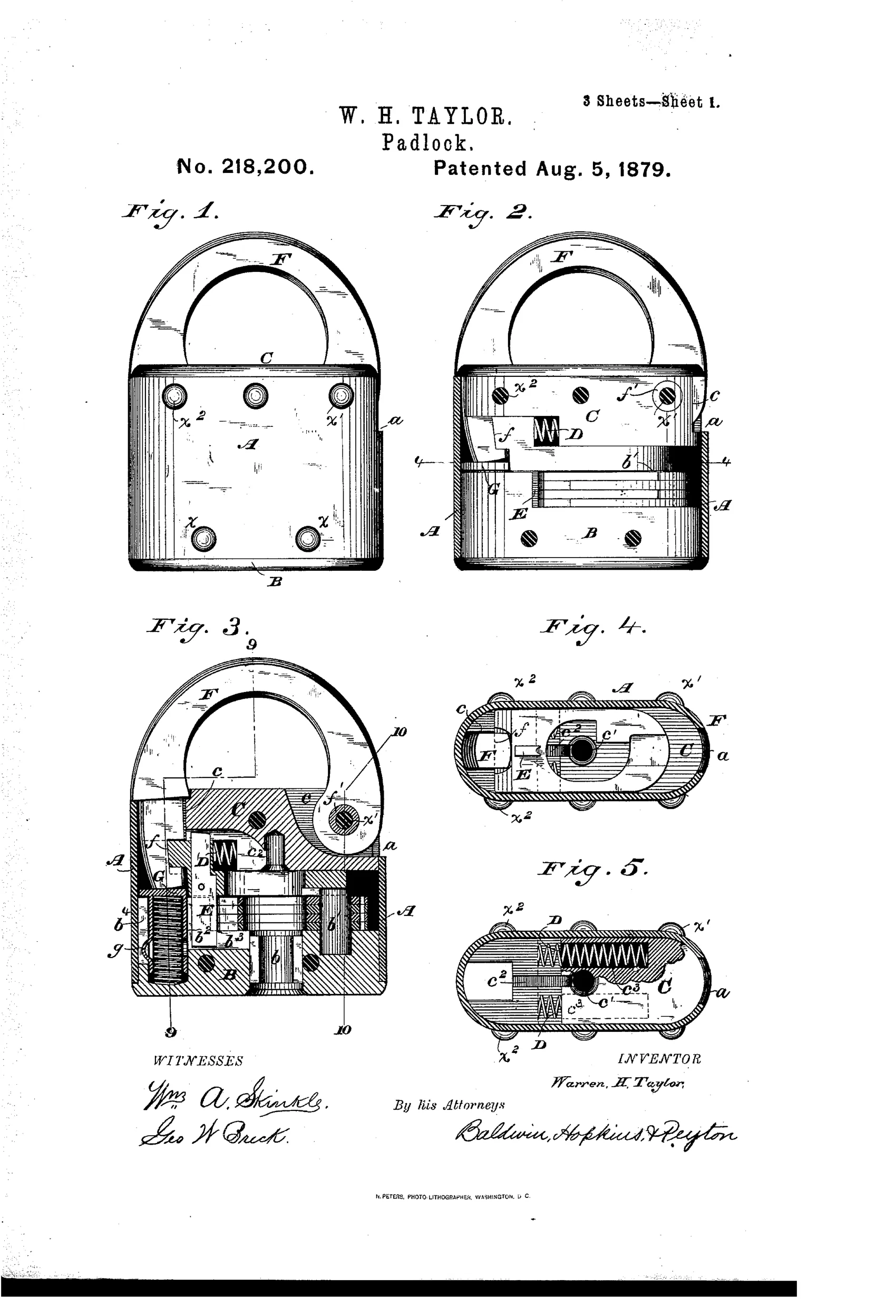
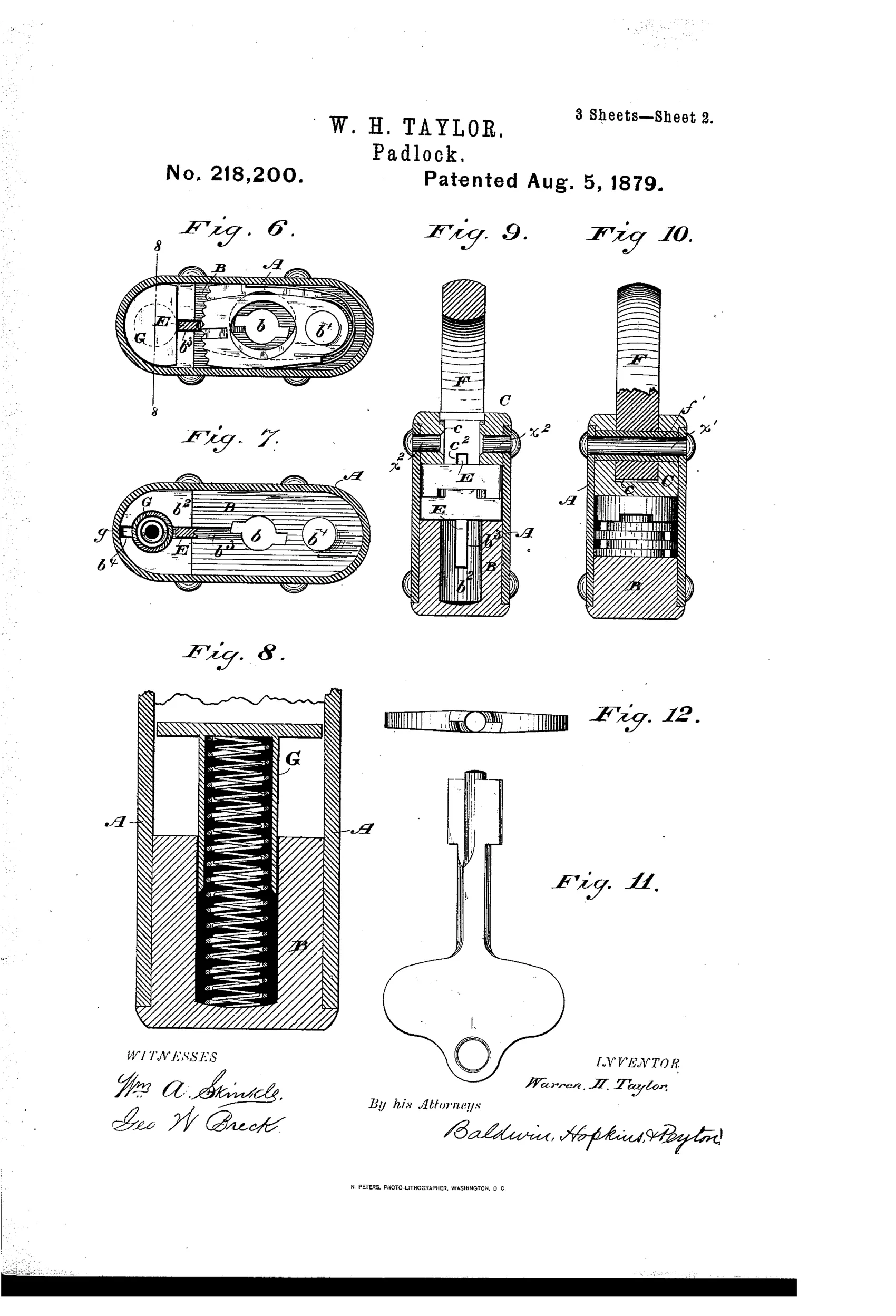
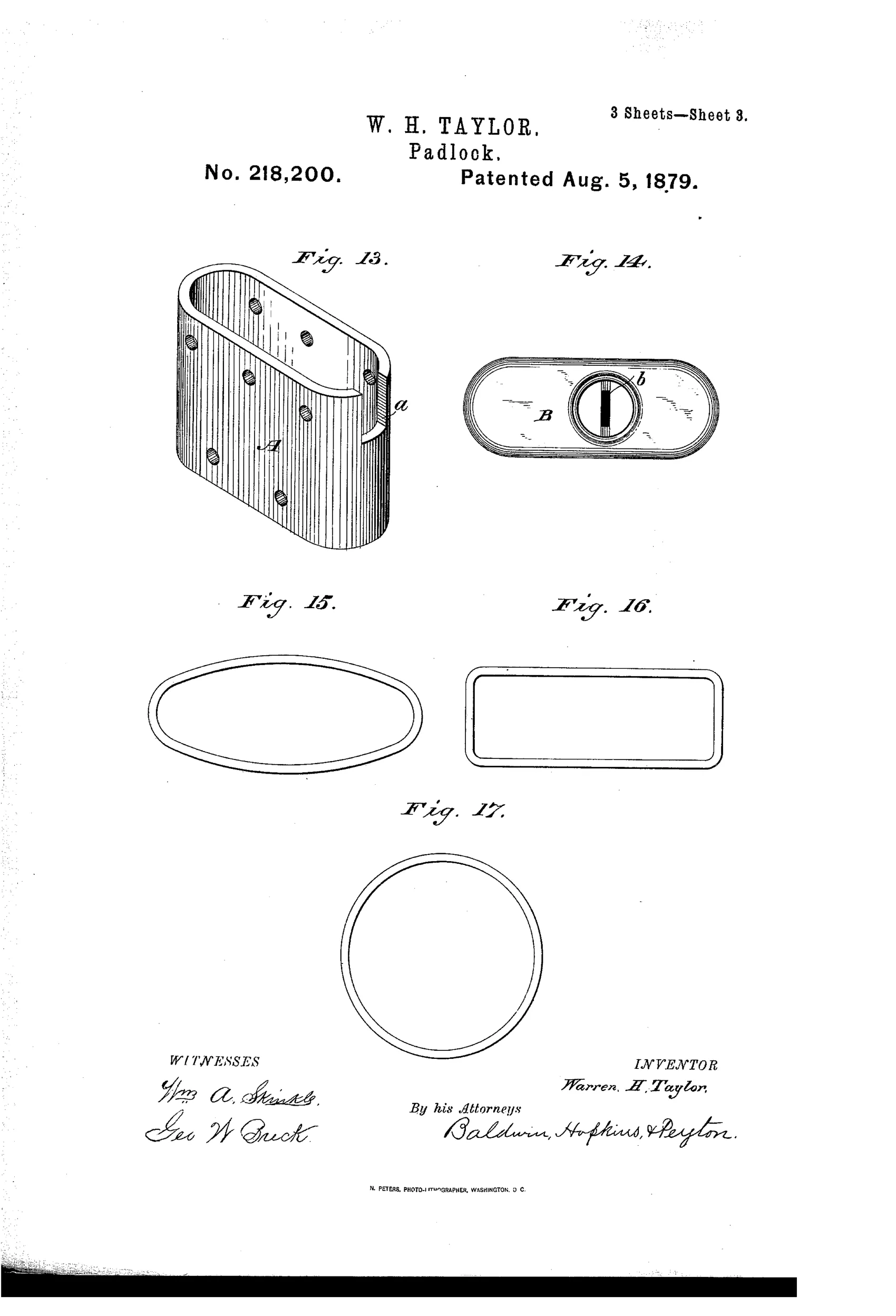
Tubular-shell padlock with internal packing blocks
⚿ How it works
The padlock's exterior case is a wrought or sheet-metal tube, open at both ends, formed either from flattened cylindrical tubing or from a bent and welded/riveted plate. Two internal metal blocks are inserted from opposite ends of the shell to pack it and carry and protect the working lever-tumbler and bolt mechanism, while the shell itself touches neither the mechanism nor the shackle directly. The hasp (shackle) pivots on a hollow rivet-secured pivot into the upper block, and a spring-loaded plunger throws the free end of the hasp outward when unlocked. Short rivets and a through-rivet secure the blocks to the shell, with their inner ends abutting the hasp when locked so they cannot be punched out.
⚿ What was claimed
“1. A wrought or sheet metal tubular padlock-shell formed of a single piece and open at both ends, substantially as described.”
In plain English: The lock's outer case is a single-piece wrought or sheet-metal tube left open at both ends.
⚿ In the inventor’s words
“It will be observed that the shell is quite distinct from all other parts of the lock, and may be manufactured as a separate article for sale.”— Warren H. Taylor, from the specification
Manufactured and sold
Taylor designed padlocks for Yale Lock Manufacturing, and Yale lever padlocks of this packed-shell construction were produced commercially in large numbers.
⚿ More by Warren H. Taylor
- IMPROVEMENT IN PADLOCKS (1877)
- PADLOCK. (1897)
⚿ Commentary
The clever move here is what the shell doesn't do. Taylor's outer case is just a length of flattened wrought tubing, open top and bottom, that touches neither the shackle nor the mechanism. All the actual lock — lever tumblers, bolt, spring-loaded hasp ejector — lives in two solid blocks slid in from opposite ends and riveted through. Fig. 13 shows the shell as a bare naked tube, and Figs. 15–17 make the manufacturing point explicit: the same construction works in oval, rectangular, or round outline. The patent even boasts the shell 'may be manufactured as a separate article for sale.' This is factory thinking, not locksmith thinking.
There's a security payoff too, quietly buried in the rivet detail. The through-rivets holding the blocks have their inner ends abutting the hasp when locked, so a thief can't punch them out to gut the lock — the shackle itself blocks the path. That's the kind of touch that separates a production design from a sketch.
Taylor was Yale Lock Manufacturing's padlock man at Stamford, and this construction — a wrought shell around a solid packed core — is the ancestry of the sturdy iron-and-brass lever padlocks Yale sold by the trainload, including to railroads. It's less a curiosity than a piece of industrial DNA: the moment the padlock case became a stamping problem rather than a casting problem.
Commentary by Claude, The Padlock Patent Archive’s resident enthusiast