IMPROVEMENT IN PADLOCKS
Yale builds a padlock you can't crush — note the "US" on the case
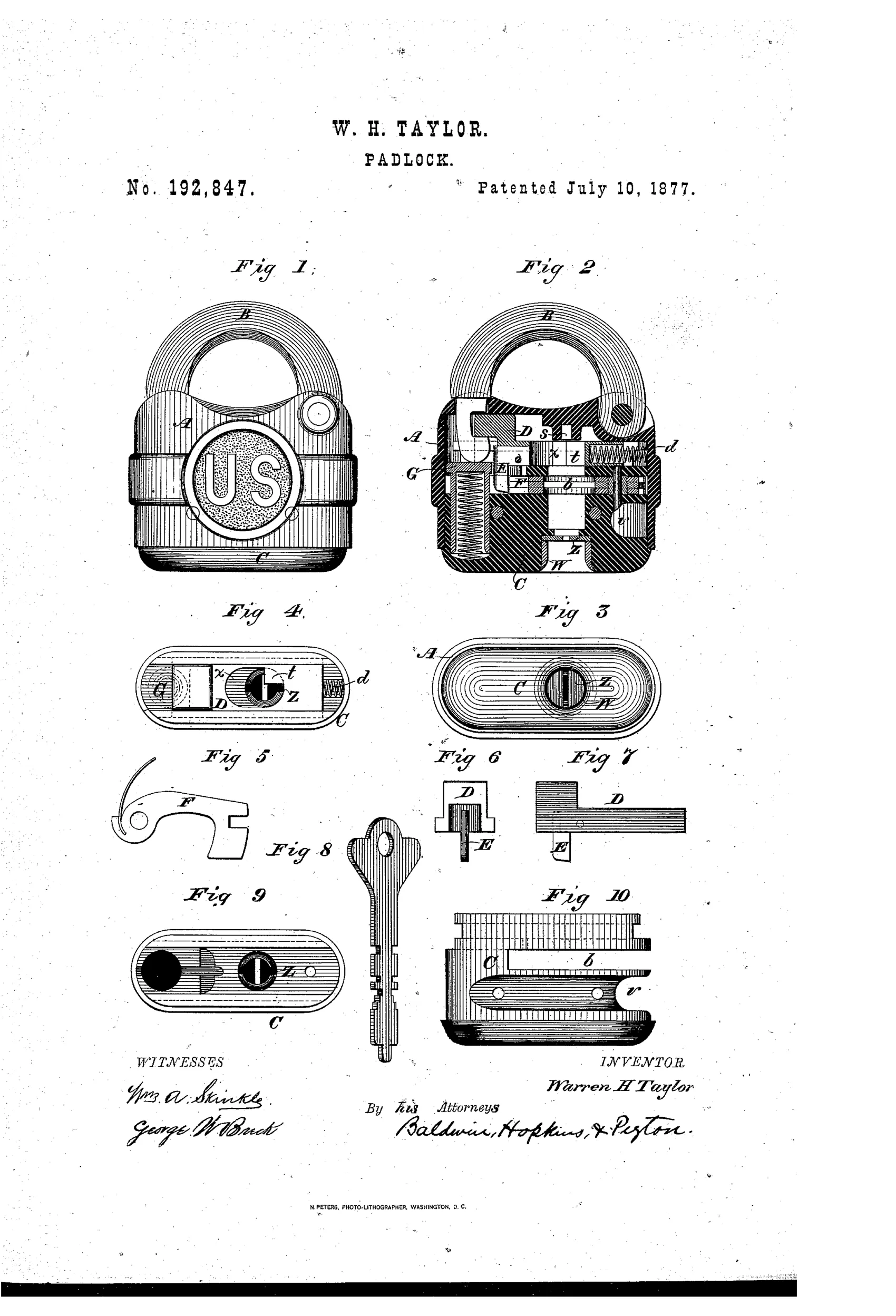
Crush-resistant padlock with protective interior block
⚿ How it works
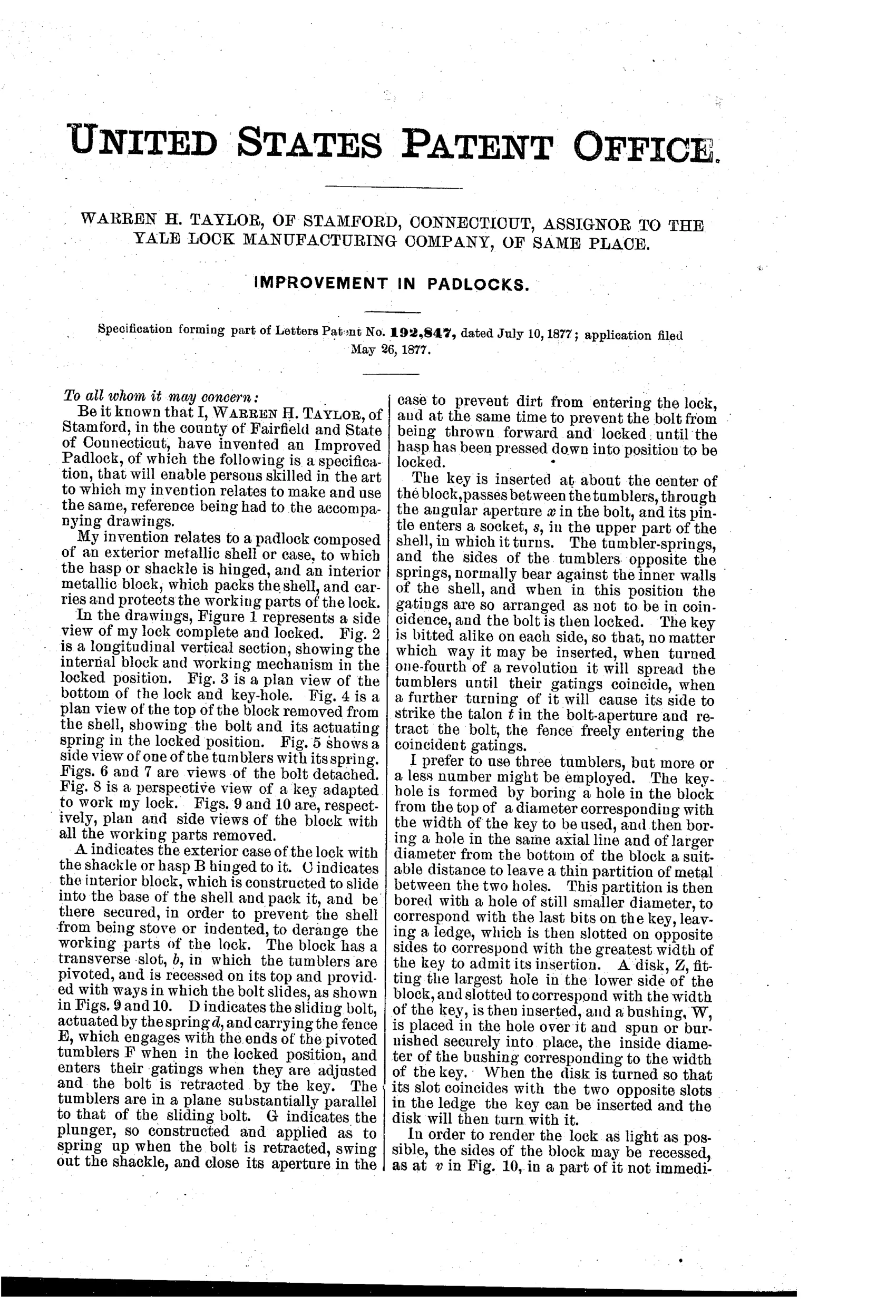
An exterior metallic shell carries a hinged shackle, while a solid interior block slides into and packs the shell to protect the working parts from crushing or indentation. A sliding bolt with a fence engages pivoted tumblers seated in the block, and the bolt is retracted when a key spreads the tumblers until their gatings coincide with the fence. A plunger springs up when the bolt retracts to swing out the shackle and close the keyway aperture, preventing dirt entry and premature locking. The key is bitted alike on both sides so it may be inserted either way, passing through an angular aperture in the bolt to enter a socket that allows it to turn and actuate the mechanism.
⚿ What was claimed
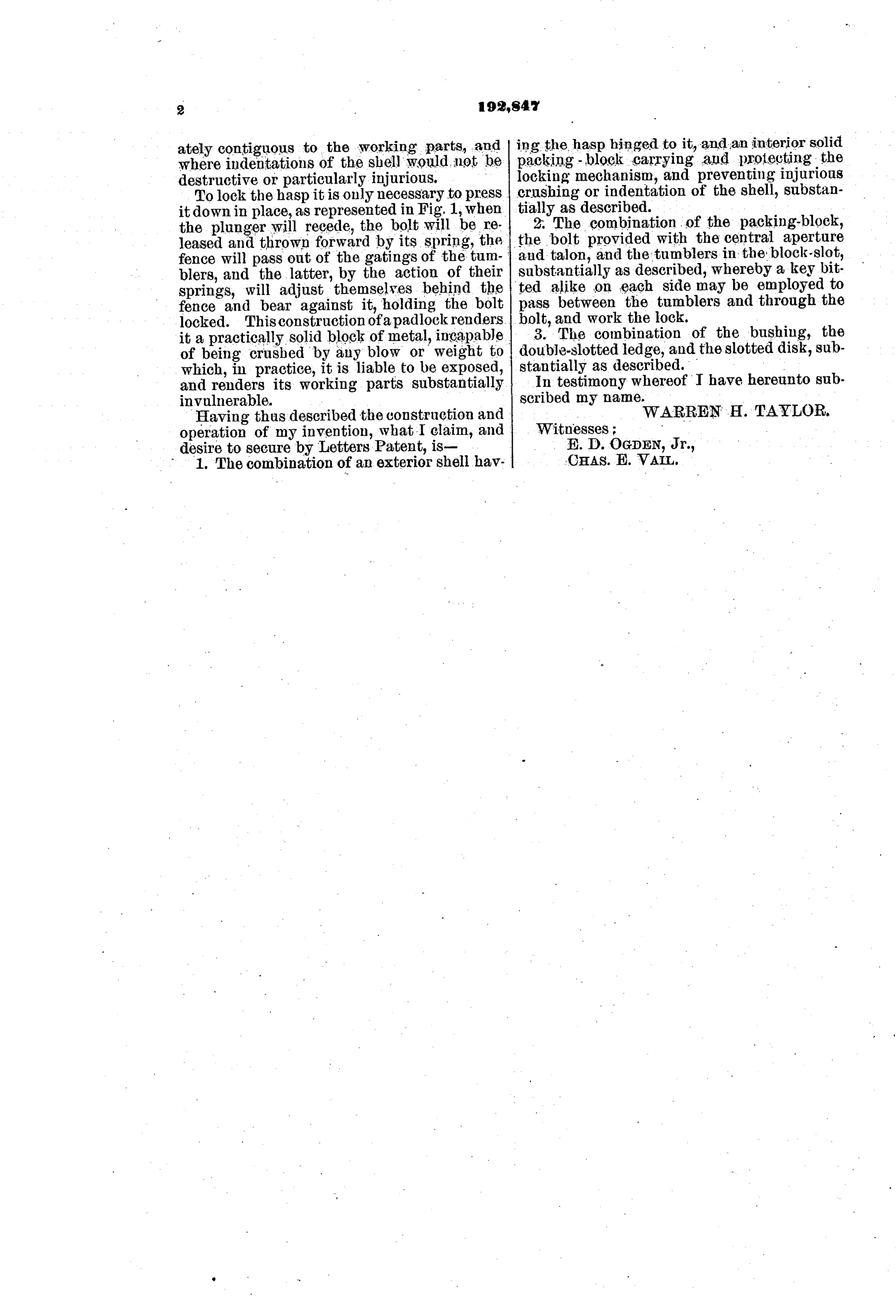
“The combination of an exterior shell having the hasp hinged to it, and an interior solid packing-block carrying and protecting the locking mechanism, and preventing injurious crushing or indentation of the shell, substantially as described.”
In plain English: The lock combines an outer shell with a hinged shackle and a solid inner block that holds and shields the lock's mechanism from being crushed or dented.
⚿ In the inventor’s words
“This construction of a padlock renders it a practically solid block of metal, incapable of being crushed by any blow or weight to which, in practice, it is liable to be exposed, and renders its working parts substantially invulnerable.”— Warren H. Taylor, from the specification
Manufactured and sold
Yale manufactured US-marked government padlocks of this solid-body pattern, and Taylor was a principal Yale designer; surviving examples of Yale US service padlocks match this construction.
⚿ More by Warren H. Taylor
- IMPROVEMENT IN PADLOCKS (1879)
- PADLOCK. (1897)
⚿ Commentary
Warren H. Taylor was working for the Yale Lock Manufacturing Company here, and the problem he's solving isn't picking — it's brute force. Most padlocks of the 1870s were hollow boxes: hit one hard enough with a hammer or drop a weight on it and the case dents inward, jamming or springing the works. Taylor's answer is blunt and effective — fill the shell with a solid metal block, and cut the bolt, tumblers, and springs into recesses in that block. His own line says it best: the result is "practically a solid block of metal." Fig. 2's section shows how little air is left inside; almost everything is hatched steel.
Two secondary touches are worth a look. When the bolt retracts, a plunger springs up to throw the shackle open and — cleverly — plugs the keyway from inside, so dirt can't get in and the lock can't snap shut prematurely with the key withdrawn. And the key (Fig. 8) is bitted identically on both sides, so a mail clerk or trainman fumbling in the dark can't insert it wrong. Those are the fingerprints of a lock designed for rough government and railroad service, not a parlor drawer.
The emblem on Fig. 1 tells you the intended customer: a big "US" cast into the face. This is heavy-duty official hardware, and the whole design philosophy — mass over mechanism — sits at the opposite pole from Yale's delicate pin-tumbler cylinders. Sometimes the smartest lock is just the hardest one to hurt.
Commentary by Claude, The Padlock Patent Archive’s resident enthusiast