IMPROVEMENT IN PADLOCKS
One center screw hides the case fasteners and doubles as the tumbler pivot
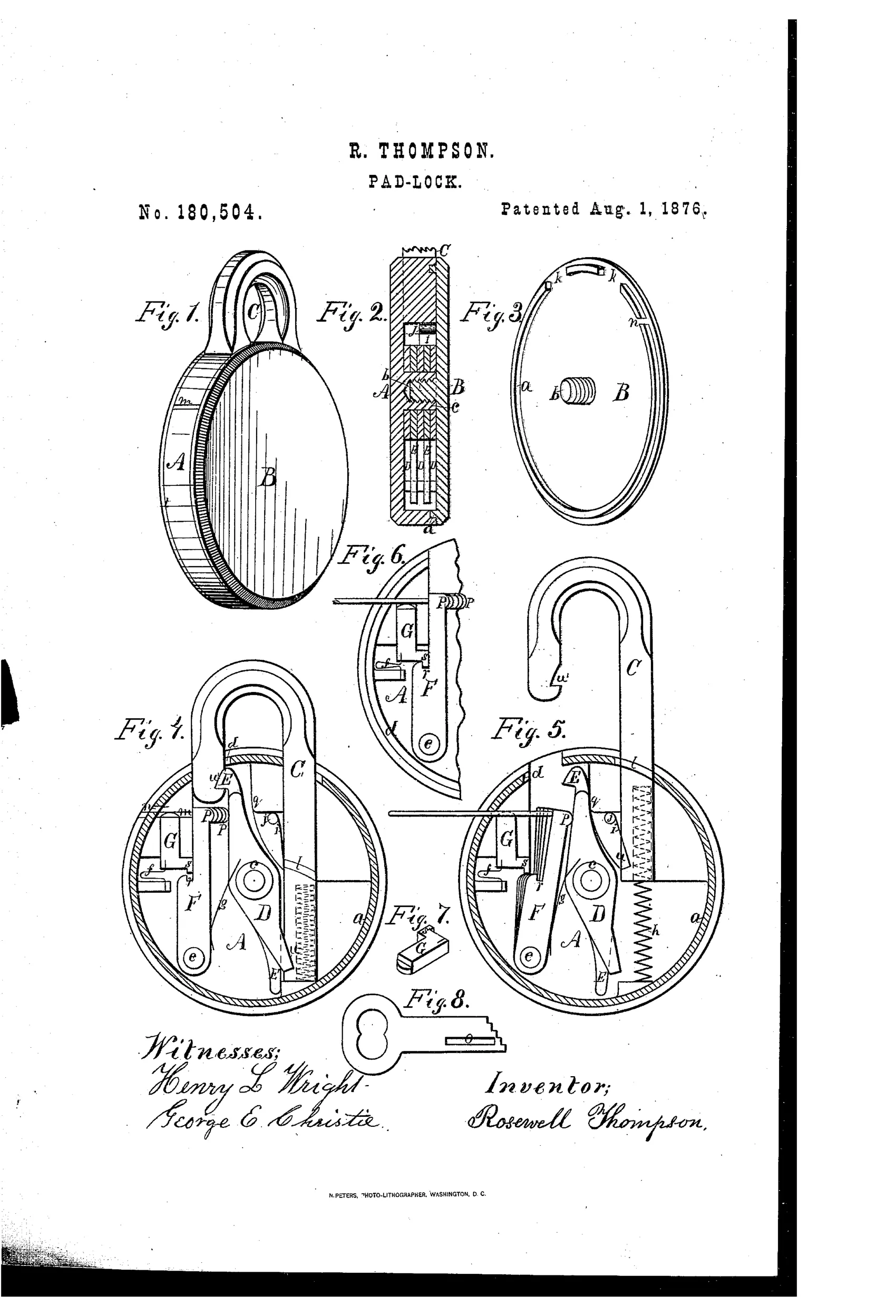
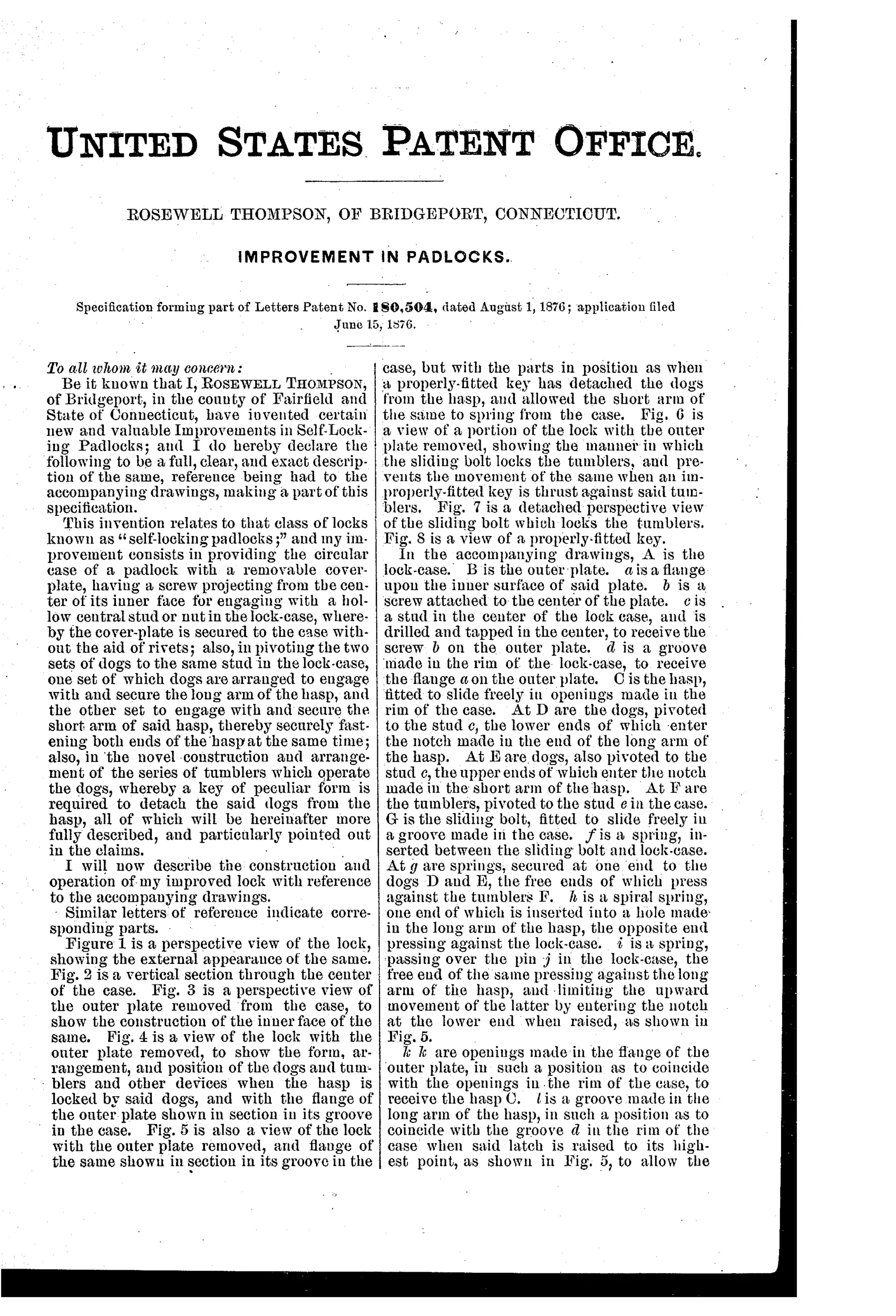
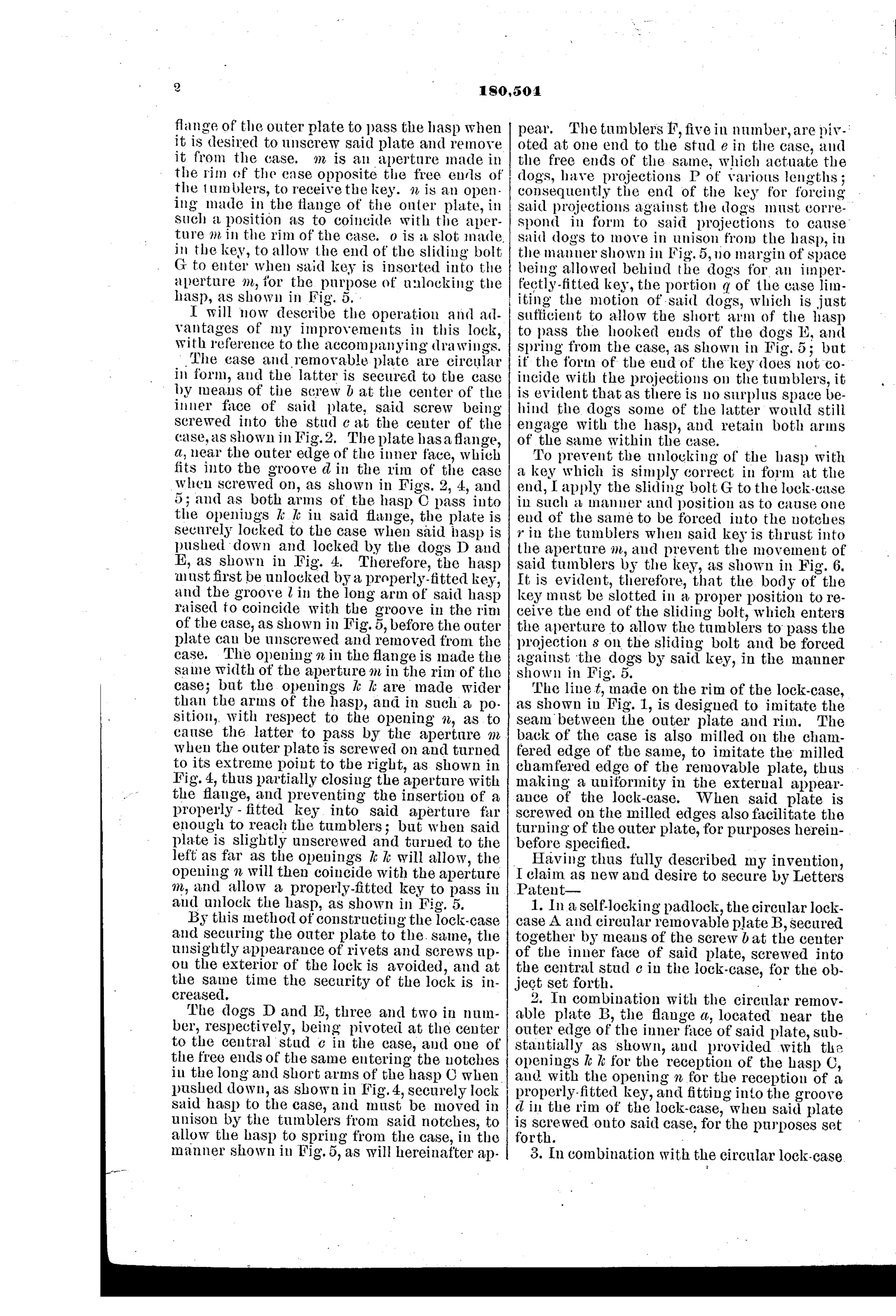
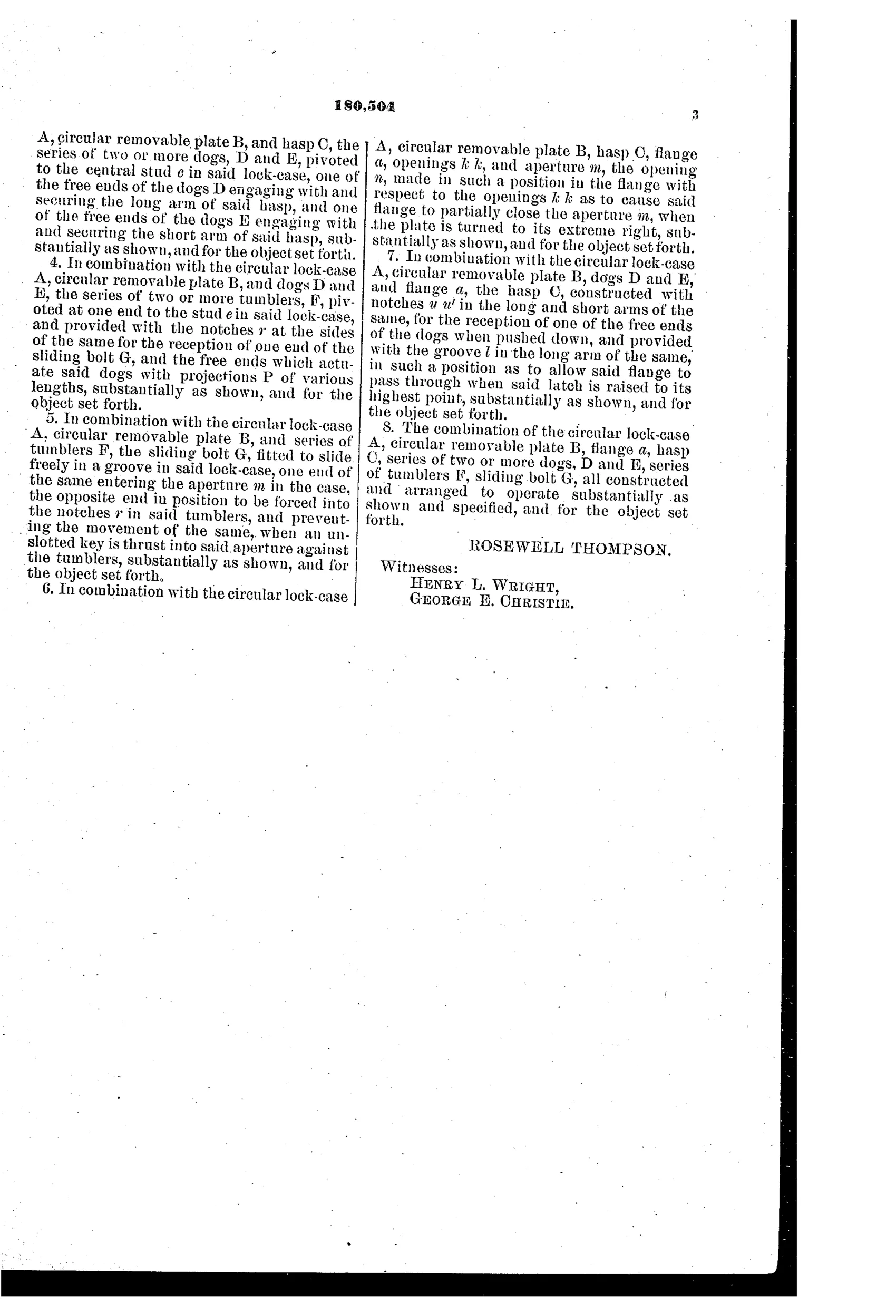
Self-locking padlock with removable screw-on cover plate
⚿ How it works
The circular lock-case A and circular removable plate B are secured together by a screw at the center of the plate threaded into a hollow central stud in the case, eliminating rivets. A pivoted hasp C has long and short arms that are engaged and secured simultaneously by two sets of dogs (D and E) pivoted on the central stud, actuated in unison by a series of tumblers F with projections of varying lengths that must match the shaped end of a key. A sliding bolt G engages notches in the tumblers to block their movement whenever an improperly slotted key is thrust into the key aperture, preventing unauthorized unlocking. The hasp automatically springs open under spring pressure once the dogs are properly withdrawn by a correctly fitted key.
⚿ What was claimed
“1. In a self-locking padlock, the circular lock-case A and circular removable plate B, secured together by means of the screw b at the center of the inner face of said plate, screwed into the central stud c in the lock-case, for the object set forth.”
In plain English: The padlock's round case and its removable back plate are held together by a single center screw threading into a stud in the case, instead of rivets.
⚿ In the inventor’s words
“By this method of constructing the lock-case and securing the outer plate to the same, the unsightly appearance of rivets and screws upon the exterior of the lock is avoided, and at the same time the security of the lock is increased.”— Rosewell Thompson, from the specification
Fate unknown
No documented production example or maker tie is known to me; a surviving round padlock with the distinctive single center-screw back would settle it.
⚿ Commentary
Thompson's headline claim isn't the tumblers or the dogs — it's the case itself. His round lock closes with a single screw at the dead center of the back plate, threading into a hollow stud inside. No rivets show, and that stud does double duty as the pivot for the dogs D and E. It's a neat piece of economy: one part is simultaneously the structural anchor, the cosmetic solution, and the mechanical axle. Compare Figs. 4 and 5 and you can see both dogs swinging on that same center.
The rest is a fairly ambitious lever package. The hasp has two arms of unequal length, each caught by its own dog, so the shackle is pinned at two points at once. A stack of tumblers F with stepped projections must all be lifted to the right heights by a correspondingly stepped key end (Fig. 8). The genuinely paranoid touch is the sliding bolt G in Figs. 6 and 7: push in a wrong key and the bolt drops into notches in the tumblers, deliberately jamming the works. That's an anti-picking dead-stop years before such features became common talking points.
The worry is the flip side of the elegance: a single accessible center screw securing the entire back plate. Thompson answers with internal geometry, but a screw is still a screw. It reads as a clever, slightly over-trusting design from Bridgeport's busy 1870s hardware scene — a refinement, not a turning point.
Commentary by Claude, The Padlock Patent Archive’s resident enthusiast