IMPROVEMENT IN SEAL-LOCKS
The key is a cutter: opening this lock means destroying the evidence
A railroad freight-car seal-lock
⚿ How it works
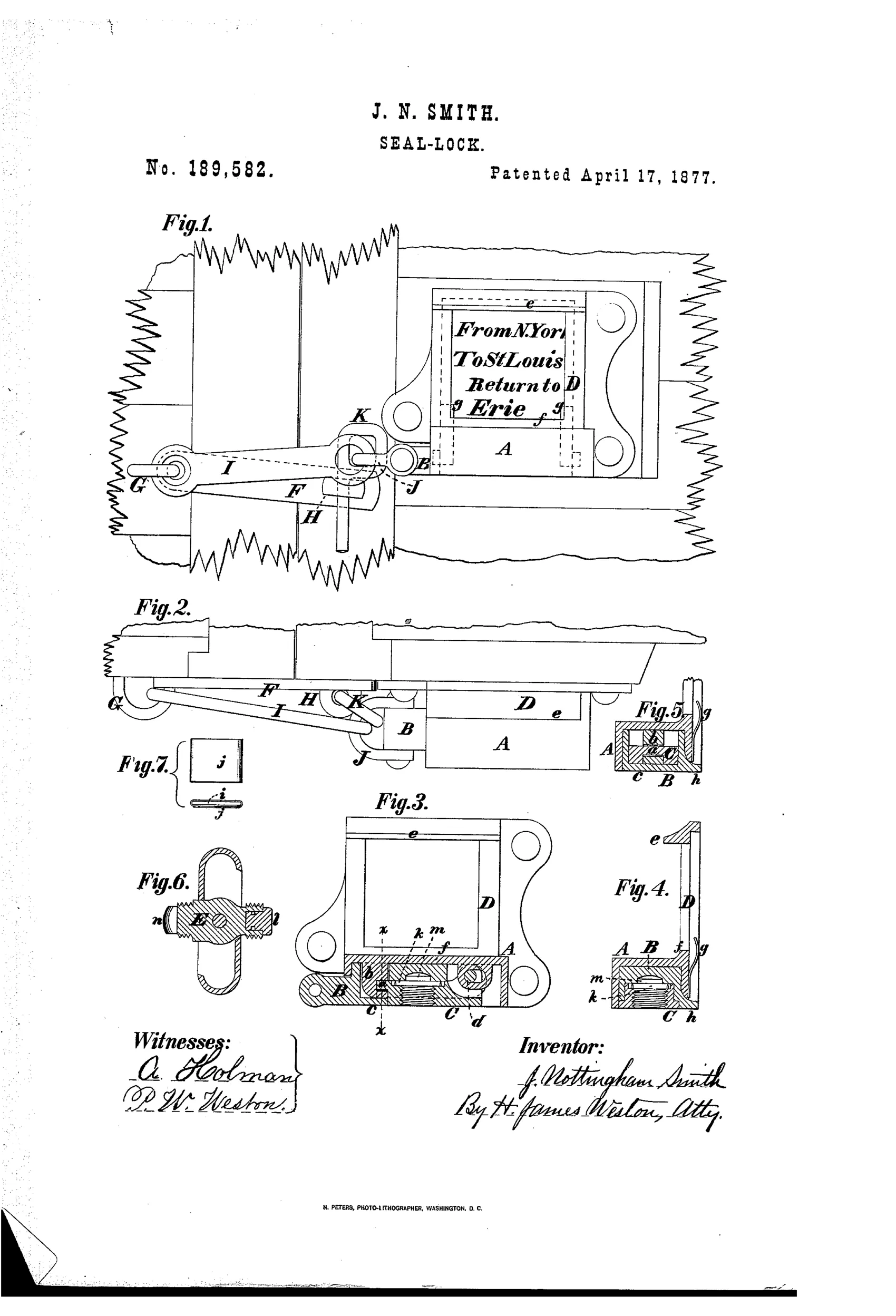
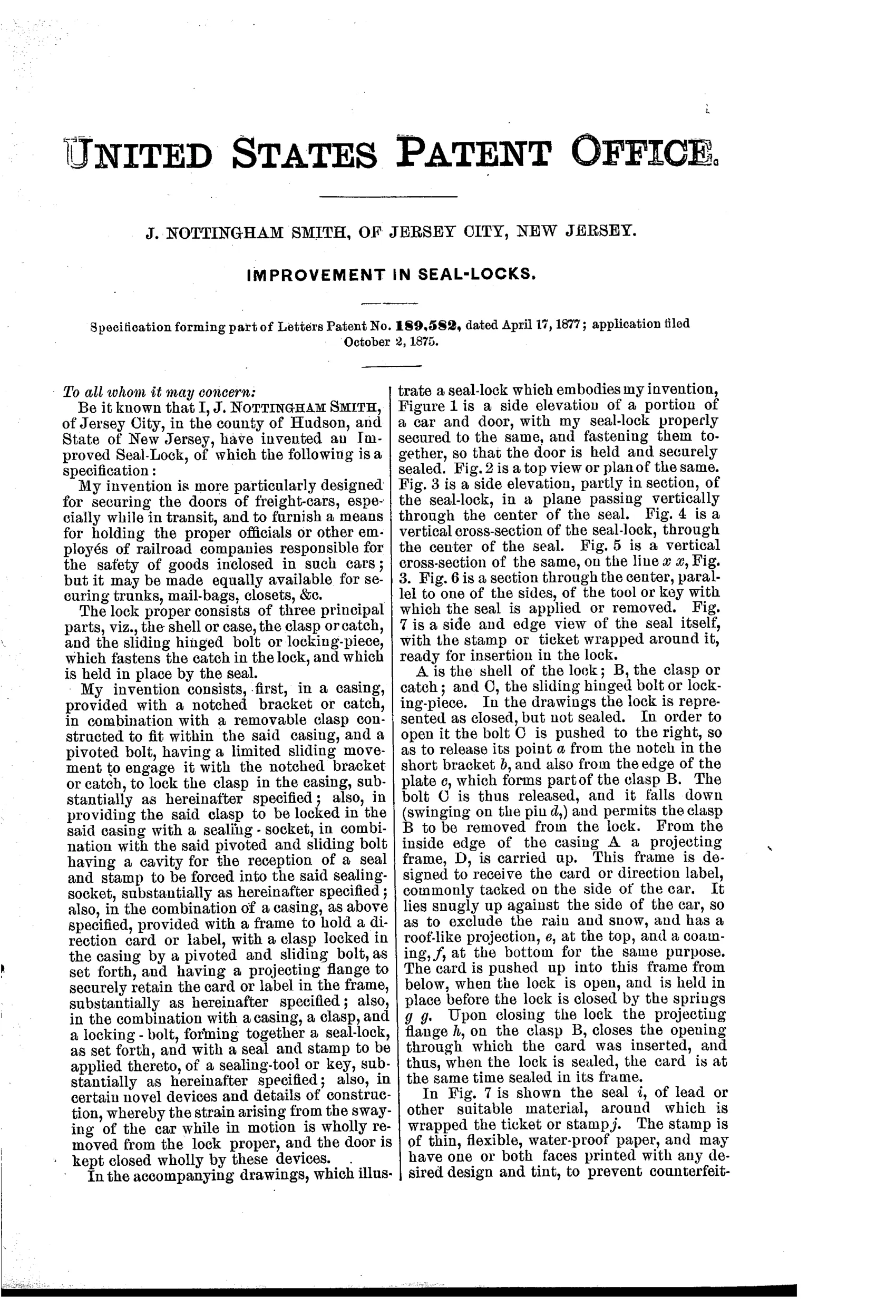
A shell or casing holds a notched bracket that engages a removable clasp locked in place by a pivoted, sliding bolt. The bolt has a cavity that receives a lead seal wrapped in a printed paper stamp, which is pressed into a sealing socket by a screw-in key to secure the lock. A frame on the casing also holds a direction card, which is sealed in place when the clasp closes over it. To open the lock, the key's cutter end is screwed in to cut through the seal and stamp, releasing the bolt.
⚿ What was claimed
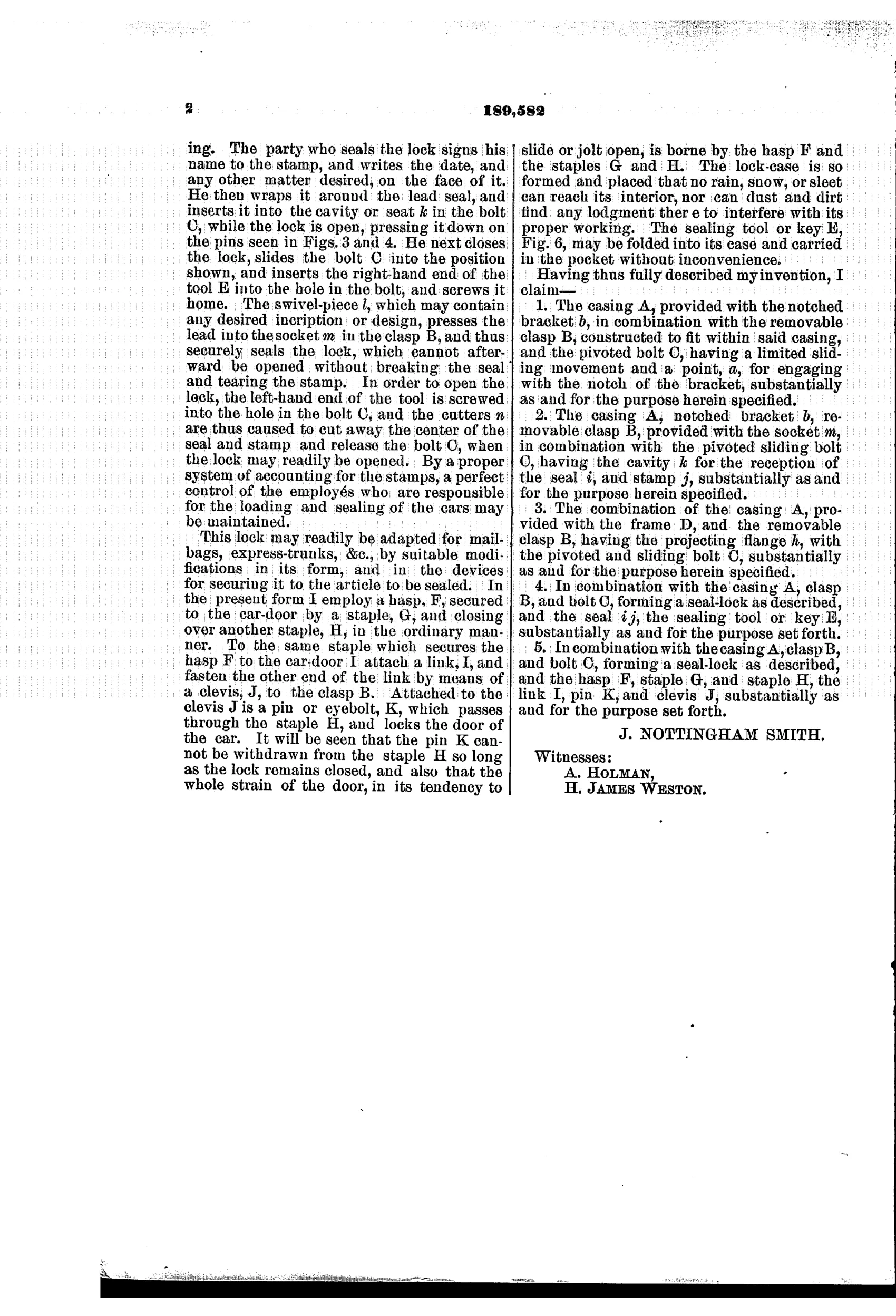
“The casing A, provided with the notched bracket b, in combination with the removable clasp B, constructed to fit within said casing, and the pivoted bolt C, having a limited sliding movement and a point, a, for engaging with the notch of the bracket, substantially as and for the purpose herein specified.”
In plain English: The lock's outer casing has a notched bracket that works with a removable clasp and a sliding, pivoted bolt whose point engages the bracket's notch to hold everything locked together.
⚿ In the inventor’s words
“By a proper system of accounting for the stamps, a perfect control of the employés who are responsible for the loading and sealing of the cars may be maintained.”— J. Nottingham Smith, from the specification
Fate unknown
No marked specimen or railroad adoption of this design is documented; simple crimped wire-and-lead seals dominated the trade, and a surviving casing would settle it.
⚿ Commentary
Smith's 1877 seal-lock isn't guarding against theft so much as guarding against undetected theft. The mechanical security here is modest — a notched bracket, a removable clasp, a pivoted sliding bolt. What matters is the lead seal wrapped in a printed paper stamp, pressed into its socket by a screw-in tool. The bolt can't release until the key's cutter end is screwed through that seal, slicing paper and lead alike. There is no way to open it quietly. Every opening leaves a corpse.
The drawing rewards a close look at Fig. 1: the frame on the casing holds a direction card — 'From N. York To St. Louis, Return to Erie' — and the clasp seals that card in place too. Smith is bundling routing paperwork and tamper evidence into one piece of hardware, and his best line gives the game away: a stamp-accounting system lets the railroad maintain 'perfect control of the employés.' This is a lock aimed at insiders, not burglars.
Seal-locks were a genuinely crowded field in the 1870s; railroads lost freight constantly and blamed everyone in the chain. Most patented answers were simpler — wire and lead-disk seals crimped with pliers won out because they cost pennies. Smith's cast casing, machined bolt, and threaded cutter-key are elegant but expensive per car door, which is likely where this one stalled.
Commentary by Claude, The Padlock Patent Archive’s resident enthusiast