COMPOUND LOCK AND LABEL-SHEATH.
The padlock hasp doubles as a tamper seal for the mail bag's address card
Combined lock and mail-bag label sheath
⚿ How it works
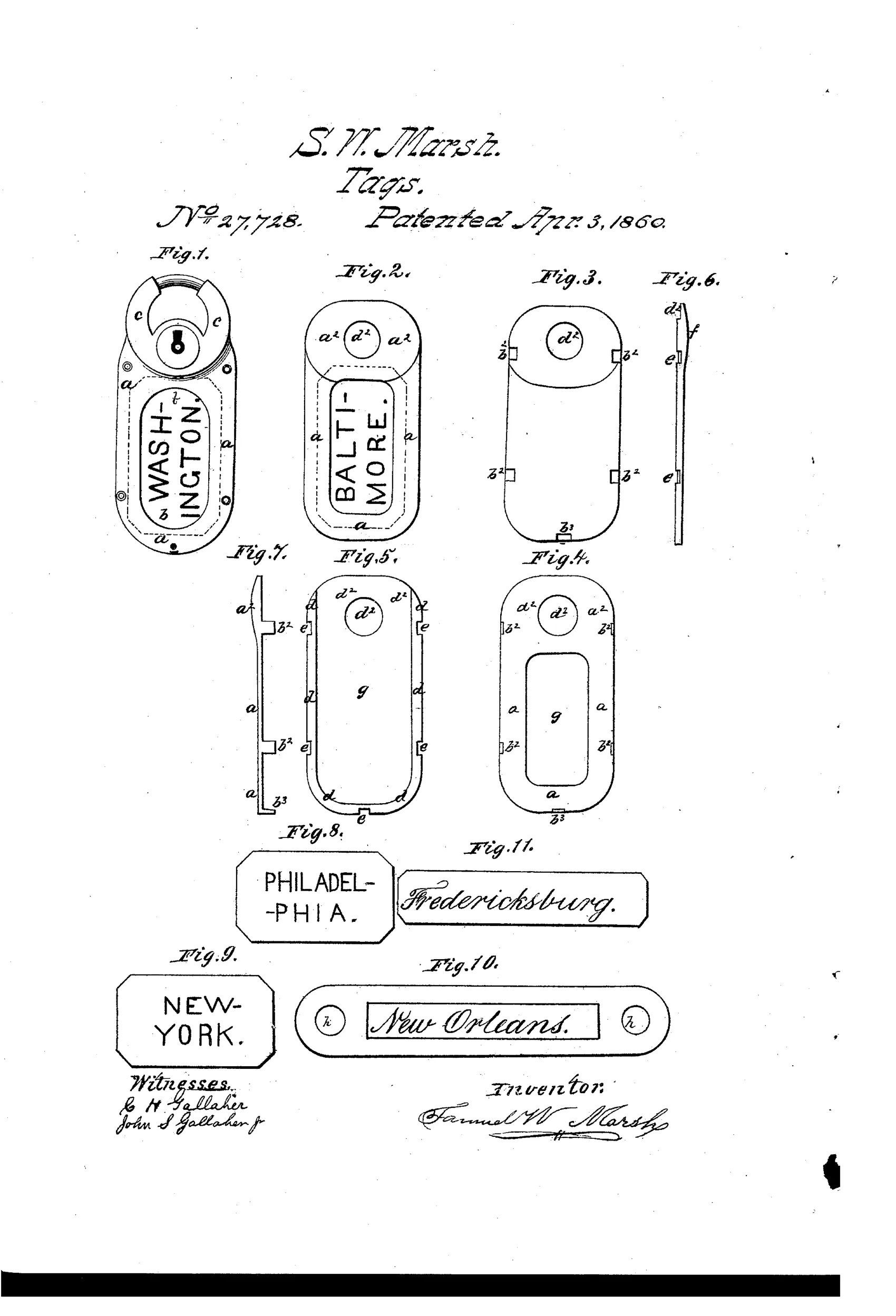
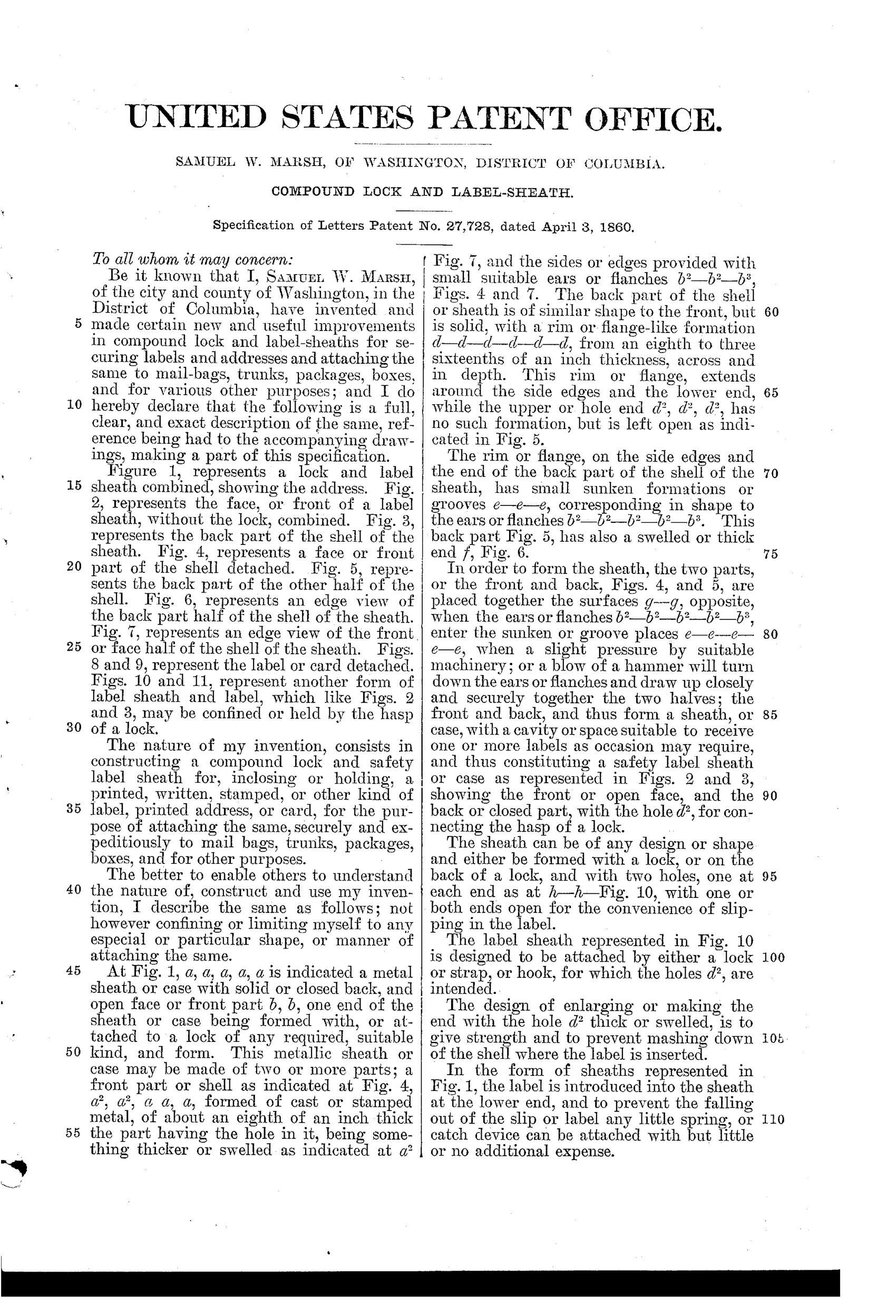
A metal sheath or shell with an open front and solid back is formed to hold a printed or written address label. The front and back plates have matching ears or flanges and grooves that are pressed or hammered together to lock the label inside securely. One end of the sheath is attached to a lock, so the hasp of the lock passes through a hole in the sheath to prevent the label from being removed or the bag opened without a key. Labels can be double-sided with different destination names, allowing one sheath to be reused for return trips by simply flipping the card.
⚿ What was claimed
“The construction of a compound lock, and safety label sheath, or label case, and label as represented in the drawings Figs. 1, 2, 3, 4, 5, 6, 7, 8, 9, 10, 11, and substantially as herein set forth and described.”
In plain English: The invention claims the overall design of a combined lock and safety label sheath, as shown in all the drawings and described in the specification.
⚿ In the inventor’s words
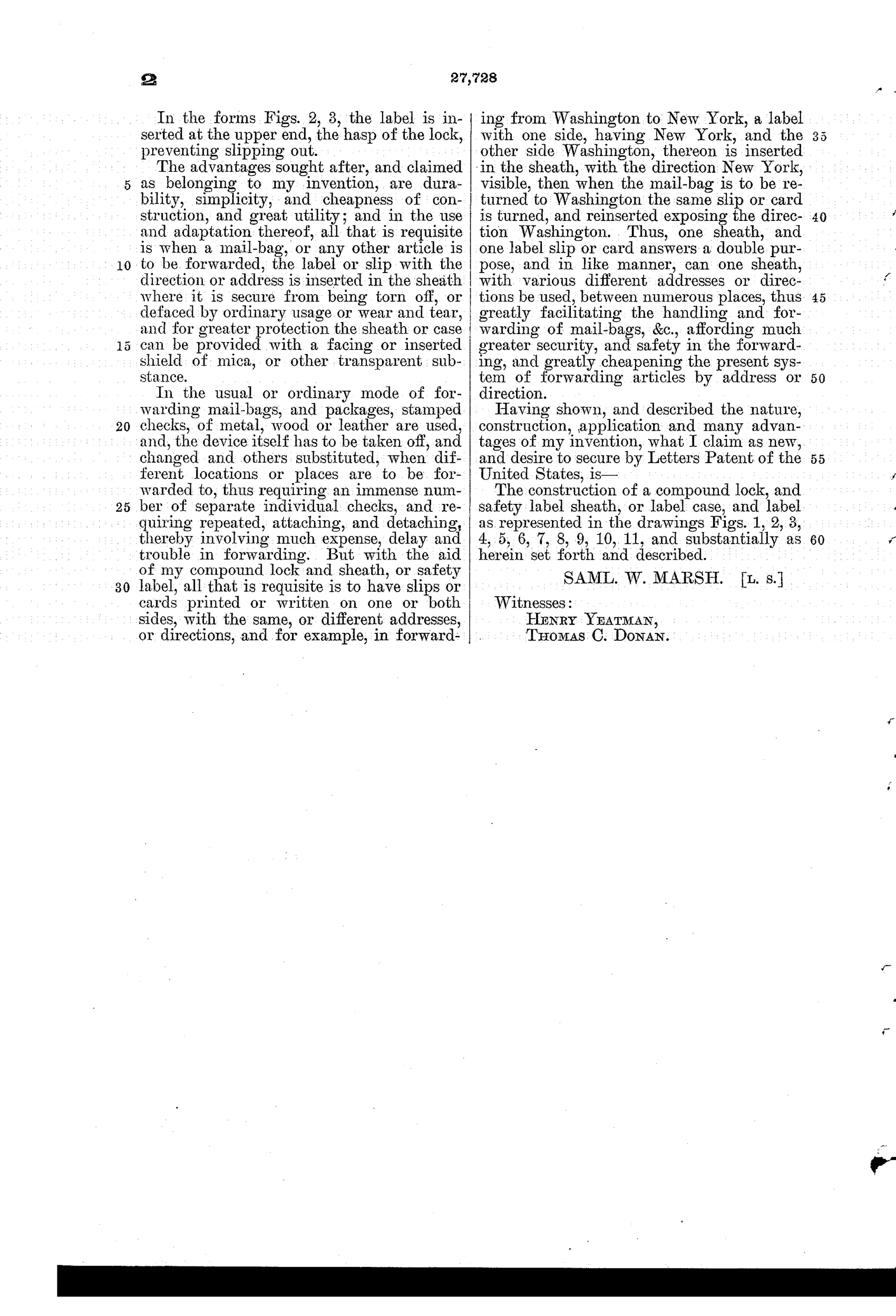
“Thus, one sheath, and one label slip or card answers a double purpose, and in like manner, can one sheath, with various different addresses or directions be used, between numerous places, thus greatly facilitating the handling and forwarding of mail-bags, &c., affording much greater security, and safety in the forwarding, and greatly cheapening the present system of forwarding articles by address or direction.”— Samuel W. Marsh, from the specification
Fate unknown
The concept closely resembles later Post Office label-holder locks, but no specimen matching this exact sheath construction is documented; a surviving marked example would settle it.
⚿ Commentary
Marsh's insight here isn't in the lock at all — it's in what the shackle passes through. The oval sheath holds a printed destination card behind an open-front shell, and the hasp threads through a hole in the sheath so that nobody can swap or strip the routing label without first defeating the lock. In 1860, when a mail bag's security and its destination were two separate problems, this collapses them into one piece of hardware. Redirect the bag fraudulently and you've broken the lock; break the lock and the label goes with it.
The drawing sheet is mostly sheath anatomy, and it rewards a close look. Figs. 3 through 7 show the two shell halves with their ears and grooves — the flanges get pressed or hammered together to trap the card, a permanent-ish closure that makes the label case itself resistant to casual fiddling. Figs. 8, 9, and 11 show the cards as loose parts, and the specification's best trick is the double-sided card: WASHINGTON one way, flip it for the return trip. One sheath, many routes.
As a lock this is unremarkable — the mechanism in Fig. 1 is a conventional keyed padlock and Marsh claims nothing about it. As mail hardware it points straight at where the Post Office actually went: marked locks with integral label holders became standard on registered mail pouches. Whether Marsh's specific construction fed that lineage or merely anticipated it is the open question.
Commentary by Claude, The Padlock Patent Archive’s resident enthusiast