CHAIN-LOCK OR BAGGAGE-GUARD.
An 1884 cable lock for train travelers, chain and hasp permanently married
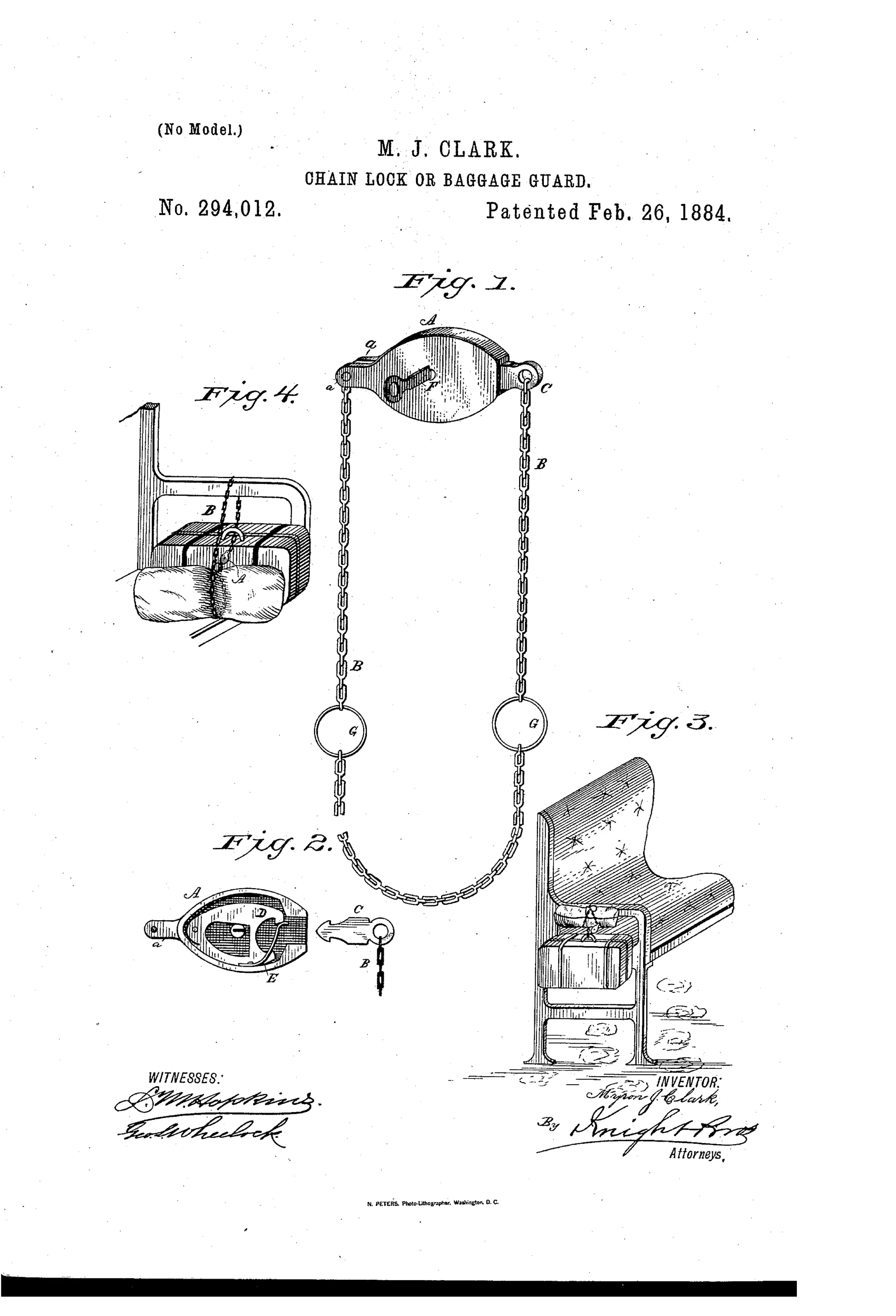
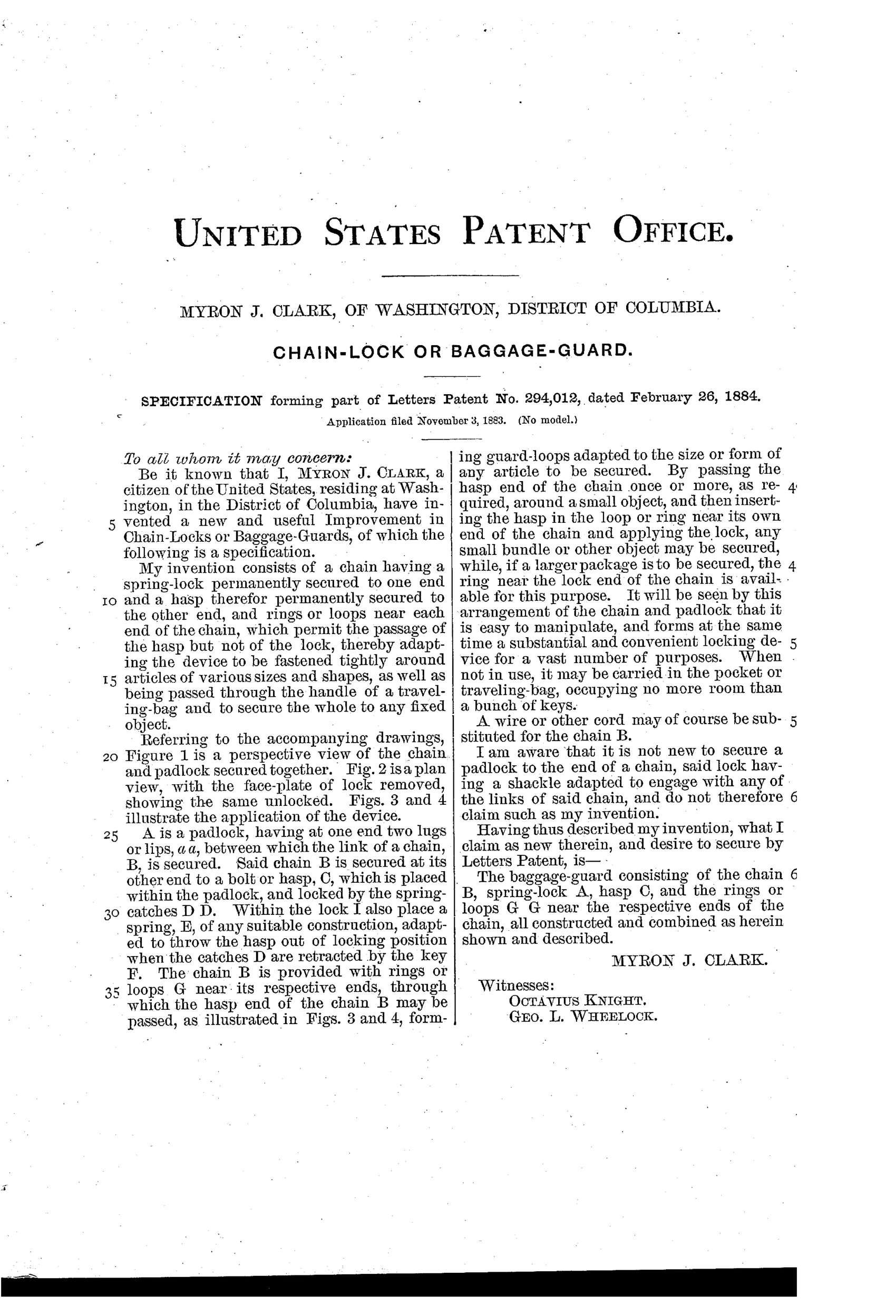
Combination padlock-and-chain baggage security device.
⚿ How it works
A padlock A has two lugs at one end that permanently secure one end of a chain B. The other end of chain B is permanently secured to a hasp C, which fits inside the padlock and is locked by spring catches D D. An internal spring E throws the hasp out of the locked position when the catches are retracted by the key F, while rings or loops G G near each end of the chain allow the hasp end to be threaded through, forming adjustable guard-loops for securing items of different sizes.
⚿ What was claimed
“The baggage-guard consisting of the chain B, spring-lock A, hasp C, and the rings or loops G G near the respective ends of the chain, all constructed and combined as herein shown and described.”
In plain English: The invention is a baggage guard made of a chain with a spring lock on one end, a hasp on the other, and loop rings near each end, all working together as described.
⚿ In the inventor’s words
“When not in use, it may be carried in the pocket or traveling-bag, occupying no more room than a bunch of keys.”— Myron J. Clark, from the specification
Fate unknown
Chain baggage guards of this type circulated in the era, but no specimen tied to Clark's patent is documented; a marked example would settle it.
⚿ Commentary
This is essentially the great-grandfather of the modern cable lock. Clark's insight isn't the lock itself — a simple spring-catch mechanism with an ejector spring, nothing a lever-tumbler man of 1884 would blink at — but the packaging. Both ends of the chain are permanently captive: one to the lock body via lugs, the other terminating in the hasp that plugs into the lock. Nothing to lose, nothing to fumble. The rings G G near each end let you thread the hasp through to form a noose of adjustable size, so the same device can cinch a satchel handle to a rack rail or wrap a whole trunk to a bench leg, as Figs. 3 and 4 show.
The cutaway in Fig. 2 is worth a second look: the spring E that throws the hasp out when the key retracts the catches D D is a genuinely traveler-friendly touch. One-handed unlocking, on a crowded platform, with gloves on.
The security is, frankly, modest — spring catches without tumblers yield to a bent wire, and light chain yields to nippers. But that misses the point. This was theft deterrence for the depot waiting room, aimed at the opportunist, not the professional. Clark's own pitch is the honest one: folded up, it occupies 'no more room than a bunch of keys.' It sits in the story as an early entry in the convenience-security genre that bicycle chains and luggage cables would eventually own.
Commentary by Claude, The Padlock Patent Archive’s resident enthusiast