PADLOCK.
A Scandinavian-pattern lock that adds a clutch so the tumbler can't be turned
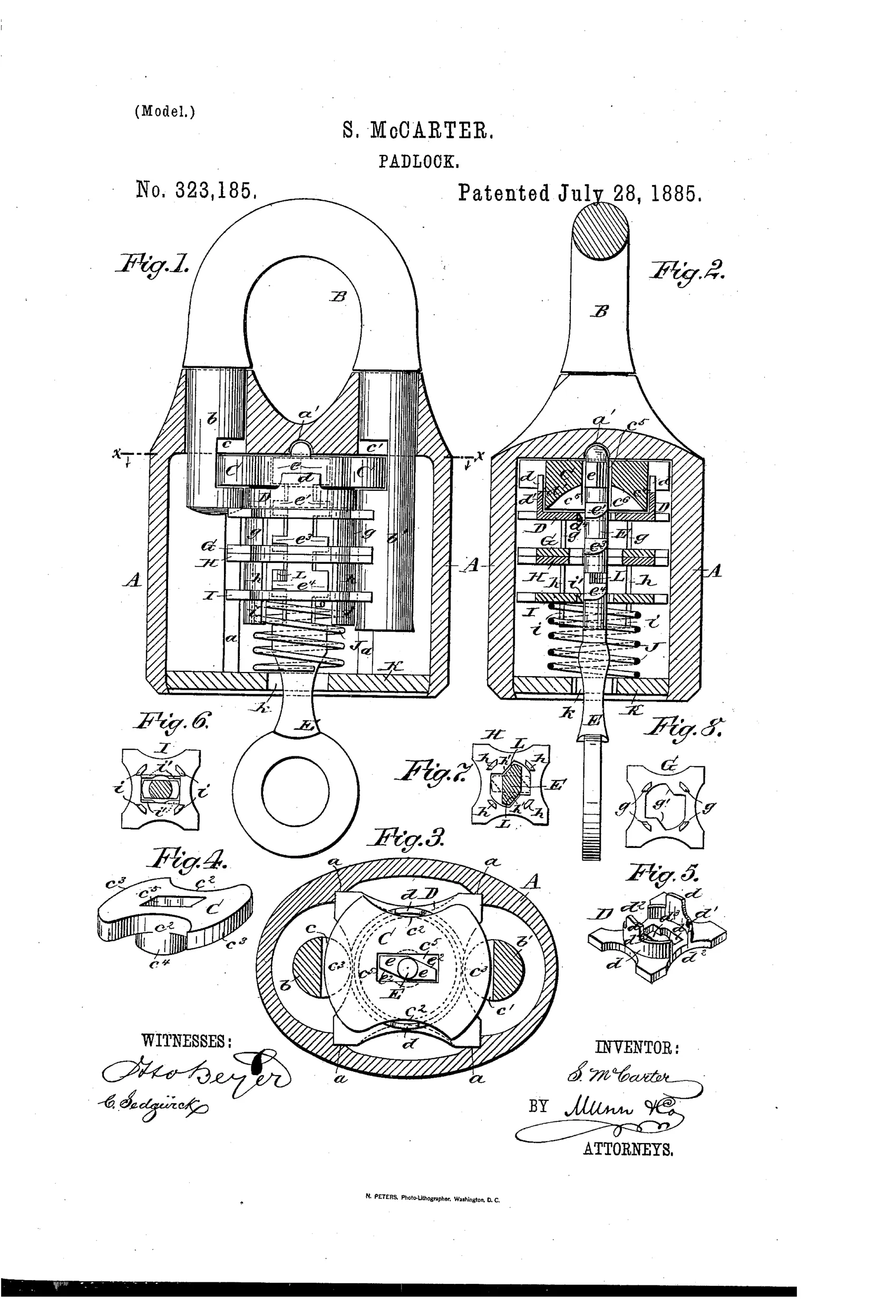
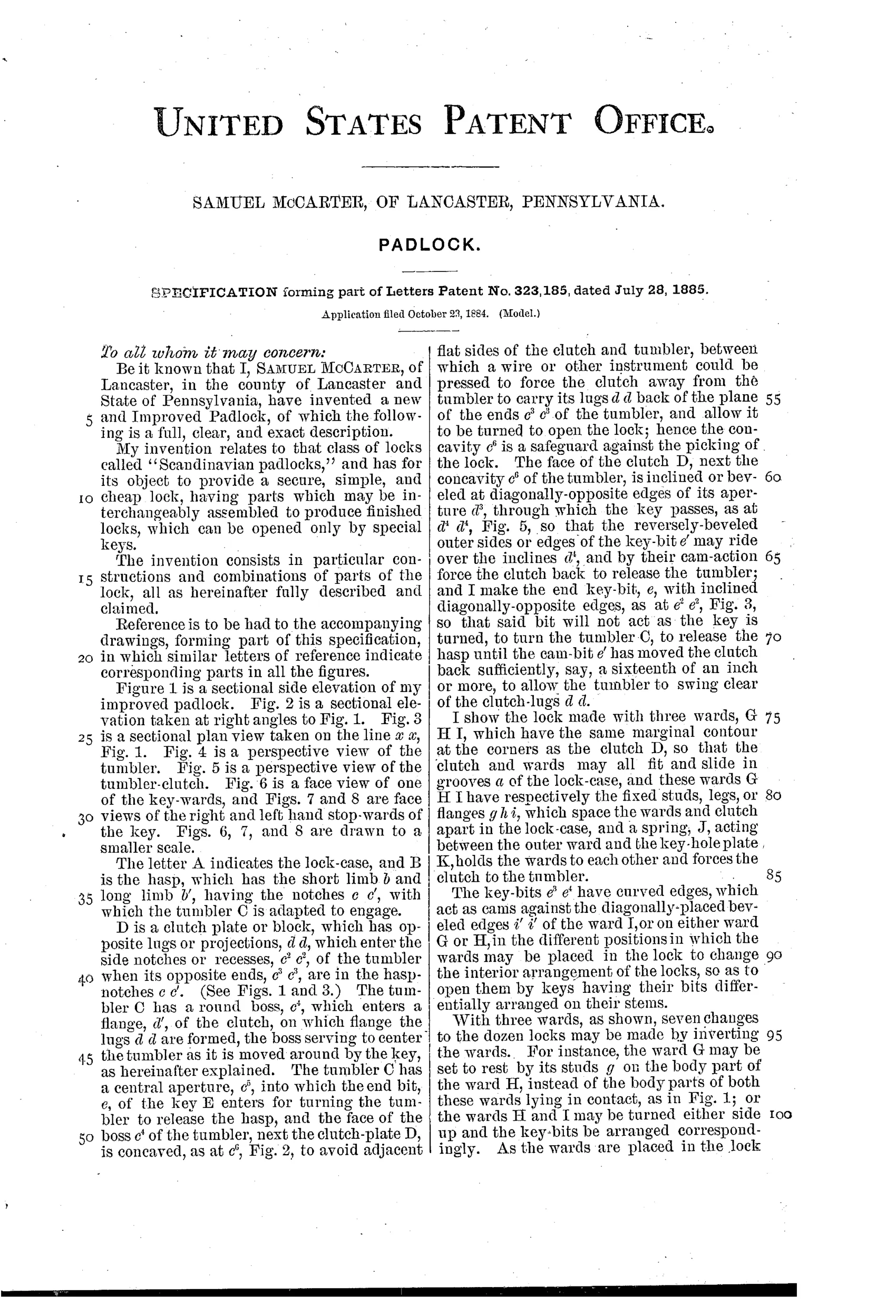
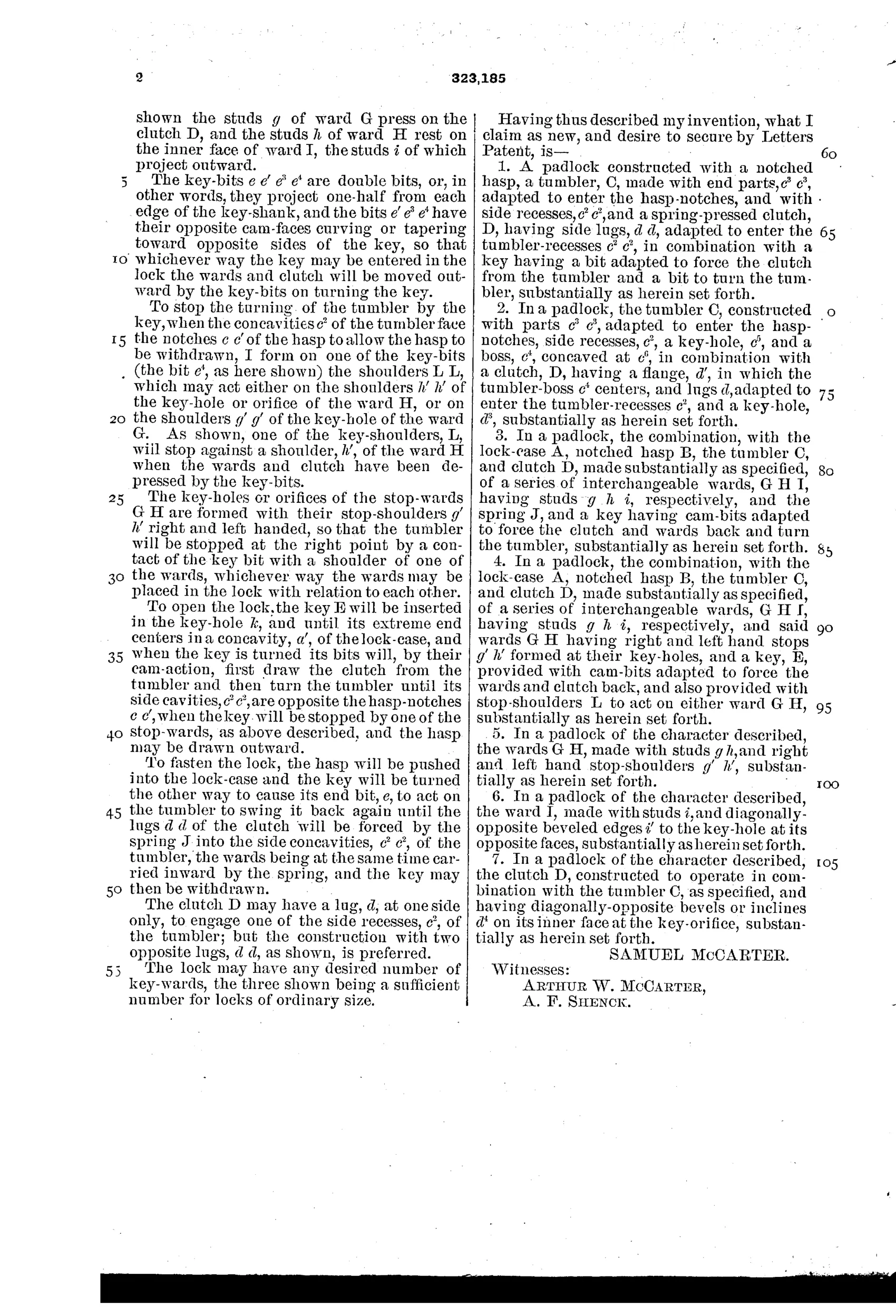
Scandinavian-pattern interchangeable-ward padlock
⚿ How it works
A notched hasp B is engaged by a tumbler C whose end parts seat in the hasp notches. A spring-pressed clutch plate D has lugs that enter side recesses of the tumbler to lock it against turning, and a series of interchangeable wards (G, H, I) with beveled edges and studs let the key bits act as cams to first push the clutch off the tumbler and then rotate the tumbler to free the hasp. A spring J biases the wards and clutch back against the tumbler when the key is withdrawn, relocking the mechanism and preventing the lock from being picked by wire or other instruments.
⚿ What was claimed
“A padlock constructed with a notched hasp, a tumbler, C, made with end parts, c3 c3, adapted to enter the hasp-notches, and with side recesses, c2 c2, and a spring-pressed clutch, D, having side lugs, d d, adapted to enter the tumbler-recesses c2 c2, in combination with a key having a bit adapted to force the clutch from the tumbler and a bit to turn the tumbler, substantially as herein set forth.”
In plain English: The padlock has a notched hasp, a tumbler with end parts that fit the hasp notches, and a spring-loaded clutch with lugs that lock into the tumbler, all released by a key whose bits first push the clutch away and then turn the tumbler.
⚿ In the inventor’s words
“hence the concavity c6 is a safeguard against the picking of the lock.”— Samuel McCarter, from the specification
Fate unknown
McCarter is not a known production name and this internal layout doesn't match documented Scandinavian-pattern hardware; a marked or teardown-matched specimen would settle it.
⚿ Commentary
The Scandinavian padlock — that cast-iron pear shape with a stack of rotating discs — was one of the most copied designs in nineteenth-century America, and its weakness was well known: the tumbler stack could often be manipulated with a bent wire once you understood the geometry. McCarter's answer is a second line of defense. His tumbler C can't turn at all until a spring-pressed clutch plate D, whose lugs sit in recesses on the tumbler's flanks, is physically pushed clear. The key has to do two jobs in sequence: one bit cams the clutch off, another rotates the tumbler out of the hasp notches.
The drawing rewards a close look at Figs. 4 and 5, the little perspective views of the tumbler and clutch. You can see the concavity c6 the specification brags about — a hollowed face meant to deny a pick any purchase. The stack of interchangeable wards (Figs. 6-8) gives the maker a cheap way to vary keying without retooling, which is the same economics that made the six-lever push-key locks so successful.
It's a genuinely thoughtful refinement rather than a new idea — the two-stage release is the honest contribution here. But by 1885 Yale's pin tumbler was setting the direction of the market, and elaborated Scandinavian internals were solving yesterday's problem, however cleverly.
Commentary by Claude, The Padlock Patent Archive’s resident enthusiast