PADLOCK.
A Scandinavian lock that admits its kind can be pounded open — and fixes it
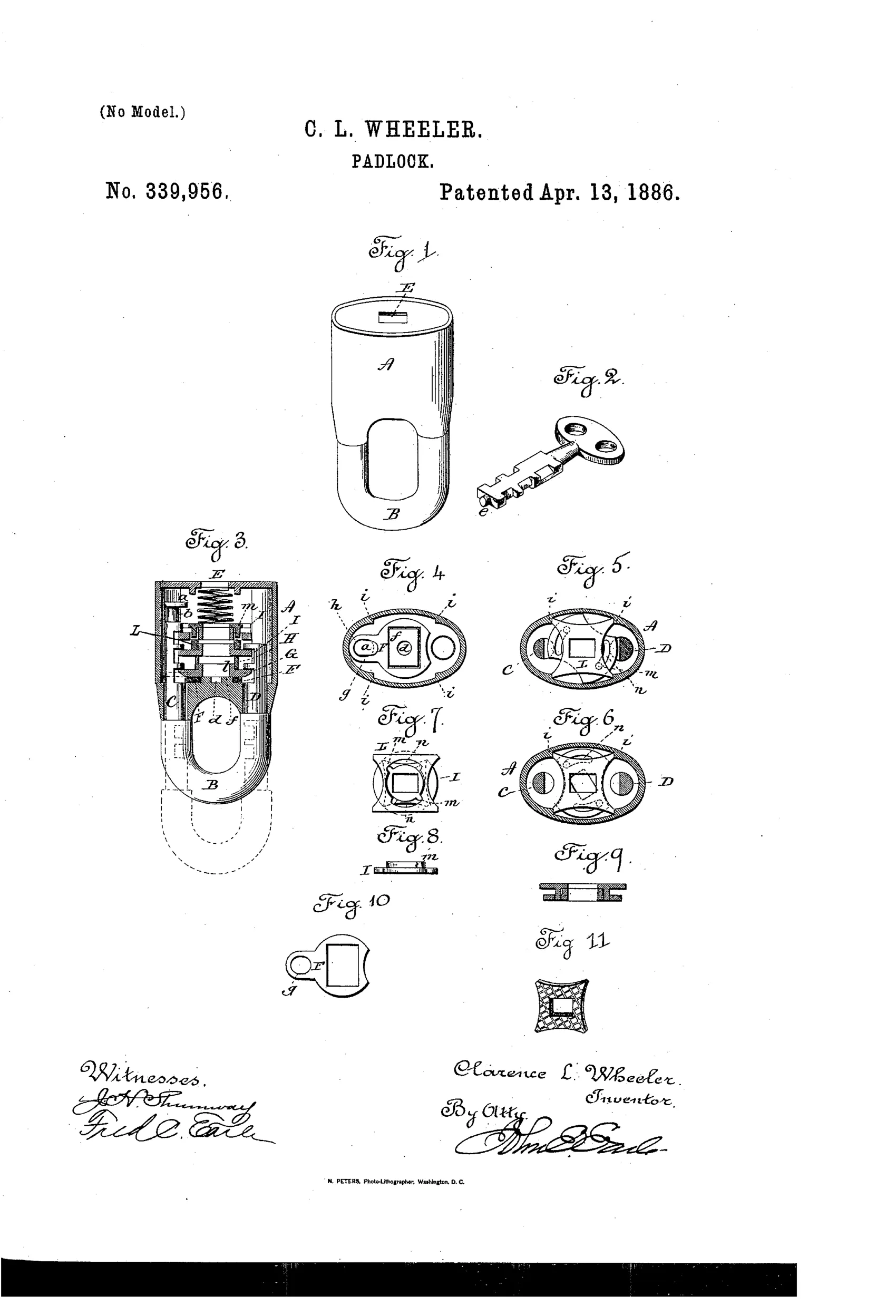
Scandinavian-pattern u-shaped shackle padlock
⚿ How it works
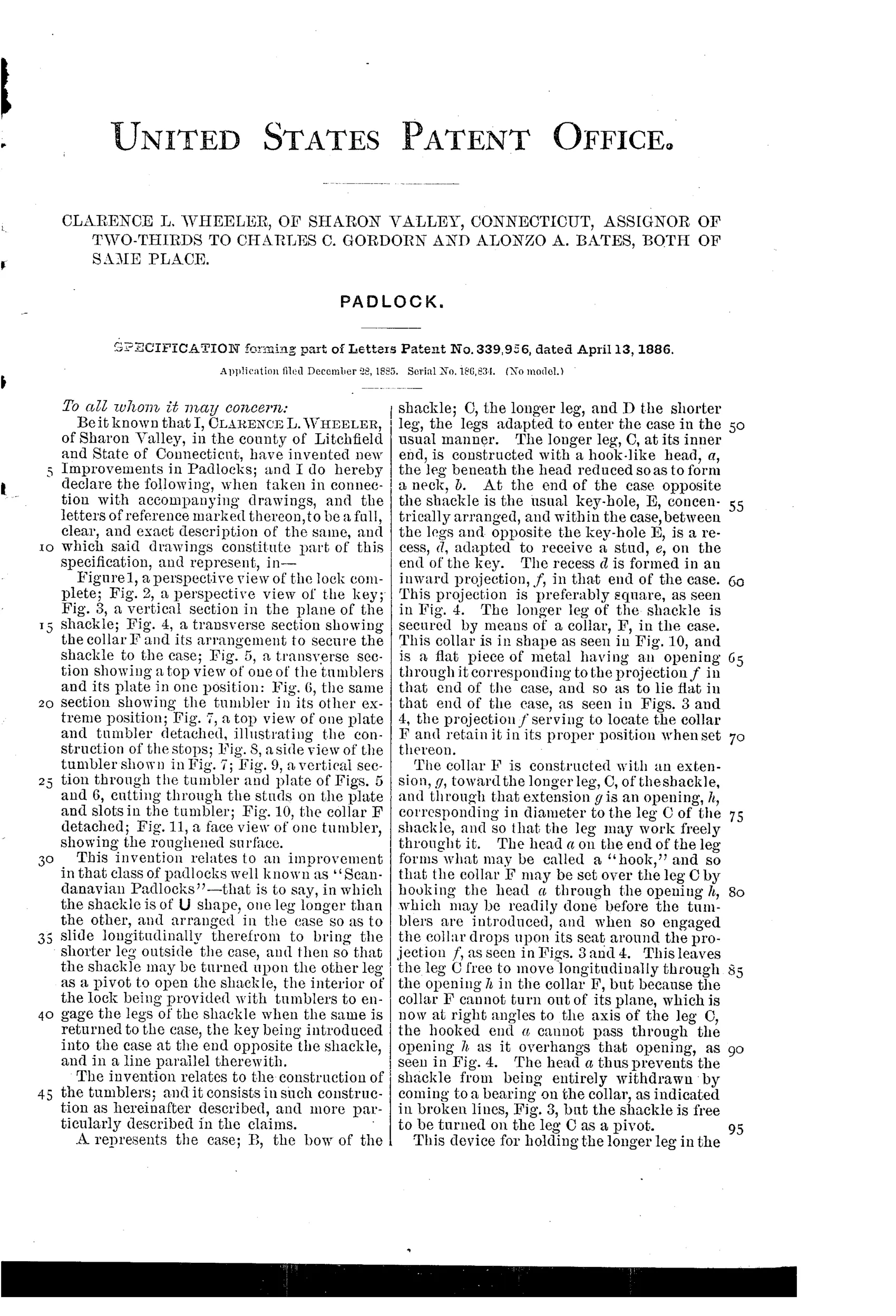
The padlock uses a U-shaped shackle with one leg longer than the other, the long leg carrying a hook-like head that is captured by a collar so the shackle can slide and then pivot open. A stack of rotating tumbler plates inside the case engages notches on the shackle legs, and each tumbler is guided and stopped by cooperating recesses and projections (studs) on adjacent plates that limit rotation to two extremes. A flat key, notched on its edges, passes through openings in fixed plates to turn the tumblers into or out of engagement with the shackle. The meeting surfaces of the tumblers are roughened with grooves to increase friction and prevent accidental turning from jarring or pounding.
⚿ What was claimed
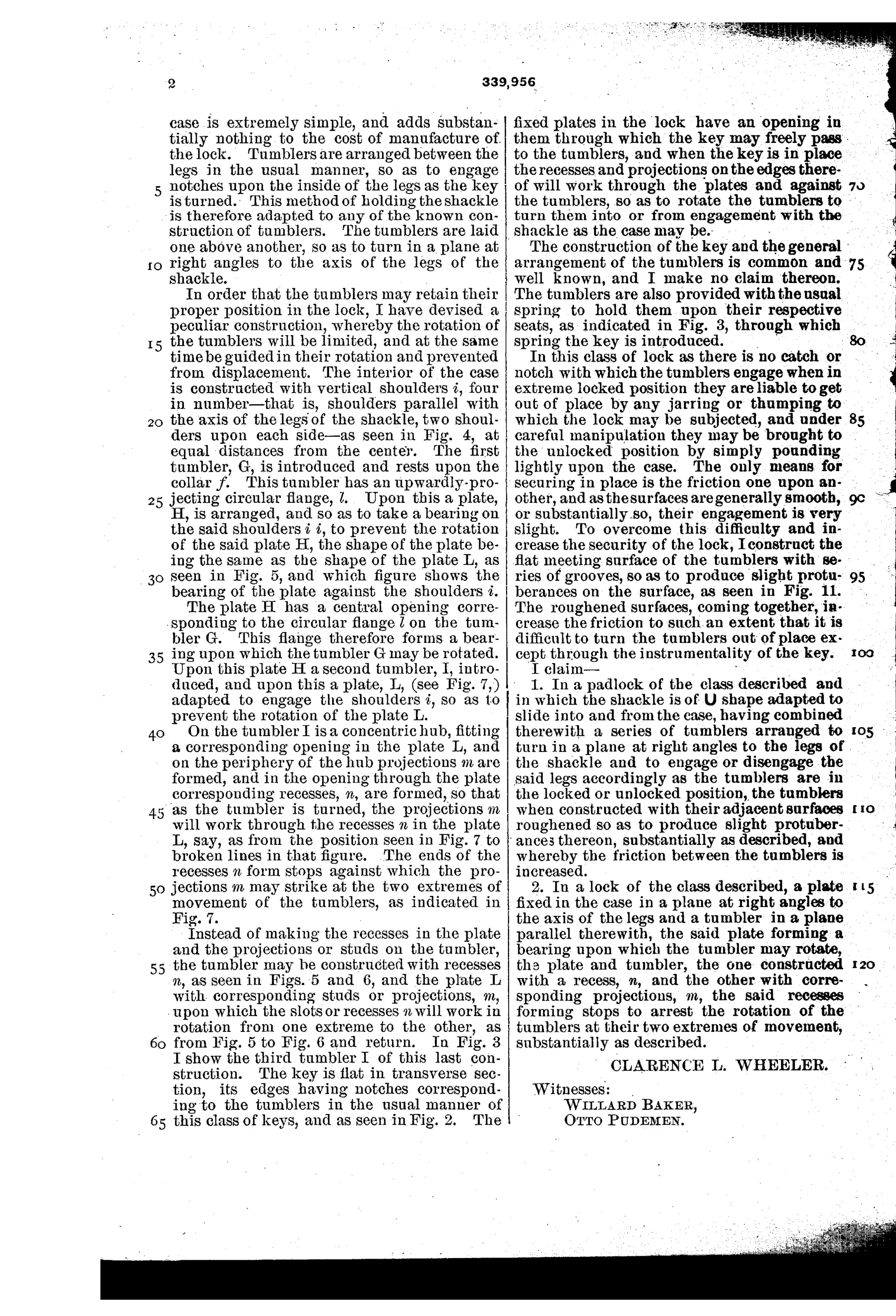
“In a padlock of the class described and in which the shackle is of U shape adapted to slide into and from the case, having combined therewith a series of tumblers arranged to turn in a plane at right angles to the legs of the shackle and to engage or disengage the said legs accordingly as the tumblers are in the locked or unlocked position, the tumblers when constructed with their adjacent surfaces roughened so as to produce slight protuberances thereon, substantially as described, and whereby the friction between the tumblers is increased.”
In plain English: The lock uses rotating tumblers with roughened, slightly bumpy contact surfaces so friction (not a catch) keeps them from turning out of place by accident.
⚿ In the inventor’s words
“In this class of lock as there is no catch or notch with which the tumblers engage when in extreme locked position they are liable to get out of place by any jarring or thumping to which the lock may be subjected, and under careful manipulation they may be brought to the unlocked position by simply pounding lightly upon the case.”— Clarence L. Wheeler, from the specification
Fate unknown
Scandinavian-type locks were made in huge numbers, but no specimen is documented with this roughened-tumbler feature; disassembling a marked example would settle it.
⚿ Commentary
The best thing in this patent is its candor. Wheeler flatly states that Scandinavian-pattern locks — the cast, rotating-tumbler type sold by the barrelful in the 1880s — have no catch holding the tumblers in the locked position, so a patient thief can rap the case lightly and jar them all around to open. That's a real vulnerability of the class, rarely put in print by the people selling them. His answer is almost comically simple: roughen the mating faces of the tumbler plates (Fig. 11 shows the stippled surface) so friction resists the jarring. No springs, no detents — just texture.
The rest of the mechanism is a competent reworking of familiar parts. The stacked plates turn at right angles to the shackle legs, driven by a flat edge-notched key, with cooperating studs and recesses on adjacent plates acting as rotation stops — Figs. 5 through 9 walk through the two extreme positions. The unequal-legged shackle with its hooked head captured by collar F (Fig. 10) lets the shackle slide, then pivot clear, which is standard for the type.
As a solution, roughened surfaces are cheap and probably help, but friction is a crude substitute for a positive detent, and wear would polish those protuberances smooth over time. It's a refinement of a mature design, not a new direction — the pin tumbler was already coming for this whole family.
Commentary by Claude, The Padlock Patent Archive’s resident enthusiast