CAR LOCK AND SEAL.
Third try at a captive-bolt seal lock that never leaves the car door
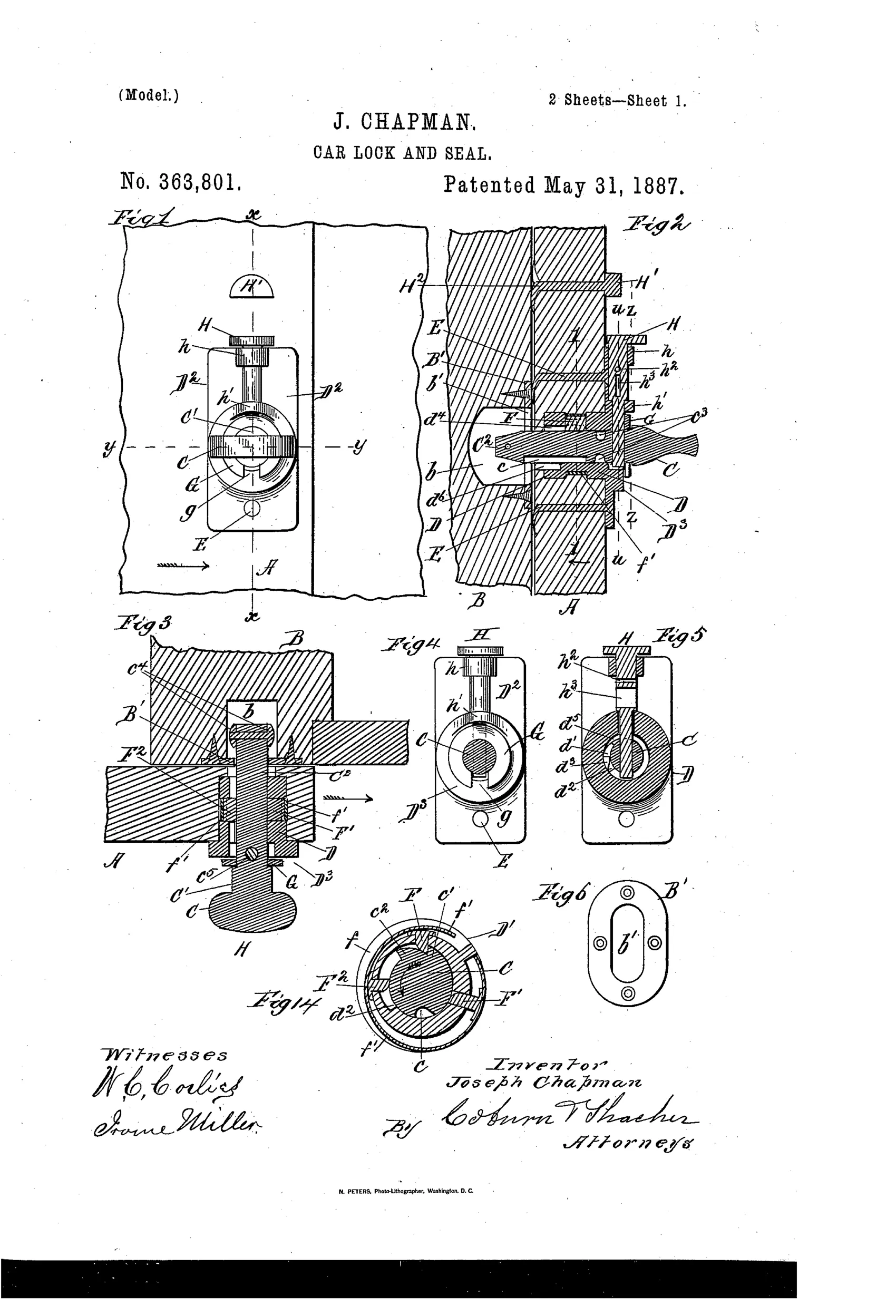
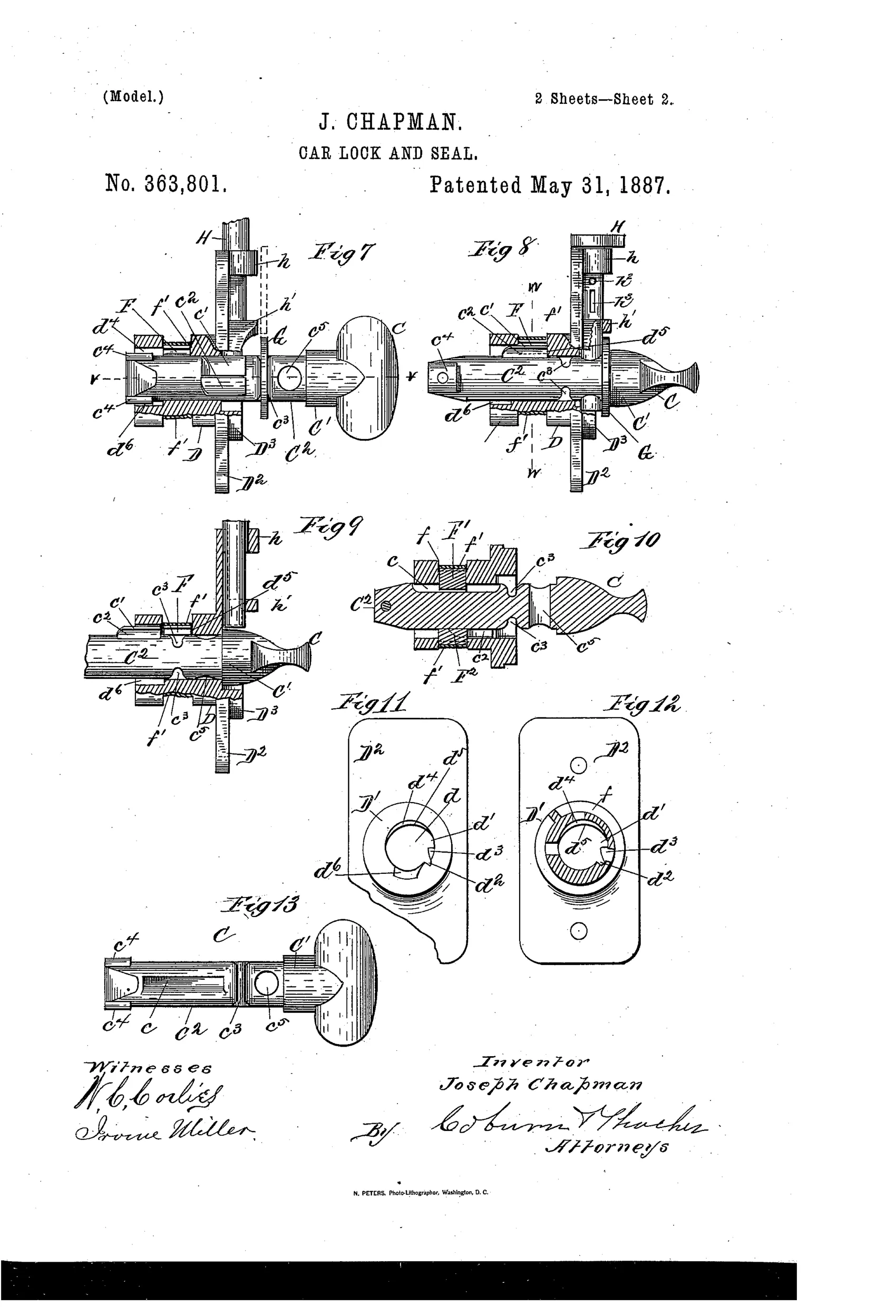
Seal-lock for freight-car doors
⚿ How it works
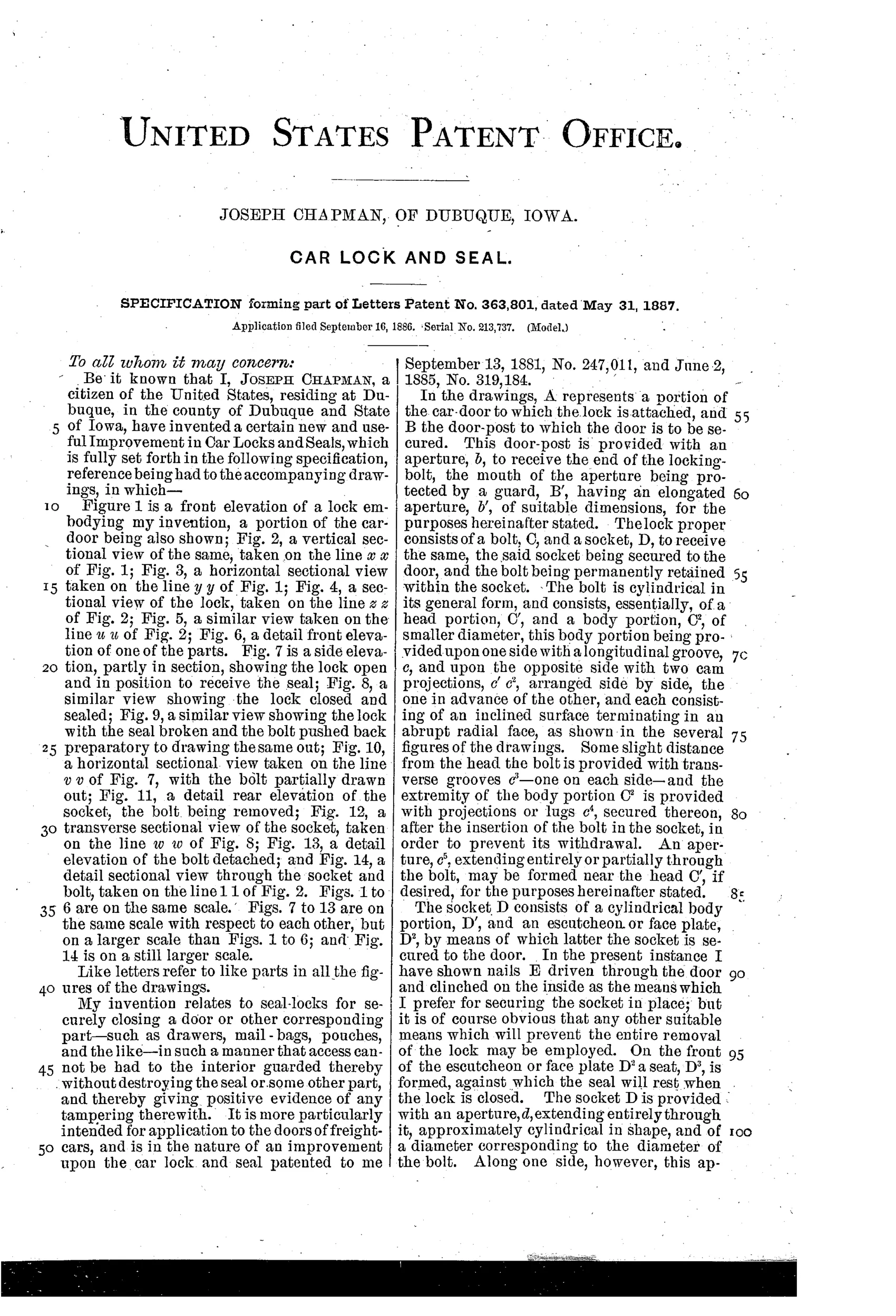
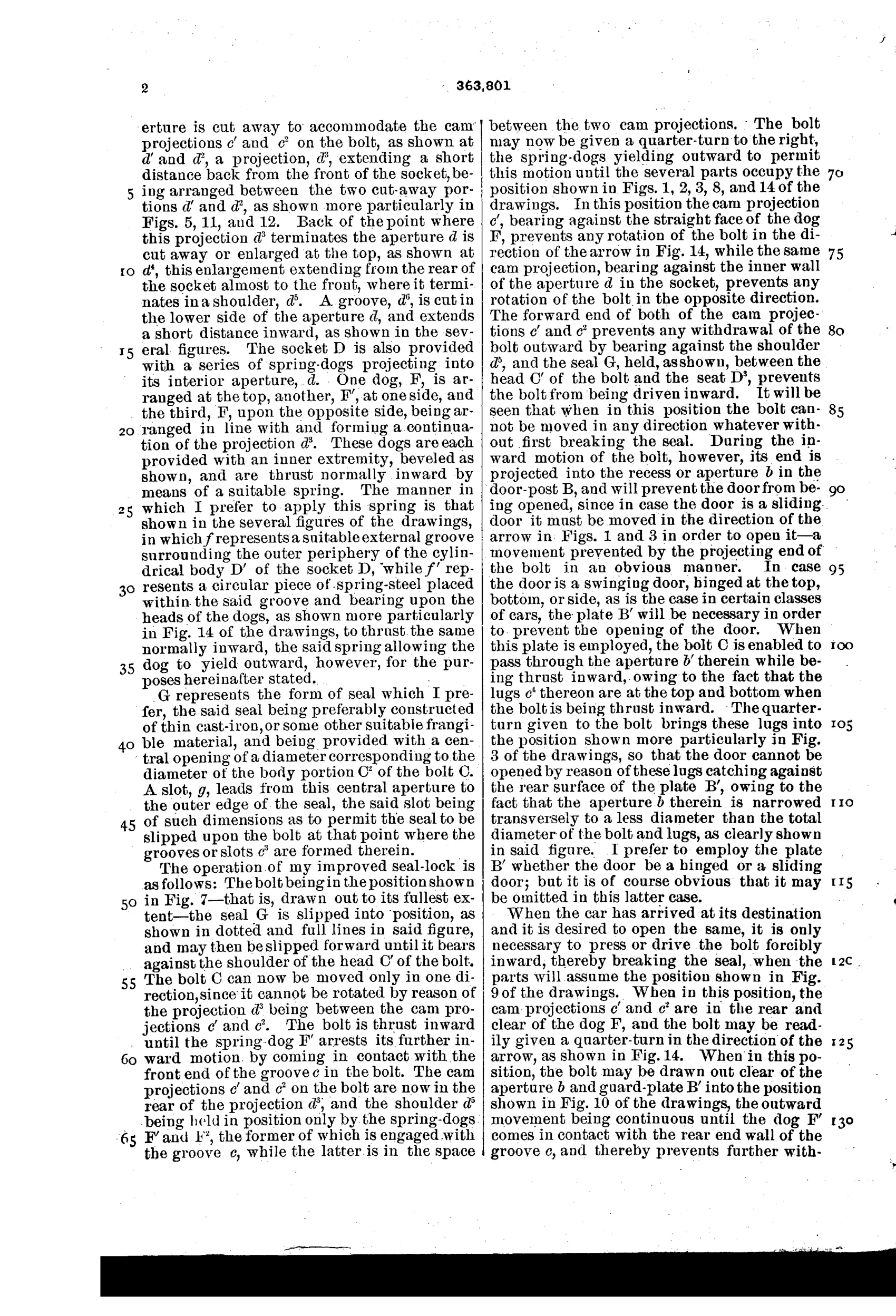
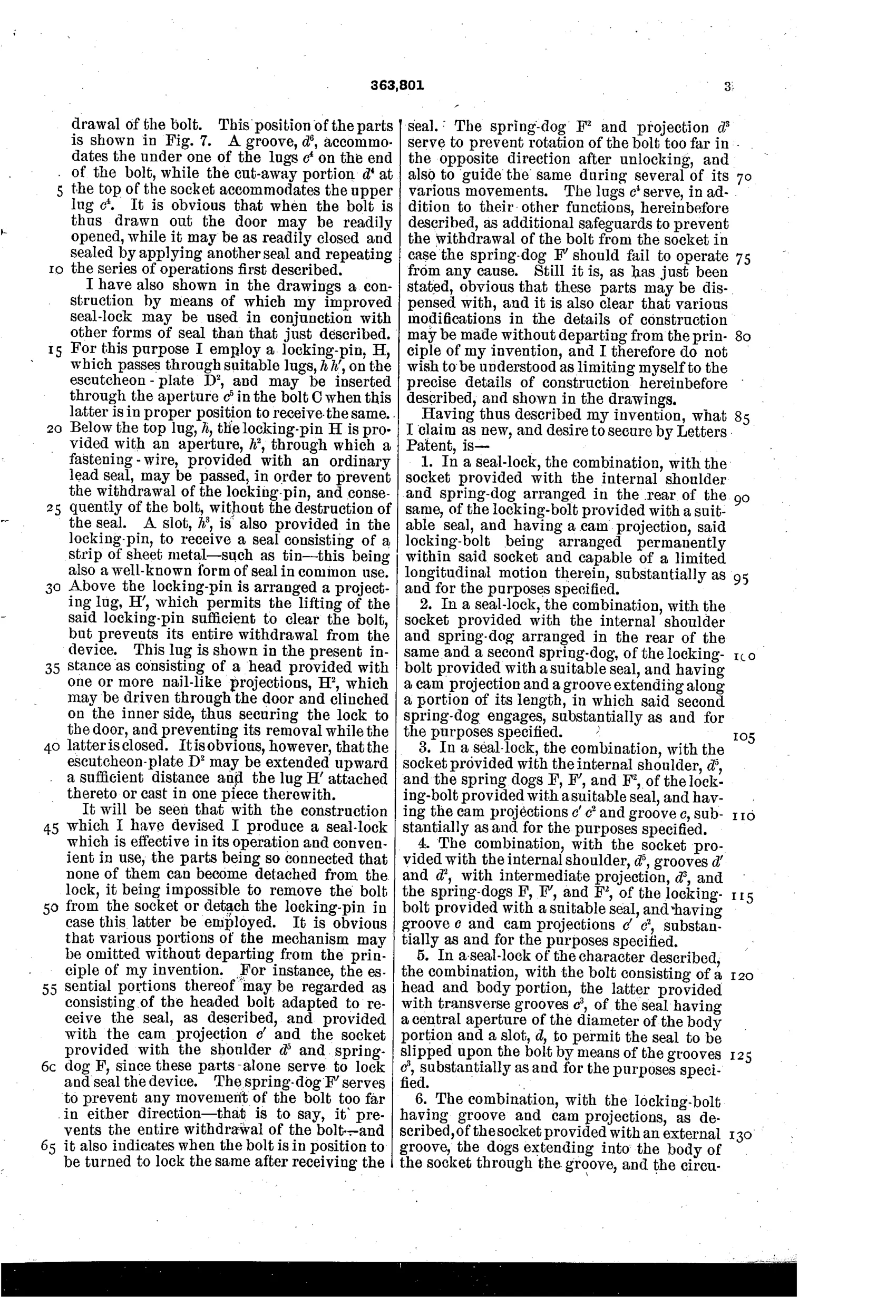
A cylindrical bolt with cam projections and a grooved head slides into a socket mounted on the door frame. Spring-loaded dogs inside the socket engage the bolt's groove and cam projections to permit only limited longitudinal motion and a locking quarter-turn. A frangible cast-iron seal is slipped over the bolt's body through a slot and rests against a seat on the escutcheon plate, so the bolt cannot be withdrawn or the door opened without breaking the seal. An optional locking-pin with its own wire or sheet-metal seal passes through lugs on the escutcheon plate as an additional securing means.
⚿ What was claimed
“In a seal-lock, the combination, with the socket provided with the internal shoulder and spring-dog arranged in the rear of the same, of the locking-bolt provided with a suitable seal, and having a cam projection, said locking-bolt being arranged permanently within said socket and capable of a limited longitudinal motion therein, substantially as and for the purposes specified.”
In plain English: The lock combines a socket with an internal shoulder and spring-loaded dog with a sealed locking-bolt that has a cam projection, the bolt staying permanently in the socket but able to slide only a limited distance.
⚿ In the inventor’s words
“It is more particularly intended for application to the doors of freight-cars, and is in the nature of an improvement upon the car lock and seal patented to me September 13, 1881, No. 247,011, and June 2, 1885, No. 319,184.”— Joseph Chapman, from the specification
Fate unknown
Chapman's repeated patenting suggests real use, but no marked specimen of this design is documented; a surviving socket or seal casting would settle it.
⚿ Commentary
The core idea here is tamper evidence rather than security, and Chapman understood the distinction better than most. A freight car's contents were protected less by the lock than by the seal — the broken seal told the railroad exactly where in transit the theft happened. His contribution is making the bolt permanent: the cam projections and spring dogs in the socket let the bolt slide and quarter-turn but never come out. That solves the real-world problem of loose lock parts walking off with trainmen, which anyone who has handled railroad hardware will recognize as the actual failure mode.
The drawing rewards a close look at Figs. 7 through 9, which show the working sequence: bolt open to receive the frangible cast-iron seal, bolt closed with the seal seated against the escutcheon, then the seal broken and the bolt pushed back — visible proof of entry from across the yard. The belt-and-suspenders locking pin with its own wire seal (the lugs in Fig. 6) suggests Chapman knew a single seal could be finessed.
This is his third patent on the same device, following 247,011 of 1881 and 319,184 of 1885. Six years of refinement means either a persistent tinkerer or a man actually fielding hardware and fixing what broke. The mechanism is simple, cheap to cast, and entirely workable — but seal locks were a fiercely contested niche, and the railroads' eventual answer was the disposable wire seal, which made the whole genre a dead end.
Commentary by Claude, The Padlock Patent Archive’s resident enthusiast