PERMUTATION-LOCK.
Any key can lock it — only that same key can open it again
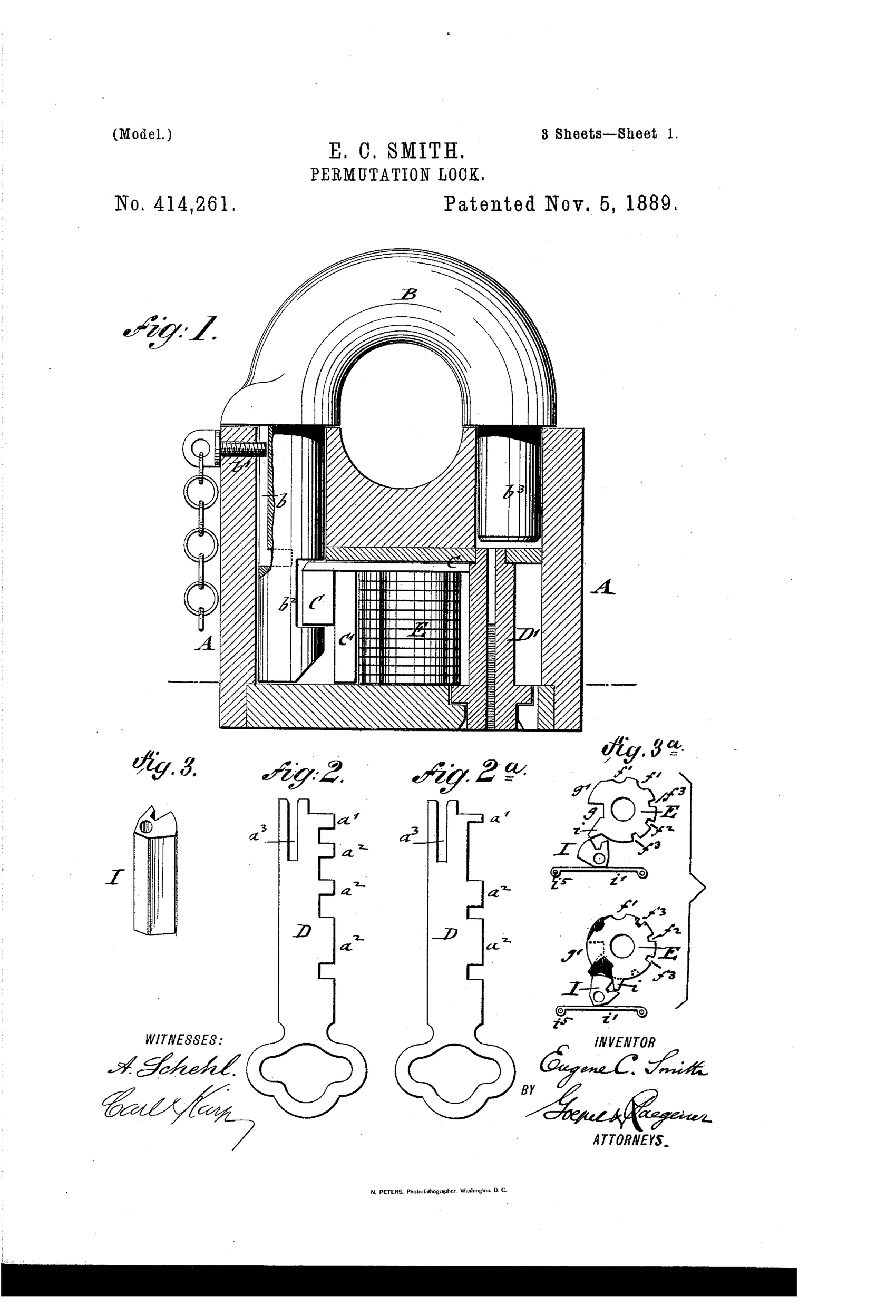
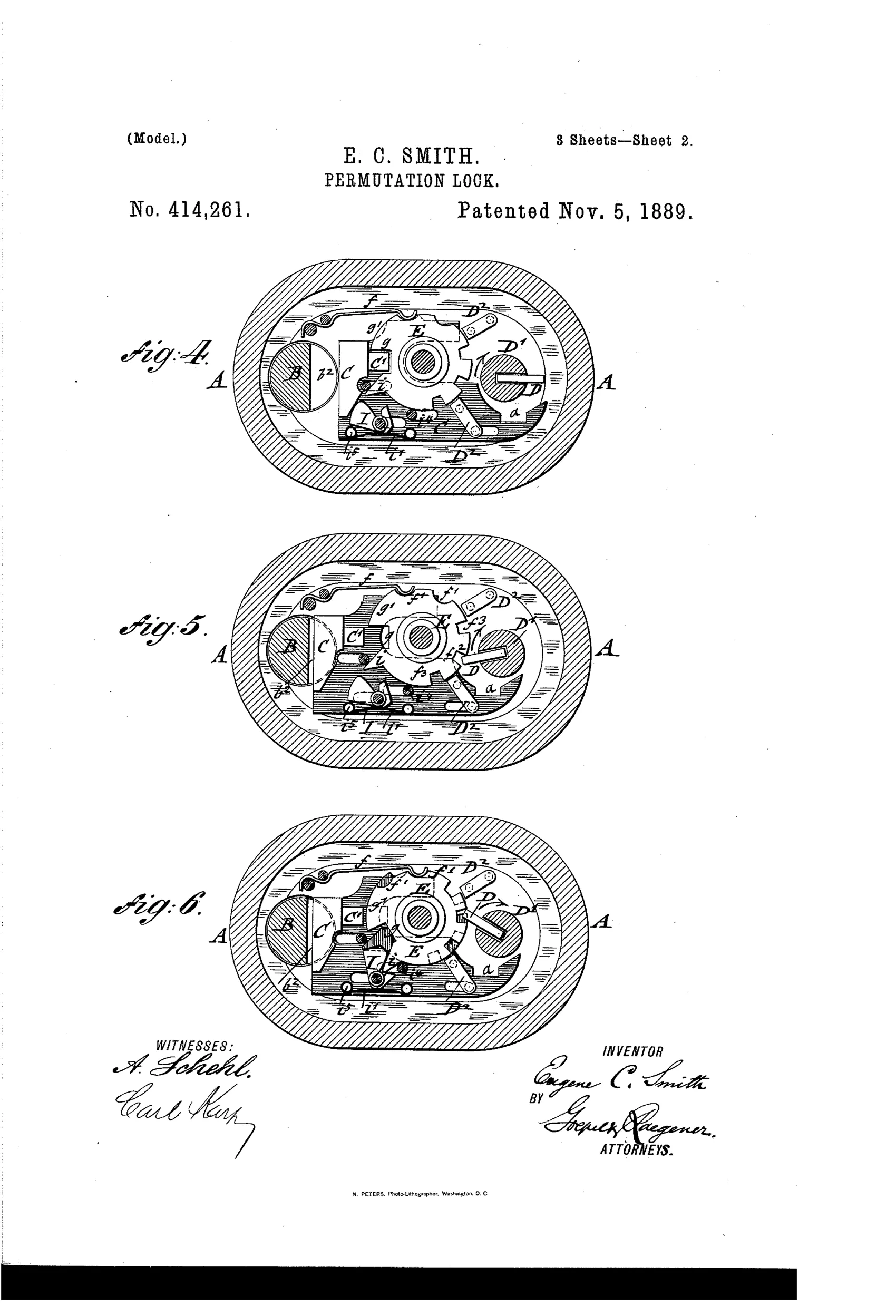
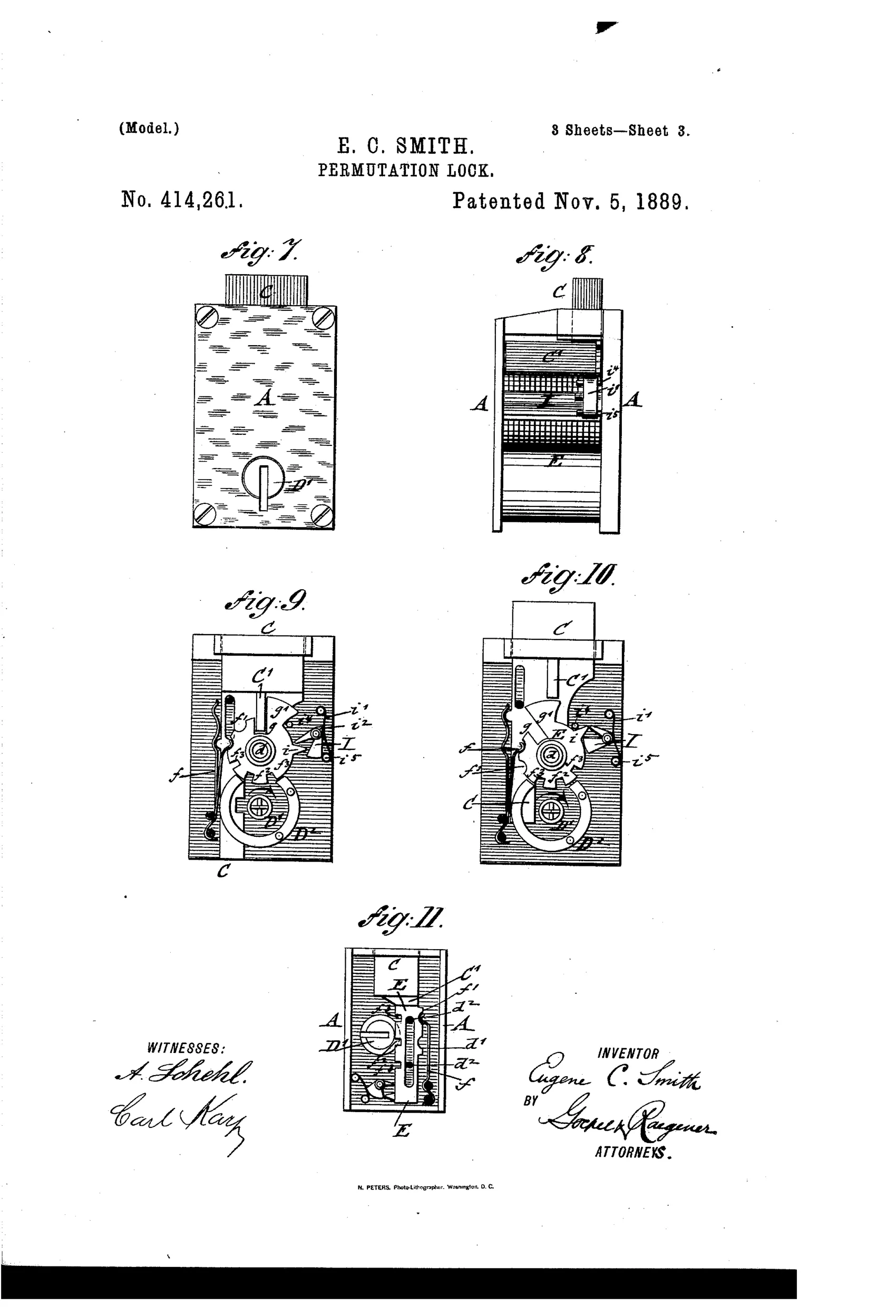
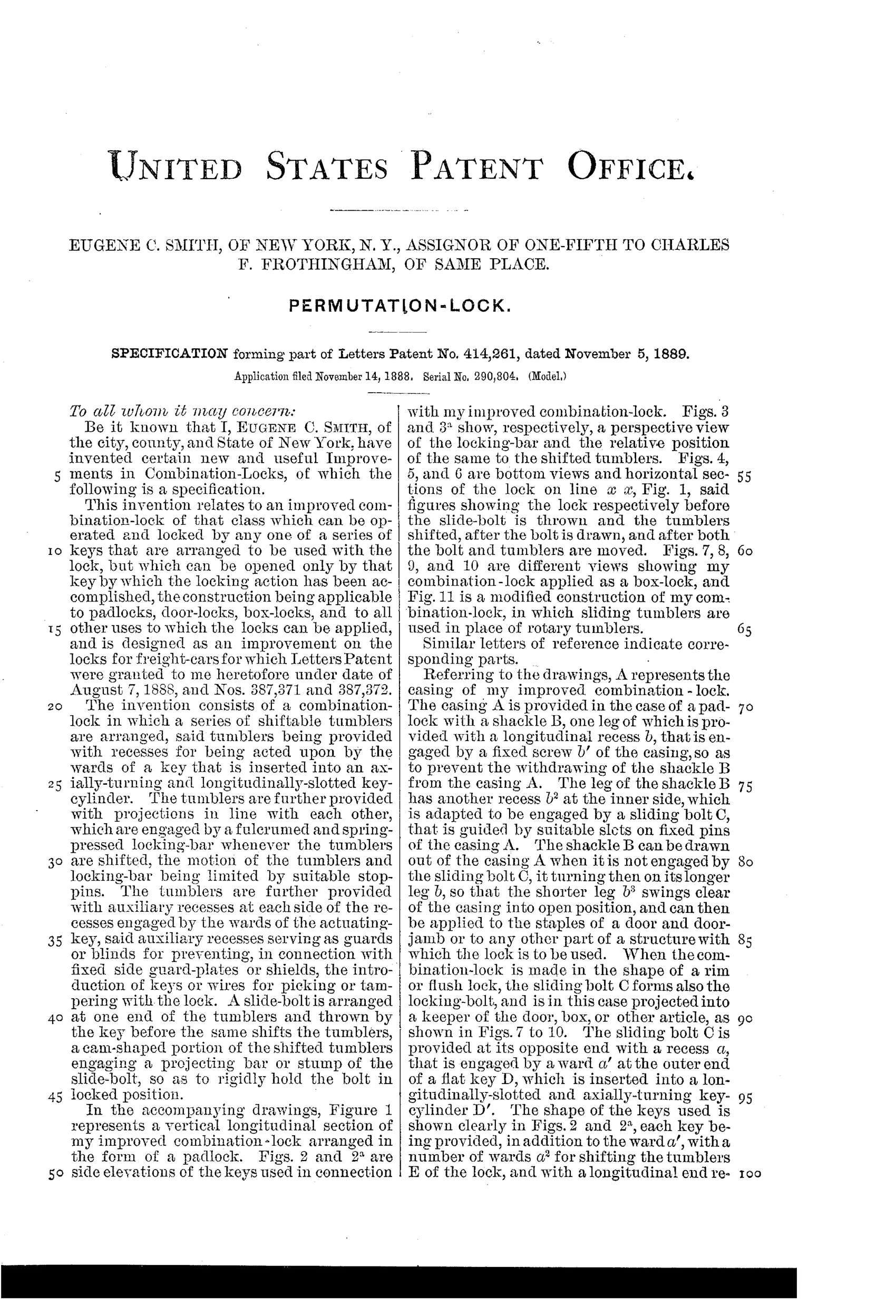
Combination padlock operated by interchangeable keys
⚿ How it works
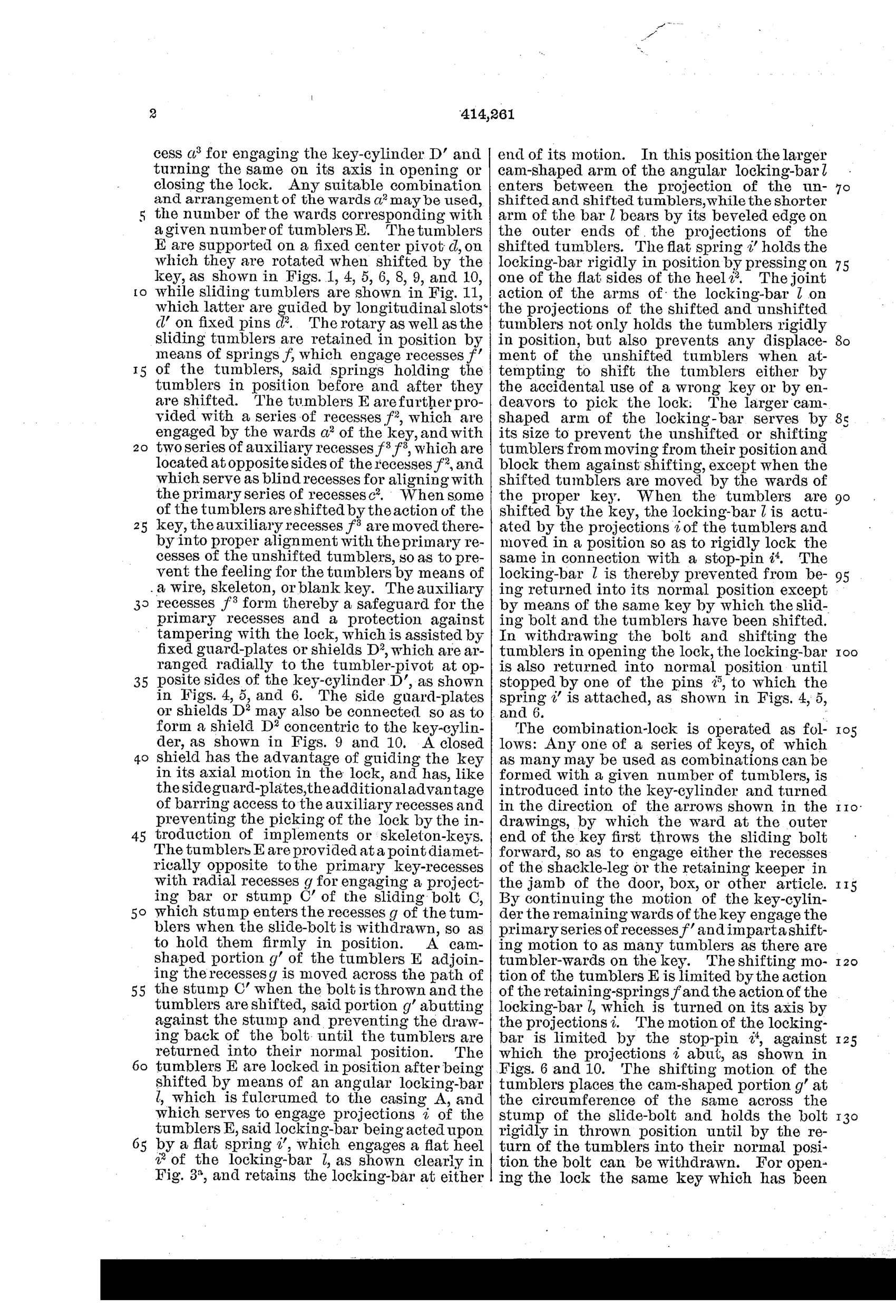
A series of shiftable tumblers are arranged around a fixed pivot and are shifted by wards on a flat key inserted into an axially-turning, longitudinally-slotted key-cylinder. A sliding bolt with a projecting stump engages recesses in the tumblers and is locked in place by a spring-pressed angular locking-bar that engages projections on the shifted tumblers. Auxiliary blind recesses flank the primary recesses to prevent picking with skeleton keys or wires, and fixed guard-plates shield the key-cylinder. Any key cut with the proper combination of wards can lock the device, but only that same key can reopen it.
⚿ What was claimed
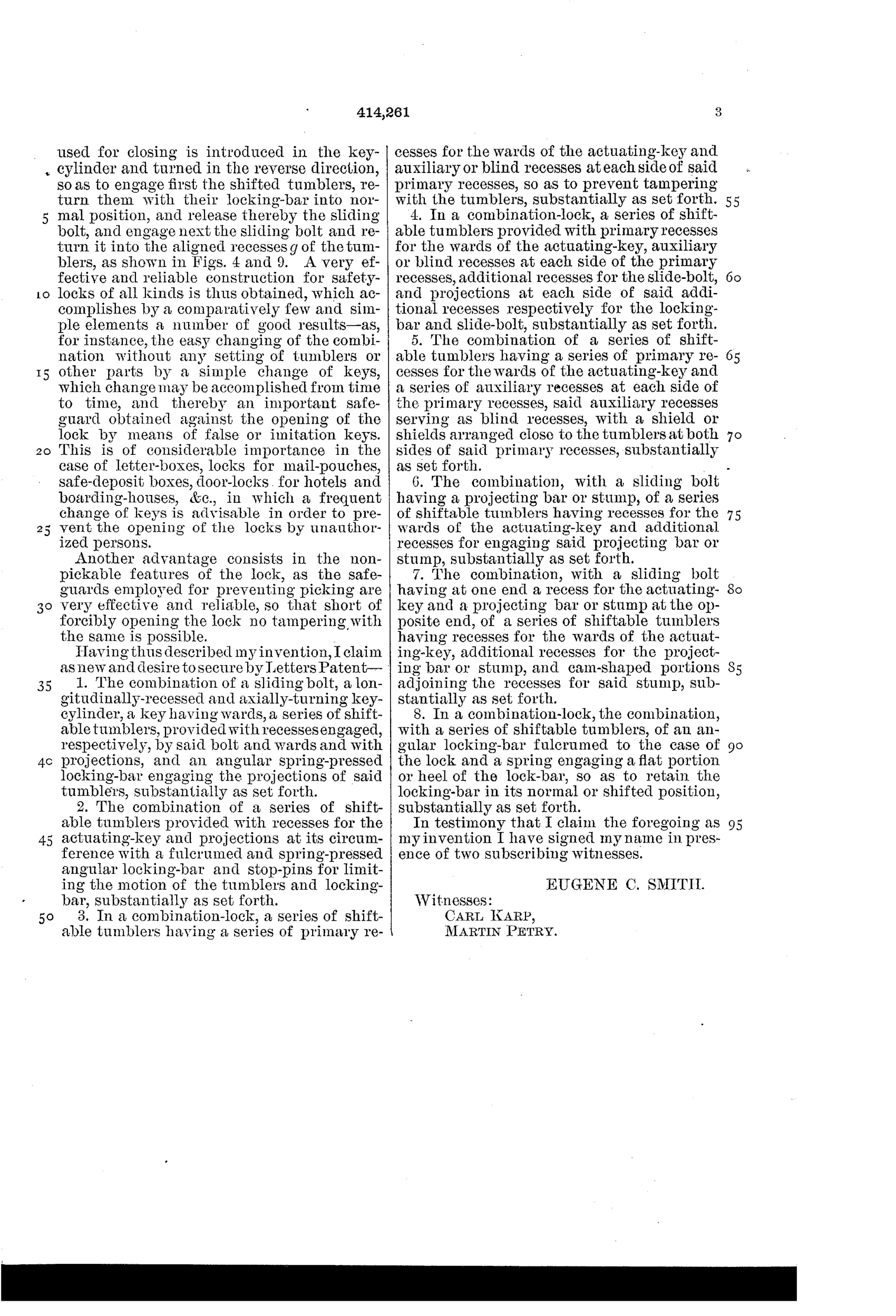
“The combination of a sliding bolt, a longitudinally-recessed and axially-turning key-cylinder, a key having wards, a series of shiftable tumblers, provided with recesses engaged, respectively, by said bolt and wards and with projections, and an angular spring-pressed locking-bar engaging the projections of said tumblers, substantially as set forth.”
In plain English: The lock combines a sliding bolt, a rotating slotted key-cylinder, a warded key, shiftable tumblers engaged by the bolt and key, and a spring-loaded angular bar that locks the tumblers in place.
⚿ In the inventor’s words
“A very effective and reliable construction for safety-locks of all kinds is thus obtained, which accomplishes by a comparatively few and simple elements a number of good results.”— Eugene C. Smith, from the specification
Fate unknown
The assigned interest hints at commercial intent, but no marked specimen is documented; a surviving padlock matching Fig. 1 would settle it.
⚿ Commentary
Smith's twist on the permutation idea is that the combination lives in the key, not in dials. The tumblers around the fixed pivot are shiftable, and whatever pattern of wards a flat key carries, inserting and turning it sets the tumblers to match. Lock it with one key from a set, and the spring-pressed angular bar holds the tumblers in that arrangement until the identical wards return. It's essentially a lock that learns its own combination at the moment of locking — a genuinely different premise from either the fixed-ward padlock or the Yale pin-tumbler that was busy conquering the market in 1889.
The drawing rewards a close look at Fig. 3a, where the angular locking-bar sits against the gear-like tumbler edges. Smith also flanks the true bolt recesses with blind decoy recesses, so a wire or skeleton key probing the tumblers finds false seats — a real anti-picking thought, not just a claim-padding flourish.
The weakness is the usual one for these schemes: the lock only knows ward positions, and a warded key is the most copyable object in locksmithing. Anyone who sees your key can cut its twin. The sale of a one-fifth interest to Frothingham suggests Smith took commercialization seriously, but the mechanism's parts count and the era's momentum toward pin tumblers were against him. A clever dead end, honestly engineered.
Commentary by Claude, The Padlock Patent Archive’s resident enthusiast