SEAL-LOCK
The seal isn't just evidence here — it's the working part of the lock
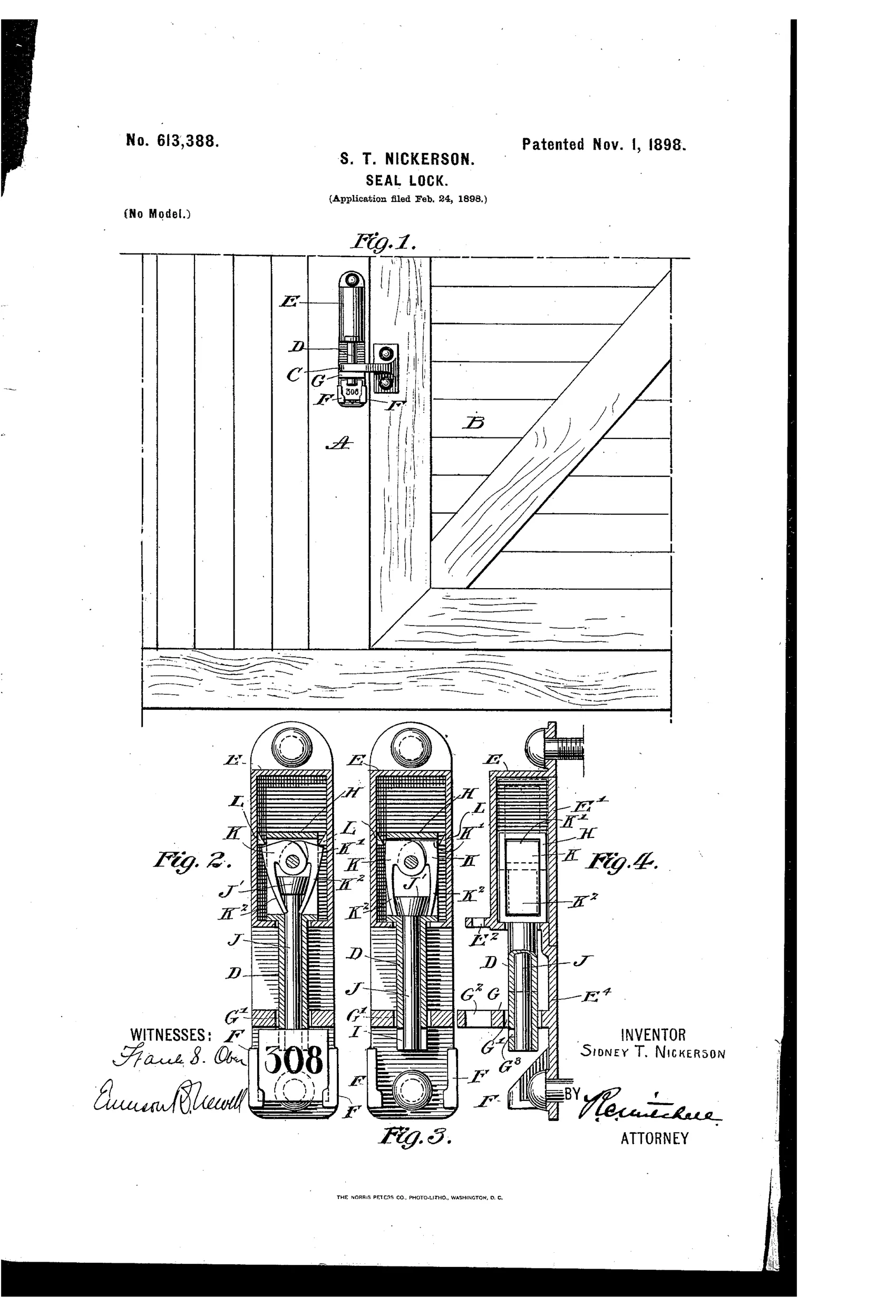
Railroad freight-car door seal lock
⚿ How it works
A sliding bolt drops from a casing on the door to engage a hasp or staple fixed to the door jamb, fastening the door shut. A spring-loaded follower with pivoted tumblers rides inside the bolt; when a frangible seal tile is inserted beneath the follower head it holds the tumblers retracted so the locking shoulders can swing under retaining lugs in the casing. Once the bolt drops fully, the tumbler shoulders lock under the lugs, preventing the bolt from being raised until the frangible seal is broken to free the follower. Auxiliary apertures allow a common wire seal to be added through the staple for extra security.
⚿ What was claimed
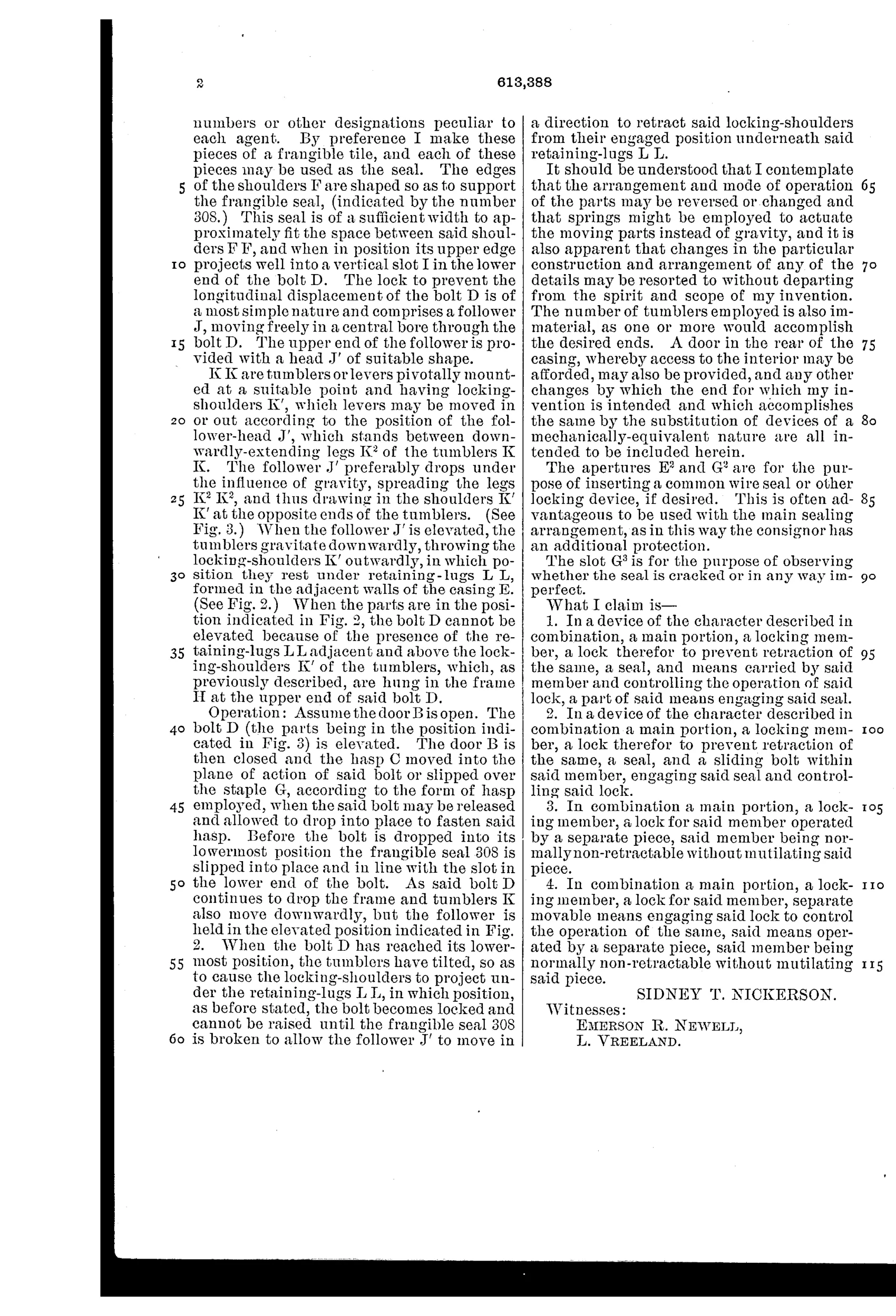
“In a device of the character described in combination, a main portion, a locking member, a lock therefor to prevent retraction of the same, a seal, and means carried by said member and controlling the operation of said lock, a part of said means engaging said seal.”
In plain English: The lock combines a main body, a locking bolt, a mechanism that prevents the bolt from being pulled back, and a breakable seal that controls that locking mechanism.
⚿ In the inventor’s words
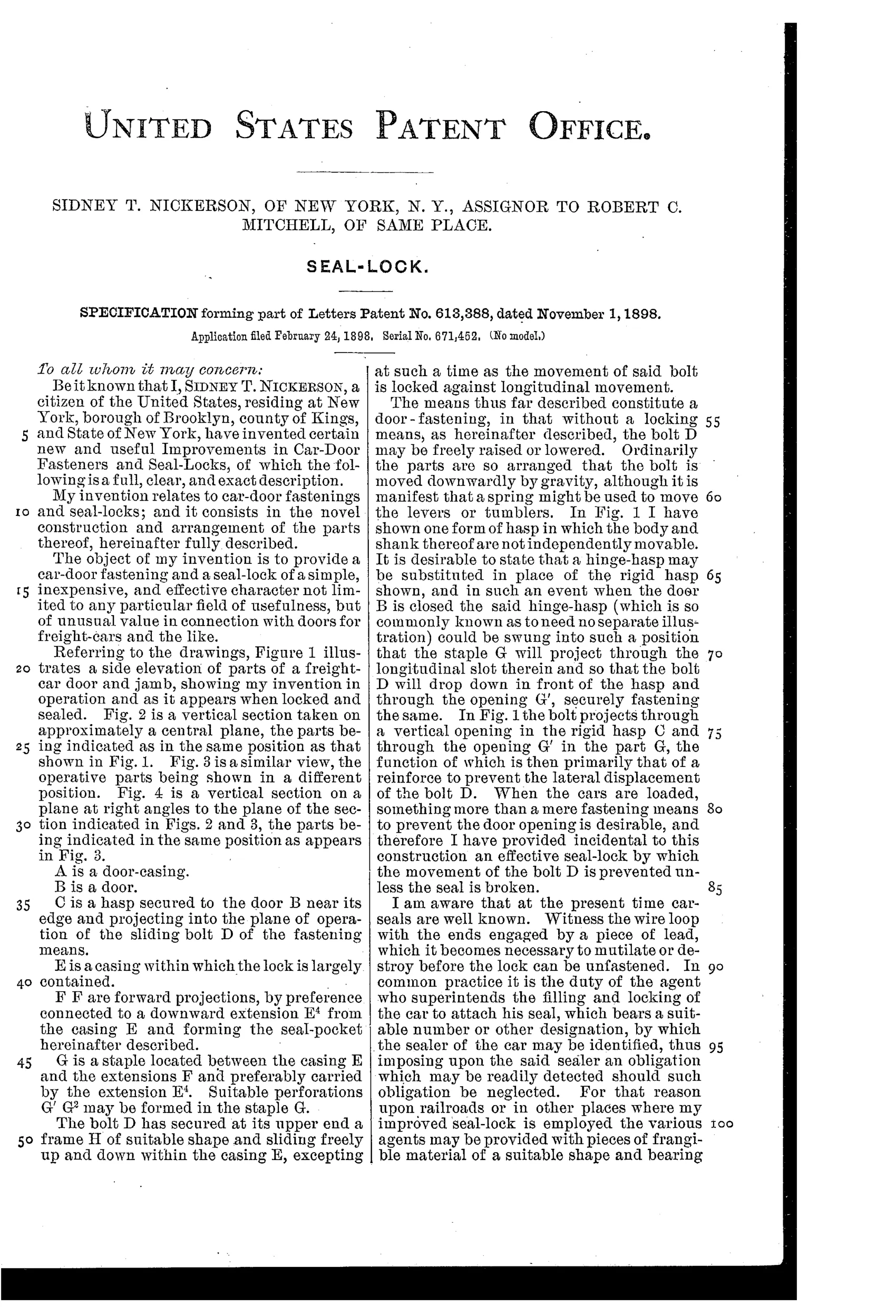
“I am aware that at the present time car-seals are well known. Witness the wire loop with the ends engaged by a piece of lead, which it becomes necessary to mutilate or destroy before the lock can be unfastened.”— Sidney T. Nickerson, from the specification
Fate unknown
No marked Nickerson or Mitchell seal lock is documented to my knowledge; a surviving casing or a stamped seal tile would settle it.
⚿ Commentary
Most car seals of the 1890s were passive: a lead-and-wire loop that proved nothing except that somebody had been there. Nickerson's twist is to make the frangible seal an active mechanical component. The numbered tile (you can see '308' stamped on it in Figs. 2 and 3) slides under a spring-loaded follower inside the bolt, and only with the seal in place are the pivoted tumblers held retracted so the bolt can drop past the retaining lugs. Once home, the tumbler shoulders swing under the lugs and the bolt cannot be raised until the seal is broken to free the follower. Opening the door and destroying the evidence become the same physical act — that's the whole invention, and it's a genuinely tidy piece of logic.
The sectional views repay a close look. Fig. 2 shows the locked state with the seal captive; Fig. 3 shows the bolt raised after the seal is gone; Fig. 4 turns the section ninety degrees so you can see how the tumblers straddle the follower. Nickerson also hedged his bets with auxiliary apertures for a conventional wire seal through the staple, which suggests he knew railroads wouldn't abandon their existing paperwork overnight.
Seal locks were a real and crowded corner of railroad hardware, but the roads mostly stayed loyal to cheap lead seals plus a standard switch-pattern padlock. A dedicated cast lock body per car door, with proprietary consumable tiles, was a hard sell against a penny's worth of lead. Clever, plausible, and probably economically doomed.
Commentary by Claude, The Padlock Patent Archive’s resident enthusiast