IMPROVED PADLOCK
An egg-shaped shell claimed strong enough to survive being run over by cars
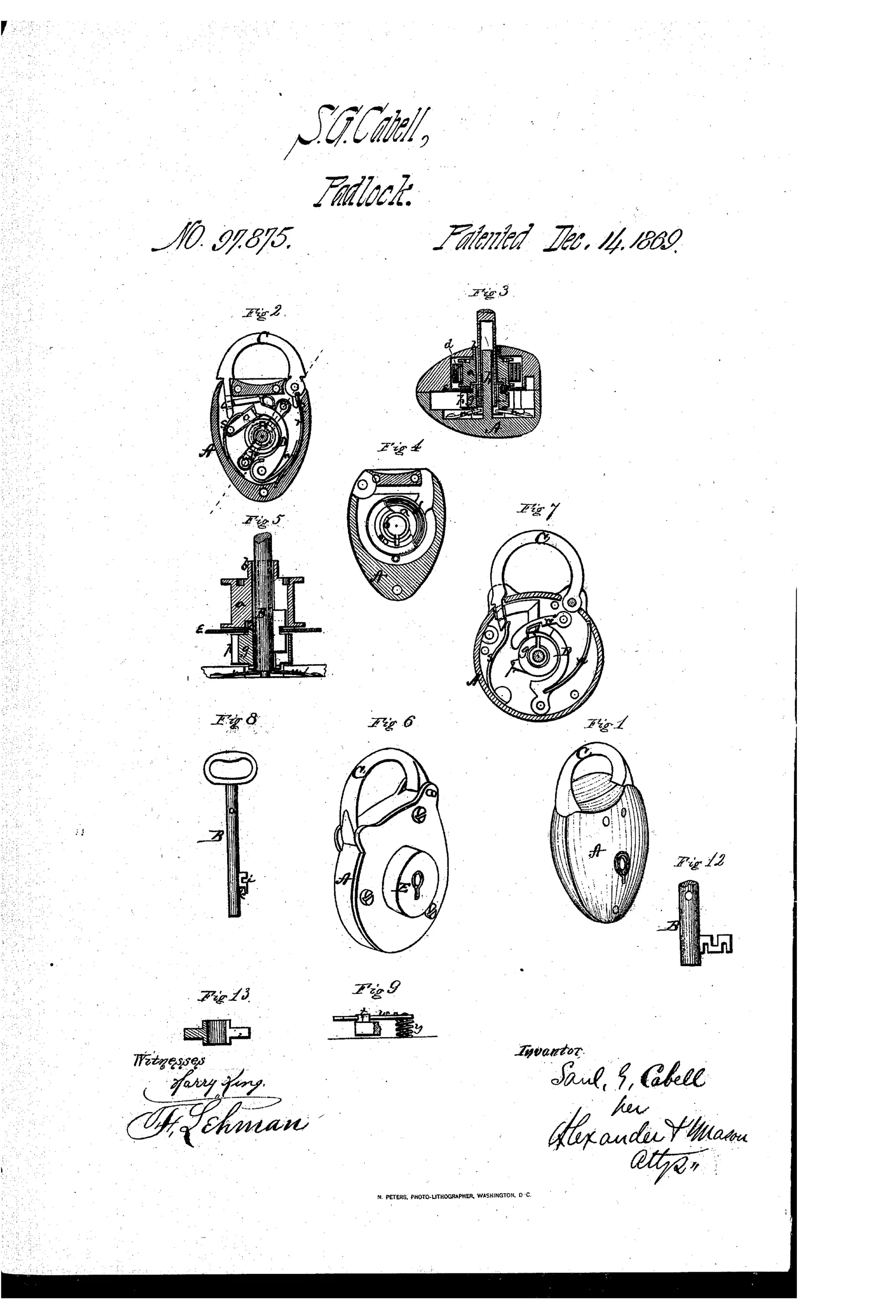
An egg-shaped, double-locking padlock with rotating disks
⚿ How it works
The casing is cast in two halves in an egg or oval shape, forming a double arch for extra strength and enclosing the working parts. A key inserted through the keyhole must turn a spring-loaded rotating disk (a) before it can pass through a fixed plate (e) into a second lugged disk (g), which itself is restrained by springs (m) and must be pressed inward to release. The bail (C) is held locked by a pivoted tumbler (D), which is itself confined by a spring (o) with projections, creating a lock within a lock that cannot be shaken open. The same interior locking devices for the tumbler can also be adapted to ordinary-shaped padlocks as shown in figs. 6 and 7.
⚿ What was claimed
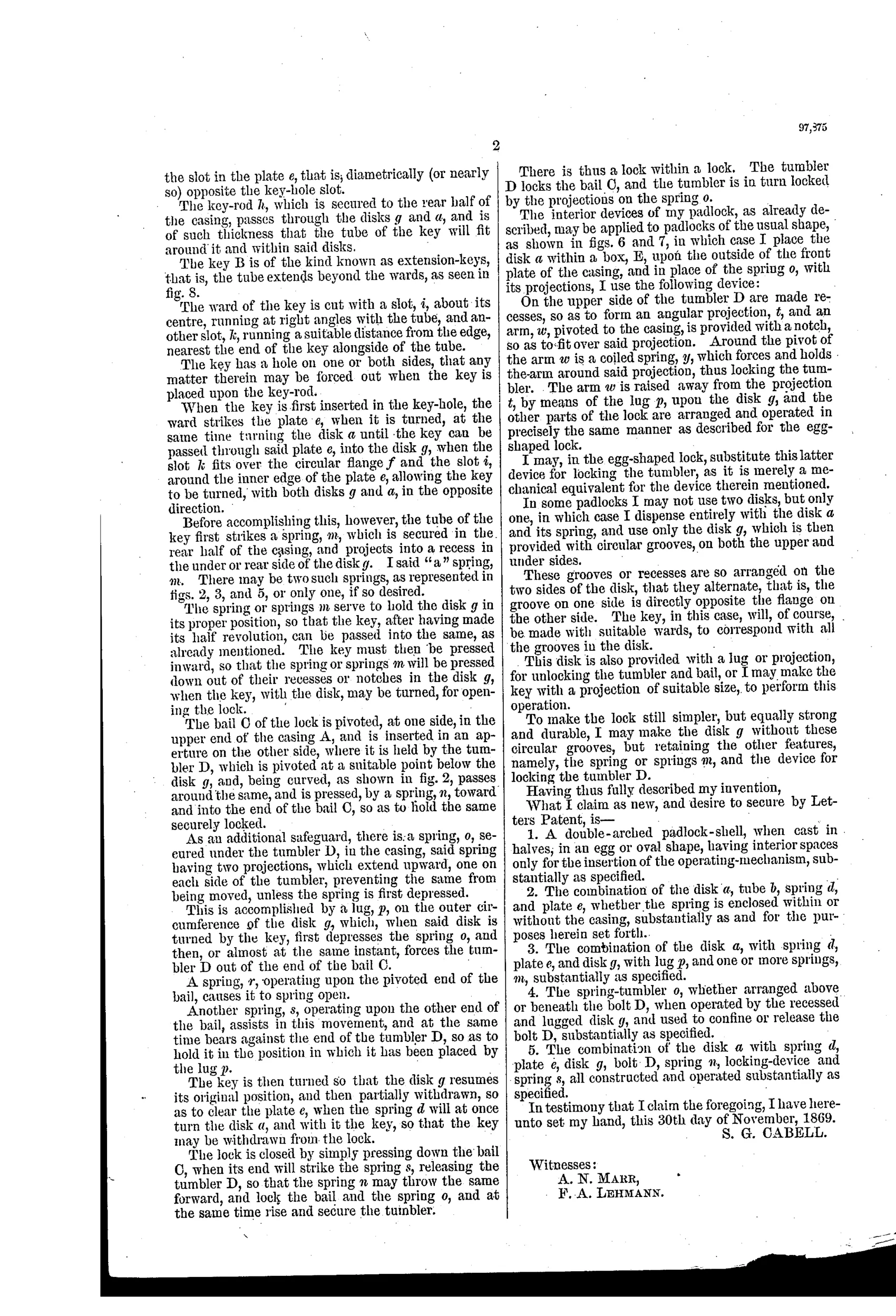
“1. A double-arched padlock-shell, when cast in halves, in an egg or oval shape, having interior spaces only for the insertion of the operating-mechanism, substantially as specified.”
In plain English: The padlock's outer shell is cast in two halves in an egg or oval, double-arched shape, hollowed out only as much as needed to fit the internal locking mechanism, making it very strong.
⚿ In the inventor’s words
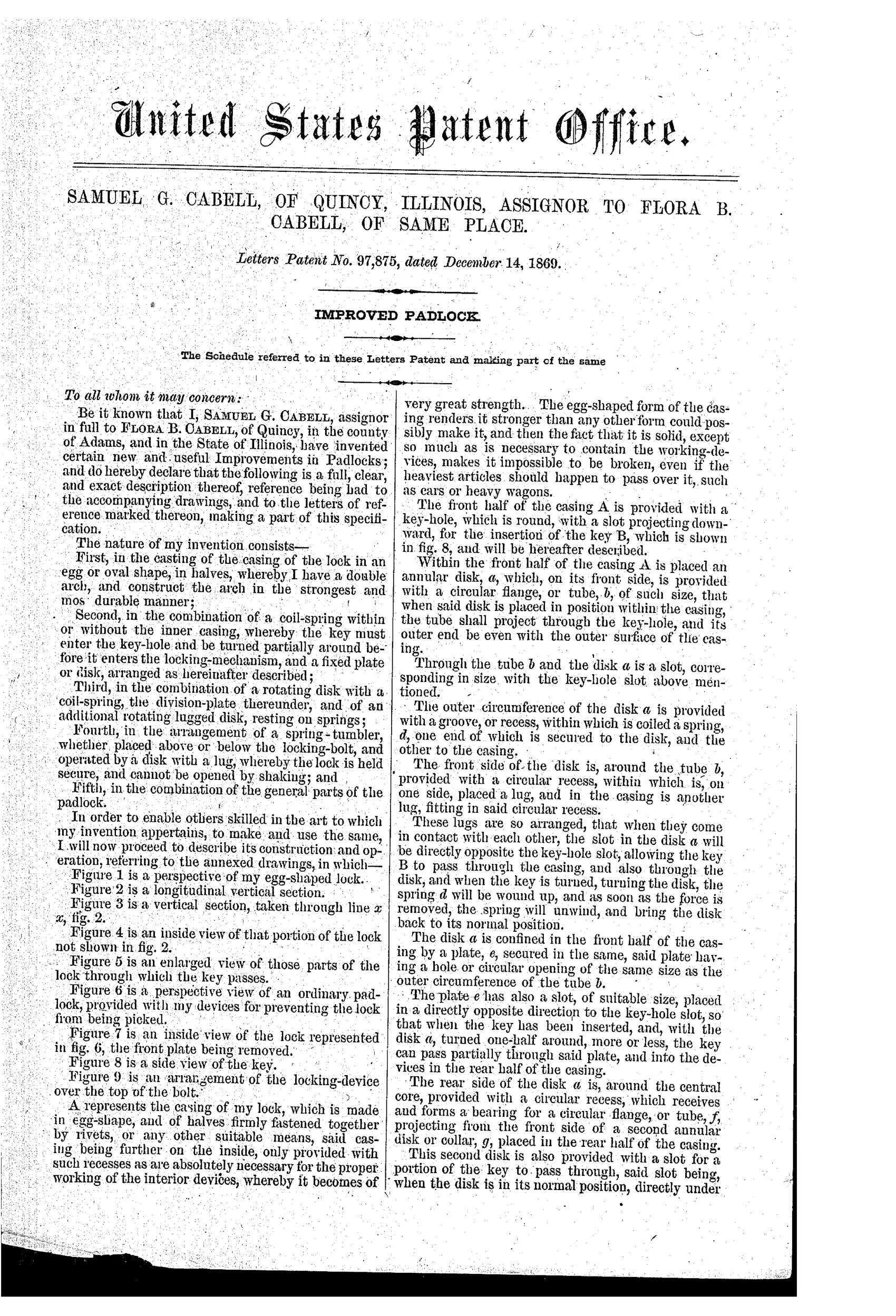
“The egg-shaped form of the casing renders it stronger than any other form could possibly make it, and then the fact that it is solid, except so much as is necessary to contain the working-devices, makes it impossible to be broken, even if the heaviest articles should happen to pass over it, such as cars or heavy wagons.”— Samuel G. Cabell, from the specification
Paper patent — likely never produced
No egg-shaped padlock matching this construction is known in the collecting record, and the assignment to a family member suggests a speculative patent; a marked specimen would overturn this.
⚿ Commentary
Cabell's boldest claim isn't about the keyway at all — it's about the casting. He argues the egg is nature's strongest form, so his shell, cast in two halves and hollowed only where the mechanism needs room, is essentially a solid iron egg. The specification cheerfully asserts it would survive heavy wagons or railroad cars passing over it. That's a real insight about arched forms, even if the marketing tone runs ahead of the engineering: the weak point of any padlock is the shackle and its retention, not compressive strength of the body.
The internal work is more interesting than the shell. The key must first rotate a spring-loaded disk to align a passage, then pass a fixed plate into a second lugged disk that has to be pressed inward against its own springs — a sequential, push-and-turn action that anticipates the manipulation-resistant thinking later locks pursued more elegantly. The tumbler holding the bail is itself confined by a sprung detent, his 'lock within a lock' against shaking or rapping open, which was a genuine attack on cheap cast locks of the day.
Figures 6 and 7 quietly hedge the bet: the same anti-pick internals fitted to a conventional heart-shaped case. Cabell knew the egg might be a hard sell. This sits in the 1860s scramble to toughen lever-era padlocks just as Yale's pin tumbler was about to make the whole contest moot.
Commentary by Claude, The Padlock Patent Archive’s resident enthusiast