IMPROVEMENT IN LOCKS FOR UMBRELLAS
Lock your umbrella to itself: 1870 anti-theft hardware for Philadelphia's rainy days
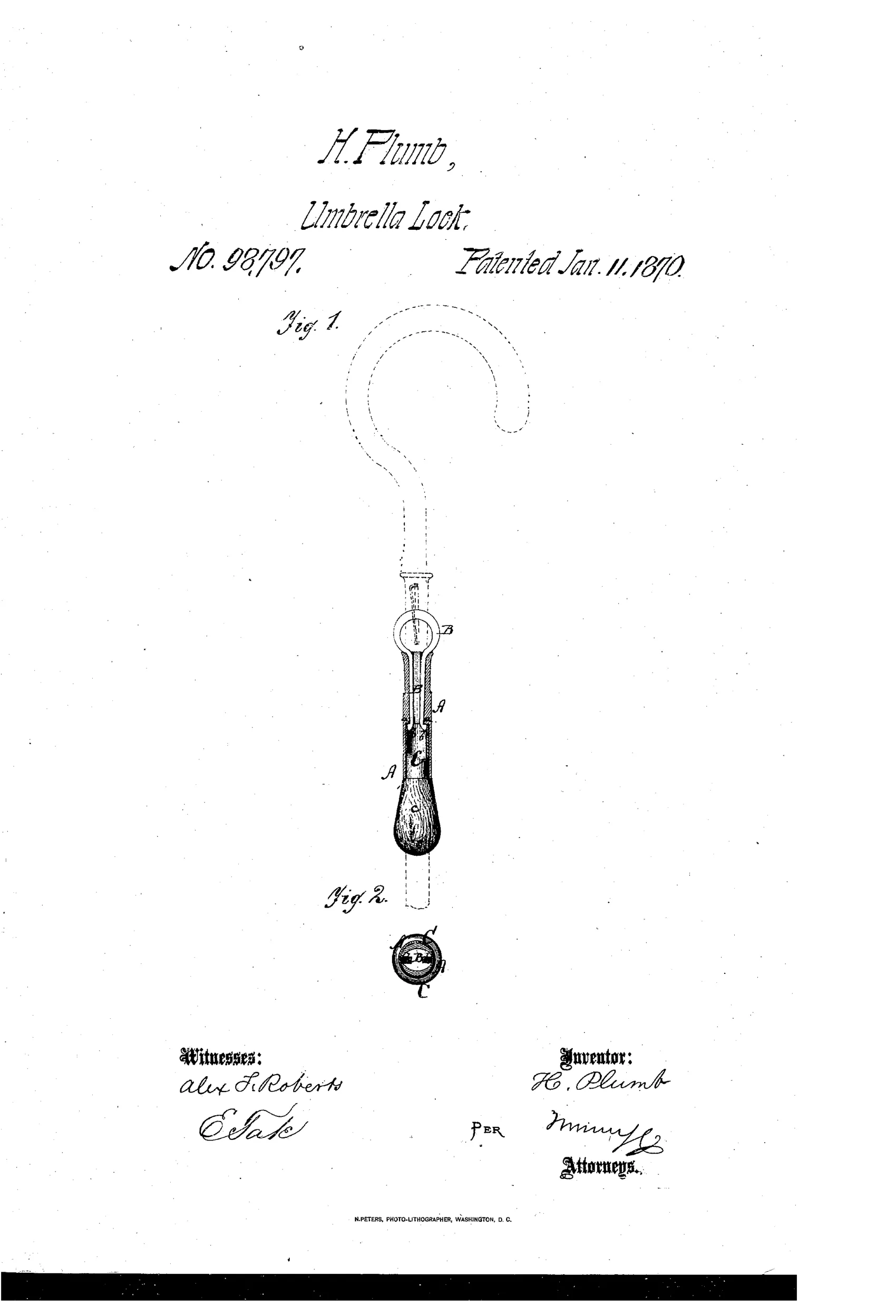
A locking mechanism for umbrella runners
⚿ How it works
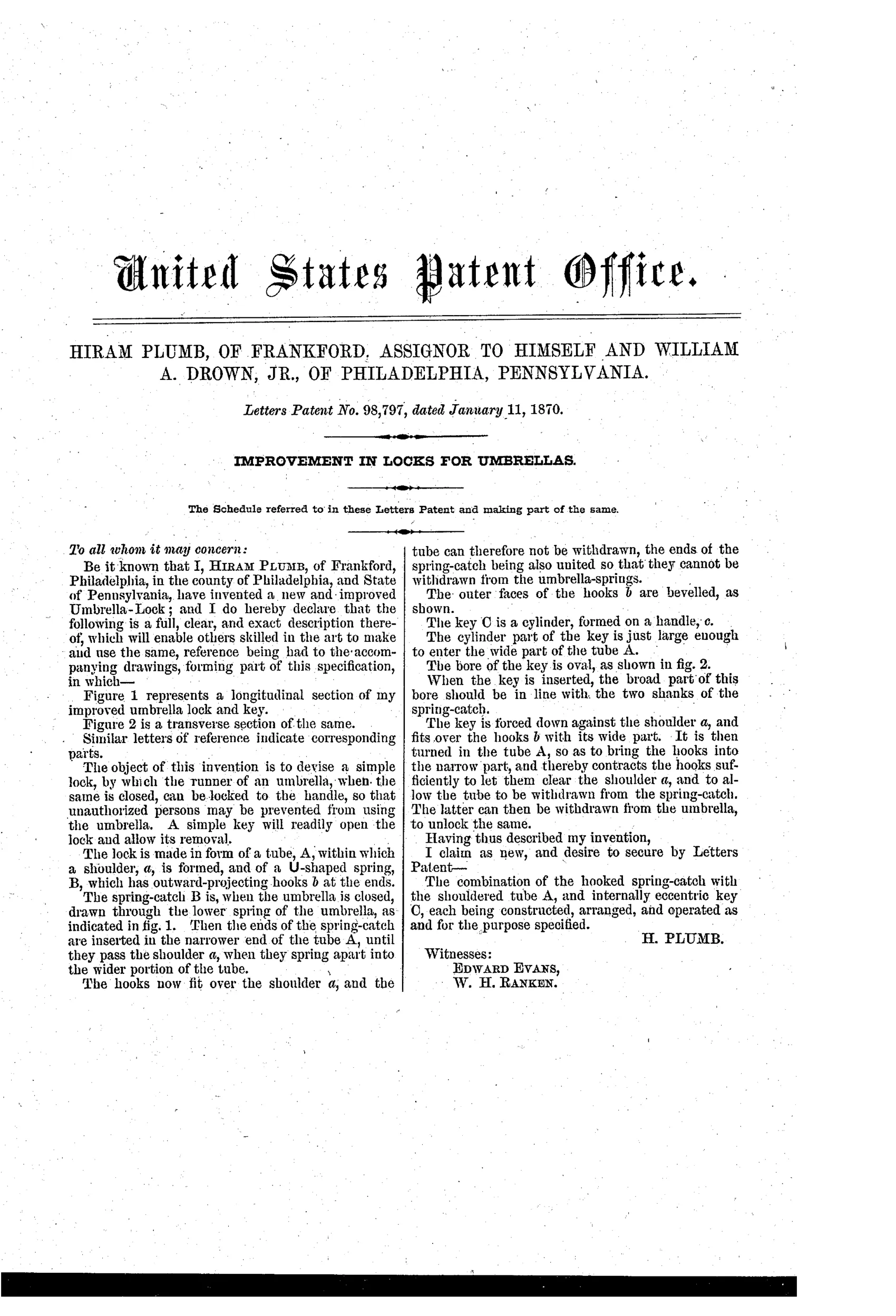
The lock consists of a tube A with an internal shoulder a, and a U-shaped spring-catch B having outward-projecting hooks b at its ends. When the umbrella is closed, the spring-catch is drawn through the lower spring of the umbrella and its hooked ends are inserted into the tube until they pass the shoulder and spring apart, locking the tube onto the catch. An oval-bored cylindrical key C, formed on a handle, is inserted into the tube and turned to contract the hooks so they clear the shoulder, allowing the tube to be withdrawn and the umbrella unlocked.
⚿ What was claimed
“The combination of the hooked spring-catch with the shouldered tube A, and internally eccentric key C, each being constructed, arranged, and operated as and for the purpose specified.”
In plain English: The invention claims the combination of a hooked spring catch, a shouldered tube, and an eccentric internal key working together to lock and unlock an umbrella.
⚿ In the inventor’s words
“The object of this invention is to devise a simple lock, by which the runner of an umbrella, when the same is closed, can be locked to the handle, so that unauthorized persons may be prevented from using the umbrella.”— Hiram Plumb, from the specification
Fate unknown
The assignment to a working Philadelphia umbrella maker suggests intent to produce, but no surviving marked example is documented; one would settle it.
⚿ Commentary
This one sits at the edge of our category — not a padlock in the strict sense, but a portable keyed lock built to solve the padlock's eternal problem, unauthorized use, applied to what was then a genuinely stealable object. A good umbrella in 1870 was real money, and the coat rack at a restaurant or office was an open invitation. Plumb's answer: lock the runner to the handle so the umbrella cannot be opened at all.
The mechanism is a tidy little piece of spring-catch thinking. A U-shaped catch with hooked ends passes through the closed umbrella's lower spring and snaps outward past an internal shoulder inside a tube — the same expand-past-a-shoulder principle you find in countless later padlock shackle latches. The key is the clever bit: a cylinder with an eccentric (oval) internal bore, shown plainly in Fig. 2. Slide it in, turn it, and the off-center bore squeezes the hooks together so they clear the shoulder. No wards, no tumblers — the 'secret' is entirely in the bore geometry, which means security is modest, but the whole lock could be made small and light enough to live inside a handle.
Note the assignment to William A. Drown Jr. — the Drowns were prominent Philadelphia umbrella manufacturers, so this was patented with a real production channel in mind, not a lone tinkerer's fancy. Whether it ever left the factory in numbers is another question.
Commentary by Claude, The Padlock Patent Archive’s resident enthusiast