IMPROVEMENT IN PADLOCKS
Anti-skeleton-key thinking in 1870: a thick bit that works out of plane
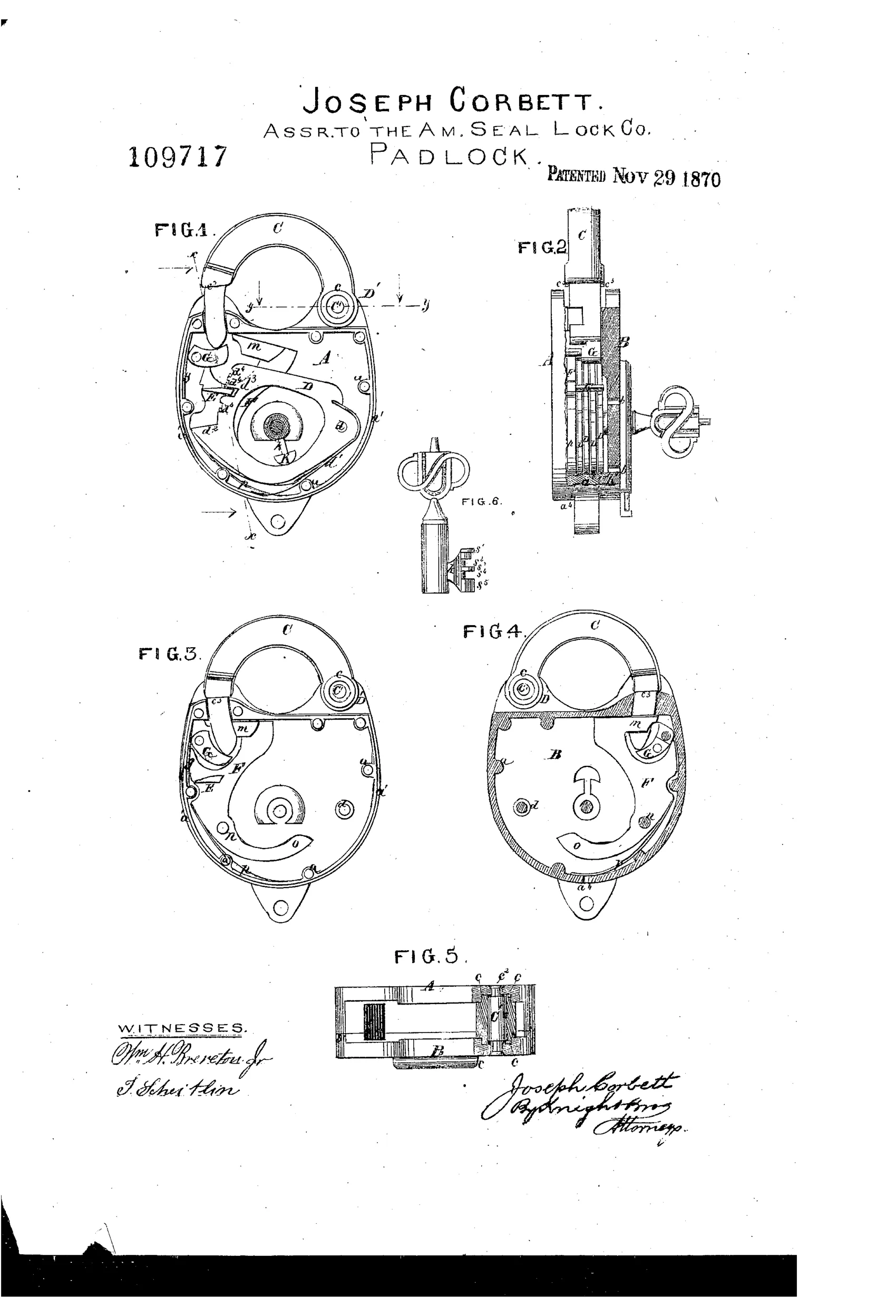
A tumbler padlock with self-ejecting shackle mechanism
⚿ How it works
The padlock uses ring-shaped spring tumblers pivoted on a stud, each with a specially shaped notch that receives a fence attached to the bolt shank. A thick-bitted key with steps of varying curved heights operates the tumblers and bolt in sequence, since the operative points on the key and tumblers are deliberately kept out of a common radial plane, preventing use of a thin skeleton key. A pivoted dog engages a tusk on the bolt shank so that as the bolt is withdrawn, the dog lifts the nose of the shackle and ejects it without relying on a spring, then holds the bolt retracted for automatic relocking when the shackle is reinserted.
⚿ What was claimed
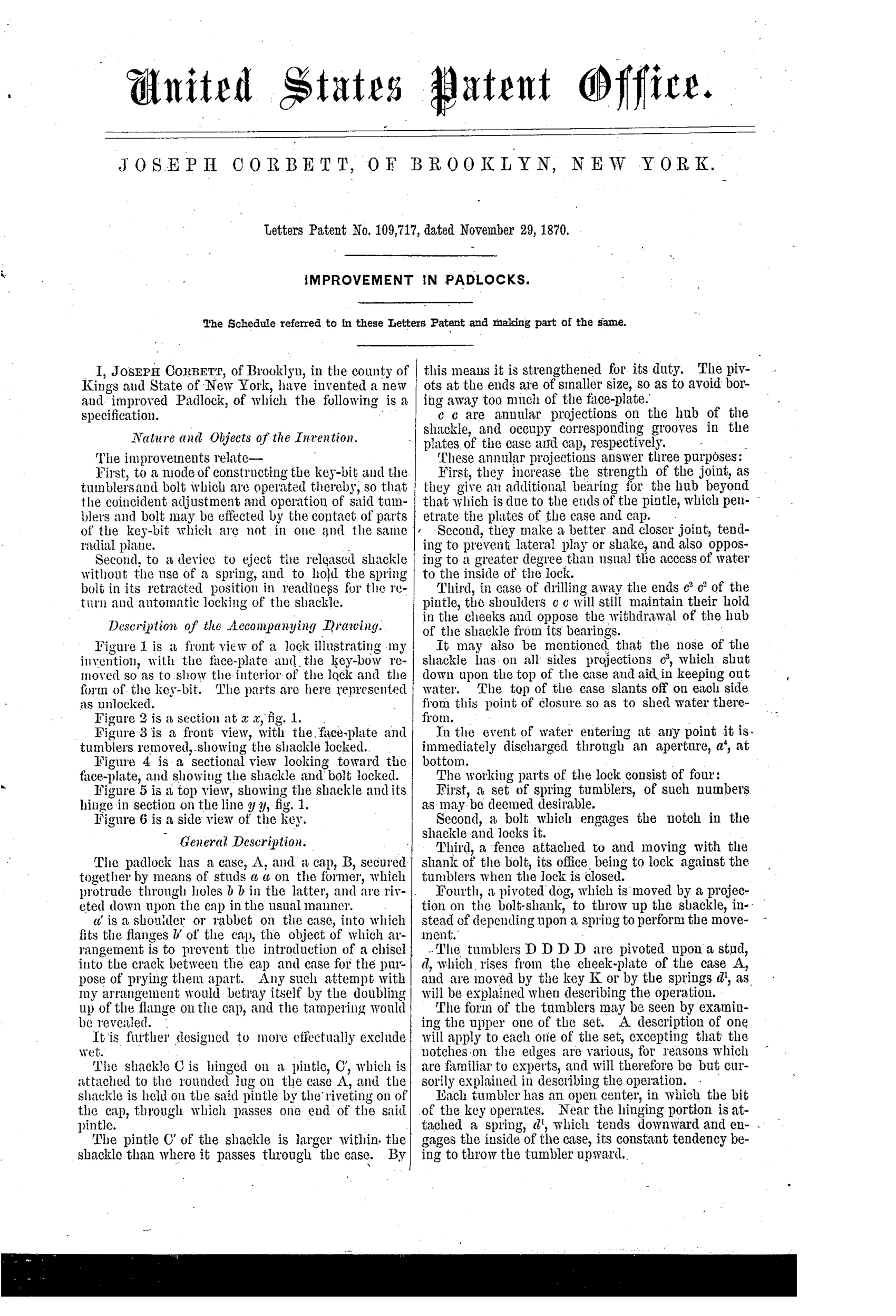
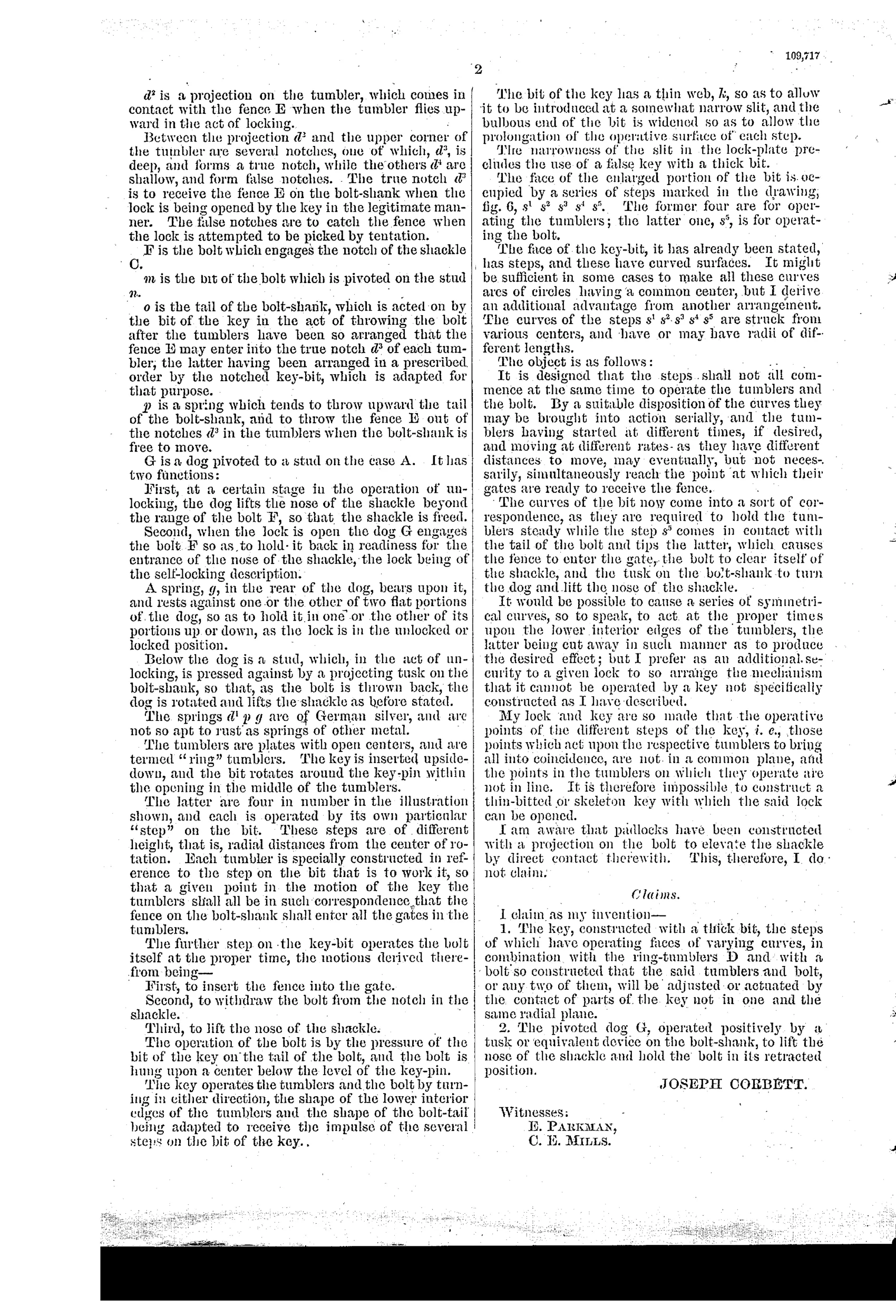
“1. The key, constructed with a thick bit, the steps of which have operating faces of varying curves, in combination with the ring-tumblers D and with a bolt so constructed that the said tumblers and bolt, or any two of them, will be adjusted or actuated by the contact of parts of the key not in one and the same radial plane.”
In plain English: A thick-bitted key with curved steps of different heights that works together with ring-shaped tumblers and a bolt, all coordinated by key contact points that are purposely not aligned in a single plane, making it very hard to pick or duplicate with a flat key.
⚿ In the inventor’s words
“It is therefore impossible to construct a thin-bitted or skeleton key with which the said lock can be opened.”— Joseph Corbett, from the specification
Fate unknown
American Seal Lock Co. was a real Brooklyn maker, but no specimen matching this ring-tumbler ejector design is documented to me; a surviving marked lock with the thick stepped key would settle it.
⚿ Commentary
Corbett's central insight here is subtractive: most lever locks of the era could be defeated because every tumbler and the bolt were operated by key surfaces lying in one radial plane — which is exactly what a thin skeleton key is. His answer was a deliberately thick key bit with stepped, curved faces, arranged so the ring tumblers and bolt are contacted at points that never share a plane. A flat blank simply cannot reach all the working surfaces at once. It's an early, mechanical statement of a principle Yale's pin tumbler would later make standard: force the key to carry information in more than one dimension.
The second feature is quieter but just as practical. Look at Fig. 3: a pivoted dog rides a tusk on the bolt shank, so withdrawing the bolt positively kicks the shackle nose up — no ejection spring to weaken or gum up — then holds the bolt back so the lock relocks itself when the shackle is pressed home. Spring-ejected shackles were a chronic failure point on cheap padlocks; doing it with a cam-and-dog linkage is honest engineering.
The assignment to the American Seal Lock Co. of Brooklyn places this in the railroad and customs security trade, where car-seal and switch locks lived or died on pick resistance. Whether this particular ring-tumbler layout reached production is harder to say, but the thinking is well ahead of the crowd of ward-key contemporaries.
Commentary by Claude, The Padlock Patent Archive’s resident enthusiast