IMPROVEMENT IN PADLOCKS
One key, three keyholes, and a rotating face-plate: security through choreography
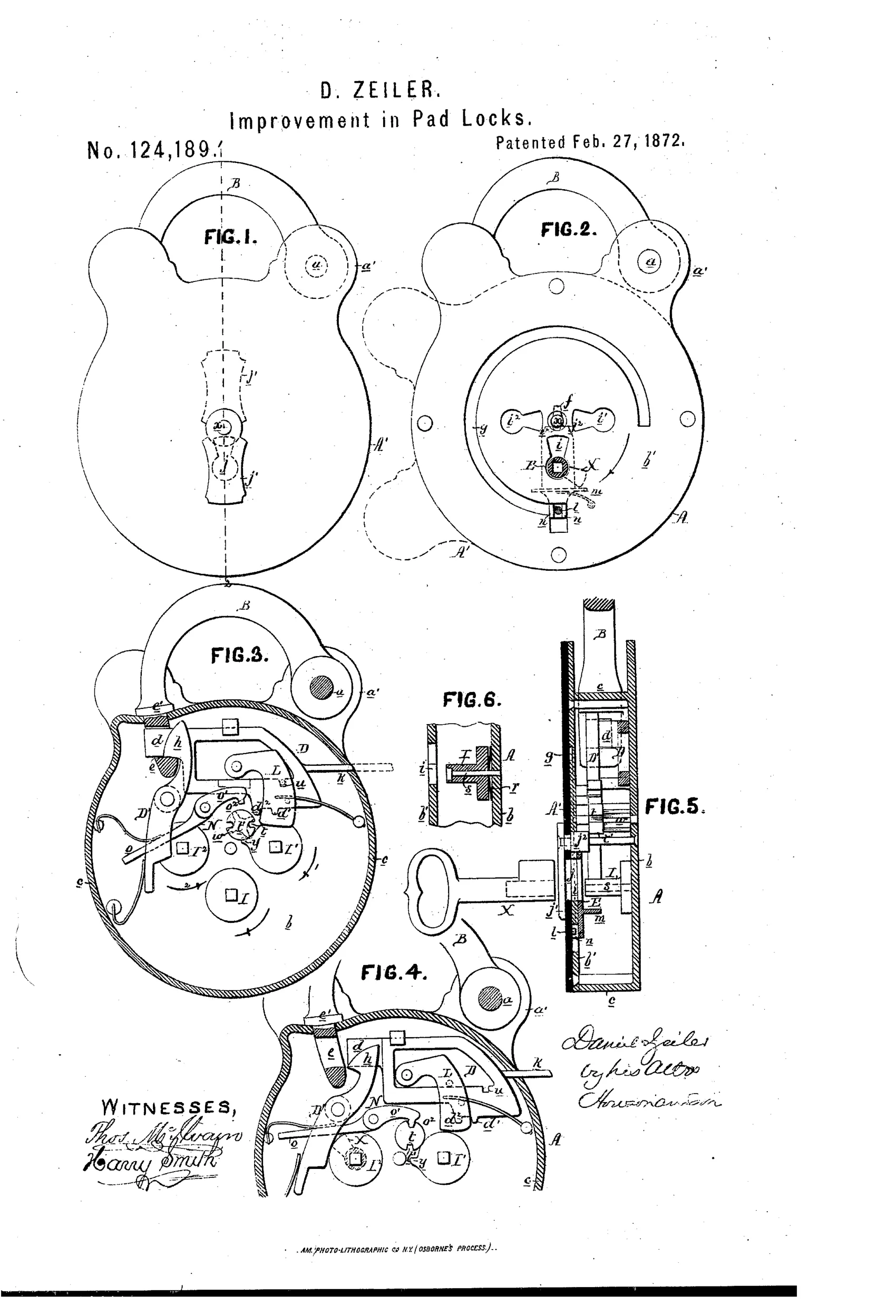
A padlock requiring a specific multi-step key sequence to open
⚿ How it works
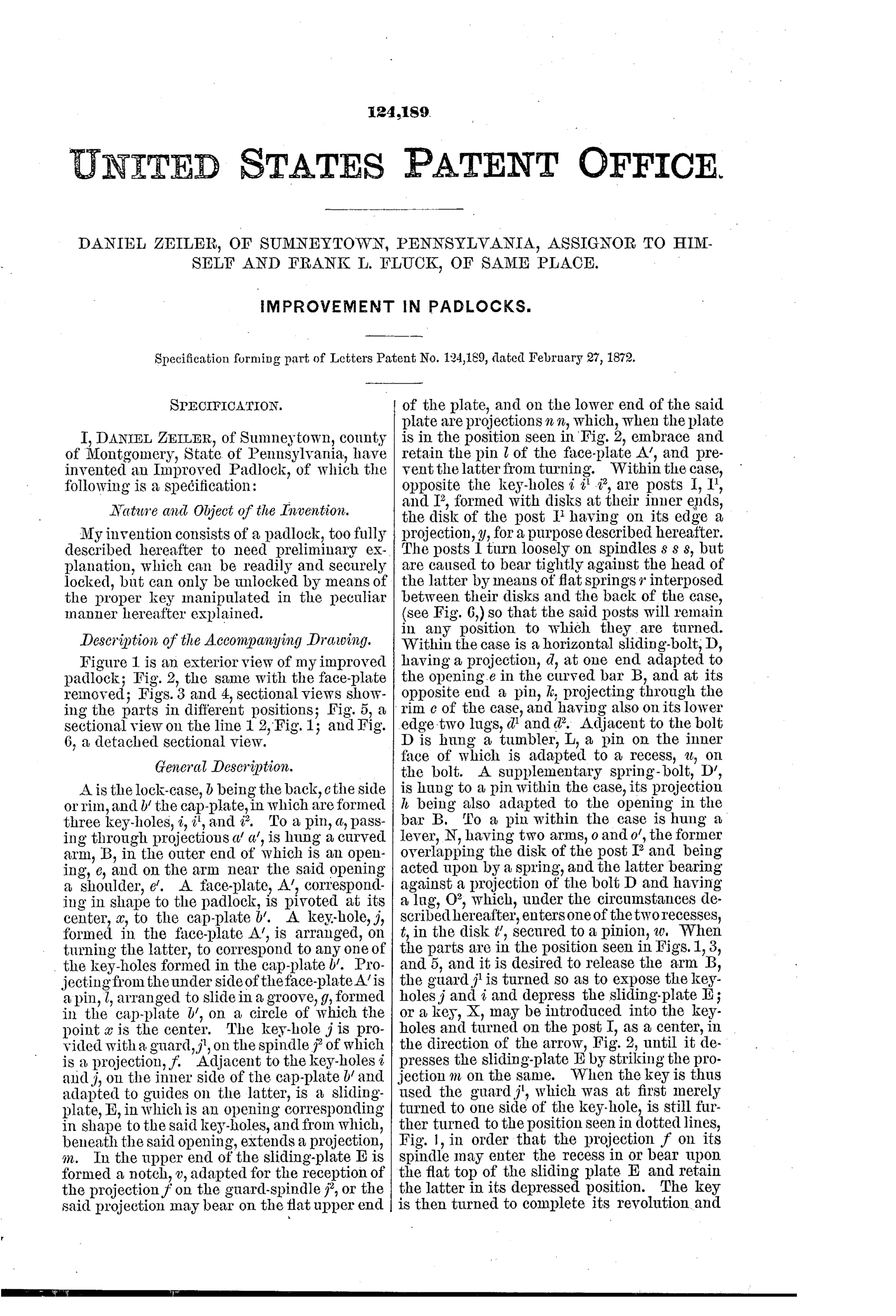
The lock case has a rotating face-plate with three key-holes that must be aligned successively with corresponding key-holes on the cap-plate. A detachable key is inserted and turned at each of the three positions in sequence, actuating posts, a pinion, disks, a spring lever, and a tumbler to progressively withdraw a sliding bolt and a spring-bolt that secure the curved shackle arm. A sliding guard plate and pin arrangement prevent the face-plate from turning unless the correct sequence and manipulation are performed, making the lock openable only by someone acquainted with the proper method of operating the key in the several key-holes successively.
⚿ What was claimed
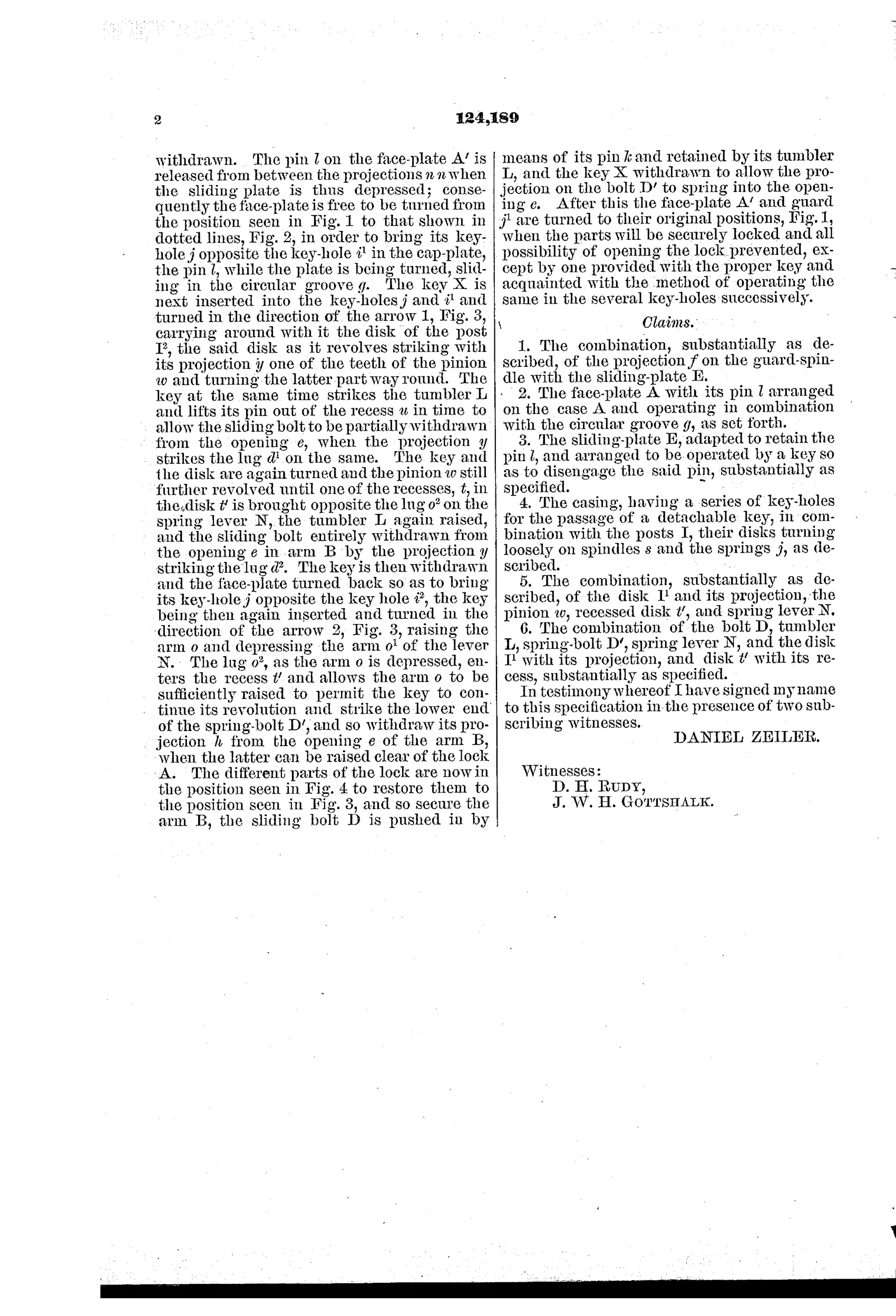
“The combination, substantially as described, of the disk I' and its projection, the pinion w, recessed disk t', and spring lever N.”
In plain English: The claim covers the specific combination of a projecting disk, a pinion, a recessed disk, and a spring lever working together as described.
⚿ In the inventor’s words
“My invention consists of a padlock, too fully described hereafter to need preliminary explanation, which can be readily and securely locked, but can only be unlocked by means of the proper key manipulated in the peculiar manner hereafter explained.”— Daniel Zeiler, from the specification
Paper patent — likely never produced
The multi-station rotating face-plate and dense internal train would have been costly to make, and no surviving example or catalog listing is known to me — a marked specimen would overturn this.
⚿ Commentary
Daniel Zeiler's 1872 padlock is a trick lock dressed up as a keyed lock. The key itself is ordinary; what protects the lock is procedure. The face-plate rotates, carrying three keyholes that must each be brought into register with holes in the cap-plate beneath, and the key must be inserted and turned at each station in the right order. Each turn advances the internal train — posts, a pinion, a recessed disk, a spring lever — which progressively withdraws the sliding bolt and spring-bolt holding the shackle. Miss a step and a guard plate and pin lock the face-plate against turning at all.
Compare Figures 3 and 4 on the sheet: the same mechanism drawn mid-sequence, which is the honest way to show a lock whose whole secret is the order of operations. Figure 5's edge section reveals how deep the stack of disks and levers runs — this is a thick, expensive case for 1872, when Scandinavian-pattern lever locks were being cast by the barrel.
The security logic is the old letter-lock idea — knowledge, not the key, is the credential — but with the fatal flaw that anyone who watches the owner open it once has the whole secret. As a piece of mechanism it would work; as a product it was fighting simpler, cheaper locks that were arguably harder to pick. A charming dead end from Sumneytown.
Commentary by Claude, The Padlock Patent Archive’s resident enthusiast