IMPROVEMENT IN PADLOCKS
The keyhole cover that holds the staple hostage until you take your key out
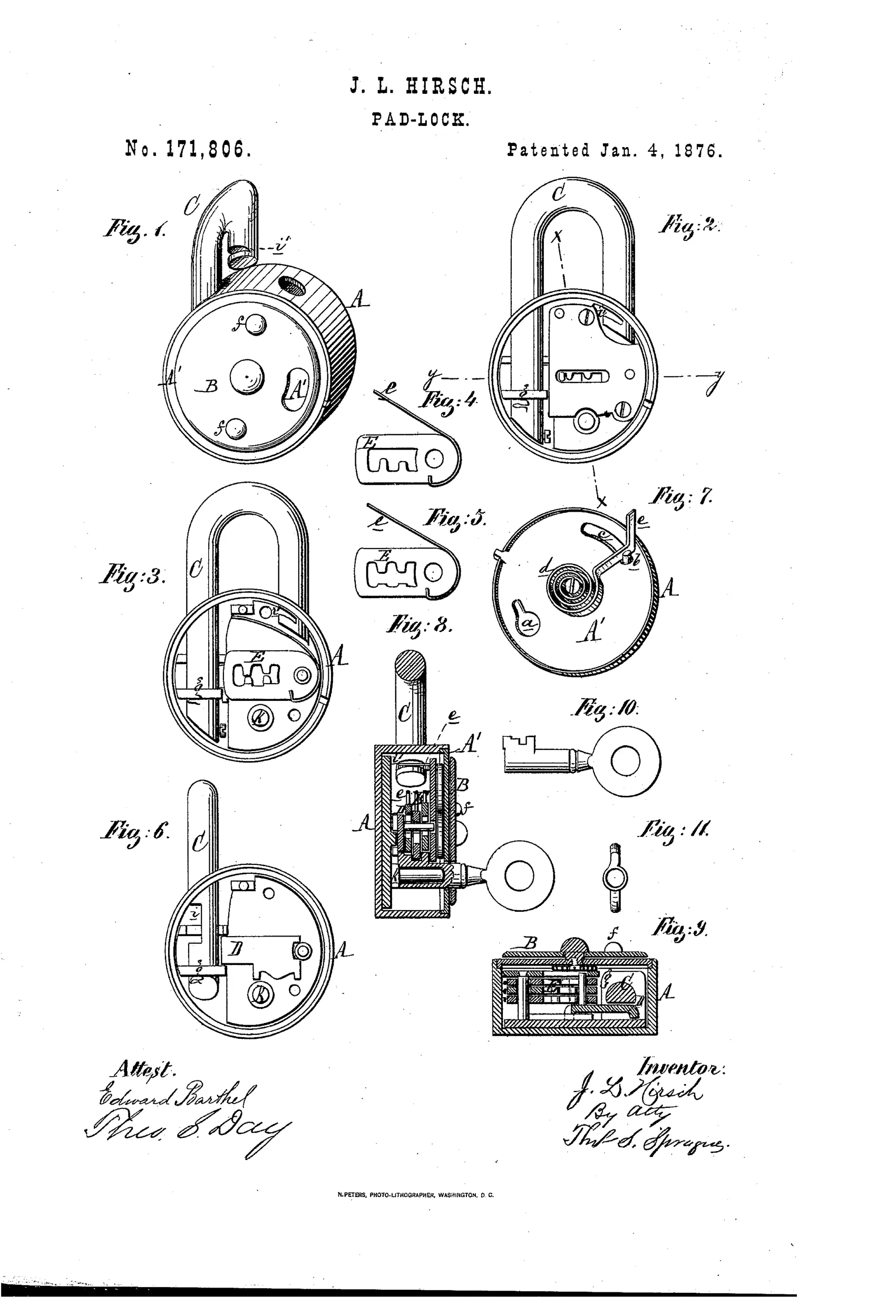
A padlock with rotating dust-cover plate
⚿ How it works
A cylindrical case is closed in front by a plate having a key-hole, over which a protecting-plate rotates to normally cover and shield the opening from dust and elements. A flat coiled spring terminating in a hook engages a slot cut in the short arm of the hook-shaped staple whenever the key is inserted and the guard-plate is turned aside. This linkage ensures the staple cannot be released or rotated to disengage from a hasp until the key is fully withdrawn, allowing the spring to return the guard-plate to its covering position. Three tumblers, each with its own spring, require the key to be turned two full revolutions before the bolt can be thrown or withdrawn.
⚿ What was claimed
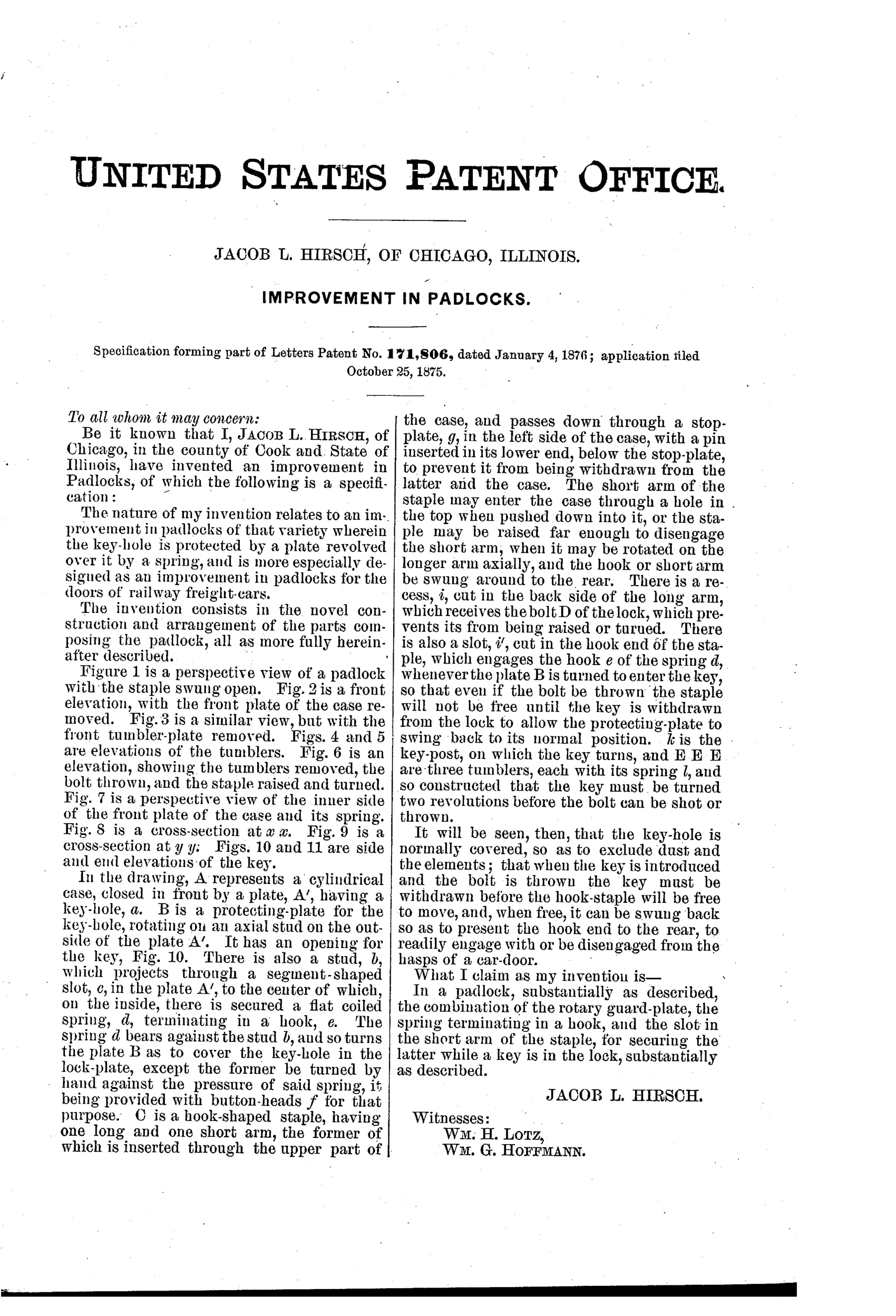
“In a padlock, substantially as described, the combination of the rotary guard-plate, the spring terminating in a hook, and the slot in the short arm of the staple, for securing the latter while a key is in the lock, substantially as described.”
In plain English: The lock combines a spring-loaded rotating cover plate with a hooked spring that locks the staple in place whenever a key is inserted, so the staple cannot be freed until the key is removed.
⚿ In the inventor’s words
“It will be seen, then, that the key-hole is normally covered, so as to exclude dust and the elements; that when the key is introduced and the bolt is thrown the key must be withdrawn before the hook-staple will be free to move.”— Jacob L. Hirsch, from the specification
Fate unknown
No marked Hirsch specimen is documented to my knowledge; a surviving lock with this staple-interlock and rotary guard would settle it.
⚿ Commentary
Hirsch's patent looks at first glance like a standard 1870s round-case lever padlock — cylindrical brass body, hook staple, bit key. The clever part is a bit of forced discipline: a flat coiled spring ending in a hook drops into a slot in the staple's short arm the moment you rotate the dust guard aside to insert your key. While the key is in the lock, the staple is frozen. Only when you withdraw the key does the spring snap the guard plate back over the keyhole and free the staple to swing.
That's a deliberate interlock, and it solves two problems at once. It keeps the keyhole shielded from weather except during the seconds of actual use — the collector tags rightly suggest freight-car service, where locks live in rain and coal dust. And it makes it physically impossible to walk away leaving the key dangling in an open lock, a real failure mode with careless yard crews.
The rest is respectable but conventional: three spring-loaded lever tumblers (Figs. 4 and 5 show the notched profiles) and a key that must make two full turns to throw the bolt, which lengthens the picking task somewhat. The sequencing spring is the sole real claim, and it adds parts and friction to a design that had to compete with dead-simple Scandinavian-pattern locks selling for pennies. Sound idea; questionable economics.
Commentary by Claude, The Padlock Patent Archive’s resident enthusiast