IMPROVEMENT IN PADLOCKS.
The shackle is an arm, and the child bites its own hand shut.
Novelty padlock shaped like a person's head
⚿ How it works
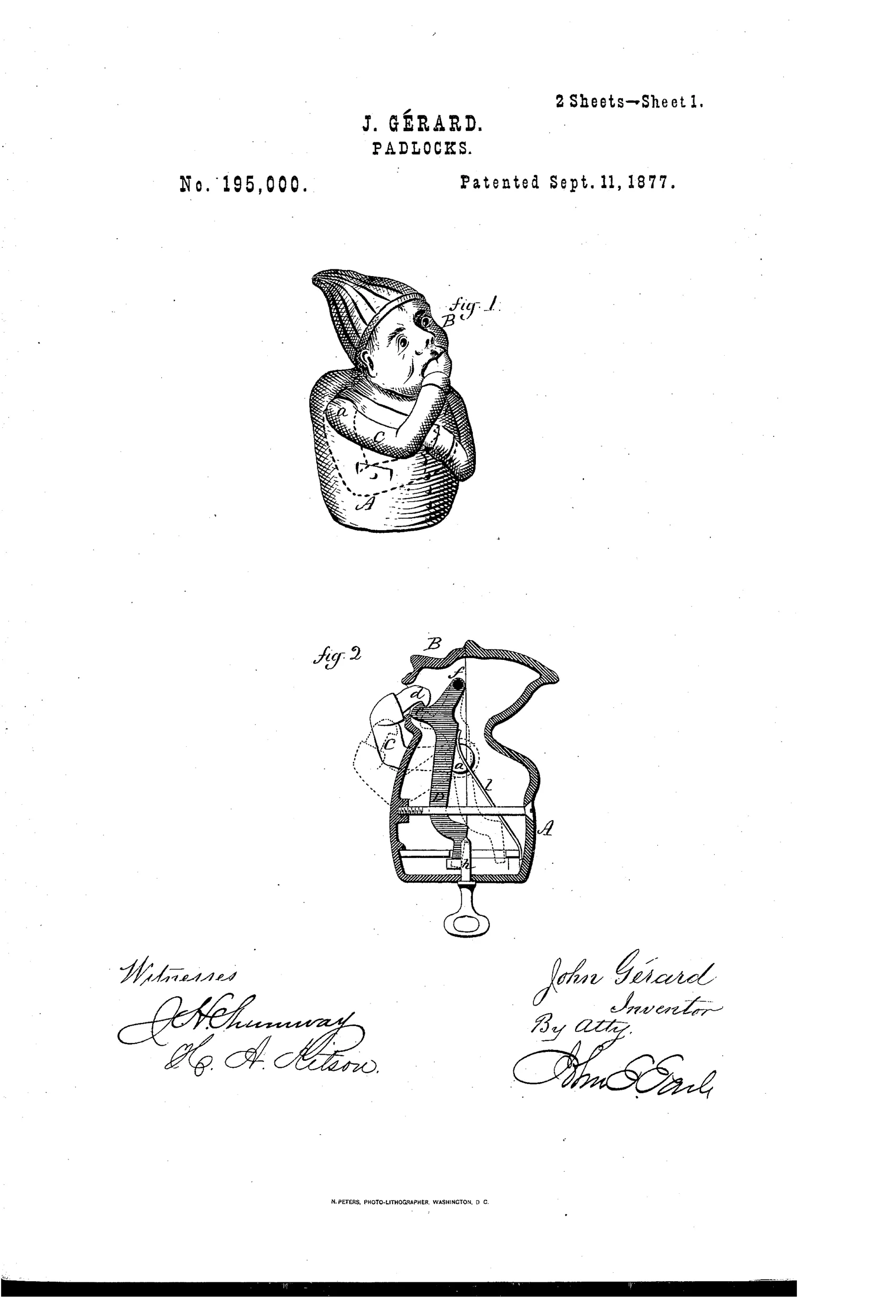
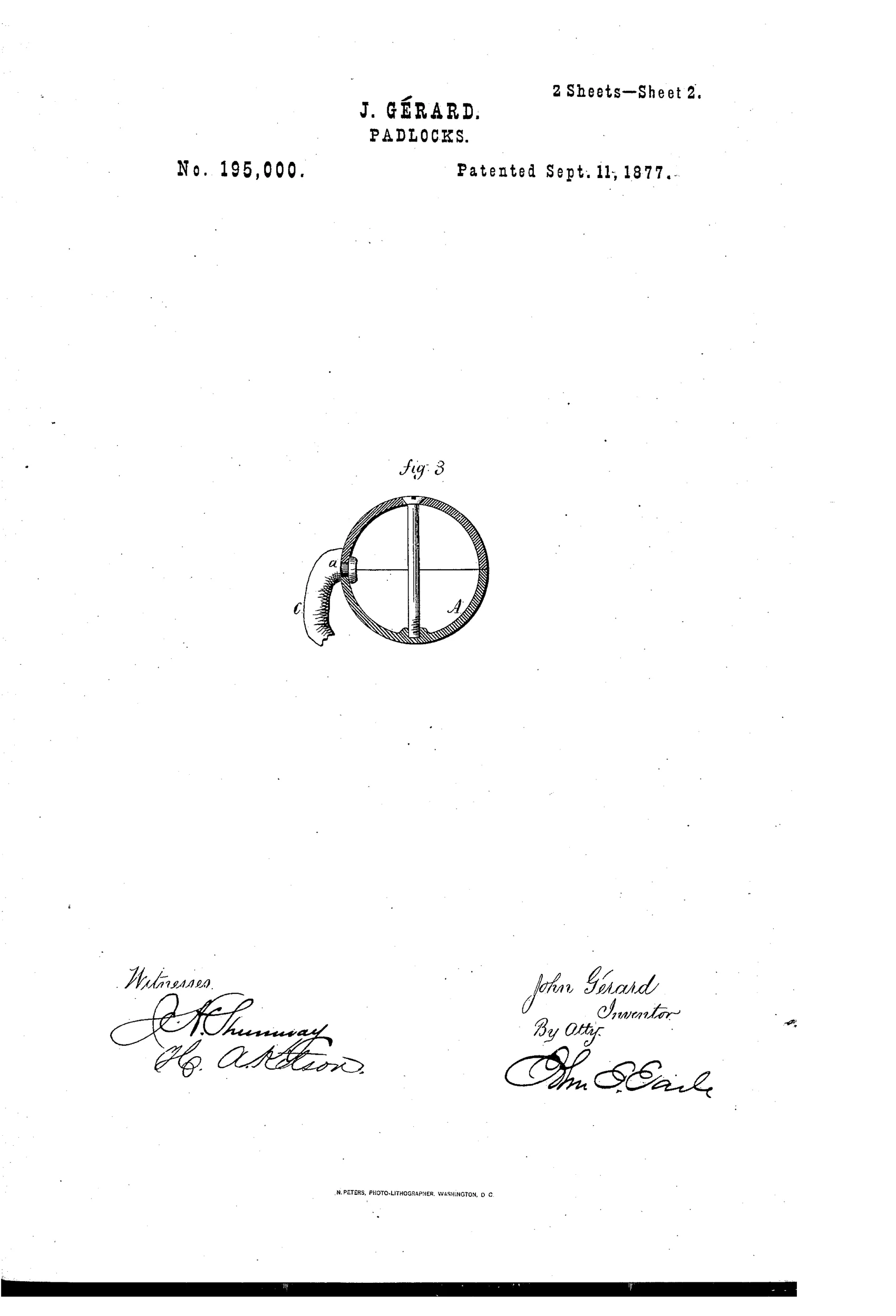
The lock body is cast hollow in the form of a human head and body, divided vertically through the shoulder joint into two parts joined by a screw, leaving the mouth open. One arm is pivoted at the shoulder with an annular groove or headed stud seated in the body, and its free end forms a hook-shaped hand that serves as the shackle. A hinged, hook-shaped tongue pivoted above and forced forward by a spring engages the hand when it is pushed into the open mouth, locking the arm in place. A key inserted through an opening at the bottom presses on an arm extending from the tongue, turning it back to disengage the hand and open the lock.
⚿ What was claimed
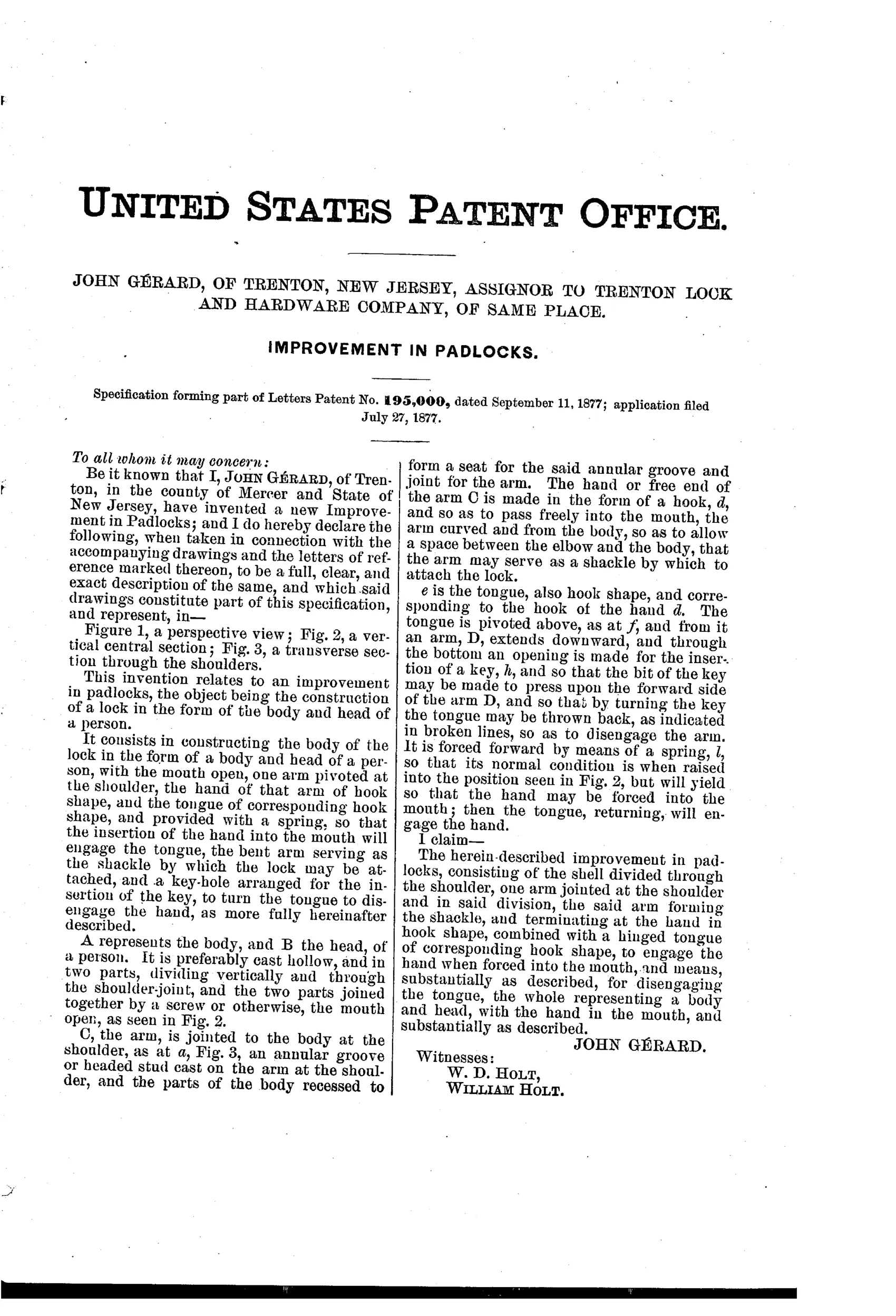
“The herein-described improvement in padlocks, consisting of the shell divided through the shoulder, one arm jointed at the shoulder and in said division, the said arm forming the shackle, and terminating at the hand in hook shape, combined with a hinged tongue of corresponding hook shape, to engage the hand when forced into the mouth, and means, substantially as described, for disengaging the tongue, the whole representing a body and head, with the hand in the mouth, and substantially as described.”
In plain English: The lock's shackle arm, shaped like a hand, is hooked into a spring-loaded hinged tongue when pushed into the mouth of a head-and-body-shaped case, and a key can retract the tongue to release the hand and unlock it.
⚿ In the inventor’s words
“This invention relates to an improvement in padlocks, the object being the construction of a lock in the form of the body and head of a person.”— John Gérard, from the specification
Fate unknown
The assignment to a working hardware firm implies intent to produce, but I know of no documented surviving specimen; one marked example would settle it.
⚿ Commentary
Most padlock patents of the 1870s fight over tumblers. Gérard sidesteps the whole contest: his invention is not a better lock but a lock disguised as a sculpture. The shackle is the pivoted arm of a cast figure — a hooded child, from the drawing — and locking it means pushing the hooked hand into the open mouth, where a spring-loaded tongue of matching hook shape snaps over it. The tongue is literally a tongue. A key pushed in from below levers the tongue back and the hand pops free.
Mechanically it is honest, if trivial: one spring, one hinged catch, no tumblers at all, so security is roughly that of a single-lever trunk latch. Note in Fig. 2 how the body is split vertically through the shoulder and screwed together — that seam is what lets the arm's headed stud seat in its socket, and it is the cheapest way to assemble a hollow figural casting. That detail, not the latch, is the real engineering here.
The assignment to the Trenton Lock and Hardware Company suggests someone meant to sell it, and it fits the era of stamped and cast emblematic 'story' locks that traded on charm rather than resistance to picking. Whether the tooling for a two-part figural casting ever paid for itself is another question; the anatomy pun may have been the whole business plan.
Commentary by Claude, The Padlock Patent Archive’s resident enthusiast