IMPROVEMENT IN HASP-LOCKS.
The padlock abolished: Fichter builds the lock into the hasp itself
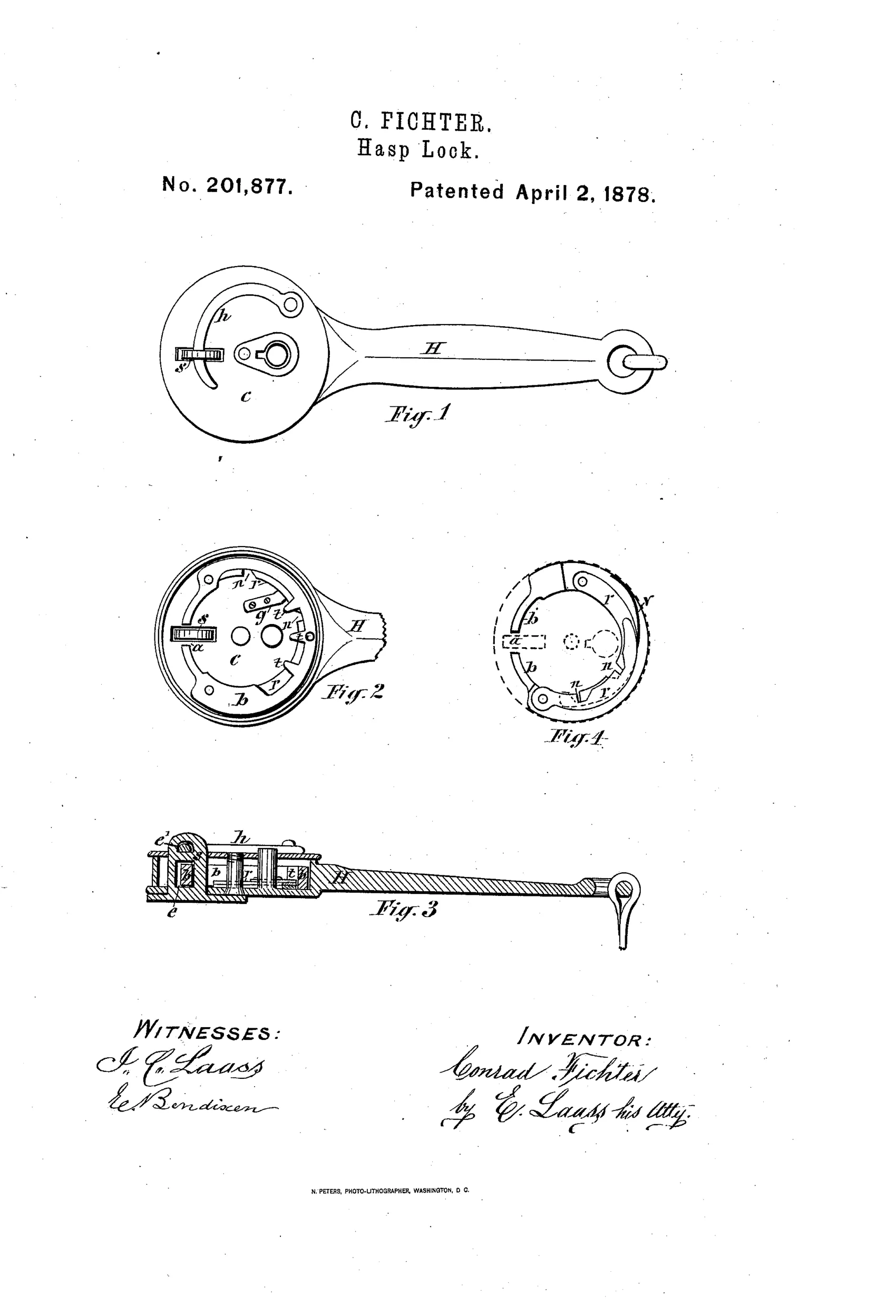
A combined hasp and padlock mechanism.
⚿ How it works
A hasp H terminates in a circular case c that houses the lock mechanism, dispensing with a separate padlock. An annular lock-bolt b fits inside the case with an opening a for the staple s and teeth t on its inner periphery engaged by a key. Two pivoted segmental tumblers r, each with notches n, are forced forward by a spring v to engage a stationary guard g, locking the bolt against retraction. The proper key, bearing a side projection, forces the tumblers rearward to release them from the guard and then engages the bolt's teeth to move it and unlock the staple.
⚿ What was claimed
“The combination and arrangement of the circular case c, having the staple-entrance near the inner edge of its back plate, the annular bolt b, having opening a, and, opposite the same, the teeth t, the tumblers r, pivoted to the bolt and having notches n, the spring v at the rear of the tumblers, and the stationary guard g at the front of same, all constructed and arranged to operate substantially as specified and shown.”
In plain English: The lock combines a circular case with a staple opening, a rotating bolt with teeth, spring-loaded pivoted tumblers with notches, and a fixed guard, all working together to secure the bolt against unauthorized retraction.
⚿ In the inventor’s words
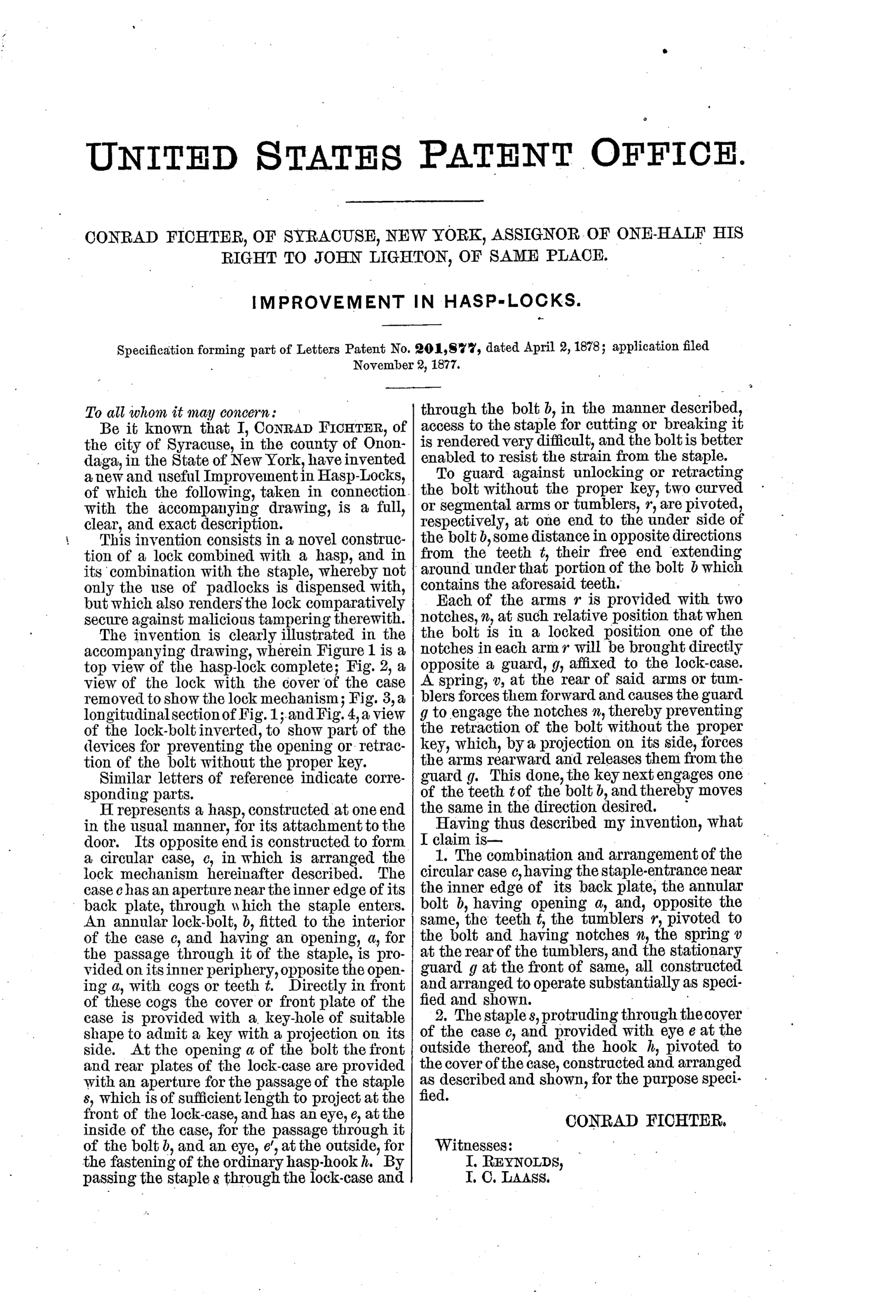
“This invention consists in a novel construction of a lock combined with a hasp, and in its combination with the staple, whereby not only the use of padlocks is dispensed with, but which also renders the lock comparatively secure against malicious tampering therewith.”— Conrad Fichter, from the specification
Fate unknown
No production hasp-lock matching this design is documented; a marked Syracuse-made specimen would settle it.
⚿ Commentary
Fichter's move here is architectural rather than mechanical: instead of a hasp swung over a staple and secured by a separate padlock, the hasp's own end swells into a round case and the lock lives inside it. The staple pokes through an opening near the edge of the back plate, and an annular bolt — a toothed ring, not a sliding bar — rotates to trap it. One less loose piece of hardware to steal, lose, or smash off with a hammer.
Fig. 4 is the drawing to study. Two segmental tumblers ride on the bolt itself, pivoted and sprung forward so their notches catch a fixed guard. The key must do two jobs in sequence: a side projection presses the tumblers back off the guard, then the bit engages the ring's inner teeth to rotate the bolt clear of the staple. Carrying the tumblers on the moving bolt rather than in the case is a neat inversion, and it makes picking through the small staple opening genuinely awkward — which is exactly the 'malicious tampering' the specification worries about.
As a chapter in the category's story, integrated hasp-locks were a recurring dream that never displaced the padlock: the padlock's virtue is that a broken or worn lock is replaced in seconds, while Fichter's failure means replacing the whole hasp. A clever, honest piece of work solving a problem the market kept deciding it didn't have.
Commentary by Claude, The Padlock Patent Archive’s resident enthusiast