IMPROVEMENT IN SEAL-LOCKS
The seal is the key: break it or the door stays shut
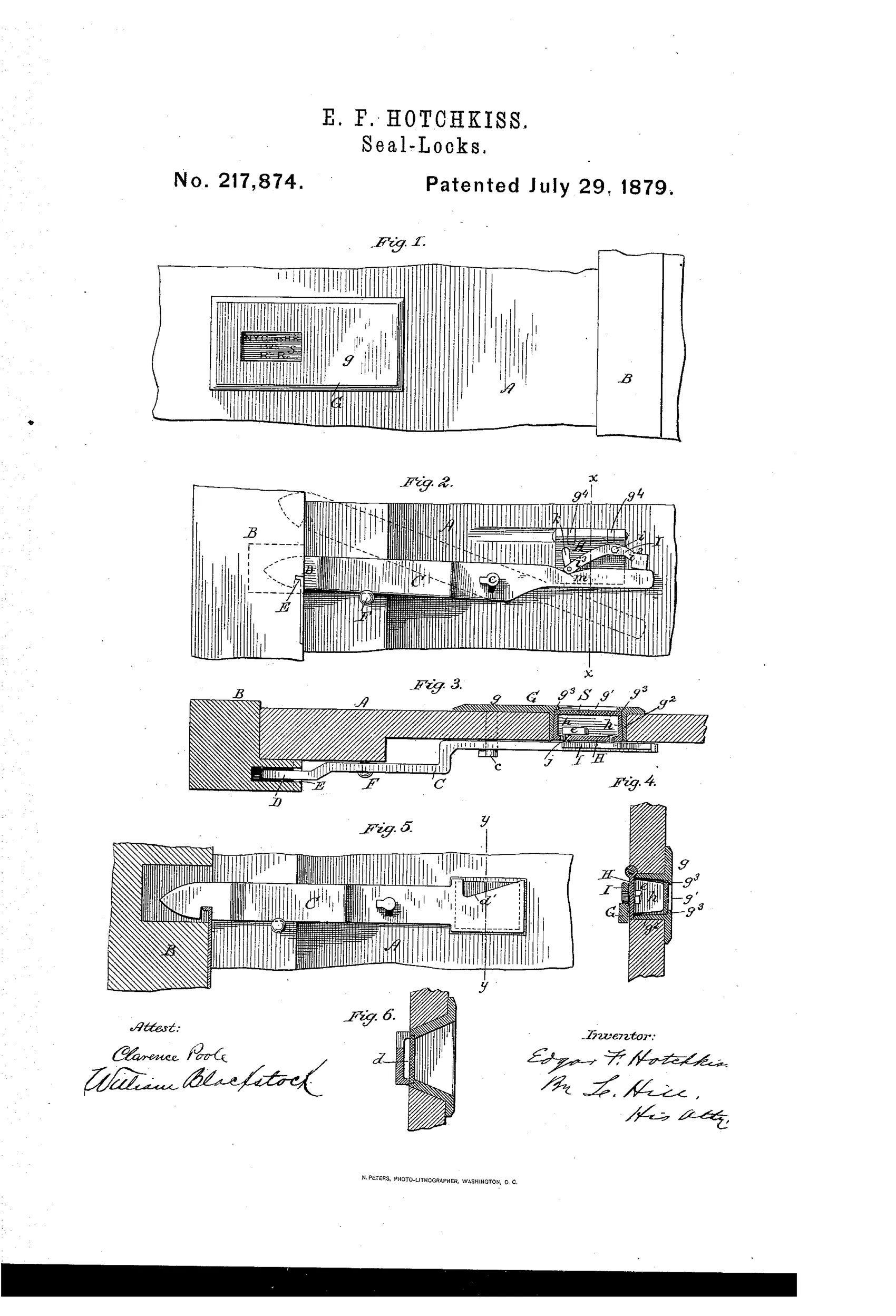
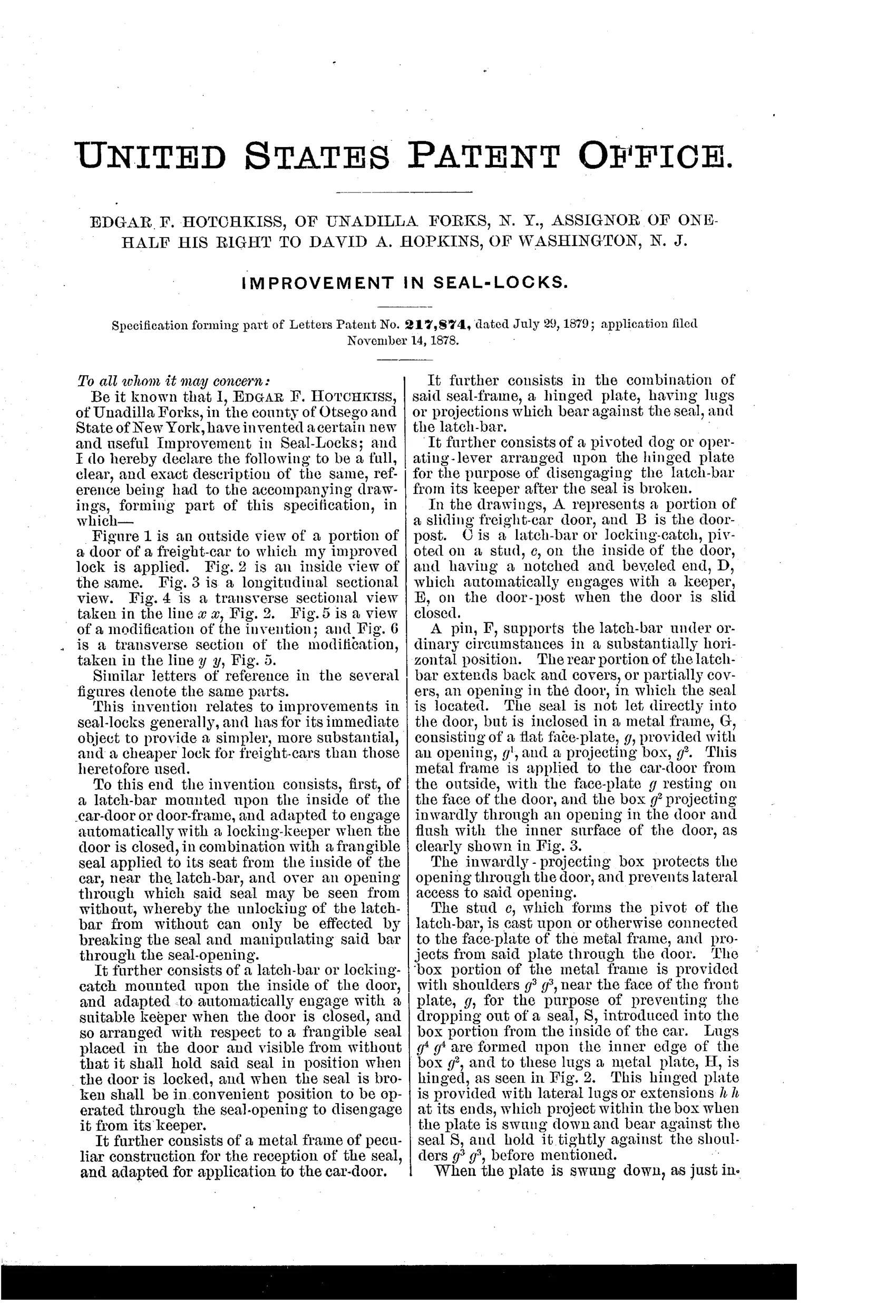
Freight-car door seal-lock with frangible seal
⚿ How it works
A latch-bar pivoted inside the car door automatically engages a keeper on the door-post when the door is slid closed. A metal seal-frame on the outside holds a frangible seal over an opening, and a hinged plate with lugs holds the seal against shoulders in the frame. A pivoted dog or operating-lever on the hinged plate can only be reached and worked through the seal-opening after the seal is broken, which then disengages the latch-bar from its keeper to allow the door to open.
⚿ What was claimed
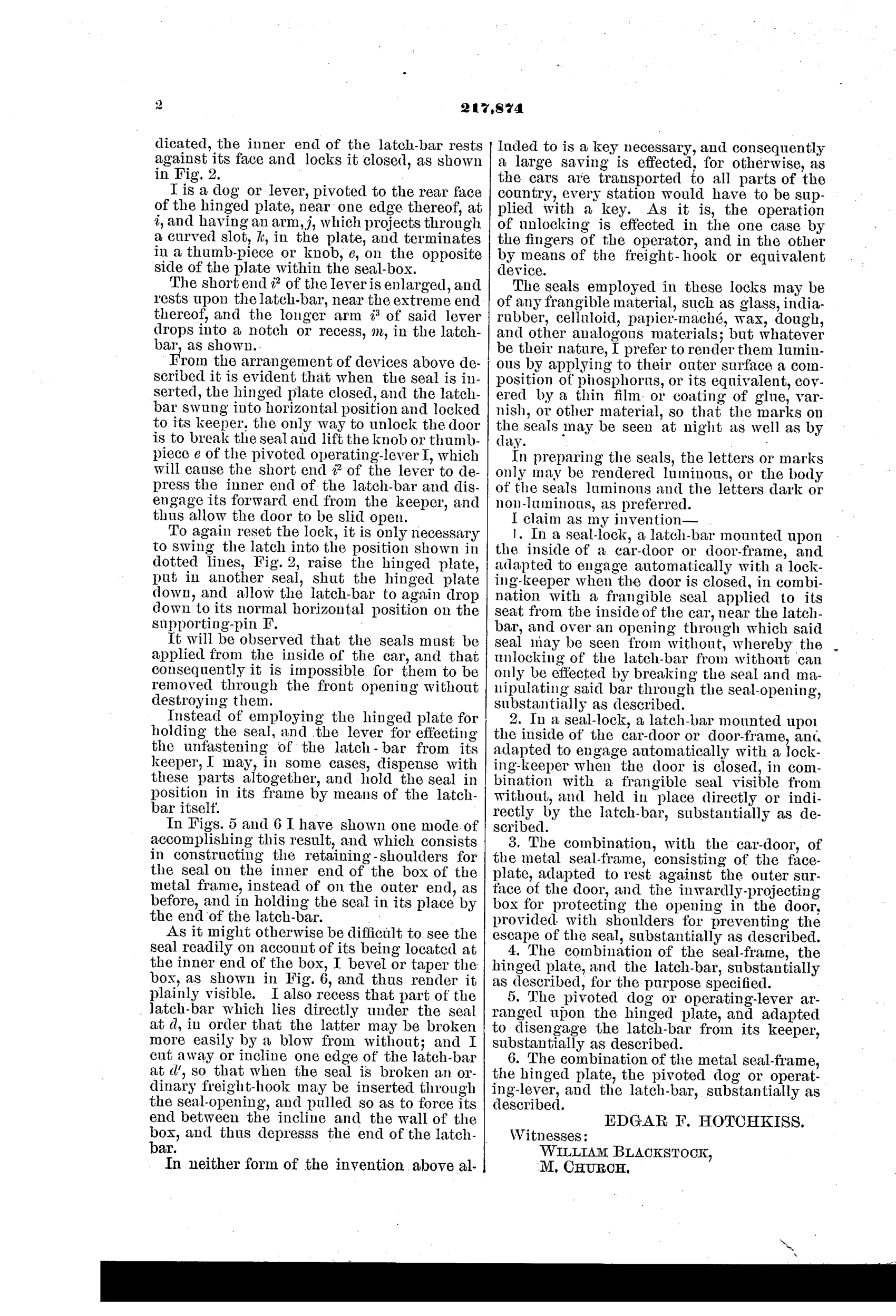
“In a seal-lock, a latch-bar mounted upon the inside of a car-door or door-frame, and adapted to engage automatically with a locking-keeper when the door is closed, in combination with a frangible seal applied to its seat from the inside of the car, near the latch-bar, and over an opening through which said seal may be seen from without, whereby the unlocking of the latch-bar from without can only be effected by breaking the seal and manipulating said bar through the seal-opening, substantially as described.”
In plain English: The lock uses a latch-bar that automatically locks the car door and can only be released from outside by breaking a visible seal and reaching through the resulting opening to work the bar.
⚿ In the inventor’s words
“The seals employed in these locks may be of any frangible material, such as glass, india-rubber, celluloid, papier-mache, wax, dough, and other analogous materials; but whatever be their nature, I prefer to render them luminous by applying to their outer surface a composition of phosphorus, or its equivalent, covered by a thin film or coating of glue, varnish, or other material, so that the marks on the seals may be seen at night as well as by day.”— Edgar F. Hotchkiss, from the specification
Fate unknown
Railroads used many seal-lock designs, but no marked hardware matching this Hotchkiss patent is documented; a surviving car-door lock or railroad supply catalog listing would settle it.
⚿ Patented the same day
- Padlock. — William F. Hofmann
⚿ Commentary
Most tamper-evident hardware of the 1870s worked one way: a padlock or hasp did the actual locking, and a lead or paper seal merely testified that nobody had opened it. Hotchkiss inverts the relationship. Here the frangible seal physically blocks access to the release lever — the latch-bar snaps home automatically when the sliding door closes, and the only way to reach the pivoted dog that frees it is through the opening the seal covers. Breaking the seal isn't evidence of entry; it's the act of entry itself. That's a genuinely tidy piece of logic, and it eliminates the classic seal-lock cheat of picking or shimming the lock while leaving the seal intact.
The sectional views (Figs. 3 and 4) repay attention: the seal seats against shoulders inside a metal frame and is applied from inside the car, so a thief on the outside can't simply substitute a fresh seal after the fact — you'd need access to the interior you were trying to reach. The mechanism itself is almost crude, a latch-bar and keeper, and that's the point; the security lives in the seal, not the lock.
The patent's most charming flourish is the specification's list of seal materials — glass, celluloid, wax, dough — with a phosphorus coating so railroad men could check seals at night by their glow. Whether phosphorescent dough ever rode a boxcar is another question, but the tamper-evident architecture was ahead of its time.
Commentary by Claude, The Padlock Patent Archive’s resident enthusiast