HASP-LOCK.
The lock that can't be lost: built into the hasp itself
Combined lock-and-hasp for doors, gates, cars
⚿ How it works
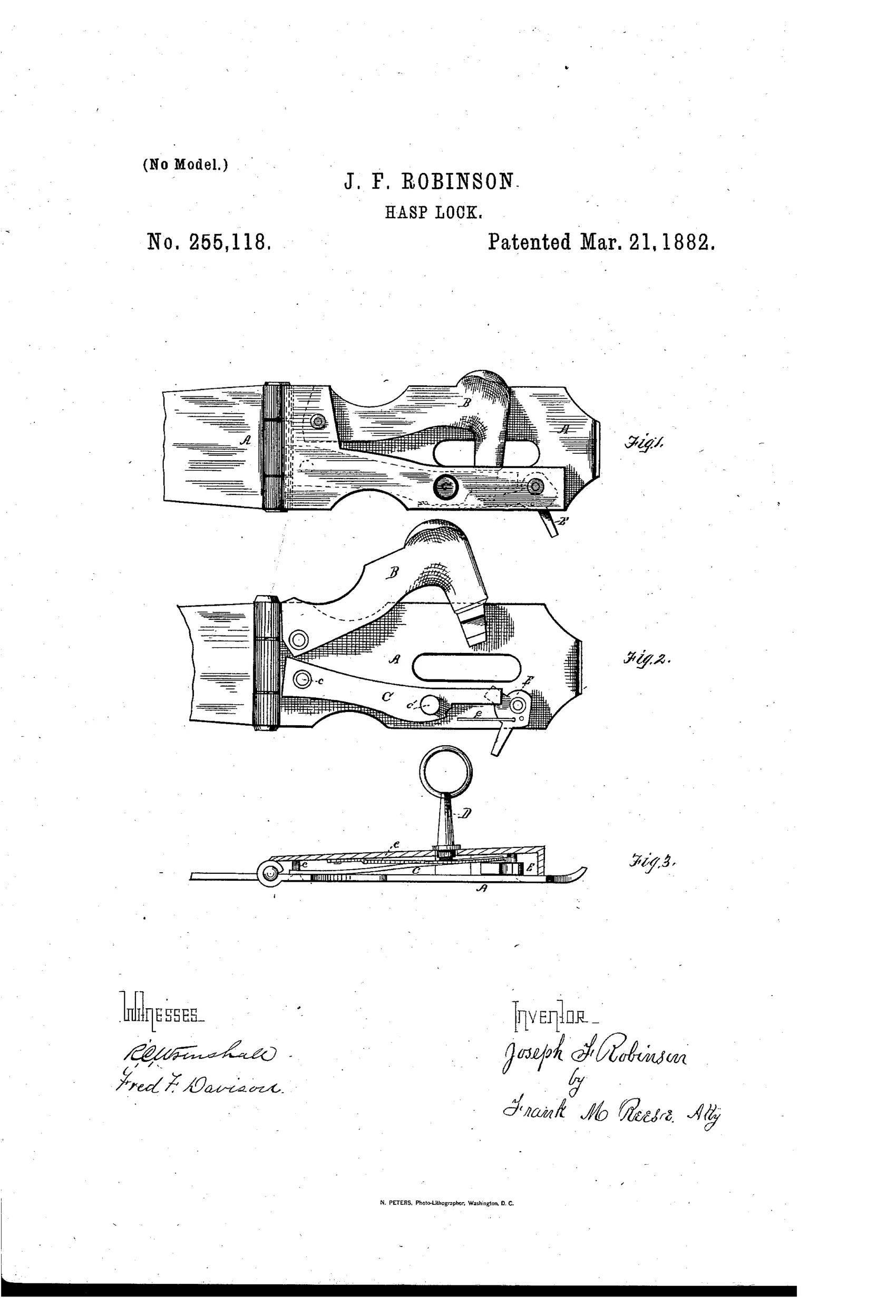
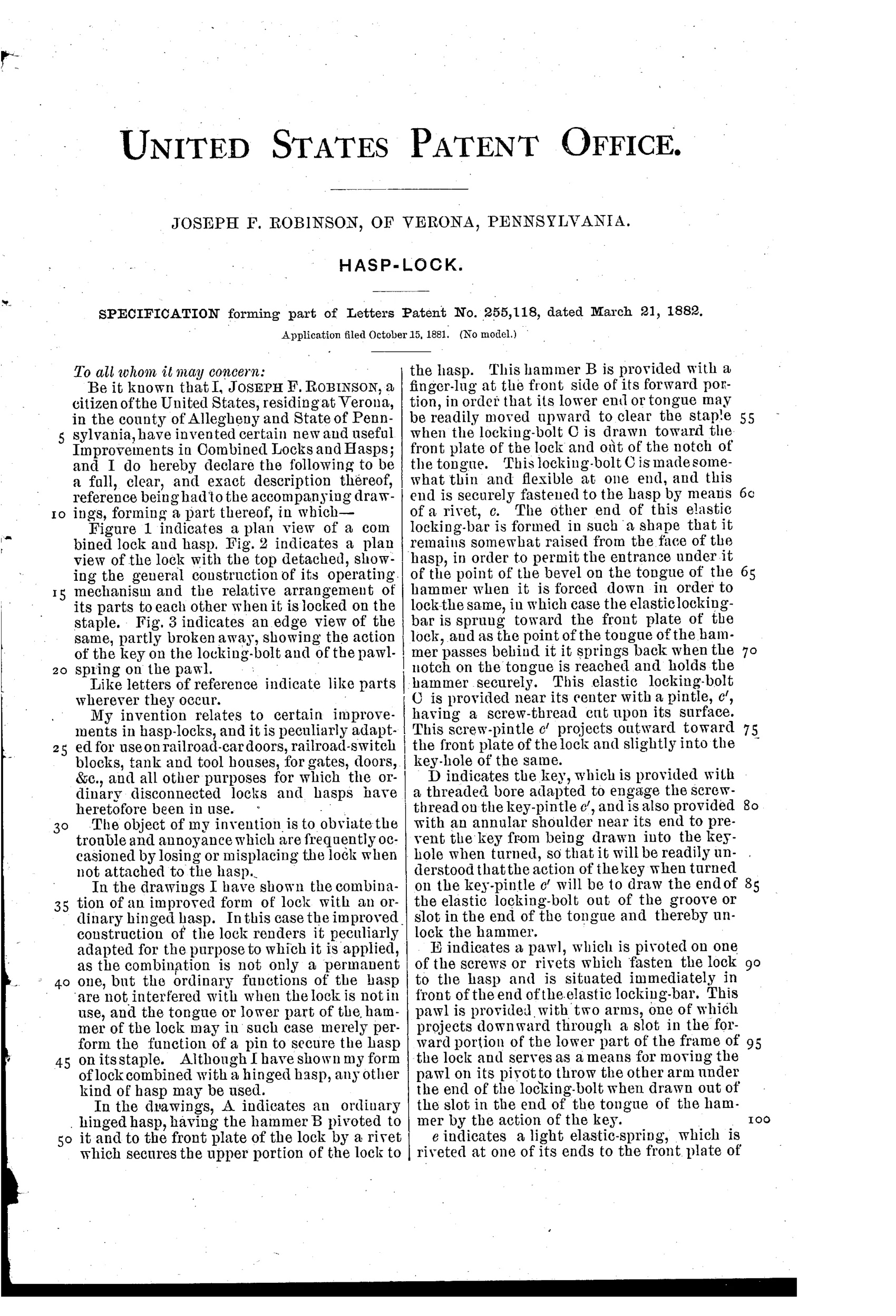
A hammer is pivoted to a rivet that also secures the lock's front plate to the hasp body, with its lower tongue engaging a staple. An elastic locking-bar, riveted at one end to the hasp, springs into a notch on the hammer's tongue to hold it locked. A screw-threaded key-pintle engages a threaded bore in the key, and turning the key draws the elastic bar back out of the notch to release the hammer. A pivoted pawl with a spring can be moved to hold the locking-bar clear of the hammer's tongue, allowing the hasp to function as an ordinary unlocked hasp.
⚿ What was claimed
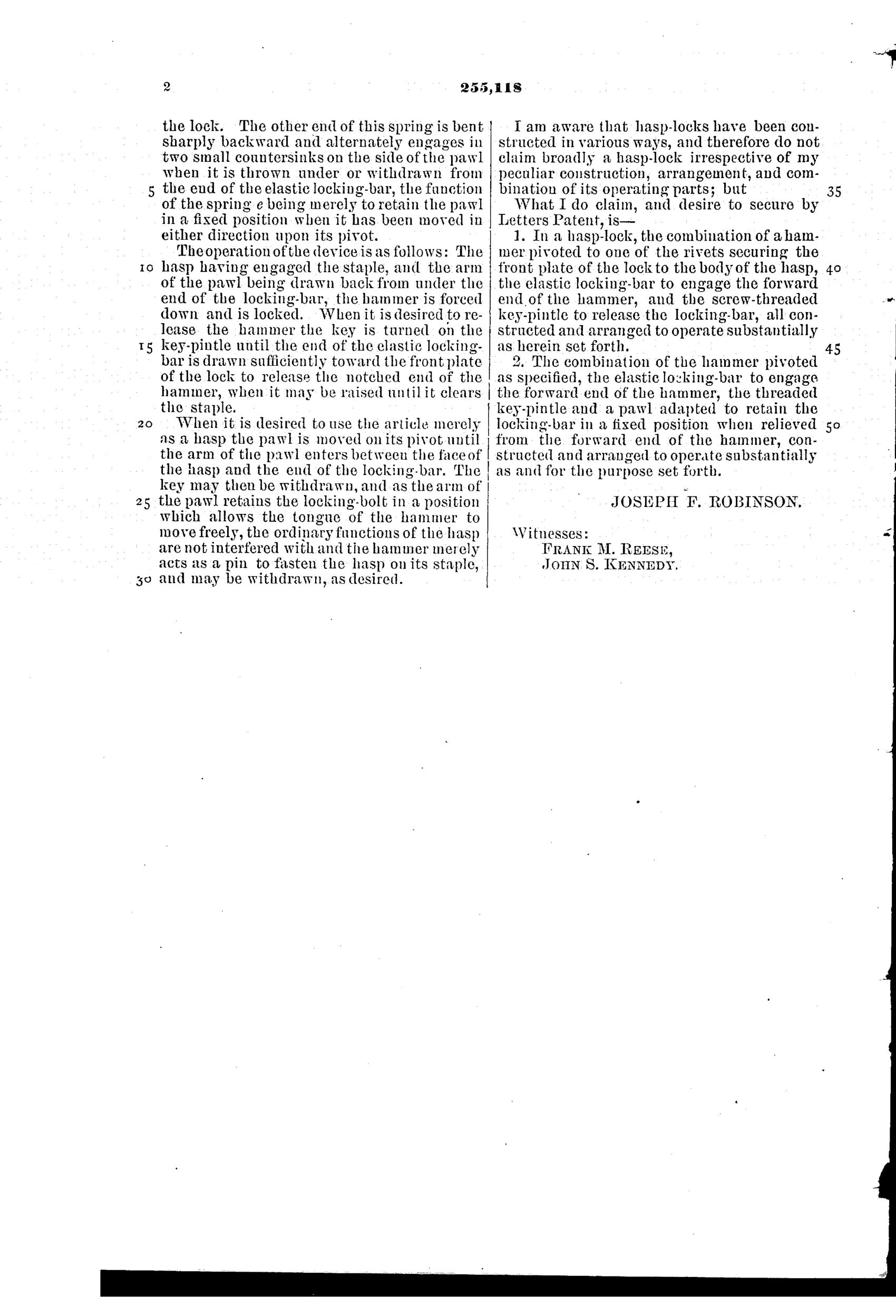
“In a hasp-lock, the combination of a hammer pivoted to one of the rivets securing the front plate of the lock to the body of the hasp, the elastic locking-bar to engage the forward end of the hammer, and the screw-threaded key-pintle to release the locking-bar, all constructed and arranged to operate substantially as herein set forth.”
In plain English: The lock combines a hammer pivoted at the hasp's securing rivet, a springy locking bar that catches the hammer's end, and a screw-threaded key post that releases the bar to unlock it.
⚿ In the inventor’s words
“The object of my invention is to obviate the trouble and annoyance which are frequently occasioned by losing or misplacing the lock when not attached to the hasp.”— Joseph F. Robinson, from the specification
Fate unknown
No marked or documented example of this hasp-lock is known to me; a surviving piece of hardware matching Fig. 1 would settle it.
⚿ Commentary
Robinson's stated problem is refreshingly mundane — people misplace padlocks. His answer is to fold the whole lock into the hasp: a pivoted hammer whose tongue drops through the staple, held shut by a springy bar riveted to the hasp body. The key is the interesting part. Instead of a bitted key turning a bolt, there's a screw-threaded pintle inside; the key has a matching threaded bore, and screwing it on draws the elastic bar back out of its notch. It's less a lock than a fastener with a proprietary wrench.
Fig. 2 rewards a close look. The dual-purpose rivet — one fastener serving as both plate anchor and hammer pivot — is the kind of parts-count thrift that separates working hardware men from parlor inventors. And the little pivoted pawl is a genuinely thoughtful touch: swing it over and it holds the locking bar clear, so the hasp works as an ordinary unlocked hasp when security isn't wanted.
As security, though, this is thin. One exposed spring bar and a threaded post is a puzzle for about thirty seconds; any hollow tube with a thread cut in it opens it. Combined hasp-locks were a recurring dream in this period — the Verona, PA address puts Robinson in railroad-shop country, and car doors are named in the spec — but the trade kept choosing separate padlocks, which could be re-keyed, replaced, and standardized. This is an honest dead end.
Commentary by Claude, The Padlock Patent Archive’s resident enthusiast