PADLOCK
Two linked dogs grab the shackle from both sides at once
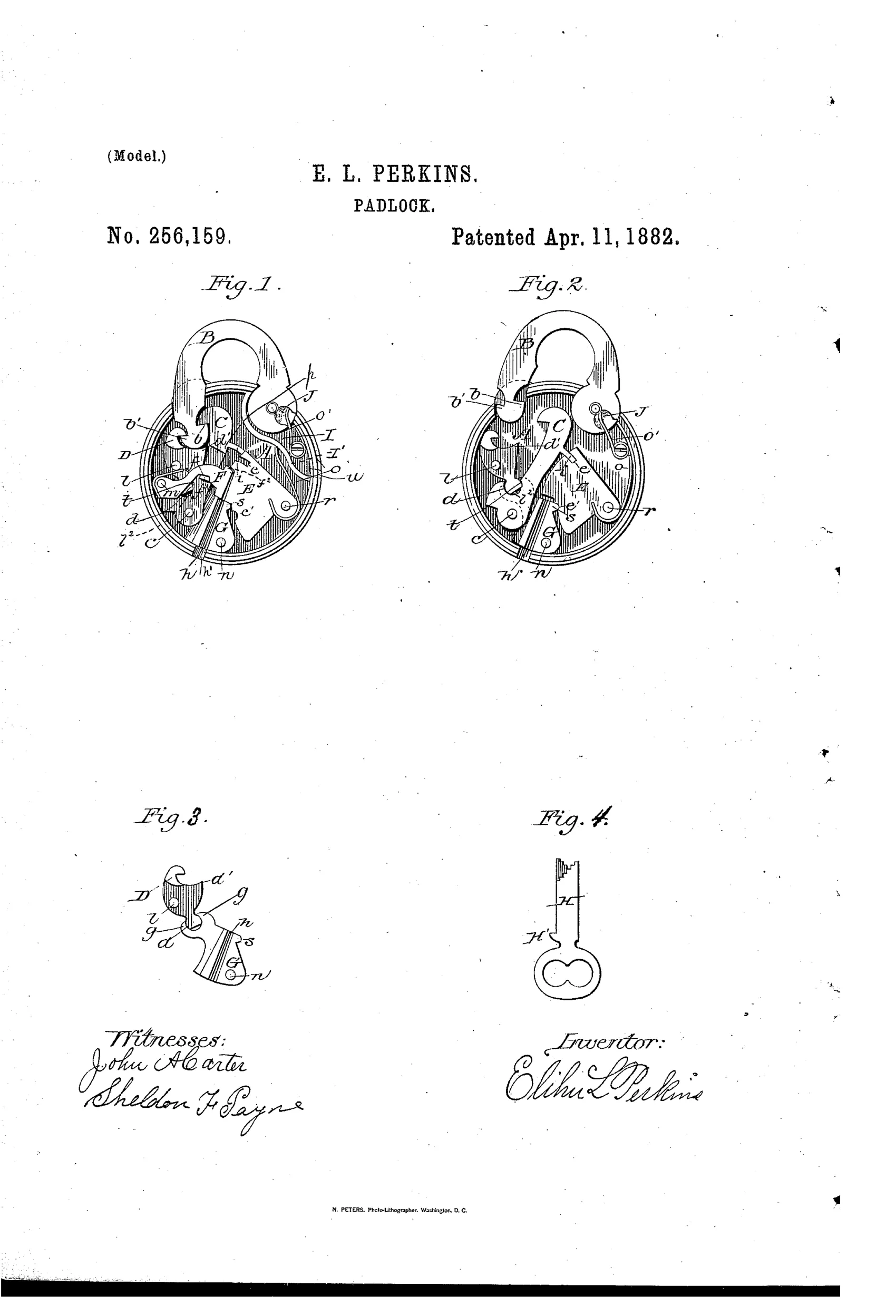
Padlock with hooked dogs and tumblers
⚿ How it works
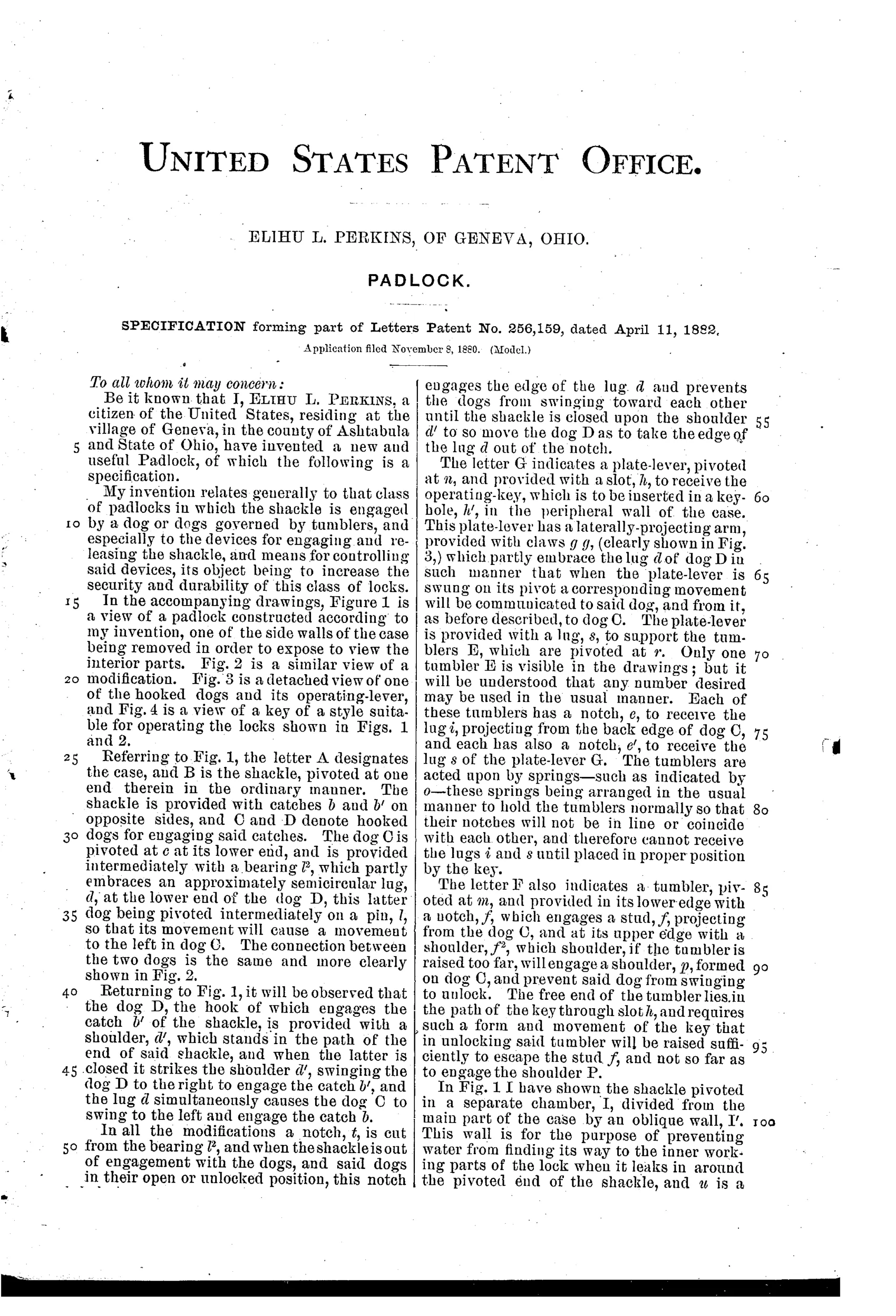
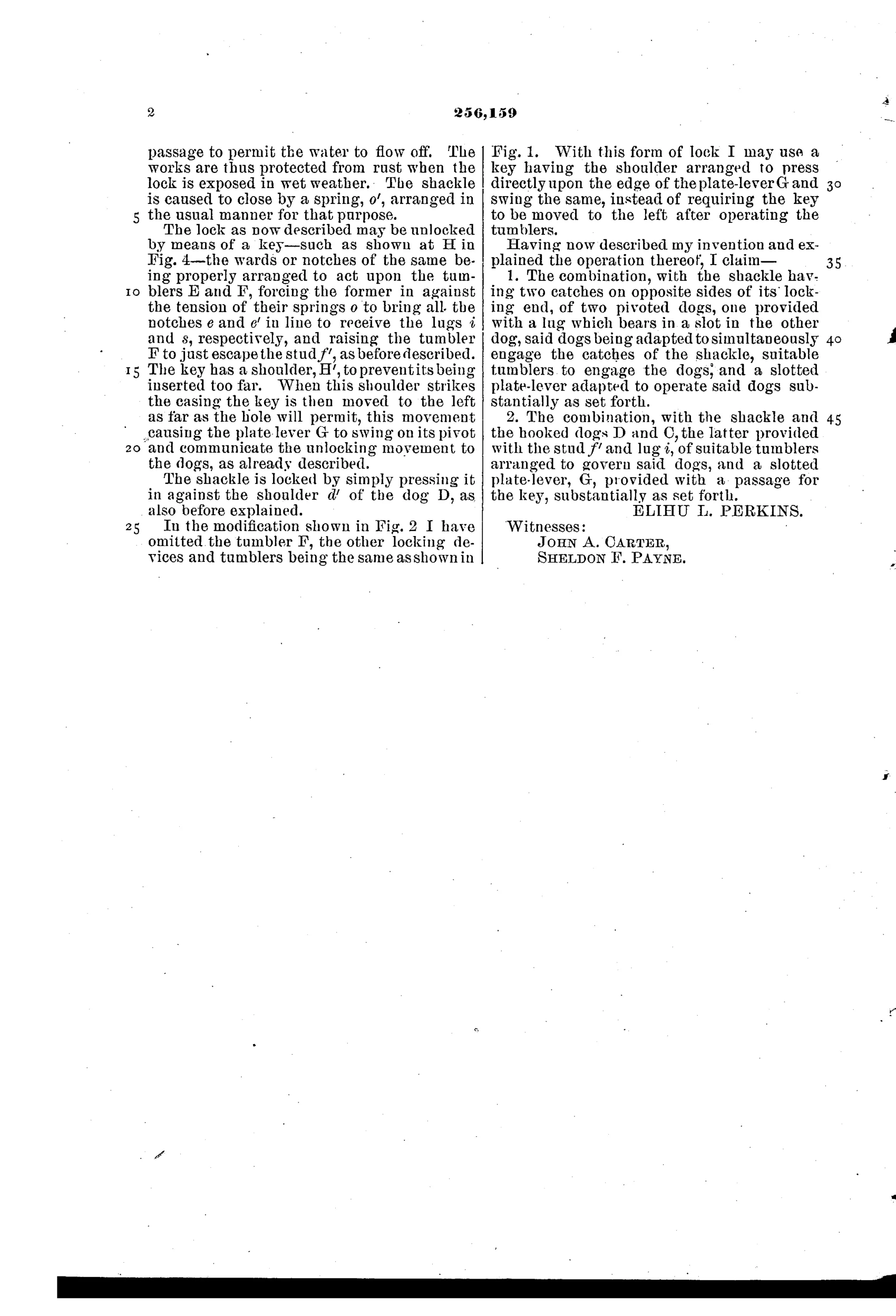
The shackle carries catches on opposite sides which are engaged by two pivoted hooked dogs, C and D, linked so that movement of one causes a corresponding movement of the other. Closing the shackle strikes a shoulder on dog D, swinging both dogs into locking engagement with the shackle catches. A slotted plate-lever, G, actuated by a key inserted through a keyhole, communicates unlocking movement to the dogs after suitable tumblers (E and F) are positioned by the key to allow the lugs on the dogs and lever to pass through aligned notches. A notch in the dog's bearing prevents the dogs from swinging together until the shackle is fully closed, and springs normally hold the tumblers out of alignment to block unauthorized operation.
⚿ What was claimed
“The combination, with the shackle having two catches on opposite sides of its locking end, of two pivoted dogs, one provided with a lug which bears in a slot in the other dog, said dogs being adapted to simultaneously engage the catches of the shackle, suitable tumblers to engage the dogs, and a slotted plate-lever adapted to operate said dogs substantially as set forth.”
In plain English: A padlock where a shackle with two side catches is locked by two connected pivoting dogs that engage both catches at once, controlled by tumblers and unlocked via a slotted lever operated by the key.
⚿ In the inventor’s words
“My invention relates generally to that class of padlocks in which the shackle is engaged by a dog or dogs governed by tumblers, and especially to the devices for engaging and releasing the shackle, and means for controlling said devices, its object being to increase the security and durability of this class of locks.”— Elihu L. Perkins, from the specification
Fate unknown
No assignee and no known production hardware matches this dog arrangement; a marked or attributable specimen would settle it.
⚿ Commentary
Most lever padlocks of 1880 held the shackle with a single bolt or dog biting one notch. Perkins doubles the grip: his shackle end carries catches on opposite sides, and two pivoted hooked dogs, C and D, swing in to seize both simultaneously. The dogs are geared together in the simplest possible way — a lug on one riding in a slot on the other — so a prybar attacking one dog fights both. Slamming the shackle home strikes a shoulder on dog D and the lock snaps shut without a key, the self-locking behavior every practical padlock of the era was chasing.
The detail worth pausing on is the notch in the dog's bearing that prevents the pair from swinging closed until the shackle is fully seated. That's insurance against the classic self-locking failure: a lock that pretends to close on a half-inserted shackle and pulls open in the field. The key works through a slotted plate-lever G that must thread its lugs past spring-loaded tumblers E and F — standard lever security, competently arranged.
Fig. 2 shows a cheaper variant with one tumbler omitted, which tells you Perkins was thinking about a product line, not just a principle. Still, this is a refinement in a crowded field. Double-engagement dogs appear in other patents of the decade, and without a manufacturer's name attached, the odds of production from a Geneva, Ohio inventor working alone are hard to gauge.
Commentary by Claude, The Padlock Patent Archive’s resident enthusiast