SEAL-LOCK FOR CAR-DOORS.
A sag-proof ramp guides the boxcar bolt home before the seal goes on
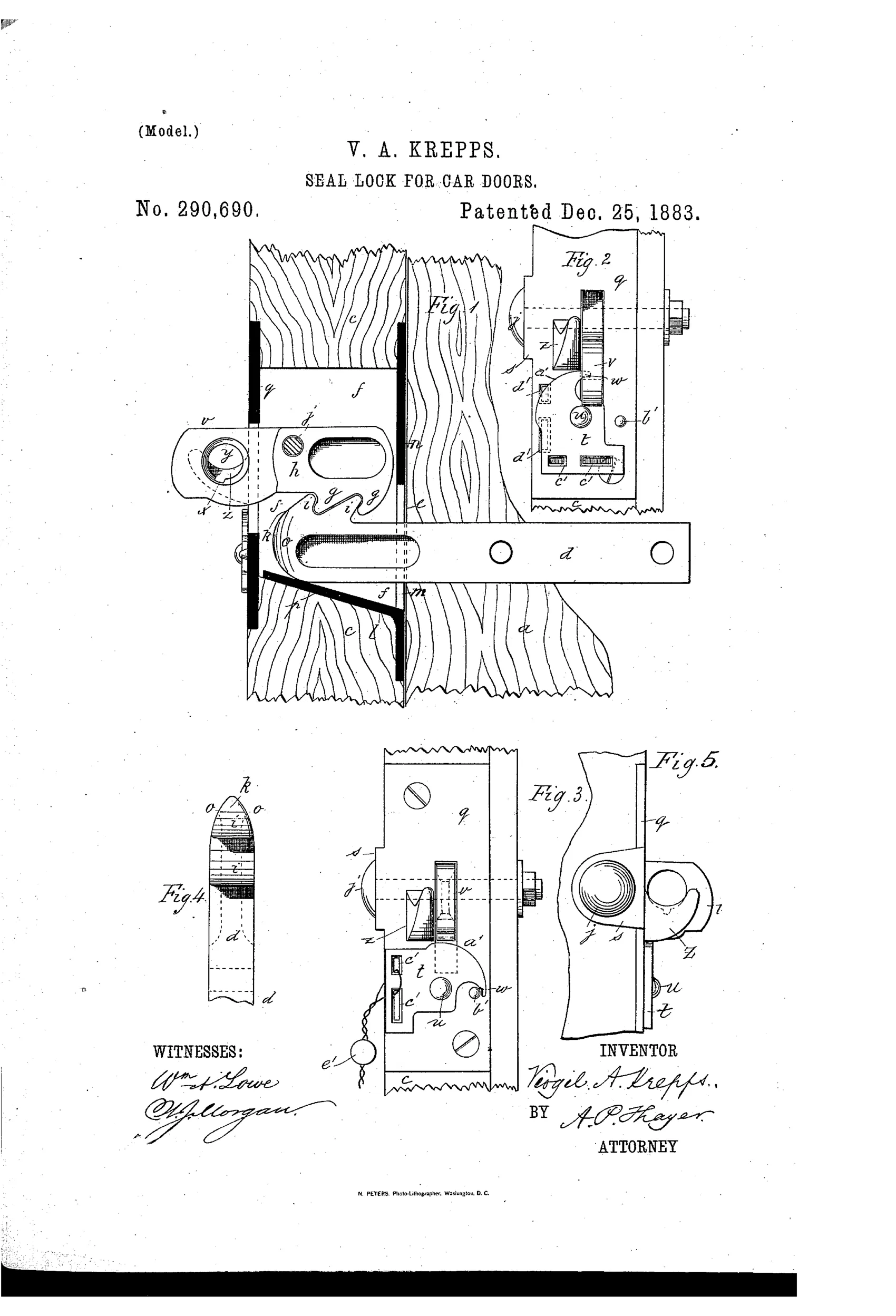
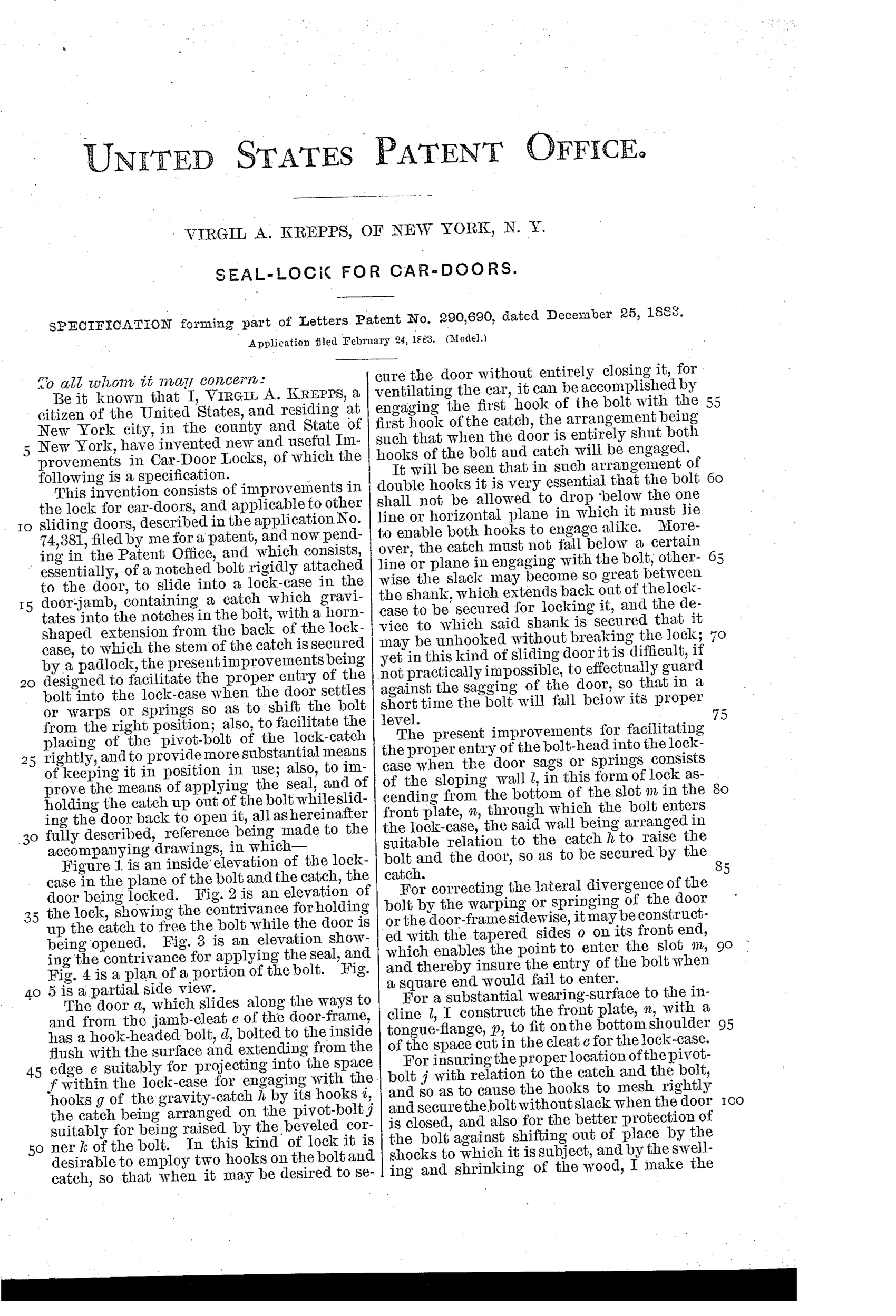
Sealable lock mechanism for sliding car doors
⚿ How it works
A hook-headed bolt rigidly attached to the sliding door engages a gravity catch pivoted inside a lock-case mounted on the door jamb. An inclined wall at the bottom of the lock-space guides the bolt upward into proper engagement with the catch if the door sags or warps. A separate pivoted plate with a hook-point can be swung to hold the catch up while the door is opened, and this same plate can be secured over a horn by a seal wire or padlock so that the seal must be cut before the lock can be reopened.
⚿ What was claimed
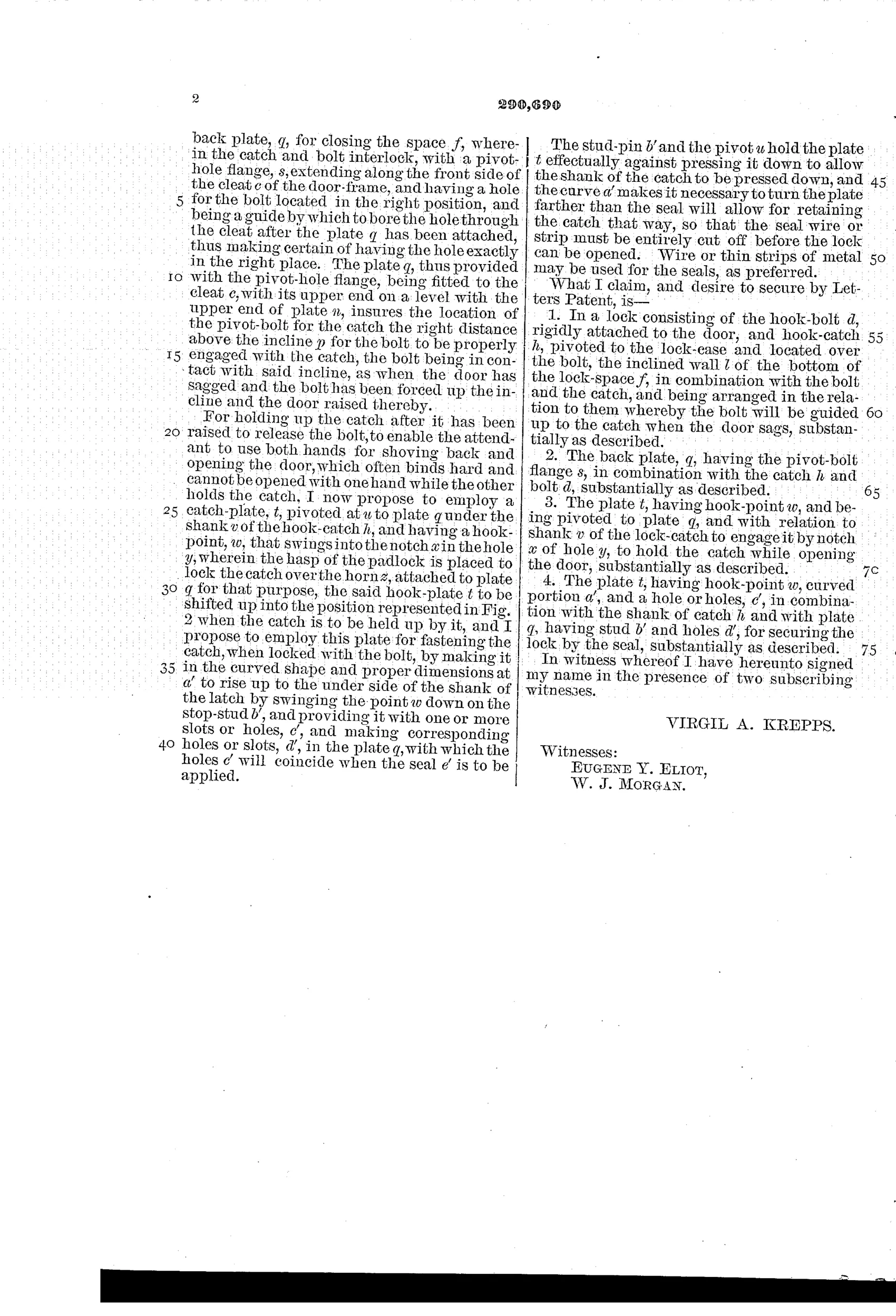
“In a lock consisting of the hook-bolt d, rigidly attached to the door, and hook-catch h, pivoted to the lock-case and located over the bolt, the inclined wall l of the bottom of the lock-space f, in combination with the bolt and the catch, and being arranged in the relation to them whereby the bolt will be guided up to the catch when the door sags, substantially as described.”
In plain English: The lock uses a sloped ramp at the bottom of the lock-case so that the door's bolt is automatically guided up into proper engagement with the catch even if the door has sagged.
⚿ In the inventor’s words
“the curve a' makes it necessary to turn the plate farther than the seal will allow for retaining the catch that way, so that the seal wire or strip must be entirely cut off before the lock can be opened.”— Virgil A. Krepps, from the specification
Fate unknown
Car seal locks were a crowded patent field with few winners; no Krepps-marked hardware is documented, and a surviving specimen or railroad supply catalog listing would settle it.
⚿ More by Virgil A. Krepps
- SEAL-LOCK (1883)
⚿ Commentary
Seal locks sit at the edge of our category: they don't keep thieves out so much as prove whether anyone got in. Freight cars of the 1880s were sealed with a lead-and-wire seal, and a whole family of patents tried to make hardware that forced the seal to be destroyed before the door could open. Krepps's entry is a good specimen of the type, and his key claim is refreshingly humble — it isn't the seal trick at all, but a sloped ramp at the bottom of the lock cavity.
That ramp is the practical heart of the thing. A wooden boxcar door sags, warps, and swells with weather; a rigid hook-bolt on a sagging door will miss a fixed catch by a quarter inch and the car goes out unsecured. The incline (l in Fig. 1) simply lifts the drooping bolt up into the gravity catch as the door slides shut. Whoever drafted the claim knew that tolerance for abuse, not cleverness, is what railroad hardware lives or dies on.
The sealing plate in Figs. 2 and 3 is the cleverer bit: its curved edge means the plate must swing farther than the seal wire permits before it can hold the catch open, so cutting the seal is mandatory, not merely conventional. It's a small geometric guarantee against a lazy or dishonest brakeman. Whether any road adopted it is another matter — this field was crowded, and most such patents stayed on paper.
Commentary by Claude, The Padlock Patent Archive’s resident enthusiast