HASP-LOCK
The padlock disappears entirely: lock and hasp fused into one bar
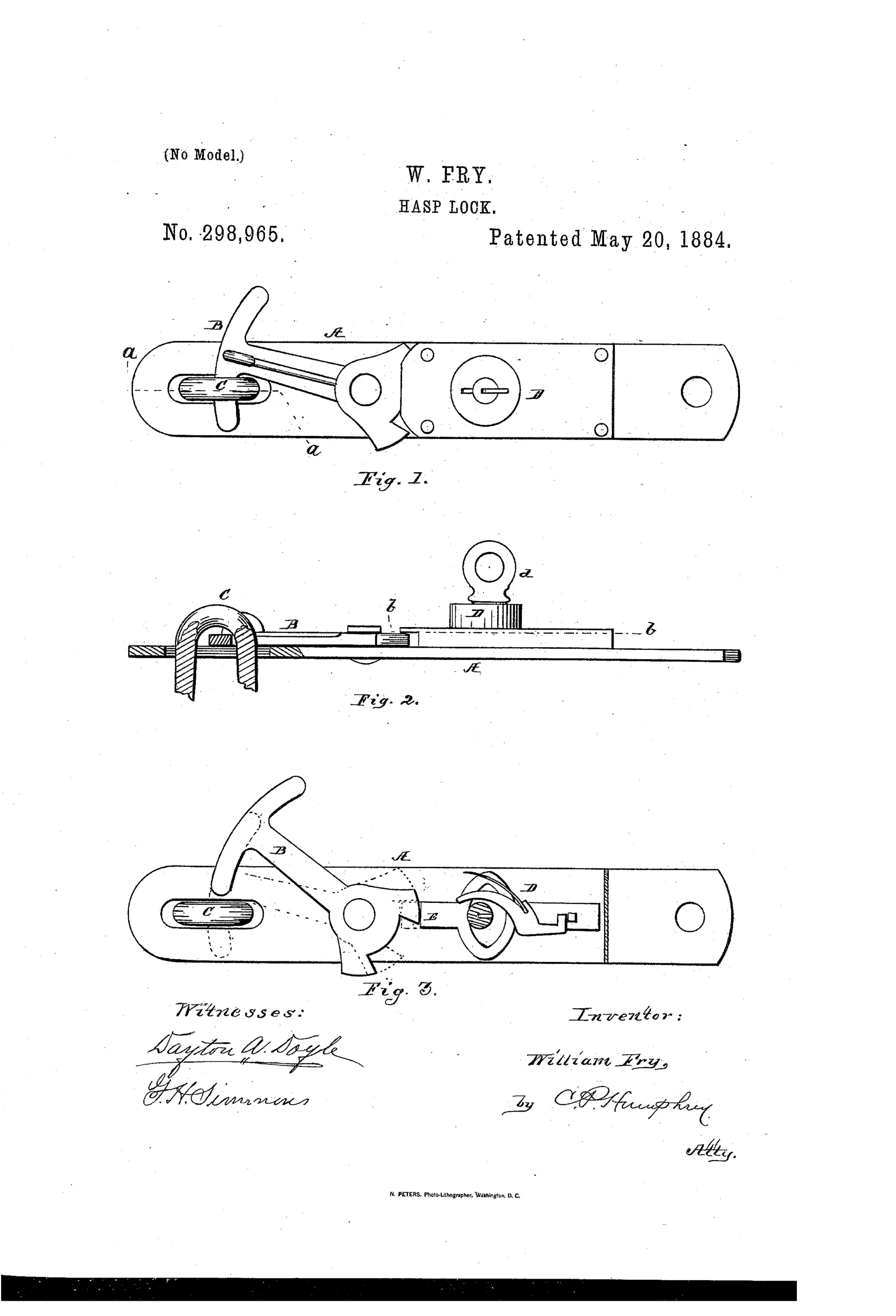
Combination hasp and lock device
⚿ How it works
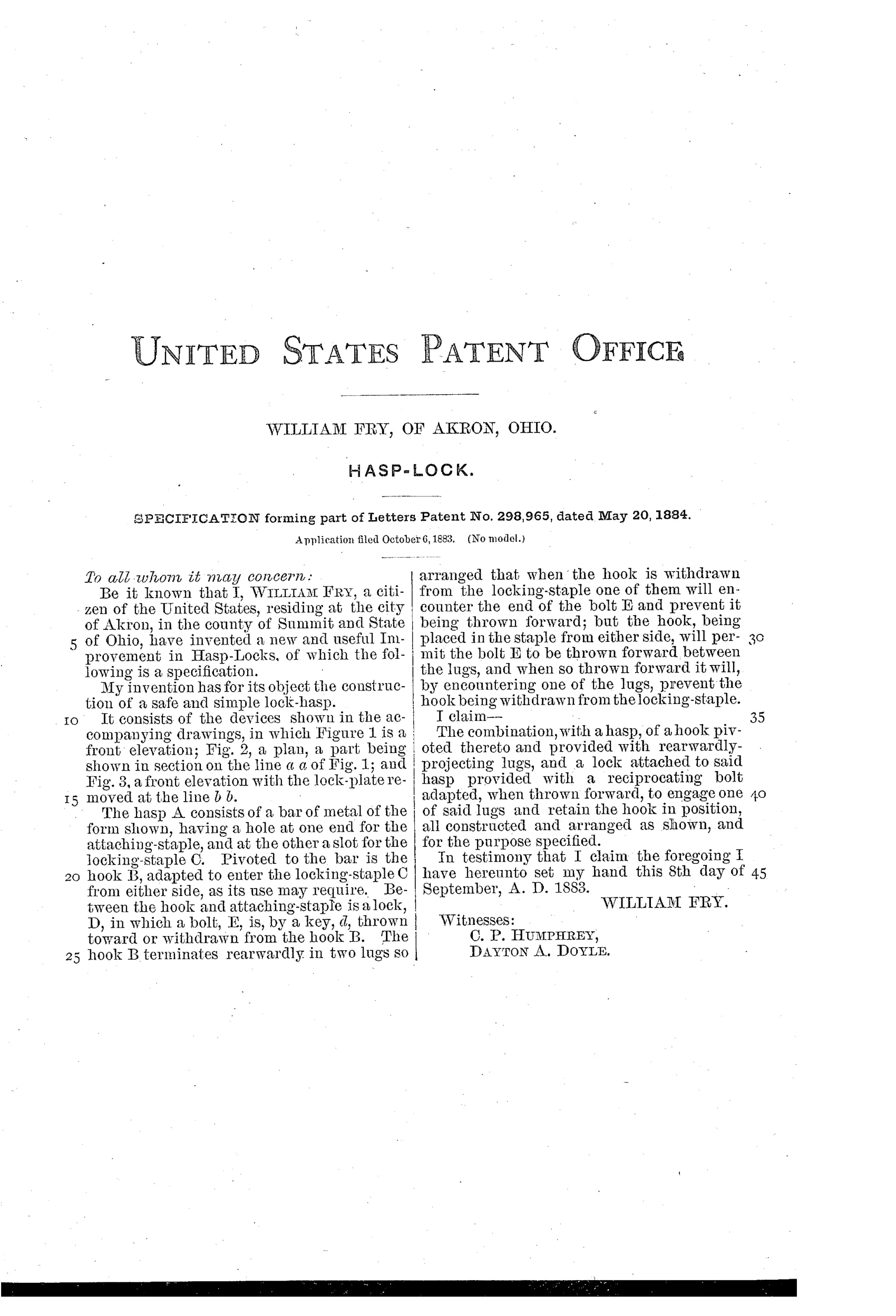
The hasp consists of a metal bar with a hole at one end for the attaching-staple and a slot at the other for the locking-staple. A hook is pivoted to the bar and adapted to enter the locking-staple from either side. Between the hook and attaching-staple is a lock containing a bolt that is thrown toward or withdrawn from the hook by a key. The hook terminates rearwardly in two lugs arranged so that when withdrawn from the staple, one lug blocks the bolt, but when the hook is inserted from either side, the bolt can be thrown forward between the lugs to engage one of them and prevent withdrawal.
⚿ What was claimed
“The combination, with a hasp, of a hook pivoted thereto and provided with rearwardly-projecting lugs, and a lock attached to said hasp provided with a reciprocating bolt adapted, when thrown forward, to engage one of said lugs and retain the hook in position, all constructed and arranged as shown, and for the purpose specified.”
In plain English: The invention combines a hasp with a pivoted hook having rear lugs and a lock with a sliding bolt that engages one lug to hold the hook locked in place.
⚿ In the inventor’s words
“My invention has for its object the construction of a safe and simple lock-hasp.”— William Fry, from the specification
Fate unknown
No production example marked to this design is documented; a surviving hasp with the pivoted double-lug hook would settle it.
⚿ Commentary
Fry's idea is to eliminate the separable padlock altogether. Instead of a hasp closed over a staple with a lock hung through it, the lock body rides permanently on the hasp bar, and a pivoted hook does the work the padlock shackle would normally do. Swing the hook into the locking staple, turn the key, and a sliding bolt inside the case shoots between two rear lugs on the hook, jamming it in place. The clever detail sits in those lugs: Fig. 3 shows that when the hook is withdrawn, one lug physically blocks the bolt, so you cannot lock the device 'open' by accident — the mechanism only closes when the hook is genuinely seated. The hook is also symmetric, entering the staple from either side, which matters on a barn door or chest lid where the hardware might be mounted either hand.
The weakness is the one that haunts all integrated hasp locks: everything is exposed. A padlock can be replaced when it wears or is bested; here the whole assembly comes off with the door. And the pivoted hook, riding proud of the plate, offers a prying attacker a ready lever arm in a way a shackle buried in a staple does not.
Still, this is an honest attempt at a genuine category — integrated hasp locks did find a market later on trunks and toolboxes — and Fry's lug-blocking safeguard shows real thought about how people actually misuse locks.
Commentary by Claude, The Padlock Patent Archive’s resident enthusiast