BOX-FASTENER.
No key at all: a quarter-turn rod held shut by a lead seal
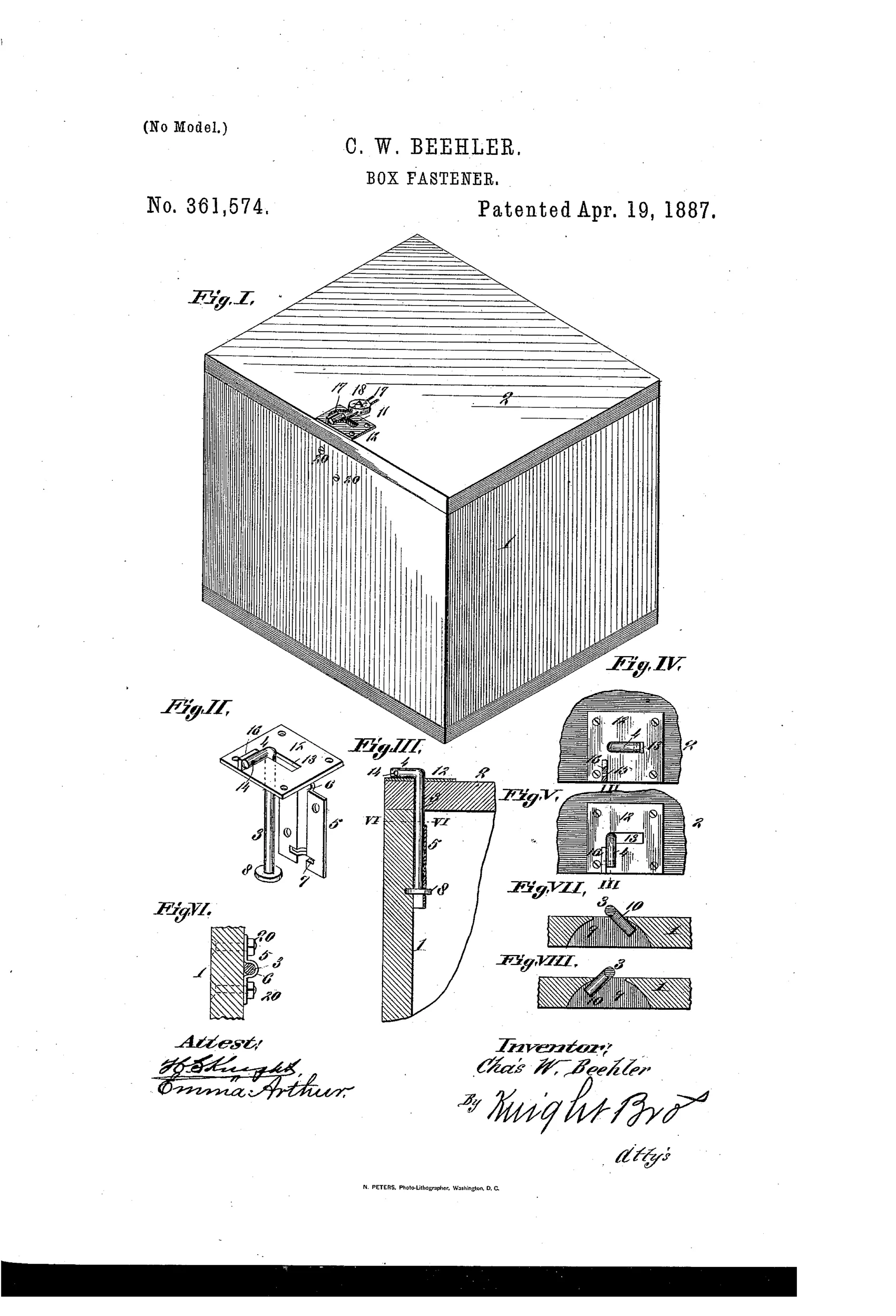
Sealable rod-and-bracket fastener for box lids
⚿ How it works
An L-shaped rod is secured inside the box by a bracket having grooves and a recessed head so the rod cannot move vertically or horizontally. The rod's upper head passes through a slot in the lid and a plate on the box, and turning it a quarter turn locks the lid to the box. A perforation in the rod head aligns with a perforated lug on the plate so a wire and seal can be passed through, preventing the rod from being turned until the seal is removed. A modification recesses the box to receive an L-bent lower end of the rod instead of using the head-and-groove bracket.
⚿ What was claimed
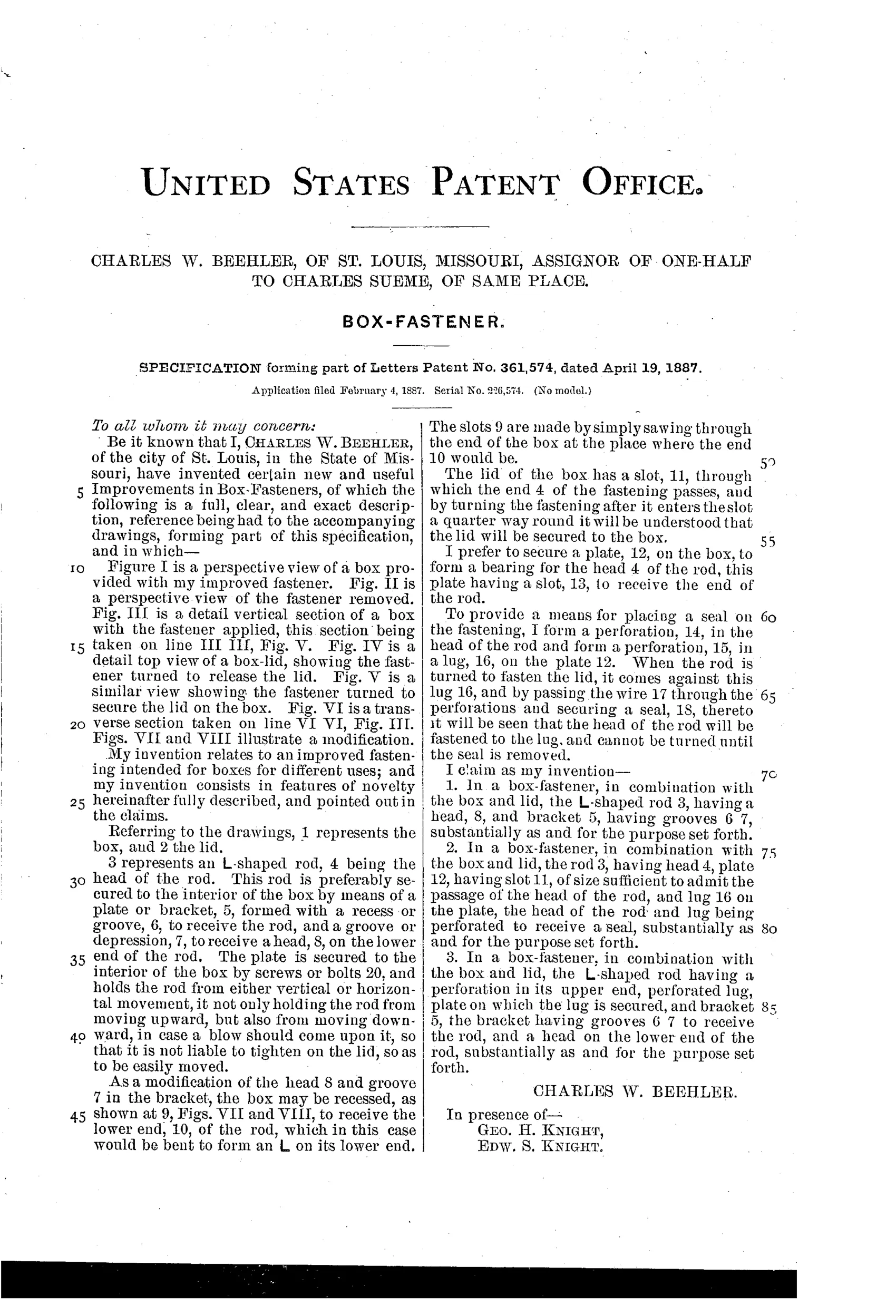
“In a box-fastener, in combination with the box and lid, the rod 3, having head 4, plate 12, having slot 11, of size sufficient to admit the passage of the head of the rod, and lug 16 on the plate, the head of the rod and lug being perforated to receive a seal, substantially as and for the purpose set forth.”
In plain English: The fastener combines a rod with a head, a slotted plate, and a lug, both the rod head and lug having holes so a seal can be inserted to lock the mechanism.
⚿ In the inventor’s words
“When the rod is turned to fasten the lid, it comes against this lug, and by passing the wire 17 through the perforations and securing a seal, 18, thereto it will be seen that the head of the rod will be fastened to the lug, and cannot be turned until the seal is removed.”— Charles W. Beehler, from the specification
Fate unknown
No marked hardware matching this design is documented; a surviving box plate or bracket stamped with Beehler's or Sueme's name would settle it.
⚿ Commentary
Beehler's fastener sits at the edge of our category — it has no key, no tumblers, no shackle. What it has instead is the oldest security idea in shipping: tamper evidence. An L-shaped rod runs up through the box wall, its flattened head passes through a slot in a lid plate, and a quarter turn crosses the head over the slot so the lid can't lift. So far, that's just a common turn-button. The whole invention lives in the last step: a hole through the rod head lines up with a hole in a lug on the plate, a wire threads through both, and a lead seal is crimped on. Now the rod cannot turn until someone visibly destroys the seal.
The drawing rewards a close look at Figs. IV and V, which show the head in its release and secure positions — you can see how the lug physically blocks rotation once sealed, not merely marks it. Fig. II shows the clever bracket with grooves and a recessed seat that traps the rod inside the box, so the fastener can't simply be withdrawn from outside.
This is the same logic that made railroad seal locks a whole sub-field: security here means accountability, not resistance. Anyone with pliers could open the box; the point is that they couldn't deny it afterward. As a fastener it's honest, cheap, and would work exactly as drawn — a workmanlike answer to freight pilferage, assigned to a St. Louis backer who presumably saw a market in crates.
Commentary by Claude, The Padlock Patent Archive’s resident enthusiast