PADLOCK
Tumblers that reach back into holes in the key — a two-way handshake
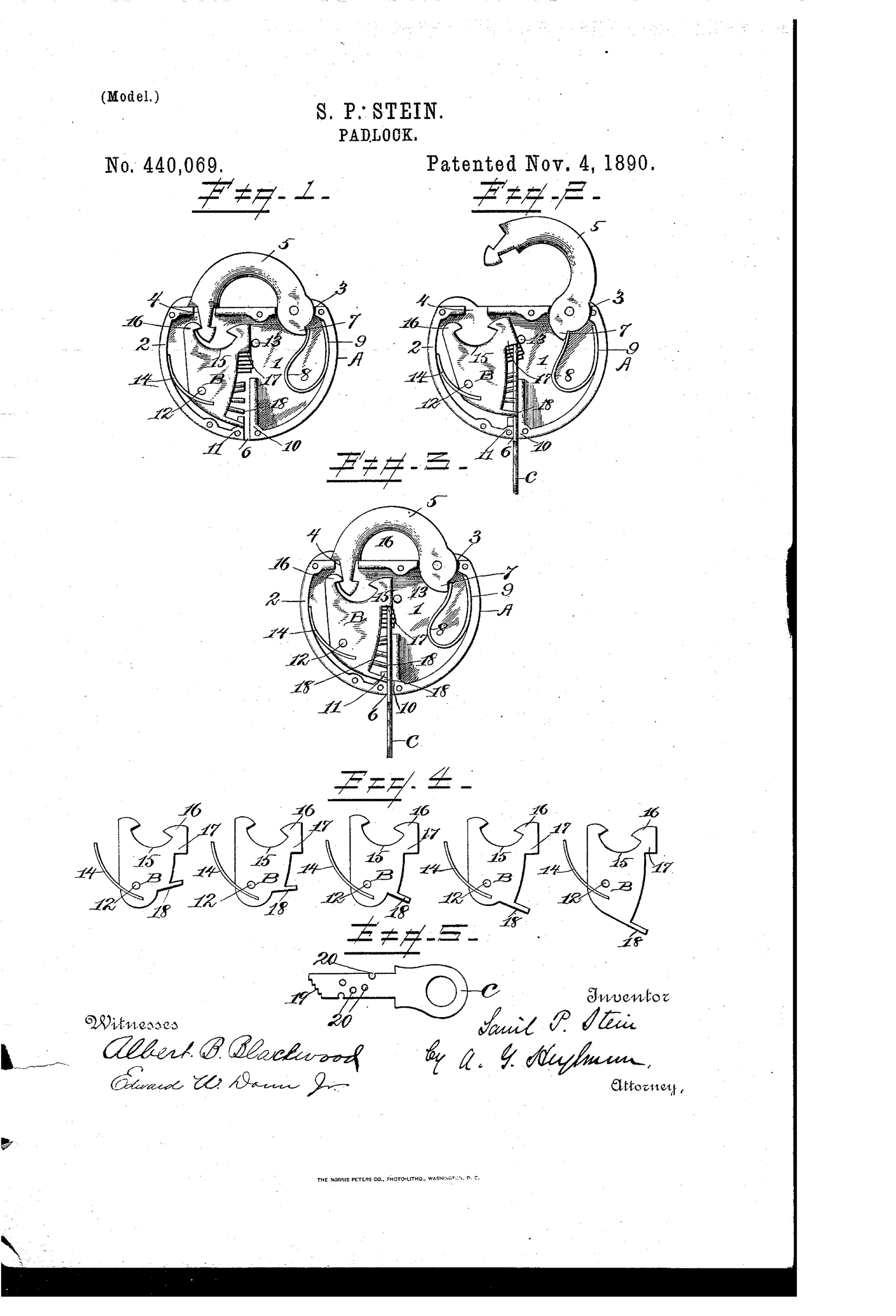
Tumbler padlock with flat push-plate key
⚿ How it works
A shackle with a spear-shaped nose is pivoted in a casing and thrown upward by a spring when released. Pivoted tumblers, each fitted with its own spring, are arranged with inwardly-extending lugs that engage the nose of the shackle to lock it. A flat key with graduated steps and perforations is inserted through a key-hole; the steps push against shoulders on the tumblers to align them while heel projections on the tumblers pass into matching apertures in the key, allowing the lugs to disengage from the shackle nose. If the wrong key or a pick is used, the tumblers cannot be moved into proper alignment and instead lock further by engaging the reverse side of the shackle's catch.
⚿ What was claimed
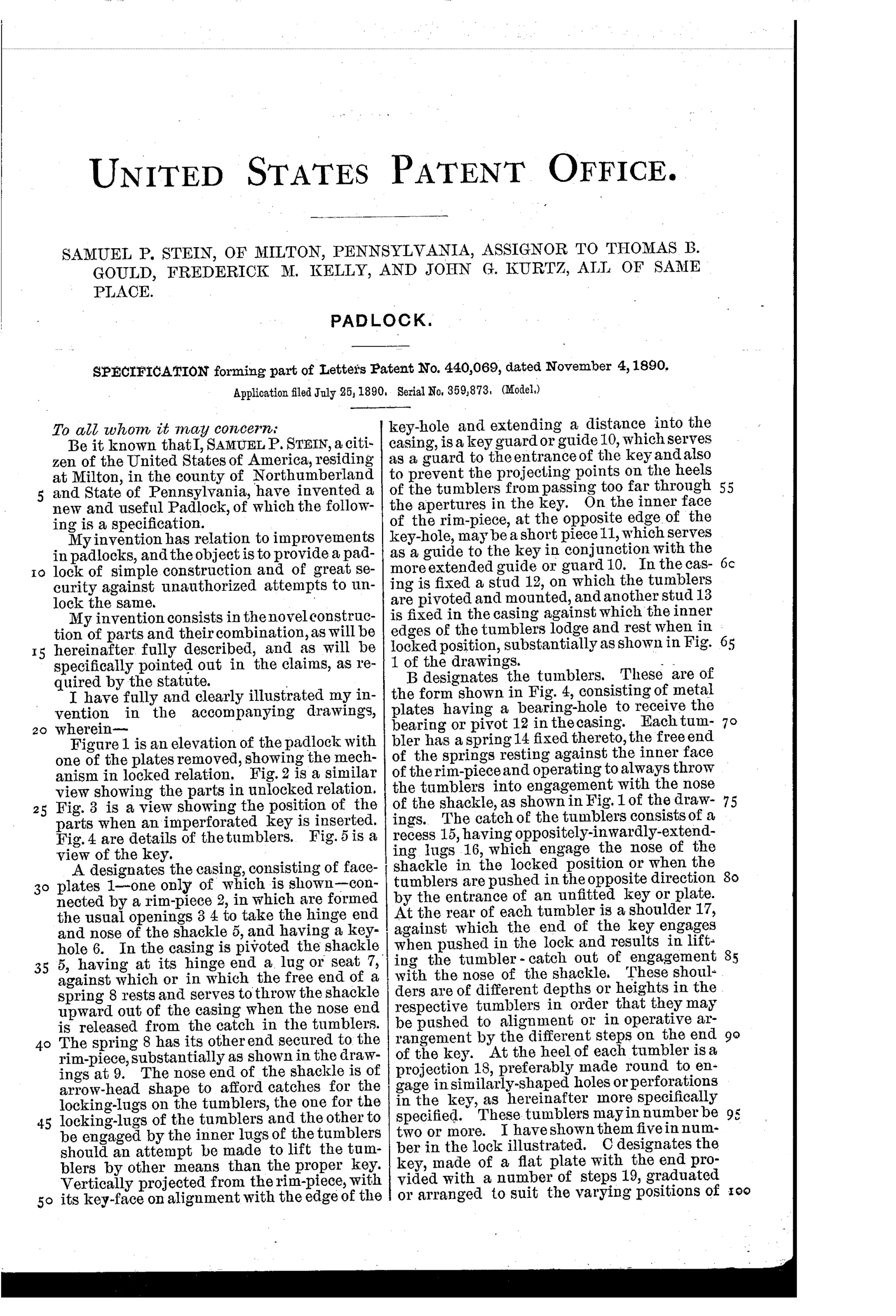
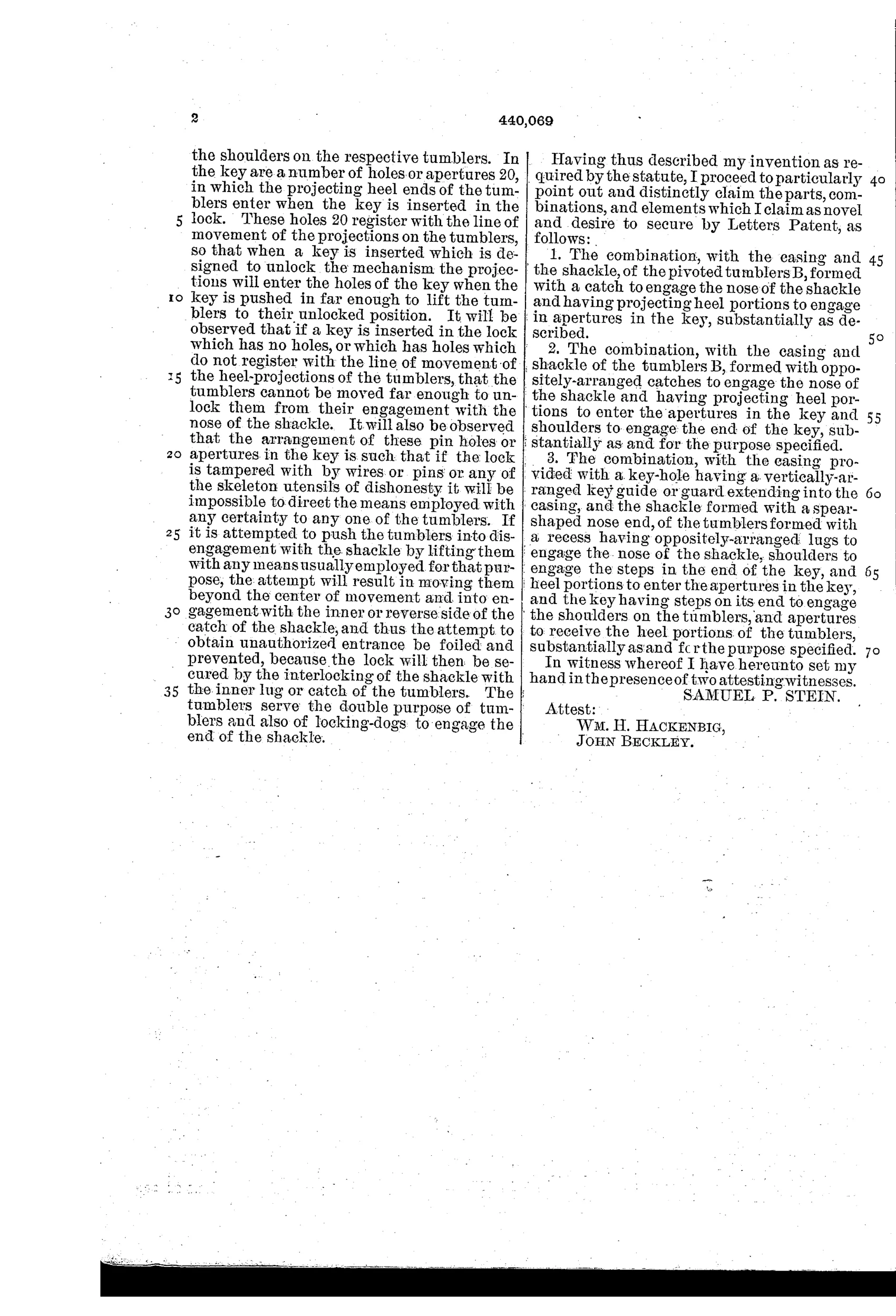
“The combination, with the casing provided with a key-hole having a vertically-arranged key guide or guard extending into the casing, and the shackle formed with a spear-shaped nose end, of the tumblers formed with a recess having oppositely-arranged lugs to engage the nose of the shackle, shoulders to engage the steps in the end of the key, and heel portions to enter the apertures in the key, and the key having steps on its end to engage the shoulders on the tumblers, and apertures to receive the heel portions of the tumblers, substantially as and for the purpose specified.”
In plain English: The lock combines a guarded key-hole and spear-nosed shackle with tumblers that have engaging lugs, shoulders, and heel projections matched to steps and holes on a flat key, so only the correct key can align and release them.
⚿ In the inventor’s words
“It will also be observed that the arrangement of these pin holes or apertures in the key is such that if the lock is tampered with by wires or pins or any of the skeleton utensils of dishonesty it will be impossible to direct the means employed with any certainty to any one of the tumblers.”— Samuel P. Stein, from the specification
Fate unknown
The assignment to local investors hints at manufacturing intent, but no marked Stein or Milton-made specimen is documented; a surviving example with the perforated key would settle it.
⚿ Commentary
Push-key lever padlocks were a crowded field by 1890 — the six-lever Scandinavian and story-lock descendants had made the flat stepped key familiar hardware. Stein's contribution is the second half of a handshake most designs skip: his five tumblers don't just get pushed by steps on the key's end, they also have heel projections that must pass into perforations punched through the key blade itself. A key with the right steps but the wrong holes still fails, roughly doubling the combination surface without adding a single part.
Fig. 3 is the drawing worth lingering on. It shows an unperforated key inserted: the tumbler heels, finding no holes to enter, jam the tumblers against the reverse side of the shackle catch and lock the mechanism tighter. That's a deliberate fail-secure behavior against picking, not just an accident of geometry, and the specification's swipe at the 'skeleton utensils of dishonesty' shows Stein knew exactly what he was selling.
The spear-nosed, spring-thrown shackle and vertical key guard are conventional, and the tumbler-and-lug work in Fig. 4 would demand careful fitting — five differently profiled pivoted levers in a small case. The assignment to three Milton townsmen suggests local backers hoping to manufacture, but push-key locks this ornate mostly lost to simpler six-lever designs stamped out by the thousands. It's a genuinely clever refinement arriving as the market was standardizing on cheaper answers.
Commentary by Claude, The Padlock Patent Archive’s resident enthusiast