PADLOCK.
Split-tumbler combination padlock where inserting the key resets the combination itself
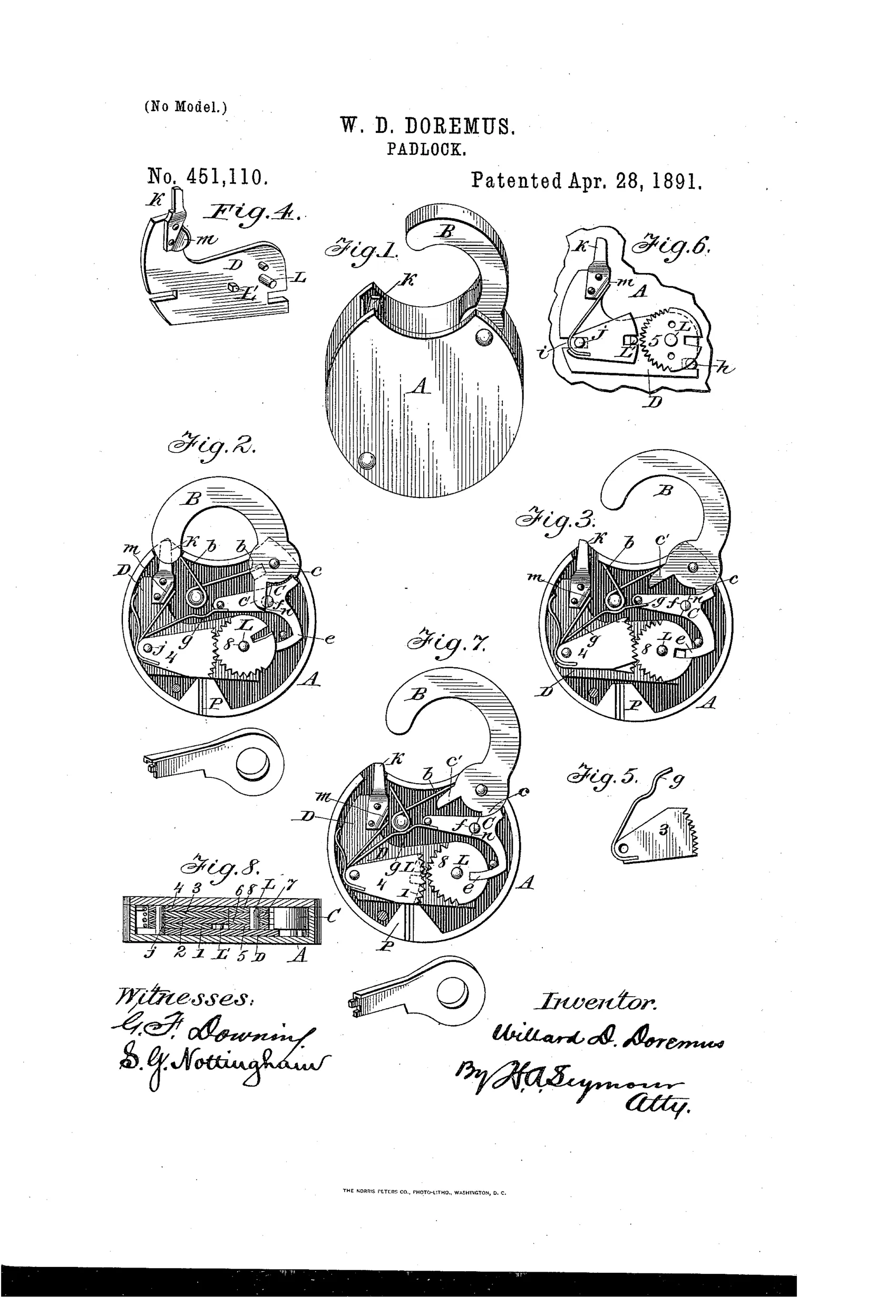
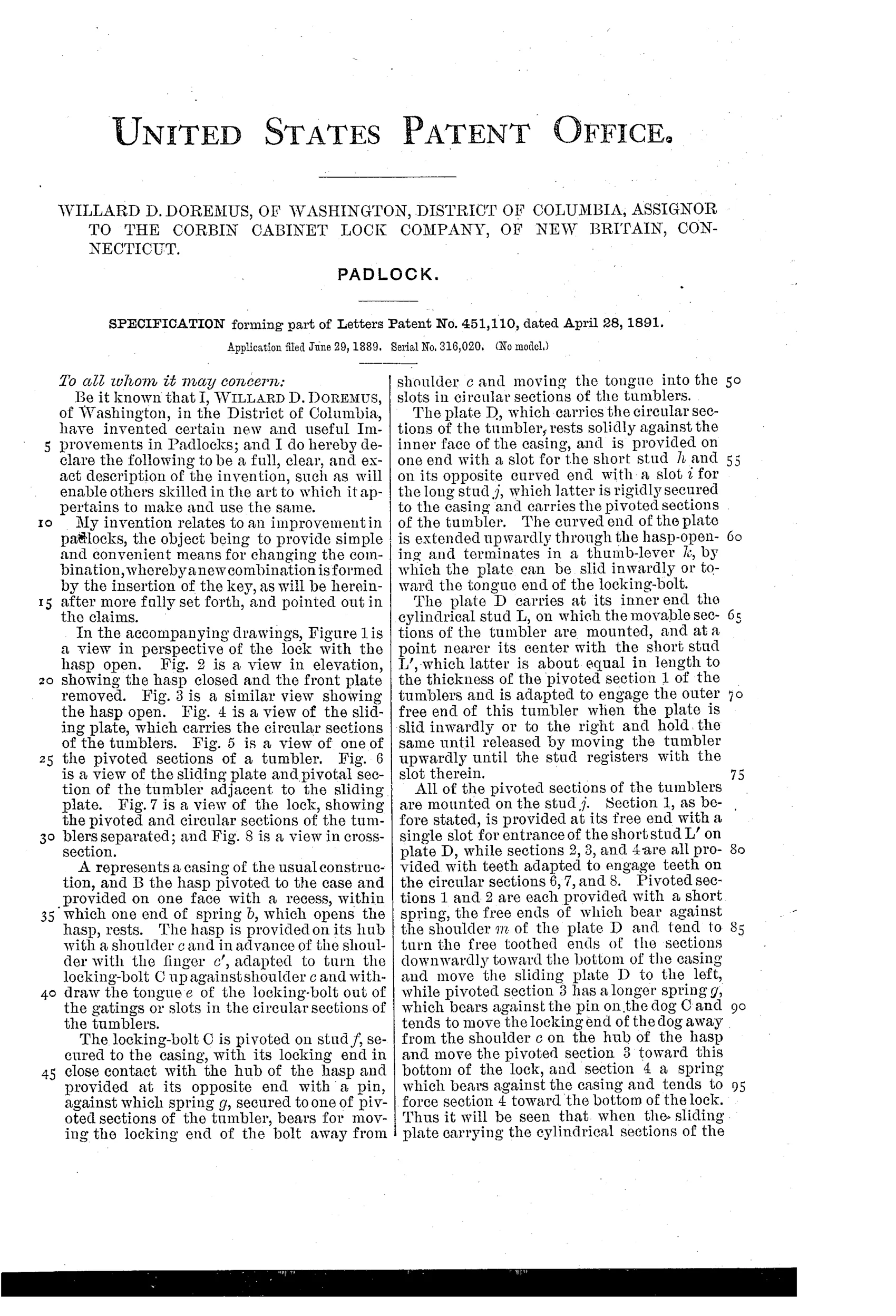
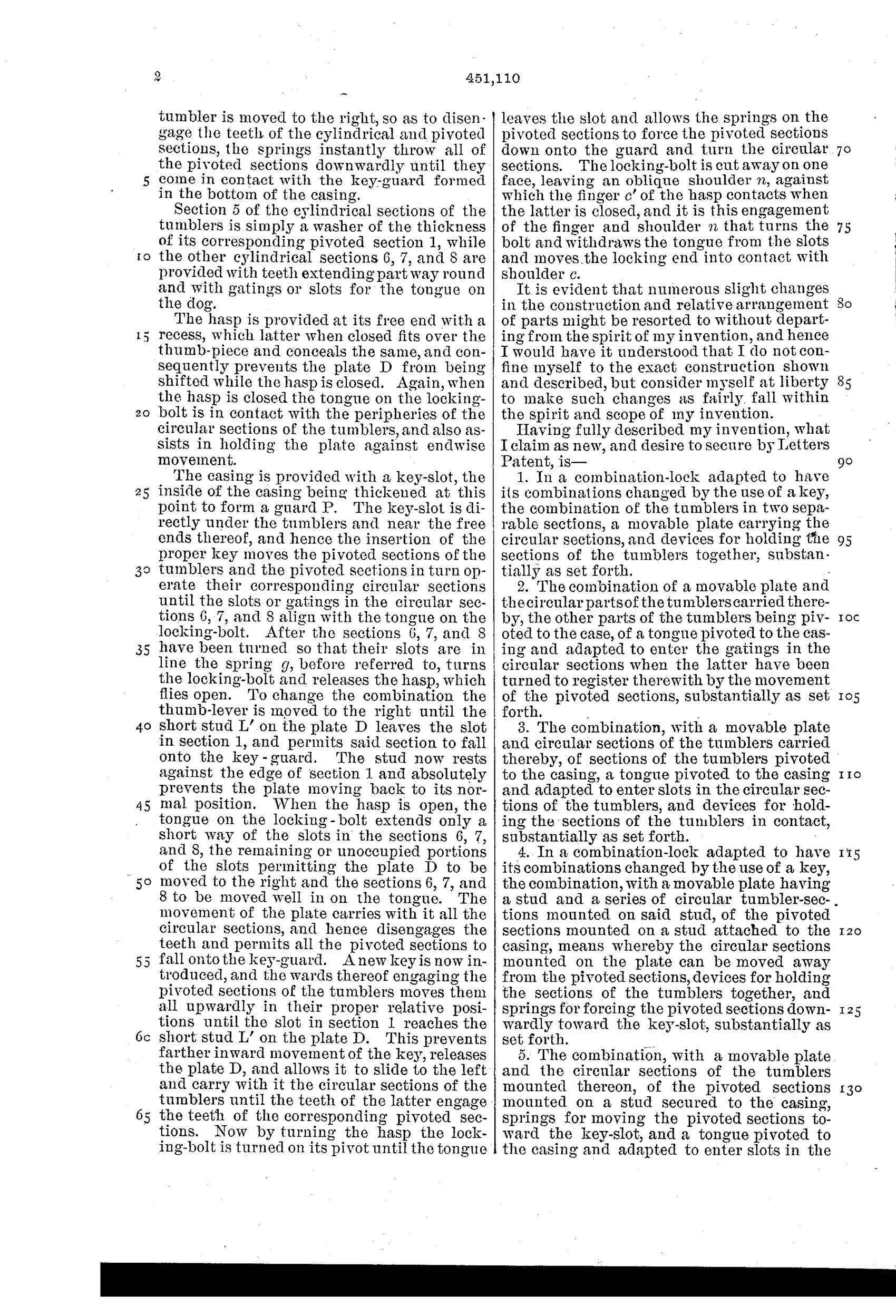
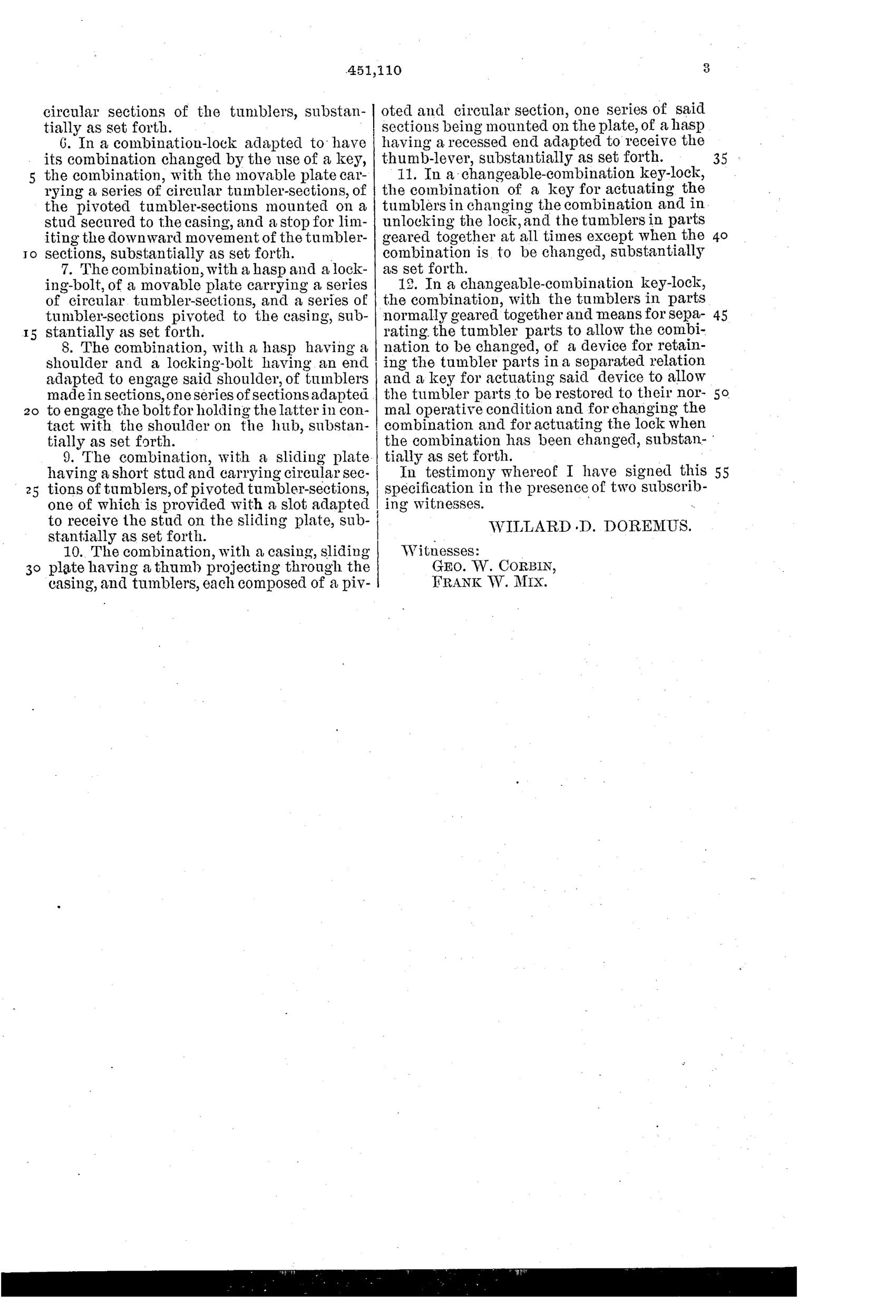
Combination padlock with key-changeable combination
⚿ How it works
The lock uses tumblers made in two separable sections: pivoted sections mounted on a stud secured to the casing, and circular sections carried on a movable sliding plate. Springs normally force the pivoted sections toward the key-guard, disengaging their teeth from the circular sections so a key can move them independently. A key inserted through a slot beneath the tumblers raises the pivoted sections until their slots register with a stud on the sliding plate, allowing the plate (and its circular sections) to shift and re-engage the teeth in a new combination. Once aligned, a spring turns a locking-bolt whose tongue withdraws from the gatings in the circular sections, releasing the hasp, which is pivoted to the casing and closed by contact of a finger against a shoulder on the bolt.
⚿ What was claimed
“In a combination-lock adapted to have its combinations changed by the use of a key, the combination of the tumblers in two separable sections, a movable plate carrying the circular sections, and devices for holding the sections of the tumblers together, substantially as set forth.”
In plain English: A combination lock whose tumblers are split into two separable parts—one on a movable plate and one pivoted to the case—that can be re-aligned by a key to change the combination, with a mechanism to hold the parts together.
⚿ In the inventor’s words
“My invention relates to an improvement in padlocks, the object being to provide simple and convenient means for changing the combination, whereby a new combination is formed by the insertion of the key, as will be hereinafter more fully set forth, and pointed out in the claims.”— Willard D. Doremus, from the specification
Fate unknown
Corbin Cabinet Lock's ownership makes production plausible, but no marked specimen of this split-tumbler design is documented; a surviving example or catalog listing would settle it.
⚿ More by Willard D. Doremus
- PADLOCK (1889)
⚿ Commentary
Most changeable-combination locks of this era make you disassemble something — pull a plate, loosen a screw, fiddle with wheels off their arbor. Doremus's trick is neater: each tumbler is sawn in two, a toothed circular section riding on a sliding plate and a pivoted section anchored to the case. Springs normally hold the halves meshed as one tumbler. Push the flat key in through the slot beneath, and the pivoted sections lift until their slots line up with a stud, freeing the plate to shift and unmesh the teeth. Now the circular sections can be spun to any new position, and when the key withdraws, the halves re-engage — new combination, no tools, no opened case.
Figure 7 is the one to study: it shows the two tumbler families deliberately separated, which makes the whole scheme legible in a way Figs. 2 and 3 (crowded with springs and the bolt tongue) do not. Fig. 8's cross-section shows how thin the sliding plate really is — this is watchmaker-grade stacking inside a padlock case.
The assignment to Corbin Cabinet Lock of New Britain matters. This isn't a lone tinkerer's fantasy; a serious hardware maker paid for it. Whether they judged the split tumblers too fussy for a padlock that gets rained on and dropped is another question — the meshing teeth demand tolerances that dirt and rust would punish. Clever on the bench, fragile in the pocket.
Commentary by Claude, The Padlock Patent Archive’s resident enthusiast