LOCK.
A laminated dog that locks tighter when you rap the case
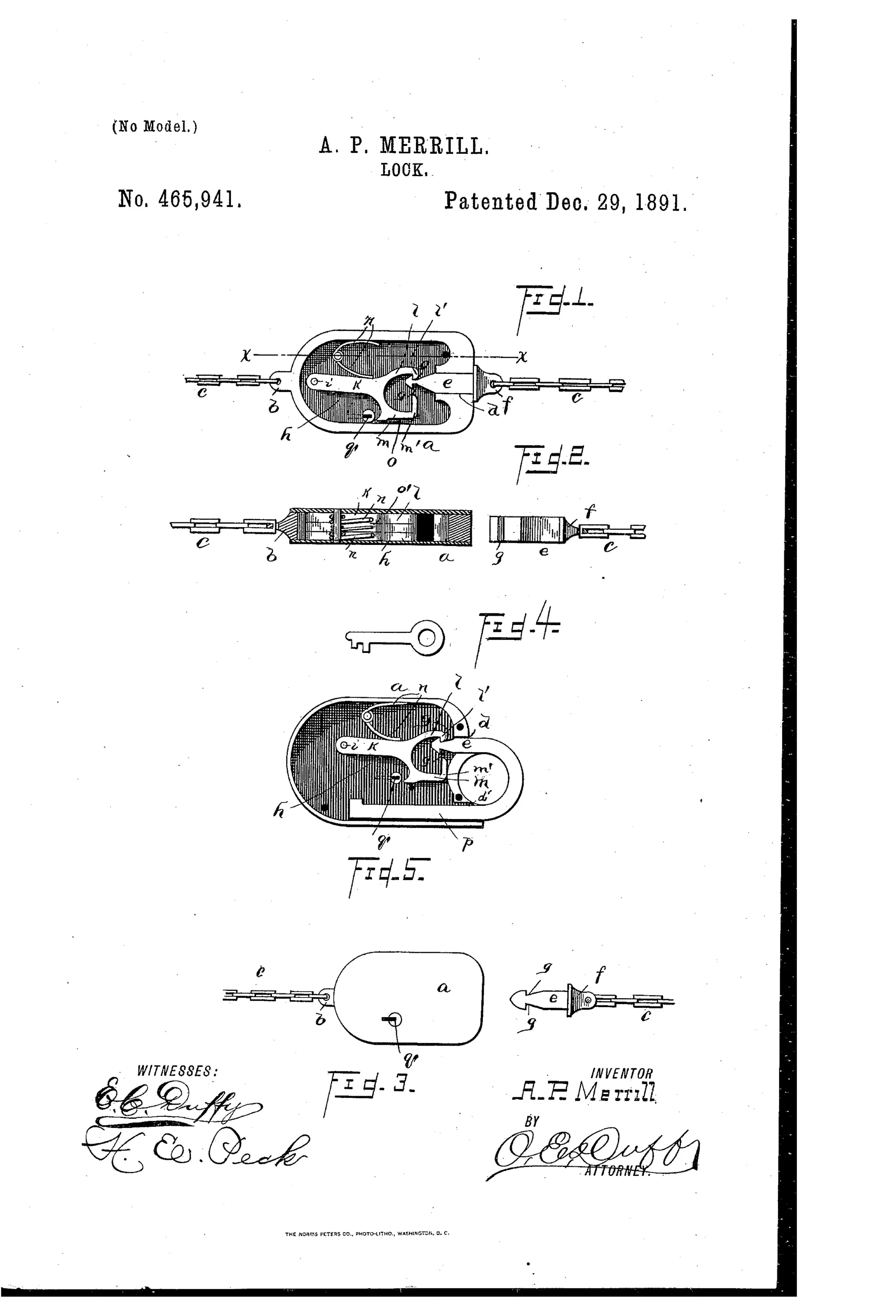
A chain-and-bolt lock with swinging dog
⚿ How it works
The lock consists of a metal case with a hasp opening at one end and a bolt with two shoulders at the inner end of a chain. A single locking-dog, pivoted at its shank and having two branching arms with inturned locking ends, swings laterally within the case to engage one shoulder of the bolt. The dog is built from several longitudinal spring-loaded sections that normally move together, but a lighter-tensioned center spring lets that section spring back faster if the case is struck sharply, so the opposite shoulder engages before the others can disengage, preventing the lock from being jarred open. A key inserted through a keyhole swings the dog laterally against spring tension to free the bolt shoulder for withdrawal.
⚿ What was claimed
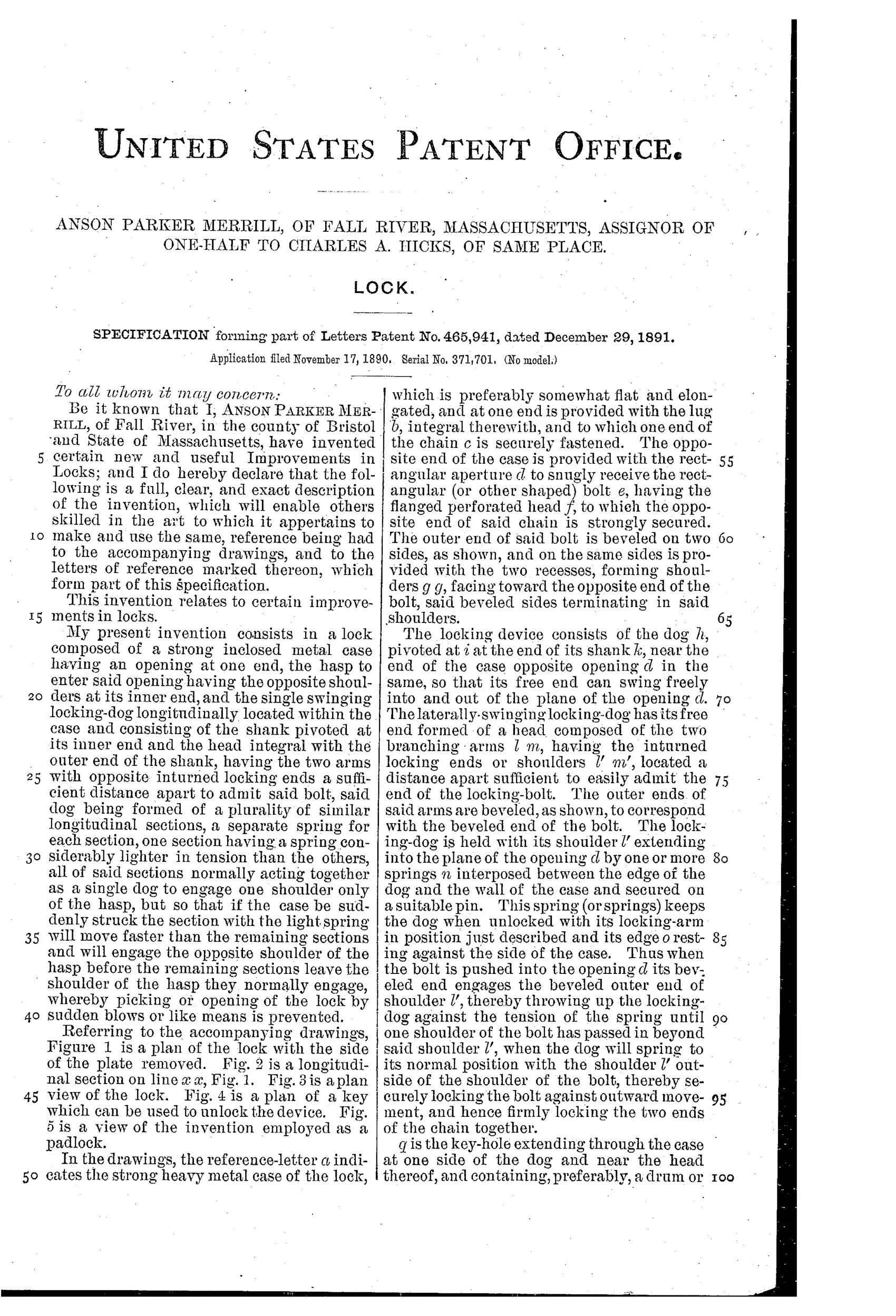
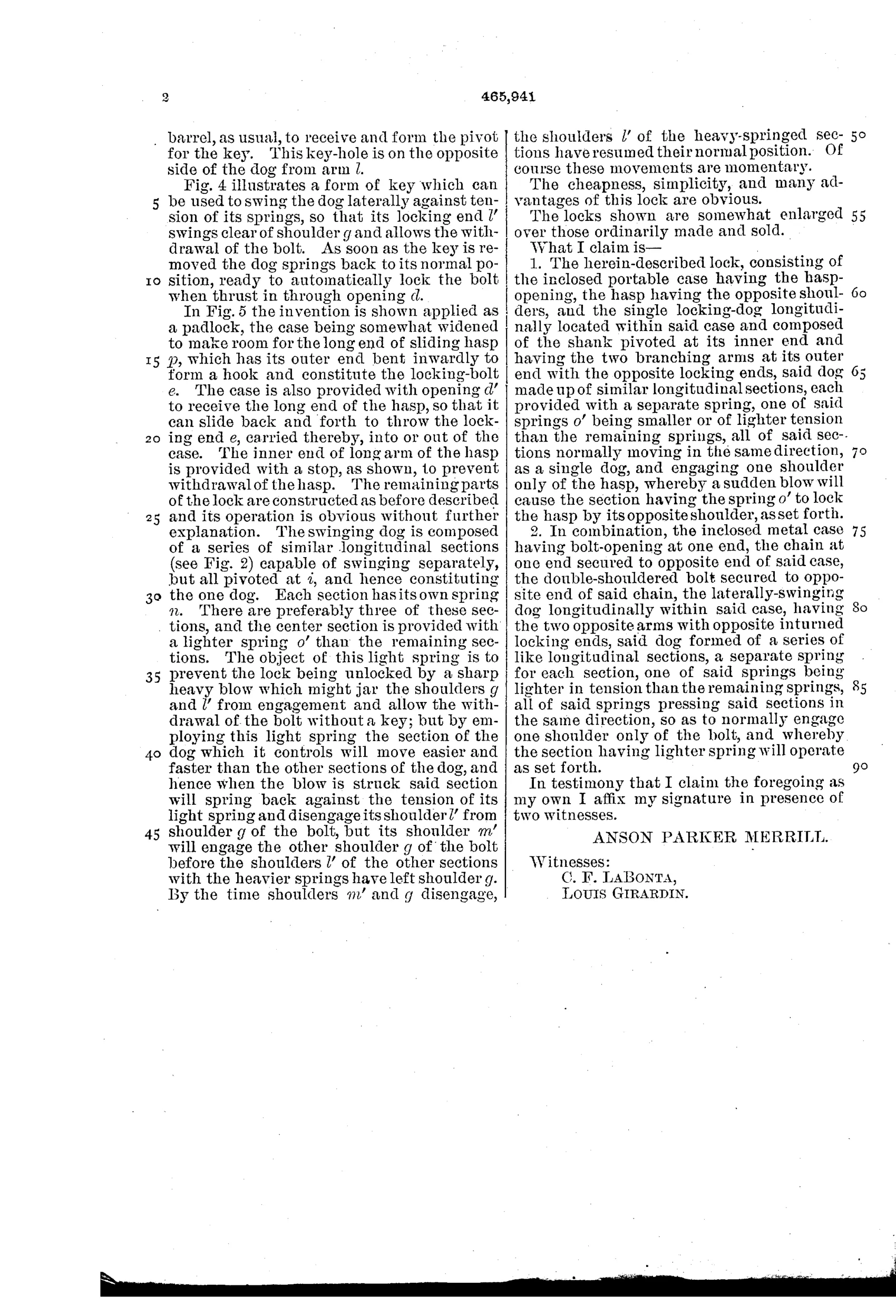
“The herein-described lock, consisting of the inclosed portable case having the hasp-opening, the hasp having the opposite shoulders, and the single locking-dog longitudinally located within said case and composed of the shank pivoted at its inner end and having the two branching arms at its outer end with the opposite locking ends, said dog made up of similar longitudinal sections, each provided with a separate spring, one of said springs o' being smaller or of lighter tension than the remaining springs, all of said sections normally moving in the same direction, as a single dog, and engaging one shoulder only of the hasp, whereby a sudden blow will cause the section having the spring o' to lock the hasp by its opposite shoulder, as set forth.”
In plain English: The lock has a case with a hasp bolt having two shoulders, and a single pivoting locking dog made of several spring-loaded sections that normally act together to engage one shoulder, but one section has a lighter spring so that if the case is struck suddenly, that section moves faster and locks onto the opposite shoulder before the lock can be forced open.
⚿ In the inventor’s words
“The cheapness, simplicity, and many advantages of this lock are obvious.”— Anson Parker Merrill, from the specification
Fate unknown
No production example of this Fall River chain lock is documented; a marked specimen with the sectional dog would settle it, though the odds favor paper.
⚿ Commentary
Merrill is solving a real problem here, and one that lock-pickers still exploit today: rapping. Strike a cheap spring-loaded padlock sharply and the dog bounces off the bolt for a fraction of a second — long enough, with tension on the shackle, to pull it open. His answer is unusually clever for 1891. The locking dog isn't a single piece; it's a stack of longitudinal sections, each with its own spring, and one spring is deliberately lighter than the rest. Normally they all move together as one dog engaging one shoulder of the bolt. But a sudden blow throws the light-sprung section back faster than its neighbors, and it catches the bolt's opposite shoulder before the heavier sections can clear the first. The attack that would open an ordinary lock double-locks this one.
Figs. 1 and 2 repay a close look: the two-armed dog with inturned tips straddles the double-shouldered bolt at the end of the chain, and the key simply swings the whole assembly laterally — a wardless, low-security keyway, honestly. All the sophistication went into the anti-rap laminations, none into resisting a false key.
That trade-off probably tells the story. As a chain lock for gates or bicycles it's a niche article, and the multi-section sprung dog adds fitting cost that a Scandinavian-pattern lever lock avoided. The claim that its 'cheapness, simplicity, and many advantages are obvious' reads more hopeful than descriptive. Still, the inertial-locking idea itself was decades ahead of its everyday use.
Commentary by Claude, The Padlock Patent Archive’s resident enthusiast