PADLOCK.
Anti-friction parting plates attack the picker's oldest trick: tumblers that drag neighbors along
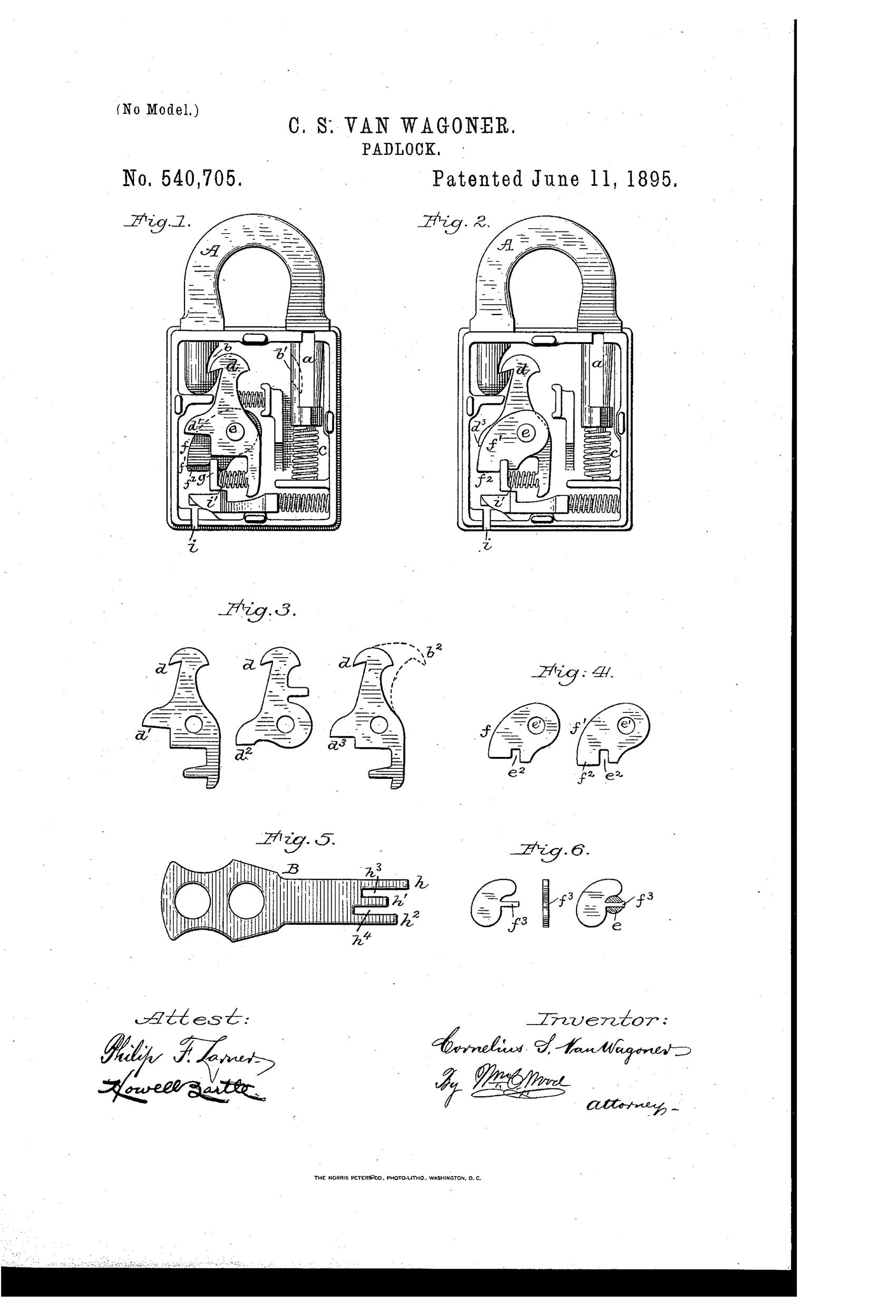
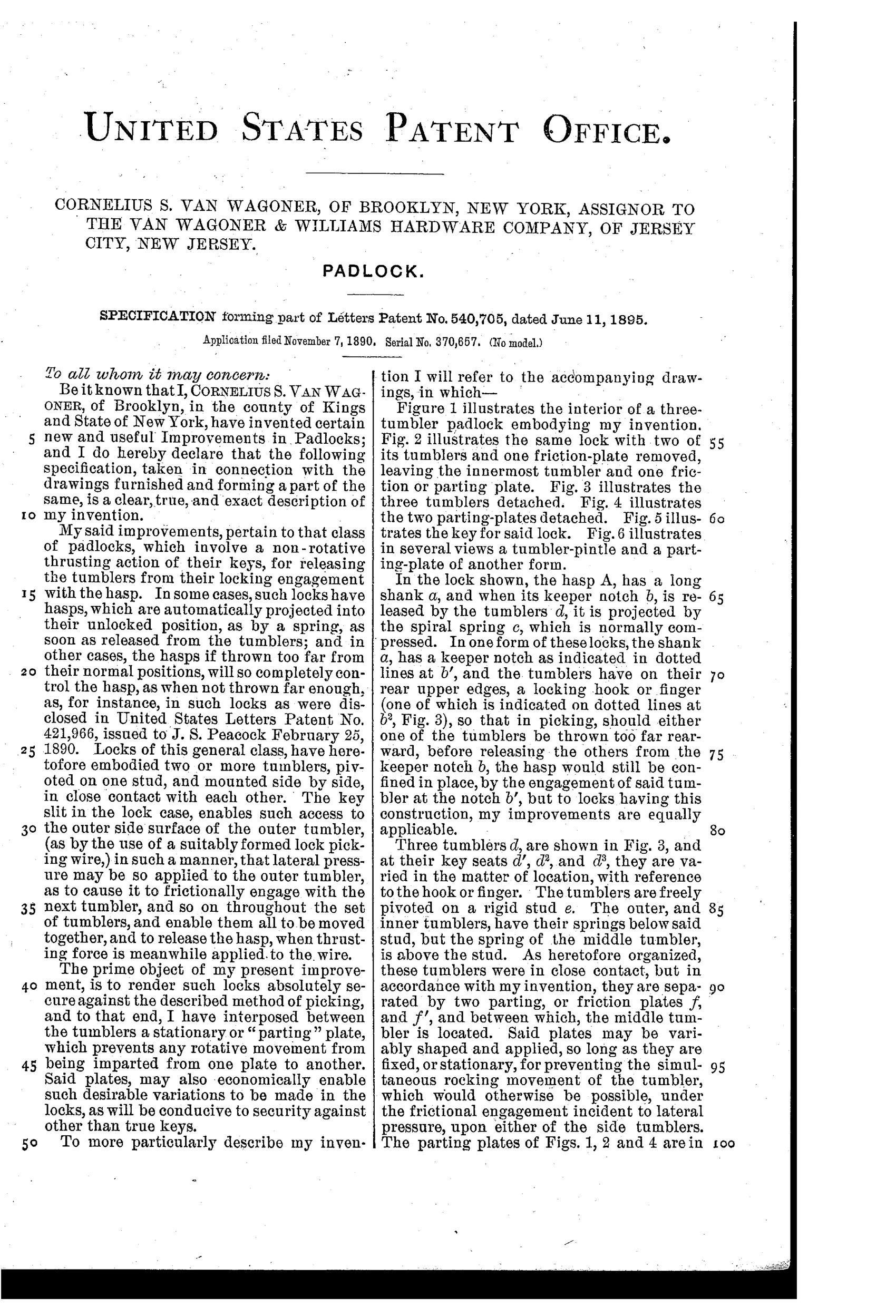
Pick-resistant tumbler padlock with parting plates
⚿ How it works
A three-tumbler padlock uses pivoted tumblers freely mounted on a rigid stud that engage a spring-loaded hasp. Stationary parting or friction plates are interposed between the tumblers and locked in place on the stud, preventing one tumbler from frictionally transmitting rocking motion to another. A push-type key with three nibs and corresponding slots enters through a spring-latched key slot to thrust the tumblers into alignment, releasing the hasp which is then projected outward by a compressed spiral spring.
⚿ What was claimed
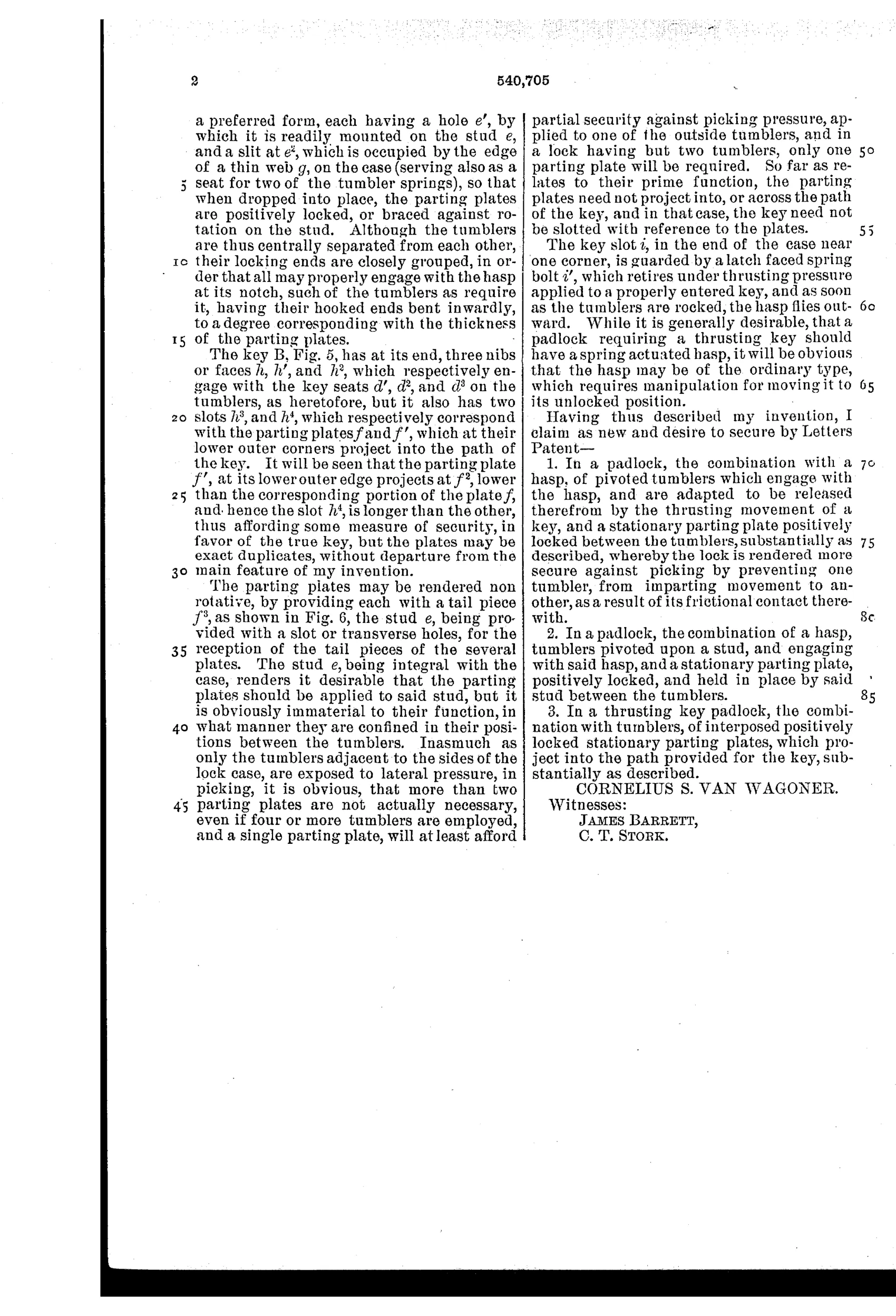
“In a padlock, the combination with a hasp, of pivoted tumblers which engage with the hasp, and are adapted to be released therefrom by the thrusting movement of a key, and a stationary parting plate positively locked between the tumblers, substantially as described, whereby the lock is rendered more secure against picking by preventing one tumbler, from imparting movement to another, as a result of its frictional contact therewith.”
In plain English: The padlock combines hasp-engaging pivoted tumblers, released by a thrusting key, with a fixed parting plate locked between the tumblers so that picking one tumbler cannot drag the others along with it.
⚿ In the inventor’s words
“The prime object of my present improvement, is to render such locks absolutely secure against the described method of picking.”— Cornelius S. Van Wagoner, from the specification
Fate unknown
The assignee was a real hardware concern and the design is cheap to build, but I know of no documented specimen; a marked Van Wagoner & Williams push-key lock matching Fig. 1 would settle it.
⚿ Commentary
Every push-key lever padlock of this era shared a quiet vulnerability: stack pivoted tumblers on one stud and friction couples them. A picker who lifts one tumbler feels the others shift with it, and can walk the whole stack into alignment with a bent wire and patience. Van Wagoner's answer is almost embarrassingly simple — slip a stationary plate between each pair of tumblers and lock those plates rigidly to the stud. Now each tumbler rubs only against fixed steel. Move one, and its neighbors sit dead still. Every tumbler must be addressed independently, which is exactly what the legitimate three-nibbed key does in a single thrust.
Fig. 3 rewards a close look: the three tumblers carry key seats at deliberately different heights, so no single-depth probe can sweep them. Fig. 4 shows the parting plates themselves, kidney-shaped with keyed slots that prevent them rotating — the 'positively locked' language in the claim is doing real work there. The spring-projected hasp and latched key slot are conventional dressing around the one genuine idea.
This sits squarely in the 1890s refinement wave, when push-key lever padlocks were cheap, common, and known to be pickable, and inventors chased security at pennies of added cost. Two stamped plates per lock is about as economical as pick resistance gets. The claim of 'absolutely secure' is inventor's optimism, but the friction-isolation logic is sound and the same principle survives in later lever-lock practice.
Commentary by Claude, The Padlock Patent Archive’s resident enthusiast