IMPROVEMENT IN HASP-LOCKS
A guard tumbler that must be lifted before the other tumblers will budge
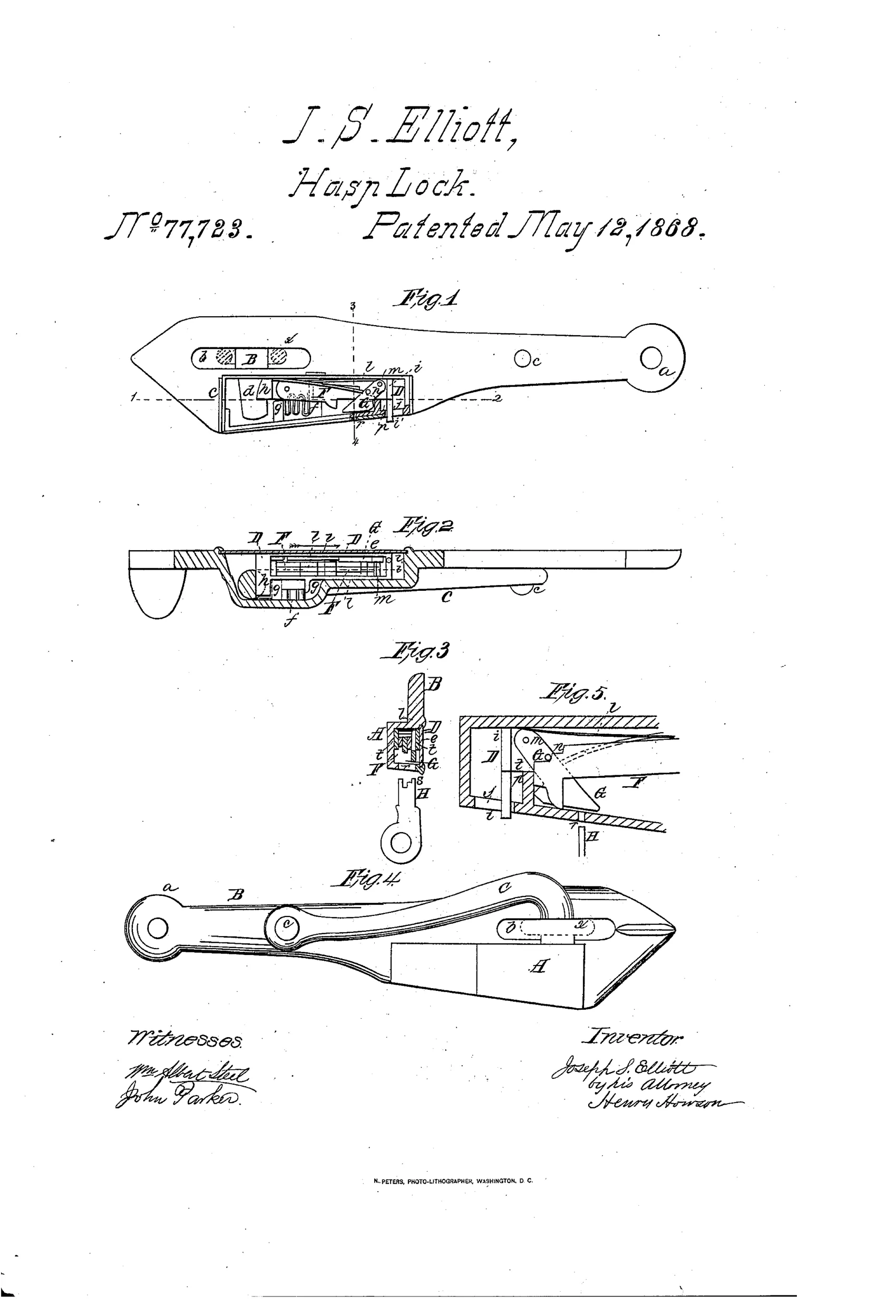
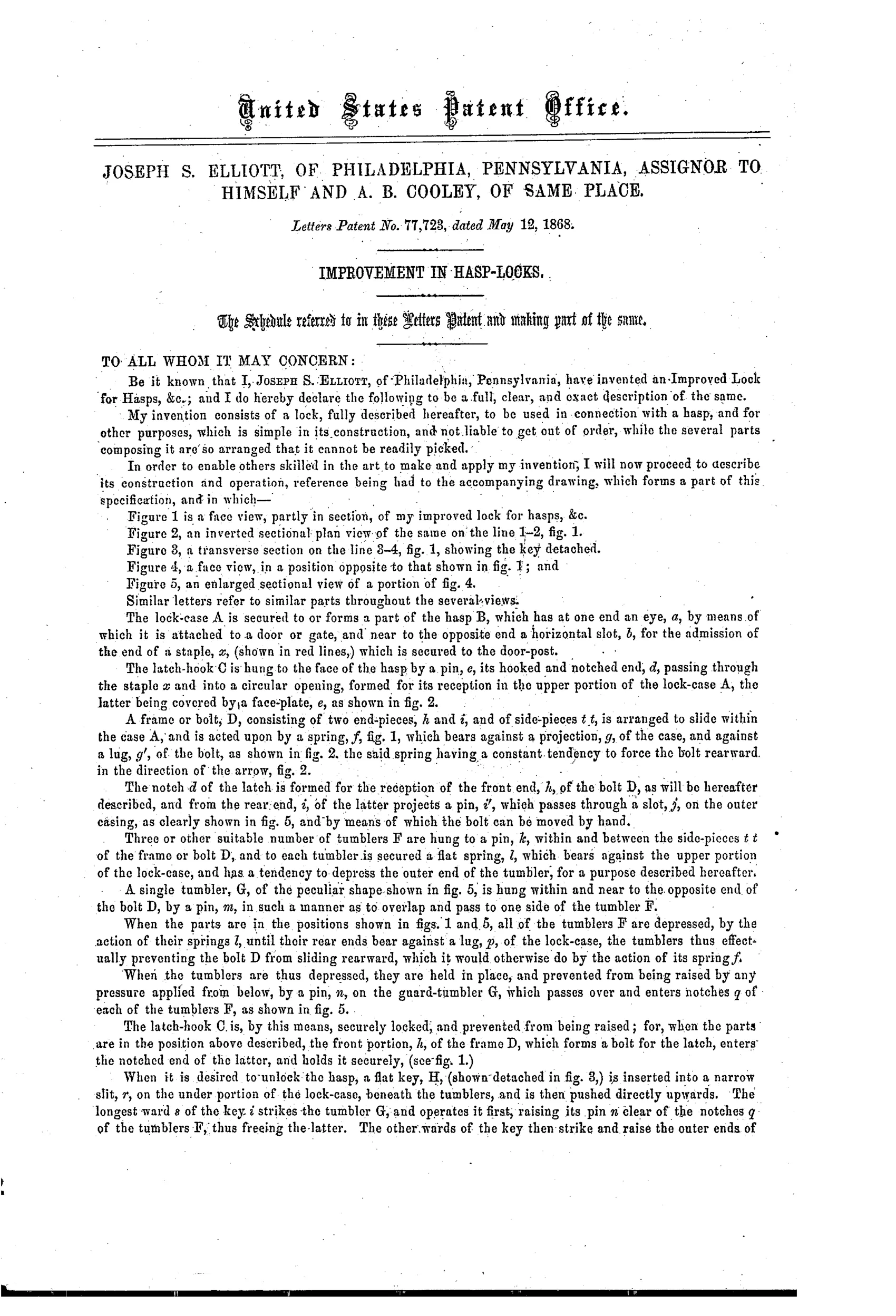
A tumbler-locking mechanism for a door hasp
⚿ How it works
A latch-hook is hinged to the hasp face and its notched end enters a lock-case through a staple attached to the door-post. Inside the case a spring-loaded bolt slides to engage the latch's notch, while several lever tumblers, held down by their own springs, block the bolt from retracting. A single guard-tumbler overlaps the others and locks their notches with a pin so that no tumbler can be raised until it is first cleared. A flat key inserted from below raises the guard-tumbler first, freeing the other tumblers, which the key's wards then lift clear of a case projection, allowing the spring to draw the bolt back and release the latch-hook.
⚿ What was claimed
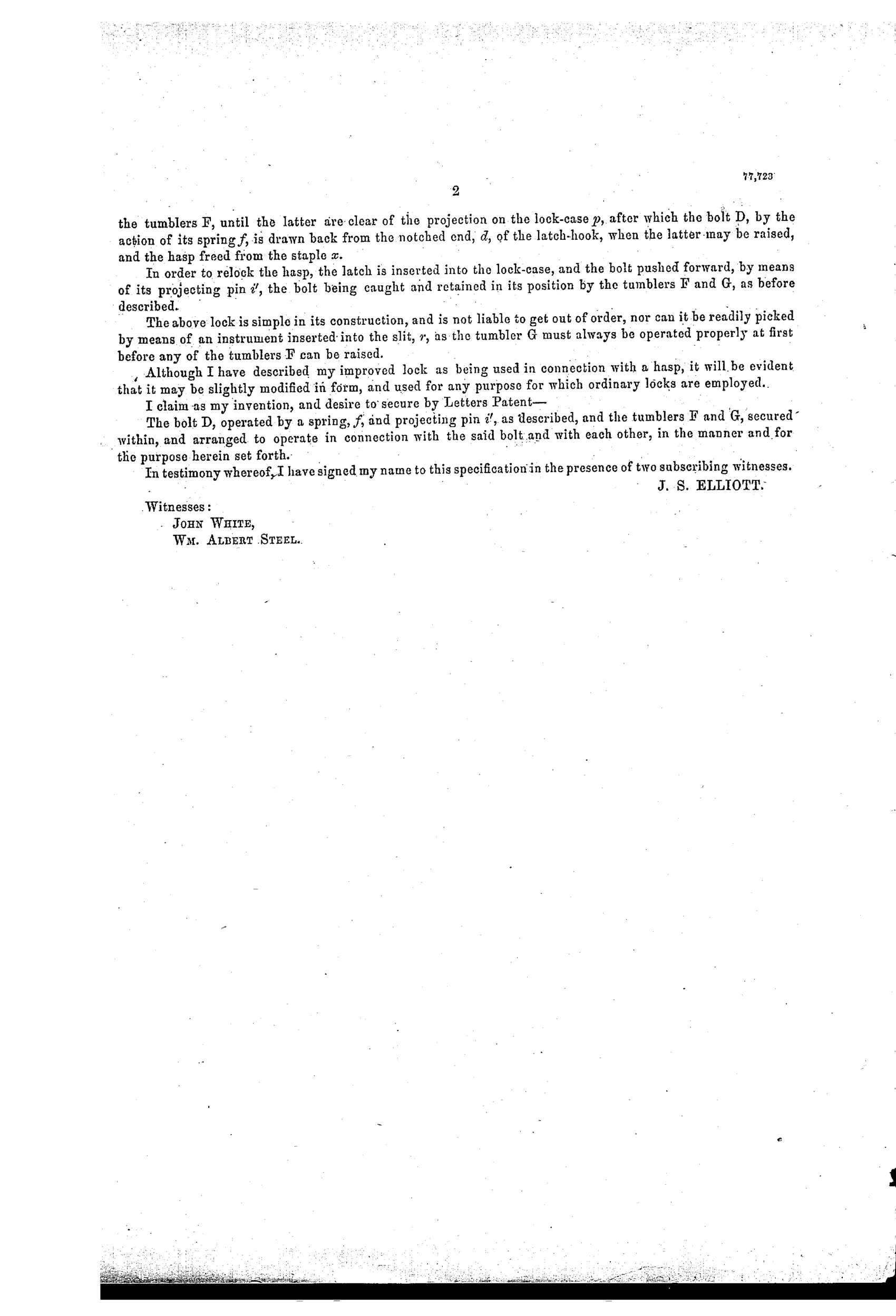
“The bolt D, operated by a spring, f, and projecting pin i', as described, and the tumblers F and G, secured within, and arranged to operate in connection with the said bolt and with each other, in the manner and for the purpose herein set forth.”
In plain English: The claim covers the spring-driven bolt with its projecting pin, together with the set of tumblers that work together with the bolt and each other as described.
⚿ In the inventor’s words
“The above lock is simple in its construction, and is not liable to get out of order, nor can it be readily picked by means of an instrument inserted into the slit, r, as the tumbler G must always be operated properly at first before any of the tumblers F can be raised.”— Joseph S. Elliott, from the specification
Fate unknown
No manufactured example of this Philadelphia hasp lock is documented to my knowledge; a marked specimen or hardware catalog listing would settle it.
⚿ Patented the same day
- IMPROVEMENT IN PADLOCKS — Frank F. Landis
⚿ Commentary
Elliott's 1868 hasp lock is a self-contained answer to the padlock: instead of hanging a lock through a staple, he builds the lock into the hasp itself. A hinged latch-hook on the hasp face drops its notched end through the staple into a fixed case, where a spring-loaded bolt catches the notch. Everything that matters happens inside that case, out of the weather and away from hammers — a real point in its favor over the exposed shackle of a cheap padlock.
The mechanically interesting part is the guard tumbler G. The ordinary lever tumblers F block the bolt as you'd expect, but G overlaps them and pins their notches, so none of them can be raised at all until G is cleared first. The flat key, pushed in from below, lifts the guard before its wards touch the working tumblers. It's a two-stage sequence aimed squarely at the picker probing through the key slit — you can't even test the tumblers until you've dealt with the gatekeeper. Elliott says as much in the specification, and for 1868 it's a thoughtful bit of layered security.
Where it sits in the story: this is the lever-tumbler era doing what it did best — stacking obstacles — a few years before Yale's pin tumbler made such elaborations feel baroque. Fig. 2's inverted section repays a close look; the tumbler stack and bolt spring are all packed into a case barely thicker than the hasp. Whether it survived barn-door abuse and grit is another question the drawing can't answer.
Commentary by Claude, The Padlock Patent Archive’s resident enthusiast