IMPROVEMENT IN PADLOCKS
A key that turns forever unless you know the secret rhythm
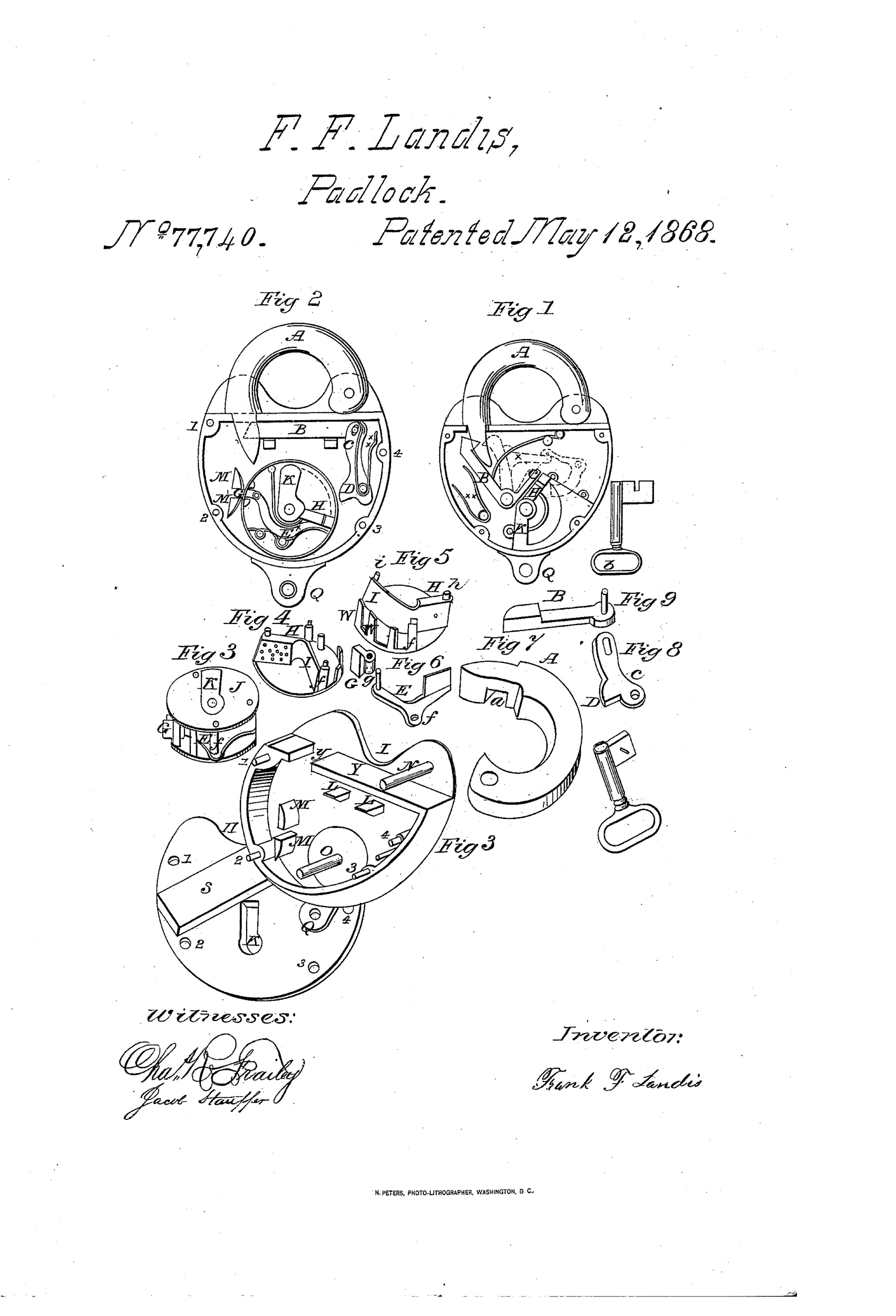
Improved combination-cylinder padlock with rotating key barrel
⚿ How it works
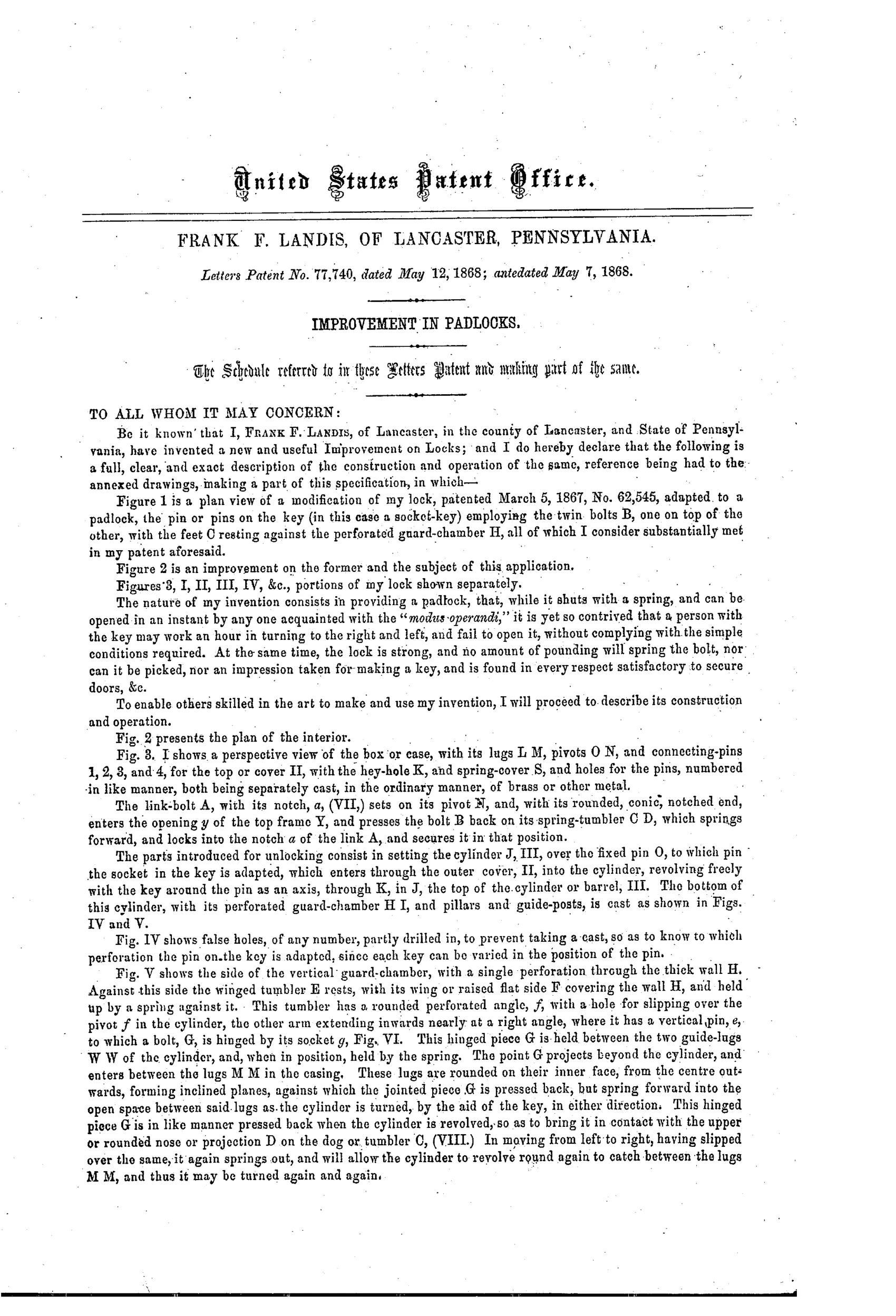
A socket key rotates a cylinder over a fixed pin, and the cylinder's guard chamber has a thickened, perforated wall against which a hinged, winged tumbler rests. The tumbler's hinged bolt piece engages between lugs in the casing, allowing the cylinder to be turned repeatedly without unlocking unless the correct pin sequence deflects the tumbler. When the key is turned right then quickly left with a pull on the shackle link, a lever with a hook disengages the spring-bolt from the link-bolt's notch, releasing the shackle. Without this precise timed motion, the lock can be turned indefinitely without opening.
⚿ What was claimed
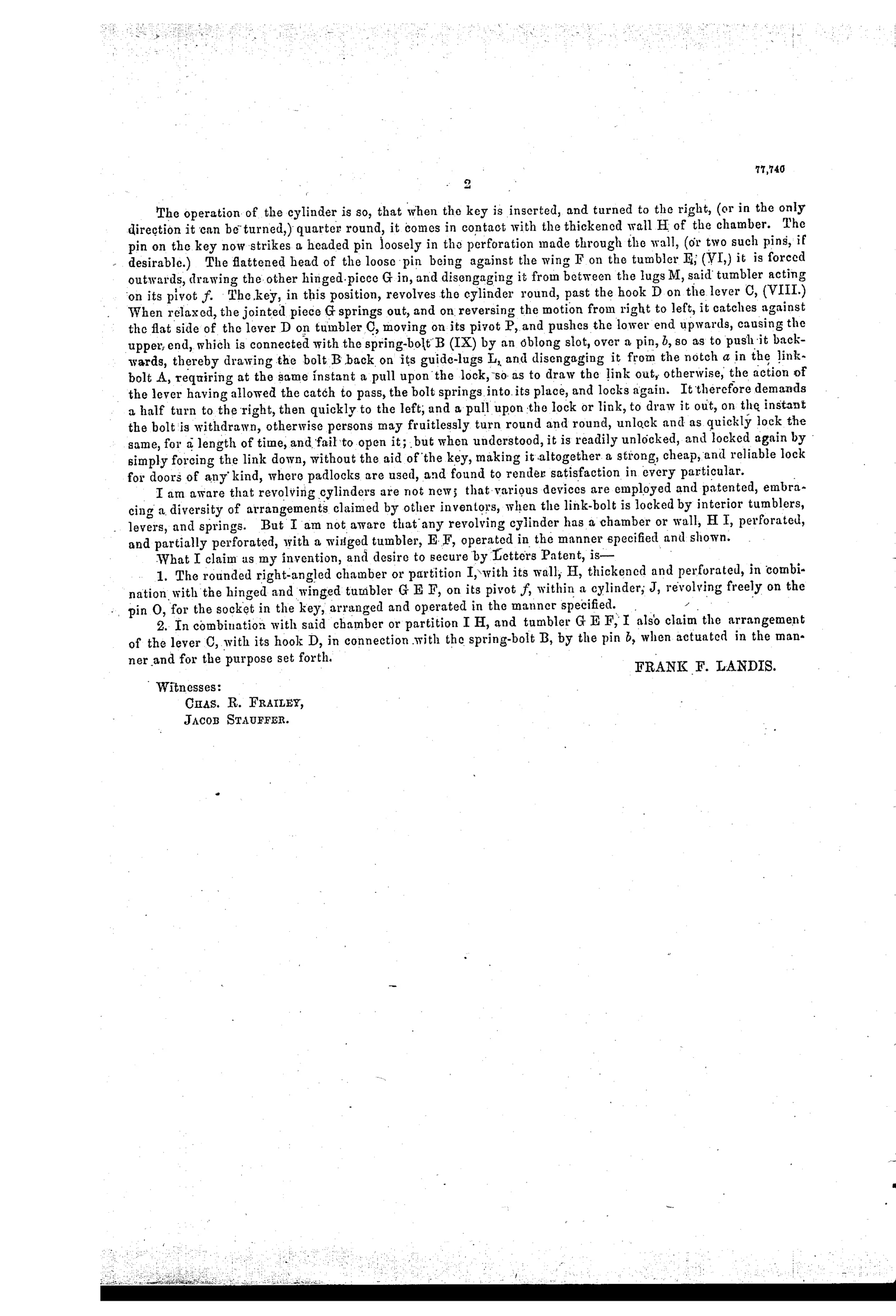
“The rounded right-angled chamber or partition I, with its wall, H, thickened and perforated, in combination with the hinged and winged tumbler G E F, on its pivot f, within a cylinder, J, revolving freely on the pin O, for the socket in the key, arranged and operated in the manner specified.”
In plain English: A right-angled perforated chamber combined with a hinged winged tumbler inside a rotating cylinder that accepts a socket key.
⚿ In the inventor’s words
“The nature of my invention consists in providing a padlock, that, while it shuts with a spring, and can be opened in an instant by any one acquainted with the "modus operandi," it is yet so contrived that a person with the key may work an hour in turning to the right and left, and fail to open it, without complying with the simple conditions required.”— Frank F. Landis, from the specification
Paper patent — likely never produced
The multi-part hinged tumbler and timed opening motion would have been costly and fussy to produce, and no manufactured example of this design is documented.
⚿ Patented the same day
- IMPROVEMENT IN HASP-LOCKS — Joseph S. Elliott
⚿ Commentary
Landis's idea is a hybrid of the trick lock and the keyed lock: the key alone is not enough. The cylinder revolves freely on its fixed pin, and the hinged, winged tumbler inside the thick perforated chamber wall simply rides along, refusing to throw the bolt no matter how many turns you make. Only the correct sequence — a turn right, a quick turn left, and a simultaneous pull on the shackle link — lets the hooked lever trip the spring-bolt out of the link-bolt's notch. His own specification says it best: a stranger with the key in hand 'may work an hour in turning to the right and left, and fail to open it.'
The exploded parts in Figs. 3 through 9 reward a close look. The winged tumbler (Fig. 6) with its separate hinged bolt piece (Fig. 8) is the heart of it — a two-part articulated tumbler, unusual for 1868, when most padlocks were still simple lever or ward work. Fig. 1 even shows his earlier twin-bolt version for comparison, a nice bit of honesty about his own iteration.
As security, it is more puzzle than fortress: once the 'modus operandi' leaks, the lock is no stronger than any spring shackle. And the timed pull-while-turning motion would be fussy in cold weather or gloved hands — exactly the conditions padlocks live in. It sits in the trick-lock branch of the family tree, a lineage the pin tumbler would soon make quaint.
Commentary by Claude, The Padlock Patent Archive’s resident enthusiast