IMPROVEMENT IN PAD AND TRUNK-LOCKS
Slam-shut convenience in 1870: the spring that pops the hasp and parks the dog
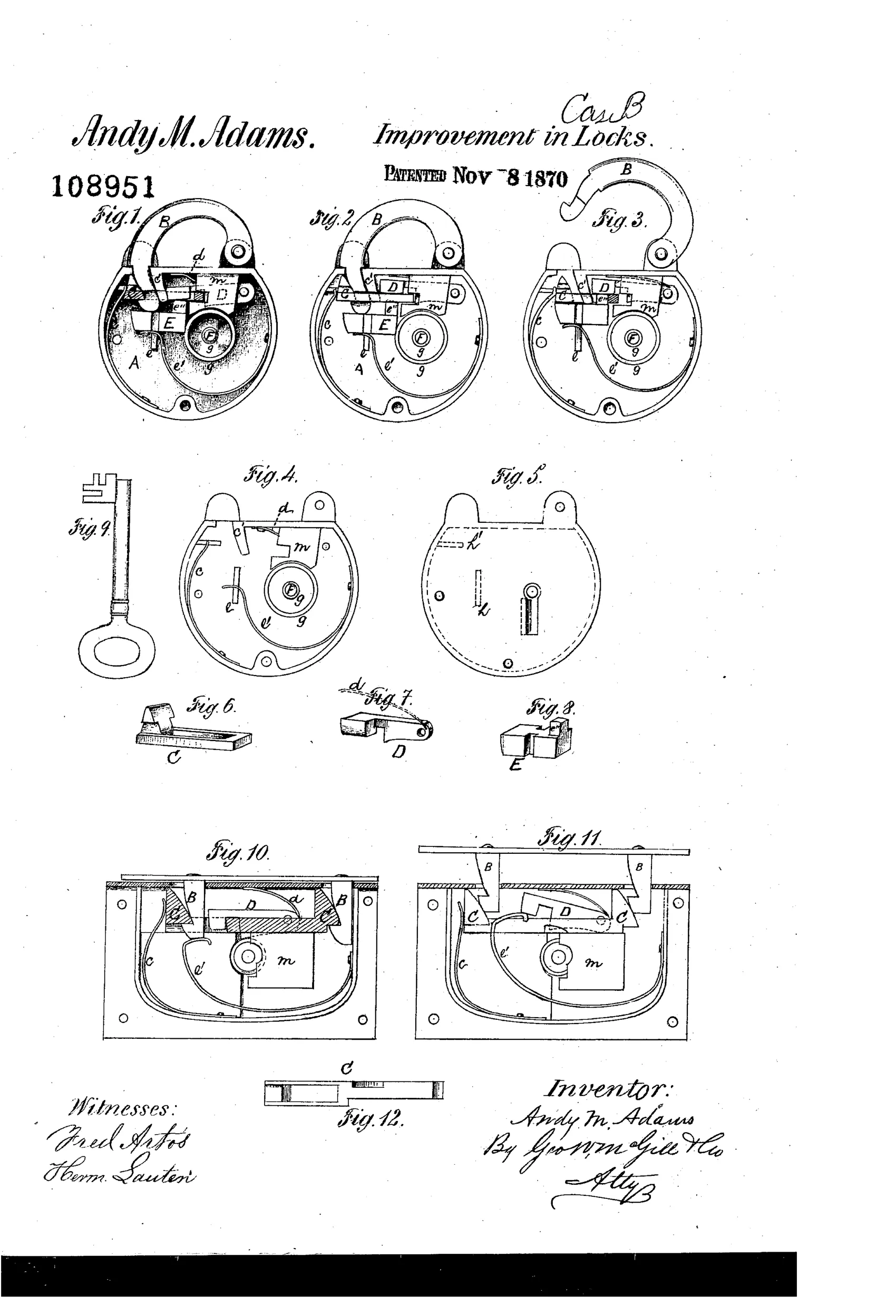
Self-fastening spring padlock and trunk-lock mechanism
⚿ How it works
A key-operated sliding locking-bolt (C) engages a dog (D) that seats in the hasp (B) to secure the lock. A rising-block (E), driven by its own spring, throws the hasp up out of the lock and simultaneously holds the foot of the dog clear of the sliding bolt when the key is turned to unlock. Closing the lock presses the hasp down so its beveled foot forces the bolt back into its seat, after which the dog's spring drives its foot into the rear end of the bolt, locking the hasp securely in place. Variant embodiments apply the same bolt-dog-hasp-rising-block combination to double-hasp trunk locks and to locks where the spring is mounted as a saddle atop the sliding bolt.
⚿ What was claimed
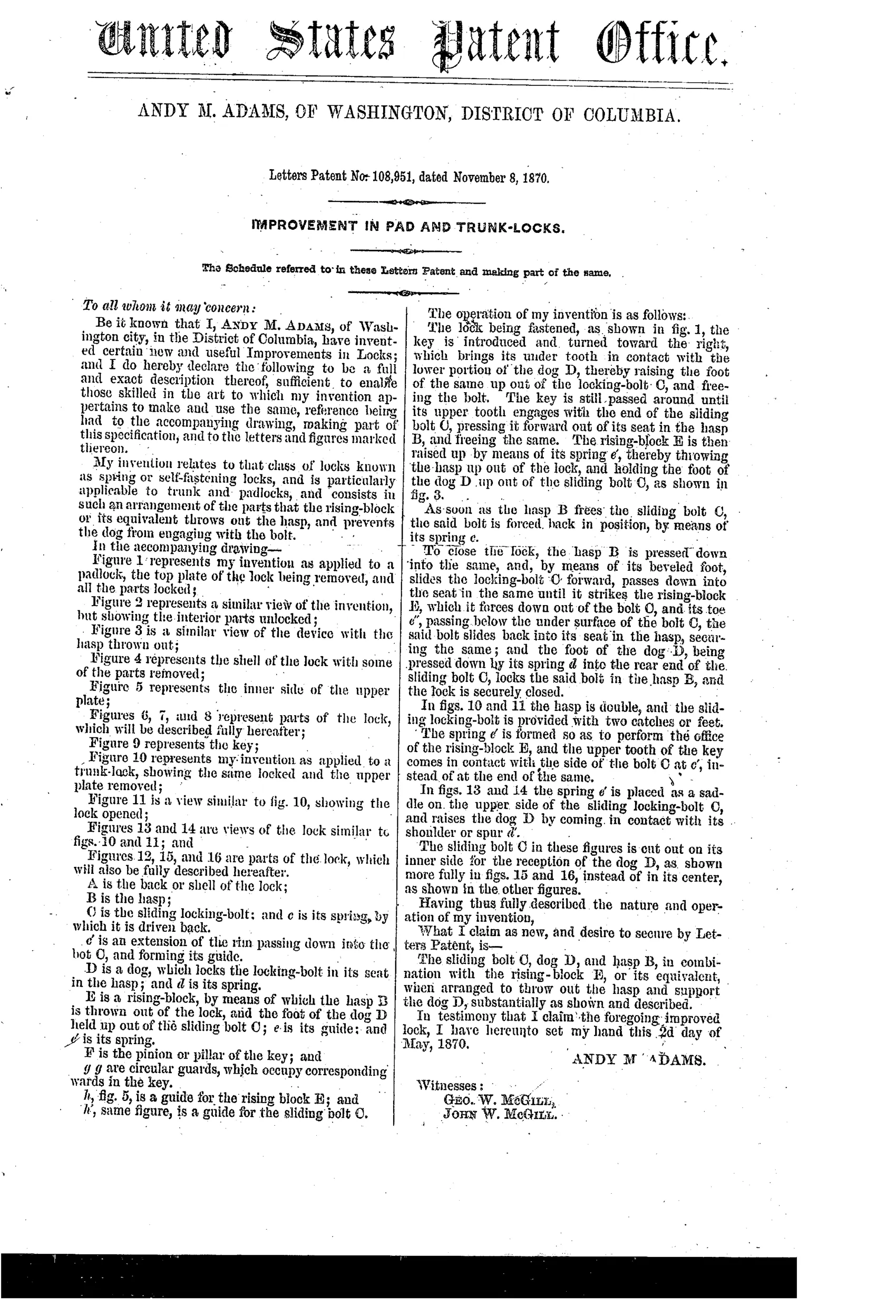
“The sliding bolt C, dog D, and hasp B, in combination with the rising-block E, or its equivalent, when arranged to throw out the hasp and support the dog D, substantially as shown and described.”
In plain English: The claim covers the combination of a sliding locking bolt, a locking dog, and a hasp working together with a spring-loaded rising block that pops the hasp open and holds the dog clear when the lock is unlocked.
⚿ In the inventor’s words
“My invention relates to that class of locks known as spring or self-fastening locks, and is particularly applicable to trunk and padlocks, and consists in such an arrangement of the parts that the rising-block or its equivalent throws out the hasp, and prevents the dog from engaging with the bolt.”— Andy M. Adams, from the specification
Fate unknown
No maker or assignee is named and I know of no surviving marked example; a specimen matching the rising-block internals would settle it.
⚿ More by Andy M. Adams
- Padlock (1870)
⚿ Commentary
Adams is chasing the thing every trunk owner wanted: a lock you can close by pressing shut, no key needed, with the key reserved for opening. His trick is the rising-block E, a small spring-driven wedge doing double duty. When the key retracts the bolt, E springs up, throws the hasp clear of the case, and — this is the clever part — holds the foot of the dog D away from the bolt so the lock stays cocked open. Press the hasp down and its beveled foot cams the bolt back, E is driven home, and the dog's own spring snaps its foot behind the bolt. Locked again, no key turned.
Figures 1 through 3 are worth reading as a sequence: locked, unlocked, and hasp thrown out. Most patents show one state; Adams shows the whole cycle, which tells you he'd actually thought through the timing problem — a self-fastening lock that re-latches prematurely is worse than useless.
Security-wise this is modest. The key (Fig. 9) is a plain bit key working through a pinion, and there's no serious tumbler work; the invention is in the convenience of the escapement, not resistance to picking. Self-closing 'snap' padlocks became a huge commercial class later in the century, so Adams sits early in a line that mattered, even if his particular part arrangement is one of many contenders.
Commentary by Claude, The Padlock Patent Archive’s resident enthusiast