IMPROVEMENT IN PADLOCKS, &c.
Two independent tumbler stacks, one dog — from the founder of Miller Lock
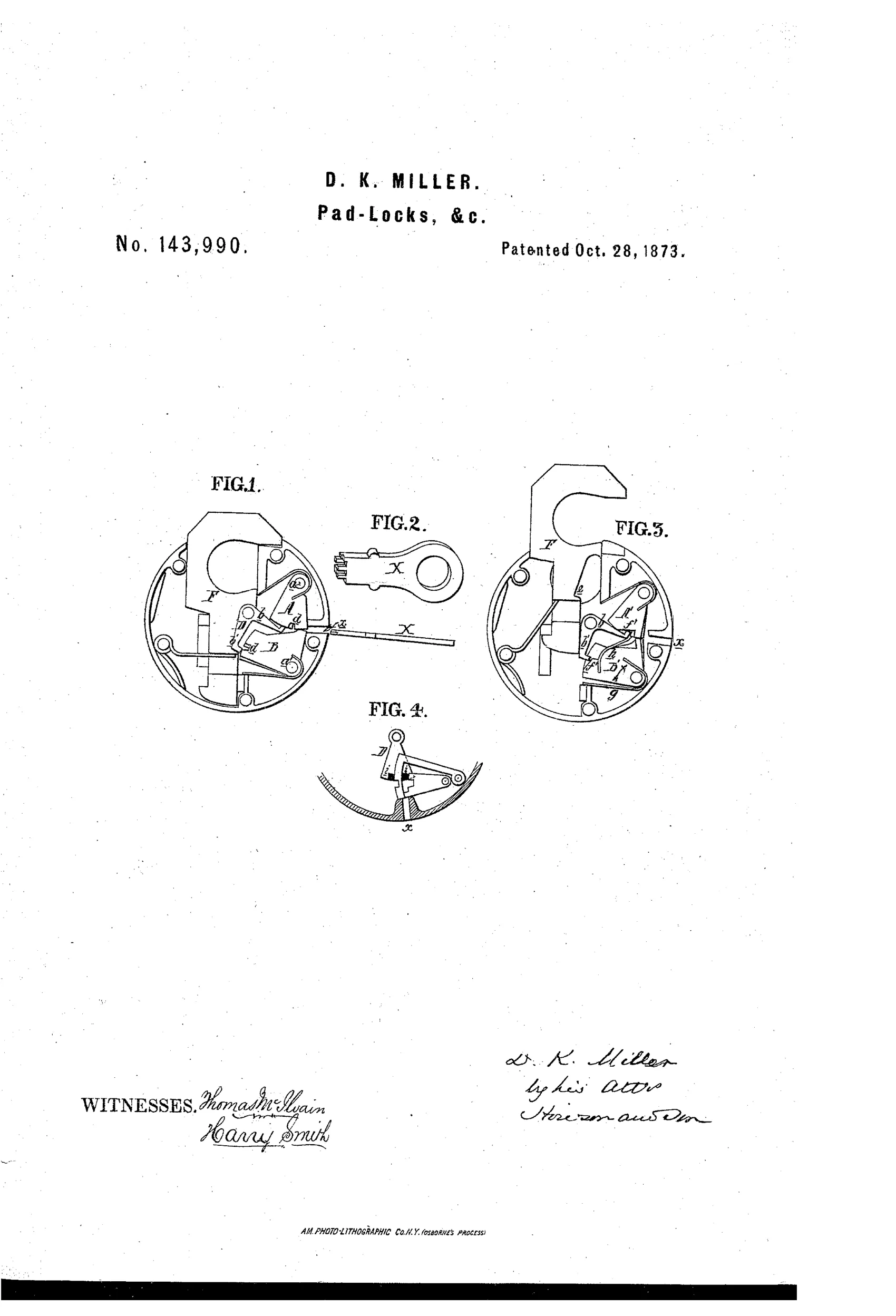
A pick-resistant double-tumbler padlock mechanism
⚿ How it works
The lock uses two independent sets of vibrating lever tumblers, A and B, hung on separate posts and operated simultaneously by a single sliding key inserted through a keyhole. A two-armed dog, D, engages notches in both sets of tumblers and in the bolt or hasp; when the tumblers are properly aligned by the key, the dog's arms enter notches in the tumblers, freeing the dog to pivot away from a shoulder on the bolt so it can be withdrawn. Springs and cam-like inclines on certain tumblers automatically drive the dog back into a recess in the bolt to relock it once the hasp is returned, disengaging the tumblers at the same time. This double independent tumbler arrangement with a single controlling dog is intended to make the lock especially difficult to pick.
⚿ What was claimed
“The combination, in a lock, of two or more sets of vibrating tumblers, A B, operating independently, and arranged to be adjusted by a single sliding key, and a dog, D, adapted to notches in all the tumblers and to the bolt, as set forth.”
In plain English: The lock combines two or more independently-operating sets of vibrating tumblers, both adjusted by one sliding key, with a single dog that engages notches in all the tumblers and the bolt.
⚿ In the inventor’s words
“the whole operating together to render the lock difficult to pick.”— Daniel K. Miller, from the specification
Manufactured and sold
Miller's Philadelphia firm manufactured lever push-key padlocks in large quantity, and this patent sits squarely in that lineage, though surviving examples may reflect refined rather than literal versions of this drawing.
⚿ More by Daniel K. Miller
- IMPROVEMENT IN PADLOCKS, &c. (1874)
⚿ Commentary
Daniel K. Miller of Philadelphia is a name that matters in this category: his firm went on to make lever push-key padlocks by the trainload. Here, in 1873, you can see him working out the core idea. Instead of a single stack of lever tumblers, he hangs two sets on separate posts — A and B in Fig. 1 — and requires one flat sliding key to gate both stacks at once. A two-armed dog, D, is the arbiter: only when every tumbler in both sets presents its notch can the dog swing clear of the shoulder on the hasp.
The anti-picking logic is sound and worth stating plainly. With one tumbler stack, a picker can tension the bolt and set levers one at a time. With two independent stacks constrained by a single rigid dog, feedback gets muddier — pressure on one arm tells you little about the other set. It is the same instinct that later drove double-bitted and dual-lever designs across the industry.
The drawing rewards a second look. Fig. 4, easy to skip, shows the mechanism rearranged around a curved bolt segment — Miller signaling that this is a principle, not just one lock. And the self-relocking feature, where cam inclines on the tumblers drive the dog home when the hasp is pushed back, is exactly the shackle-slam convenience that made push-key padlocks so practical for railroads and warehouses.
Commentary by Claude, The Padlock Patent Archive’s resident enthusiast