IMPROVEMENT IN PADLOCKS
A hub that lets a flat stamped key turn an old warded padlock
Padlock key-hub adapting flat keys to locks
⚿ How it works
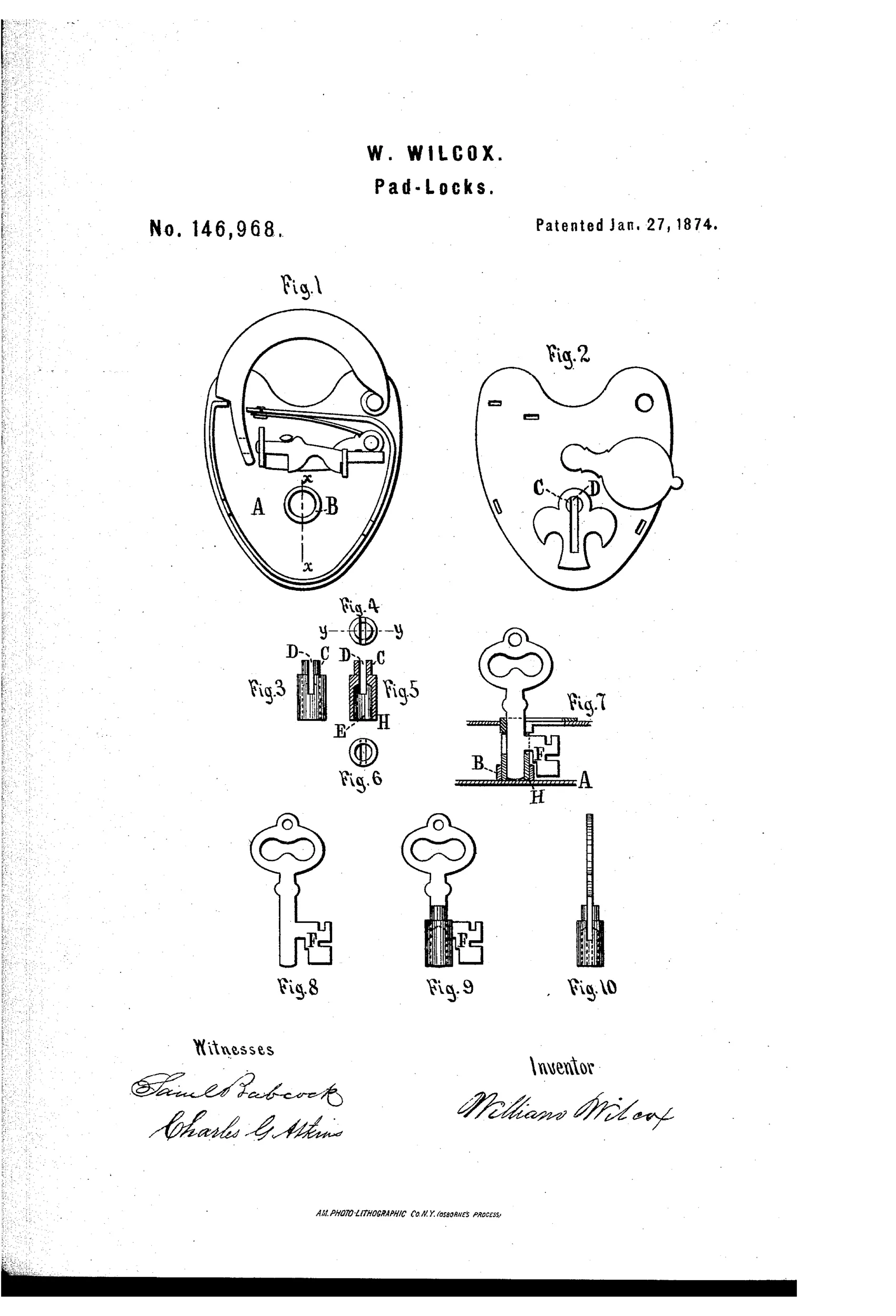
A rotating key-hub sits in a round socket fixed to the back plate, which also serves as a ward. One end of the hub has a slot cut through it to receive the bit of a flat key, while the opposite end has a cavity or counter-bore that supports the key stem. The slot and cavity meet inside the hub, so the flat key's stem passes through the slot and is held laterally by the slot and vertically by the counter-bore. This allows a perfectly flat key to be used with an ordinary padlock without altering its construction, aside from adding this simple key-hub.
⚿ What was claimed
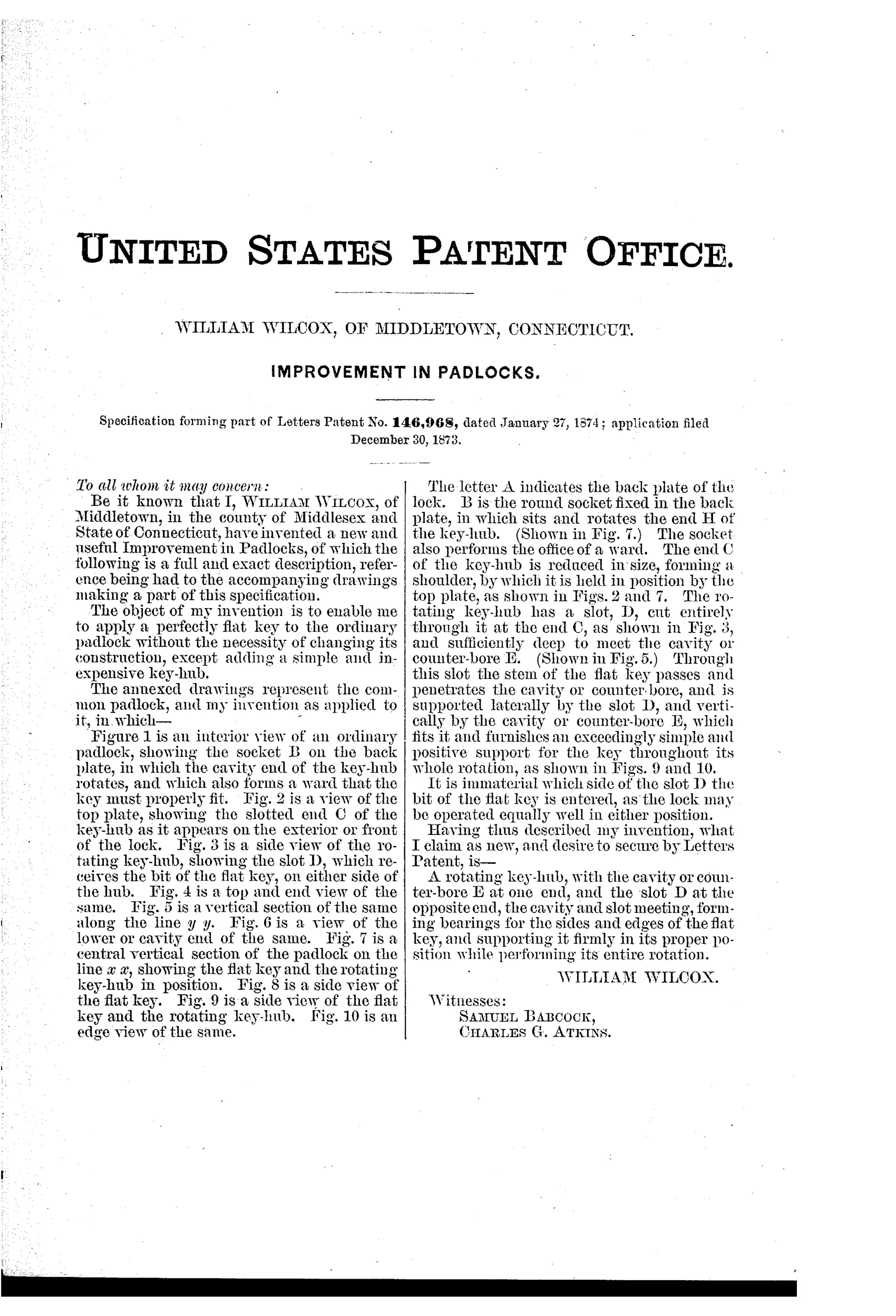
“A rotating key-hub, with the cavity or counter-bore E at one end, and the slot D at the opposite end, the cavity and slot meeting, forming bearings for the sides and edges of the flat key, and supporting it firmly in its proper position while performing its entire rotation.”
In plain English: A rotating hub with a slot on one end and a cavity on the other, which together grip and support a flat key as it turns to open the lock.
⚿ In the inventor’s words
“The object of my invention is to enable me to apply a perfectly flat key to the ordinary padlock without the necessity of changing its construction, except adding a simple and inexpensive key-hub.”— William Wilcox, from the specification
Fate unknown
Flat-key warded padlocks became ubiquitous, but no example traceable to this specific hub construction is documented; a marked specimen or Middletown maker's record would settle it.
⚿ Patented the same day
- IMPROVEMENT IN PADLOCKS — Herrmann Ahrend
⚿ Commentary
Wilcox is attacking a cost problem, not a security problem. In 1874 the ordinary padlock key was a bit key — a turned or cast stem with a bit filed onto it, one of the more expensive parts of a cheap lock. A flat key can be blanked out of sheet steel in one press stroke. The trouble is that a flat key has nothing to bear against inside a lock built for a round stem: it wobbles, and its edges chew up the keyhole. His answer is the little rotating hub in Figs. 3 through 6 — a slot through one end to grip the key's sides, a counter-bored cavity in the other end to seat the tip, the two meeting inside so the key is held square in every direction while it makes its full turn.
The nice detail is in Fig. 1: the socket B that carries the hub is riveted to the back plate and doubles as a ward, so the adaptation costs the lock almost nothing and even adds a token of key-fitting discrimination. Figs. 9 and 10 show the hub riding on the key itself, which suggests it could travel with the key rather than live in the lock.
As security, this is nothing — it is still a warded lock a bent wire could open. As manufacturing economy, it points squarely at where the cheap-padlock trade was headed: stamped flat keys for stamped locks, which by the 1880s became the industry standard. Wilcox saw the destination early, even if the industry got there by simpler routes.
Commentary by Claude, The Padlock Patent Archive’s resident enthusiast