IMPROVEMENT IN PADLOCKS
One stepped stud must enter every tumbler slot at once — Newark's answer to picking
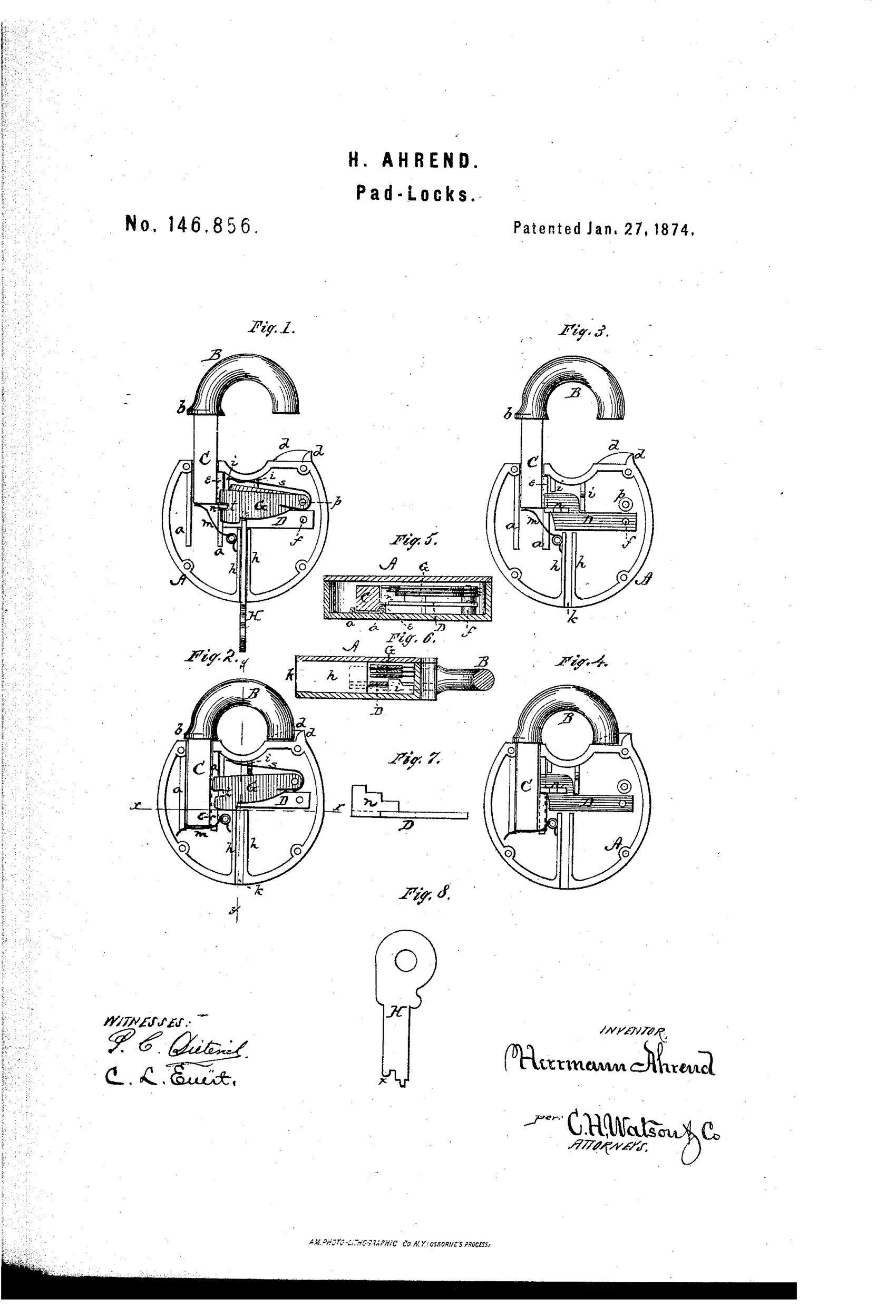
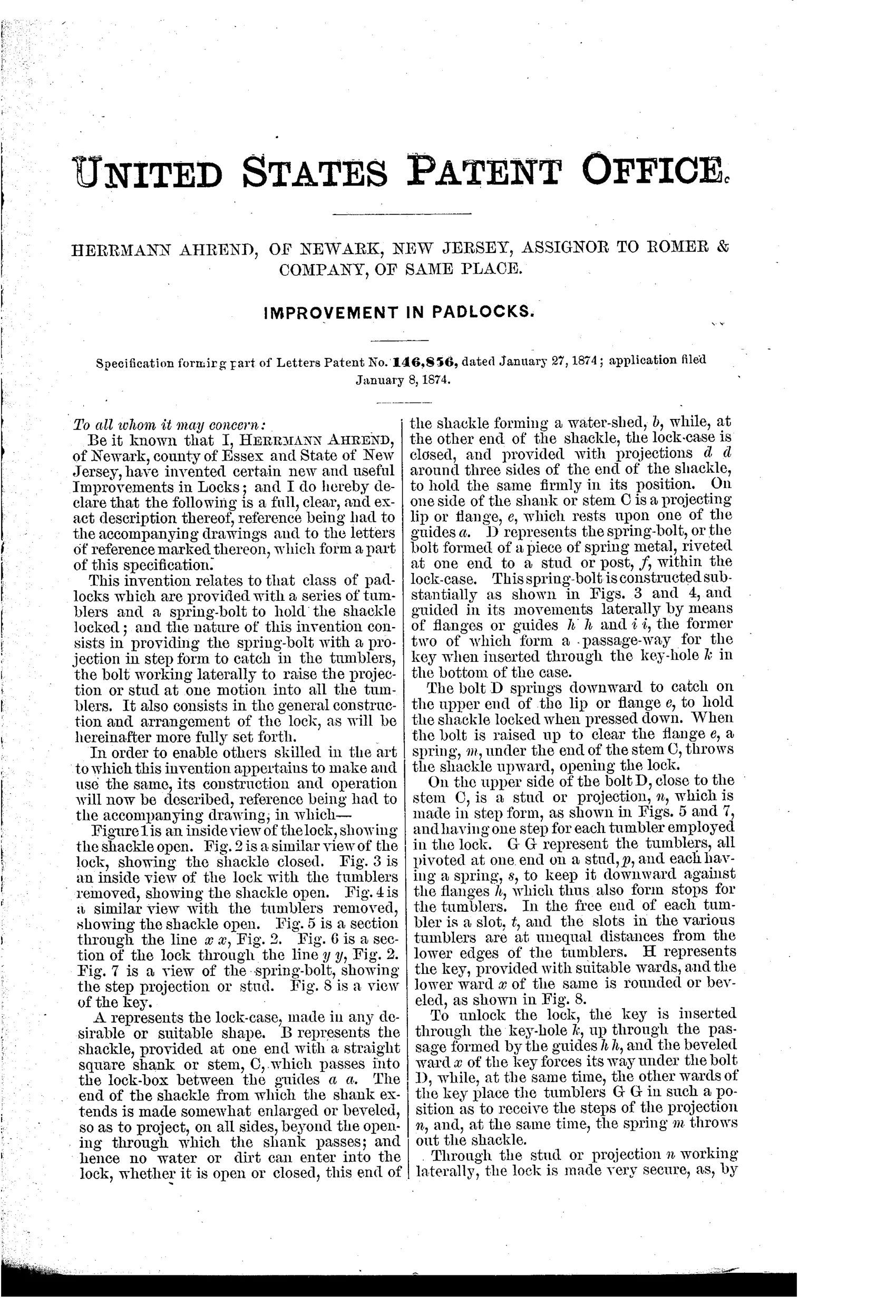
Tumbler padlock with laterally-moving stepped spring-bolt
⚿ How it works
The shackle stem C carries a flange e that a spring-bolt D catches to hold the shackle locked. The bolt D bears a step-form stud n that engages a series of pivoted tumblers G G, each with a slot t at unequal distances. Inserting the beveled-ward key through a narrow bottom key-hole lifts the bolt and positions all tumblers simultaneously so the stepped stud can pass into every tumbler slot at once, releasing the shackle via a spring m. The long narrow key passage keeps the lock's inner works far from the key-hole for added security.
⚿ What was claimed
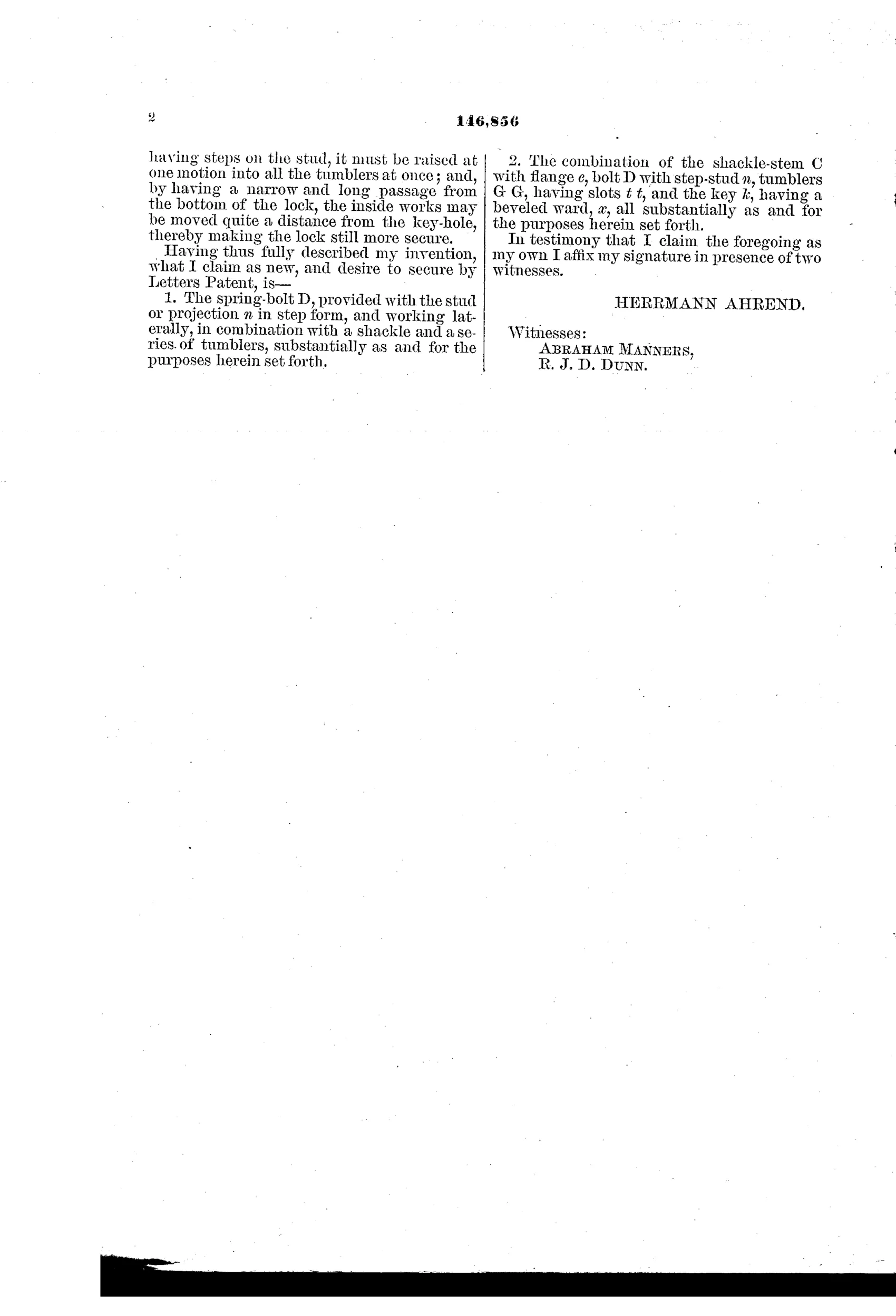
“1. The spring-bolt D, provided with the stud or projection n in step form, and working laterally, in combination with a shackle and a series of tumblers, substantially as and for the purposes herein set forth.”
In plain English: The lock uses a sideways-moving spring-bolt with a stepped stud that engages multiple tumblers at once to lock or release the shackle.
⚿ In the inventor’s words
“Through the stud or projection n working laterally, the lock is made very secure, as, by having steps on the stud, it must be raised at one motion into all the tumblers at once.”— Herrmann Ahrend, from the specification
Fate unknown
Assignment to Romer & Company, a working Newark lock maker, makes production plausible, but no marked specimen matching this stepped-stud mechanism is documented; one would settle it.
⚿ Patented the same day
- IMPROVEMENT IN PADLOCKS — William Wilcox
⚿ Commentary
Ahrend's move here is to turn the usual tumbler arrangement sideways. Instead of a bolt that slides under the key's direct push, his bolt D travels laterally and carries a single stud cut into steps, like a tiny staircase (Fig. 7 shows it in isolation). Each pivoted tumbler has its slot at a different height, and the staircase only passes when every tumbler is lifted to exactly its own level in one motion. That's the whole security argument: a picker probing tumblers one at a time gets nowhere, because the stepped stud demands a simultaneous, correctly graduated lift — essentially the same logic Yale used with pin stacks, expressed in flat lever hardware.
The other quiet feature is the key passage. The bottom key-hole is deliberately narrow and long, keeping the working parts well away from the opening — a plain acknowledgment that most padlocks of the day were defeated with wire through the keyhole, not with skill. Figs. 5 and 6 show how deep the key must reach before anything happens.
The assignment to Romer & Company of Newark, an actual lock-making concern, is worth noting: this isn't a lone tinkerer's fantasy but a design filed and issued within three weeks, presumably with a shop behind it. As lever-tumbler refinements go, it's a thoughtful one — more clever than most of the crowd chasing 'unpickable' in 1874, even if the pin tumbler was already coming for all of them.
Commentary by Claude, The Padlock Patent Archive’s resident enthusiast