IMPROVEMENT IN PADLOCKS
A push-in key, a spring-shot bolt, and refreshingly honest claims
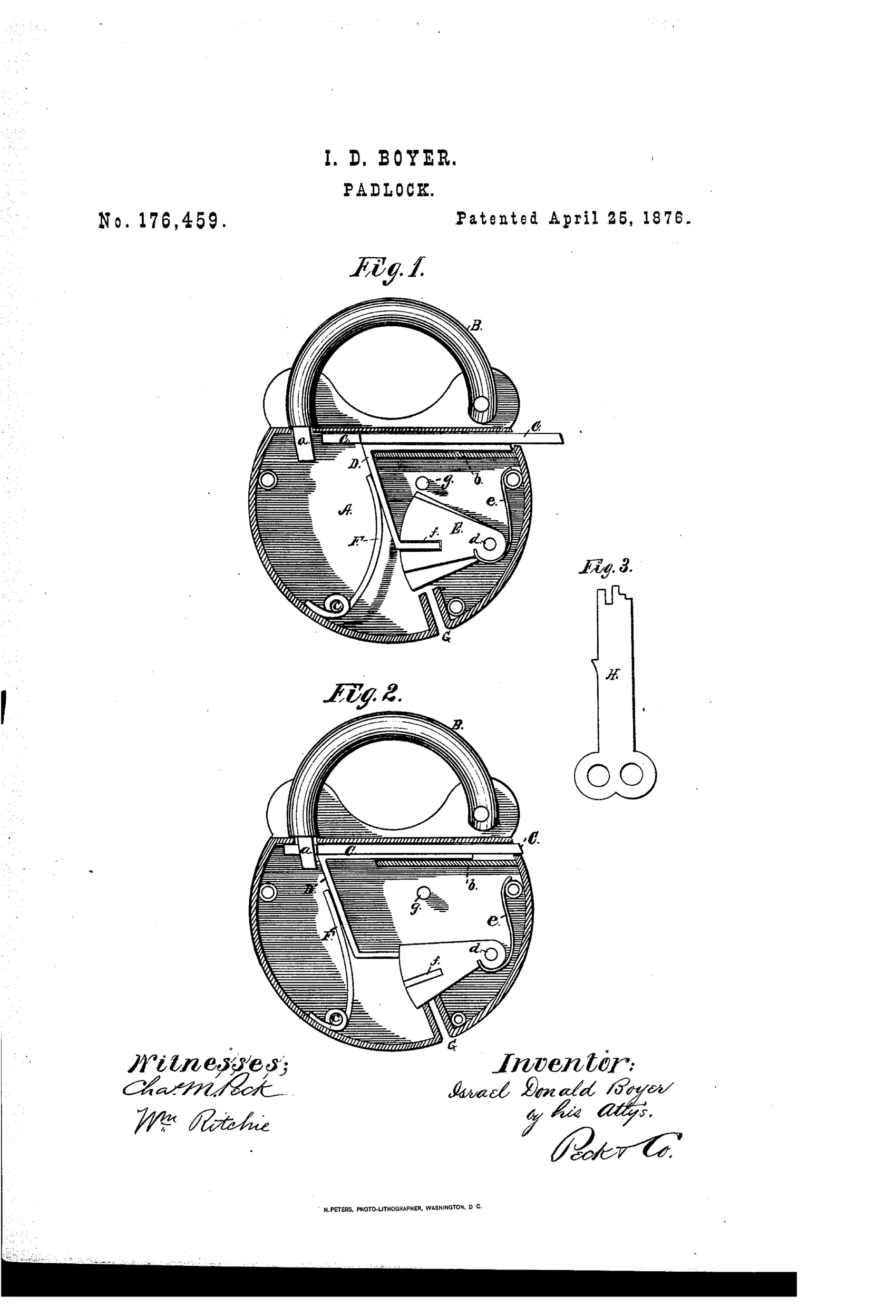
A chubb-tumbler padlock with straight thrust key
⚿ How it works
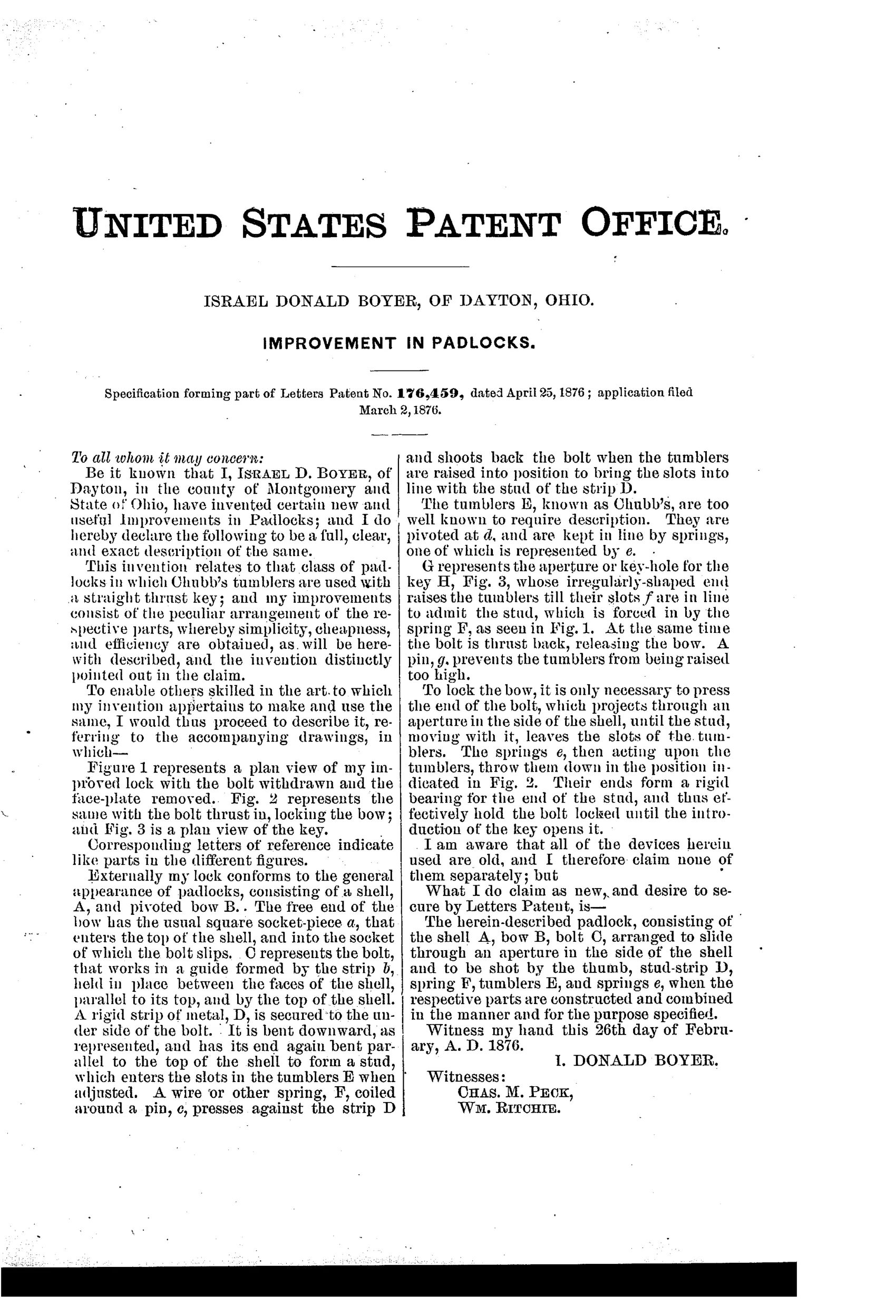
The lock uses a pivoted bow whose free end enters a socket-piece that engages a sliding bolt inside the shell. A stud-strip fixed to the bolt engages slots in spring-loaded Chubb-type tumblers, which must be raised to a precise height by the irregularly-shaped key before the stud can pass. When the key raises the tumblers into alignment, a coiled spring shoots the bolt back, releasing the bow; pressing the bolt back in relocks it as the tumbler springs drop the tumblers to trap the stud again.
⚿ What was claimed
“The herein-described padlock, consisting of the shell A, bow B, bolt C, arranged to slide through an aperture in the side of the shell, and to be shot by the thumb, stud-strip D, spring F, tumblers E, and springs e, when the respective parts are constructed and combined in the manner and for the purpose specified.”
In plain English: The claim covers the specific padlock design combining the shell, bow, sliding bolt, thumb-operated stud-strip, spring, tumblers, and tumbler springs arranged and working together as described.
⚿ In the inventor’s words
“I am aware that all of the devices herein used are old, and I therefore claim none of them separately.”— Israel Donald Boyer, from the specification
Fate unknown
The design is buildable and conventional enough to have been made, but no marked Boyer specimen or manufacturer tie is documented; a surviving example would settle it.
⚿ Commentary
Boyer's 1876 padlock is a levers-and-bolt design in the Chubb tradition, but with two touches worth noting. First, the key is a straight thrust key — you push it in rather than turn it. The irregular blade profile (Fig. 3) has to lift each spring-loaded tumbler to exactly the right height so the stud-strip on the bolt can pass through their aligned slots. Second, once the tumblers line up, a coiled spring does the work: the bolt shoots back on its own and the bow pops free. Relocking is just as economical — press the bolt home with your thumb and the tumbler springs drop the levers back over the stud. No key needed to lock, which was a genuinely practical feature for anyone snapping a lock shut in the cold or the dark.
Compare Figs. 1 and 2 and you can see the whole cycle: the stud-strip trapped in the tumbler gates in one, riding free in the other. It's a compact, sensible layout inside a conventional round shell.
The best line in the patent is Boyer's own: 'I am aware that all of the devices herein used are old, and I therefore claim none of them separately.' That candor tells you where this sits in the story — not an invention so much as a tidy recombination, filed in an era when push-key lever padlocks were becoming a crowded, competitive field.
Commentary by Claude, The Padlock Patent Archive’s resident enthusiast