IMPROVEMENT IN PADLOCKS
One-piece cast case with a gated shackle spindle, from Decatur, 1878
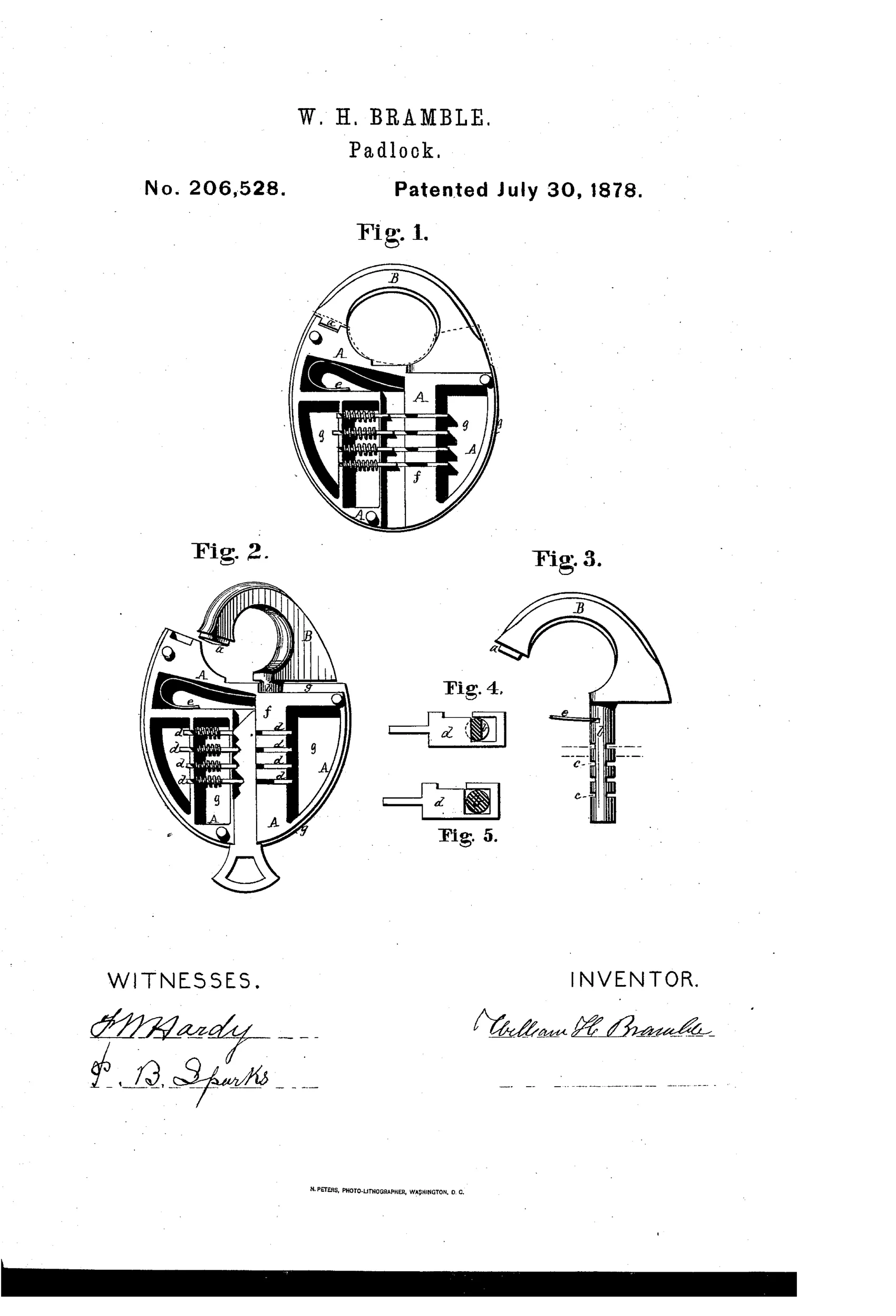
Cast-iron padlock with gated shackle spindle
⚿ How it works
The lock case has one side and its rim cast in a single piece, with solid interior webs and partitions that form a housing for the shackle spindle and provide bearings for the tumblers and springs. The shackle's spindle is located centrally and has lateral notches (gatings) cut into opposite sides. Spring-loaded sliding tumblers surround the spindle and move transversely, engaging into the gatings to lock the shackle. A key withdraws the tumblers from the gatings, freeing the spindle so the shackle can be lifted and its tenon released from the mortise in the case.
⚿ What was claimed
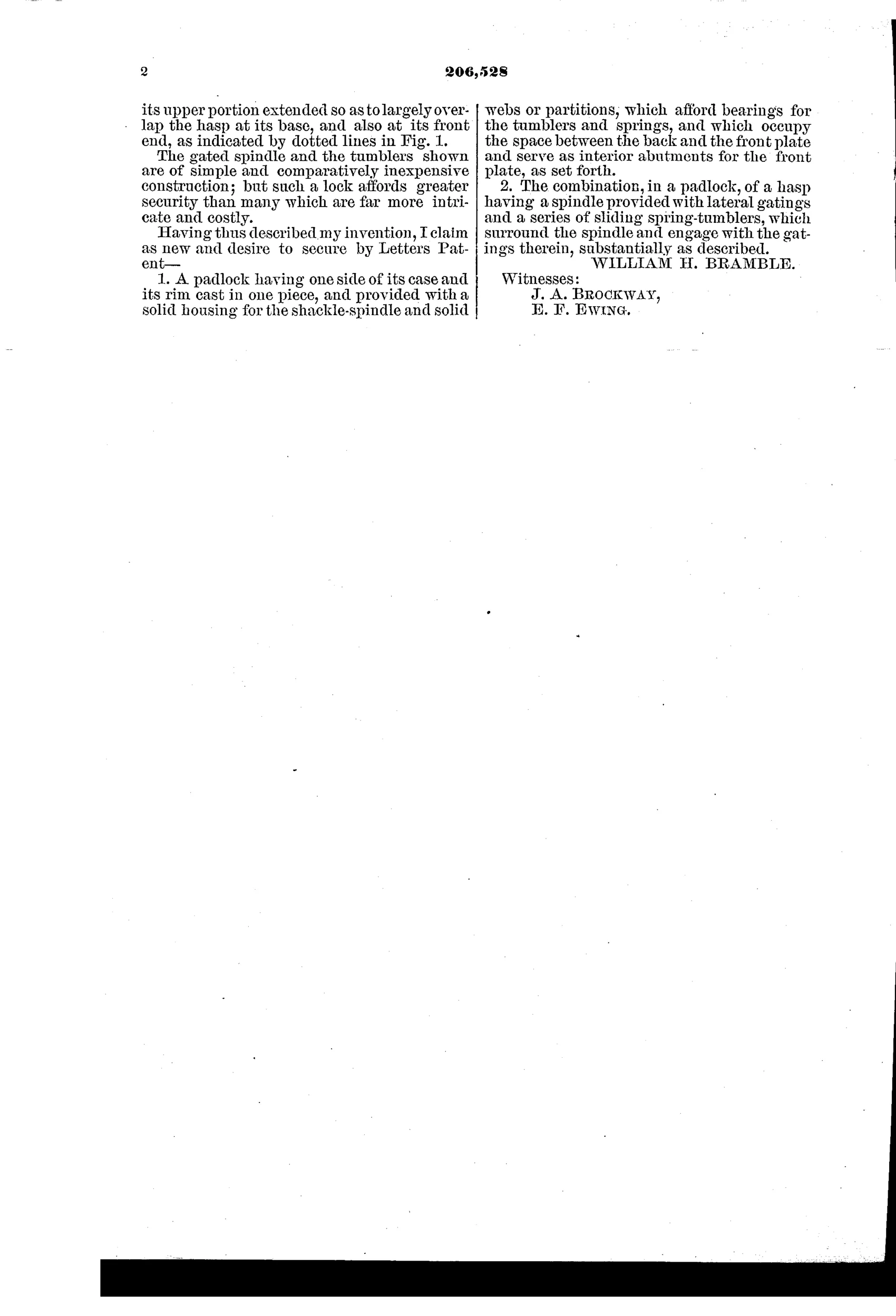
“1. A padlock having one side of its case and its rim cast in one piece, and provided with a solid housing for the shackle-spindle and solid webs or partitions, which afford bearings for the tumblers and springs, and which occupy the space between the back and the front plate and serve as interior abutments for the front plate, as set forth.”
In plain English: A padlock whose case has one side and rim cast as a single piece, with built-in solid supports that both house the shackle spindle and hold the tumblers and springs while bracing the front plate.
⚿ In the inventor’s words
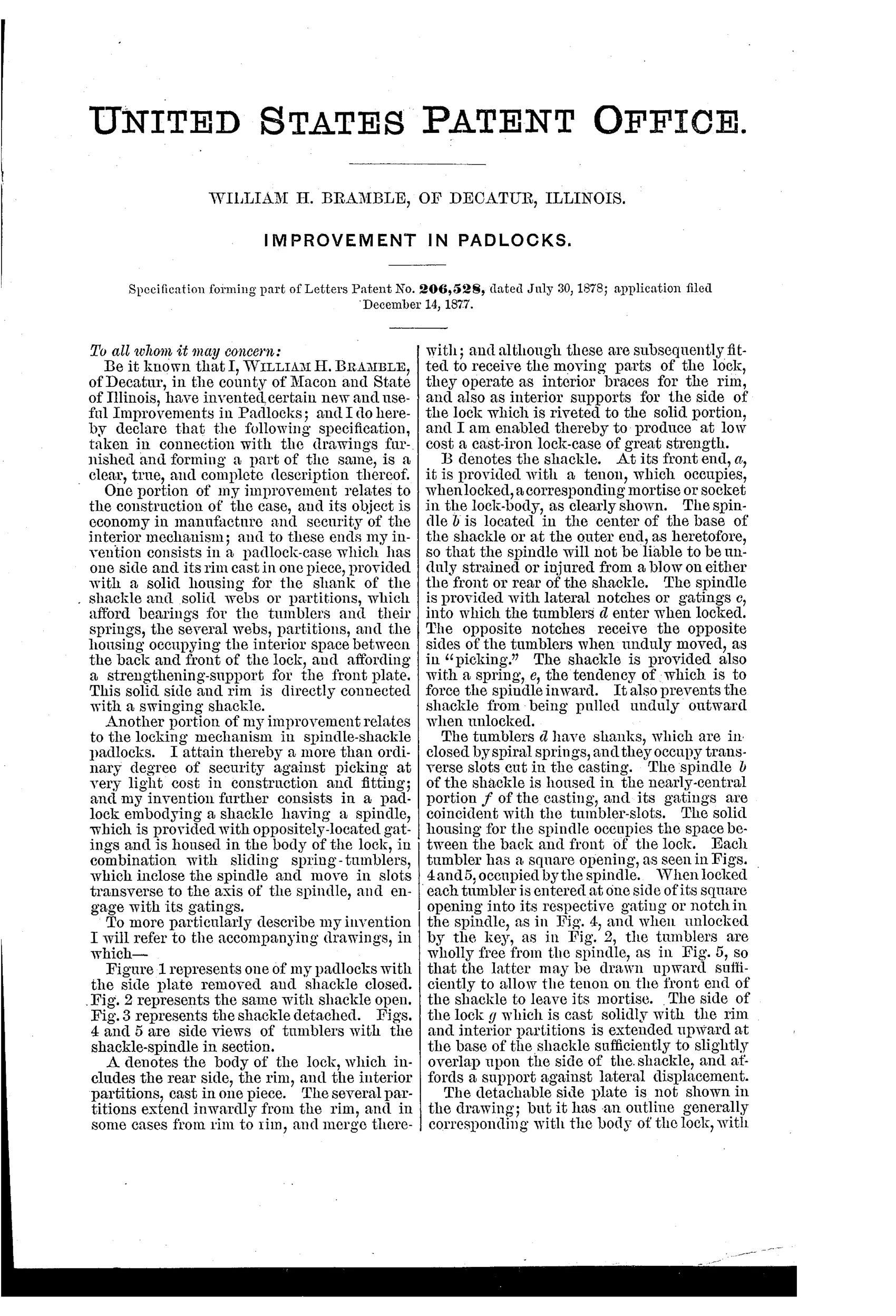
“The gated spindle and the tumblers shown are of simple and comparatively inexpensive construction; but such a lock affords greater security than many which are far more intricate and costly.”— William H. Bramble, from the specification
Fate unknown
No documented production example under Bramble's name is known to me; a surviving marked lock matching the gated-spindle internals would settle it.
⚿ Commentary
Bramble's real claim here isn't the tumbler mechanism — it's the foundry work. Cast one side and the rim of the case in a single piece, with solid webs inside that do triple duty: they house the shackle spindle, give the sliding tumblers and springs their bearings, and prop the front plate from behind. In 1878 the cheap end of the padlock market lived or died on how few parts you had to fit and rivet, and this design lets the casting itself replace most of the internal chassis. Look at Figs. 1 and 2 and notice how little there is besides the casting, the tumblers, and their coil springs.
The locking scheme is a gated spindle: the shackle drops a central stem into the case, and spring-loaded tumblers slide sideways into notches cut in opposite faces of the stem. The key's job is simply to retract them all at once. Figs. 4 and 5 show a single tumbler engaged and cleared — it's essentially lever-tumbler thinking rotated onto a plunger, cousin to the Scandinavian-pattern locks flooding the market at the time.
Bramble is candid that this is a cheap lock, arguing plainly that his simple gatings beat 'many which are far more intricate and costly.' Security-wise that's optimistic — anything that lifts all the tumblers together opens it — but as a manufacturable design it's honest, workmanlike, and squarely aimed at where the volume was.
Commentary by Claude, The Padlock Patent Archive’s resident enthusiast