IMPROVEMENT IN PADLOCKS.
The dog never touches the tumblers — geometry as anti-picking insurance
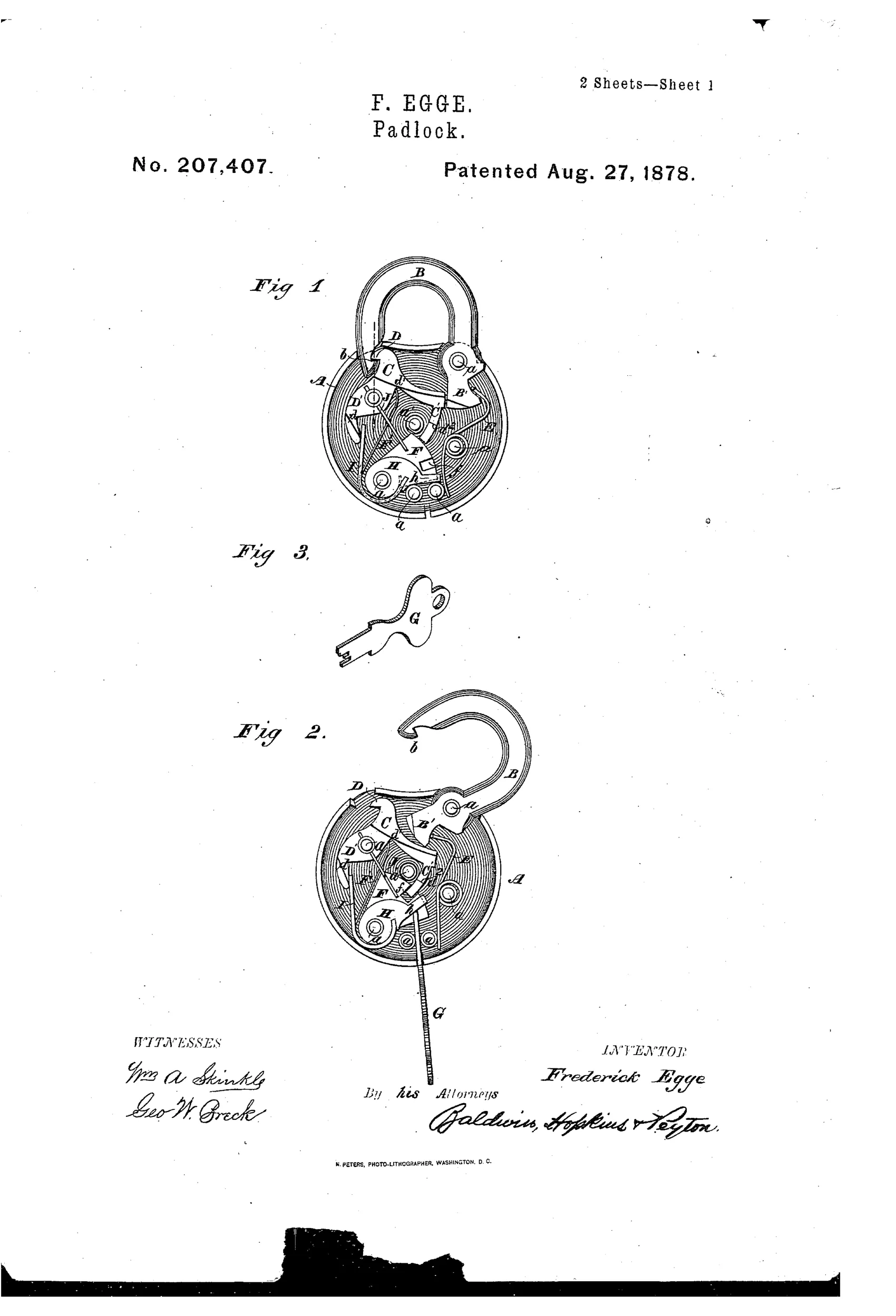
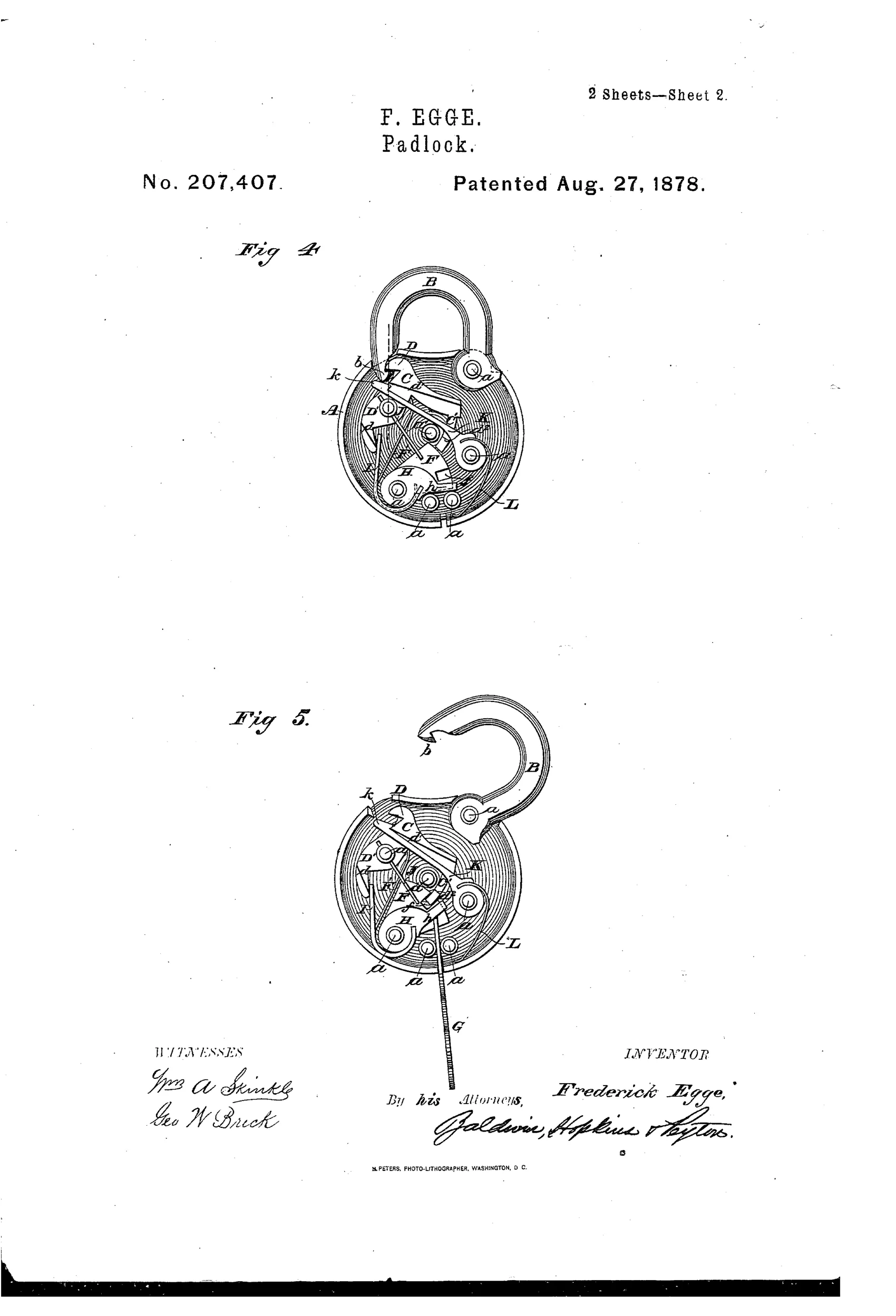
Key-operated padlock with hooked dog mechanism
⚿ How it works
A pivoted shackle with a nose engages a single rocking hooked dog that both locks the shackle and guards the tumblers. Oscillating spring-tumblers with slots are set by the key, and a spring-lever mounted on the tumbler pivot simultaneously actuates the dog independently of the tumblers. The dog's tail-piece only enters the tumbler slots when the key correctly registers them, releasing the shackle-nose which is thrown open by a separate spring. The dog and its lever are arranged so strain on the shackle cannot force the tail-piece against the tumblers, protecting against manipulation.
⚿ What was claimed
“The combination, substantially as hereinbefore set forth, of a hooked or shouldered shackle, a rocking dog provided with a hook to engage the shackle-hook when locked, and having a tail end or heel moving toward tumblers in unlocking, and a pivot upon which the dog is fulcrumed, the vertical central plane of which pivot passes slightly to that side of the point of contact between the shackle-nose and dog-hook opposite the side on which the dog-heel is located, whereby the dog-heel cannot be moved in the direction of the tumblers by strain upon the shackle, as set forth.”
In plain English: The lock combines a hooked shackle and a pivoted dog positioned so that pulling on the shackle cannot force the dog's tail toward the tumblers, preventing manipulation.
⚿ In the inventor’s words
“At no time, except when in the unlocked and unlocking position, does the dog come in contact with the tumblers. It is impossible to feel the tumblers by manipulating them and the shackle.”— Frederick Egge, from the specification
Fate unknown
Assignment to Smith & Egge, an active Bridgeport manufacturer, makes production plausible, but a surviving padlock matching this dog-and-tumbler layout would settle it.
⚿ More by Frederick Egge
- PADLOCK. (1890)
⚿ Commentary
Most lever padlocks of the 1870s share one weakness: pull on the shackle and the locking dog presses against the tumblers, letting a patient picker feel which tumbler is binding and walk the lock open. Egge's answer is not a new tumbler or a trick key, but pure pivot geometry. His hooked dog is fulcrumed so that the line of force from the shackle-nose passes just past the pivot on the wrong side — tension on the shackle actually seats the dog tighter rather than driving its tail toward the tumbler slots. The tail only approaches the tumblers during a deliberate unlocking stroke, when the key has already registered them.
The spec says it plainly: 'At no time, except when in the unlocked and unlocking position, does the dog come in contact with the tumblers.' That is the whole invention in one sentence, and it costs nothing to manufacture — no extra parts, just care in where you drill the pivot hole.
Figures 1 and 2 reward a close look: the oscillating spring-tumblers cluster at the lower left, and the shackle is spring-thrown open, a small convenience that also confirms the dog fully clears. Egge assigned this to Smith & Egge of Bridgeport, a working hardware and lock house, which puts this squarely in the practical stream of the lever era rather than the paper-lock fringe — a quiet refinement rather than a revolution, but the kind that shows up in real hardware.
Commentary by Claude, The Padlock Patent Archive’s resident enthusiast