PADLOCK.
Loose tumblers snap rigid to a hook — then the whole assembly rotates open.
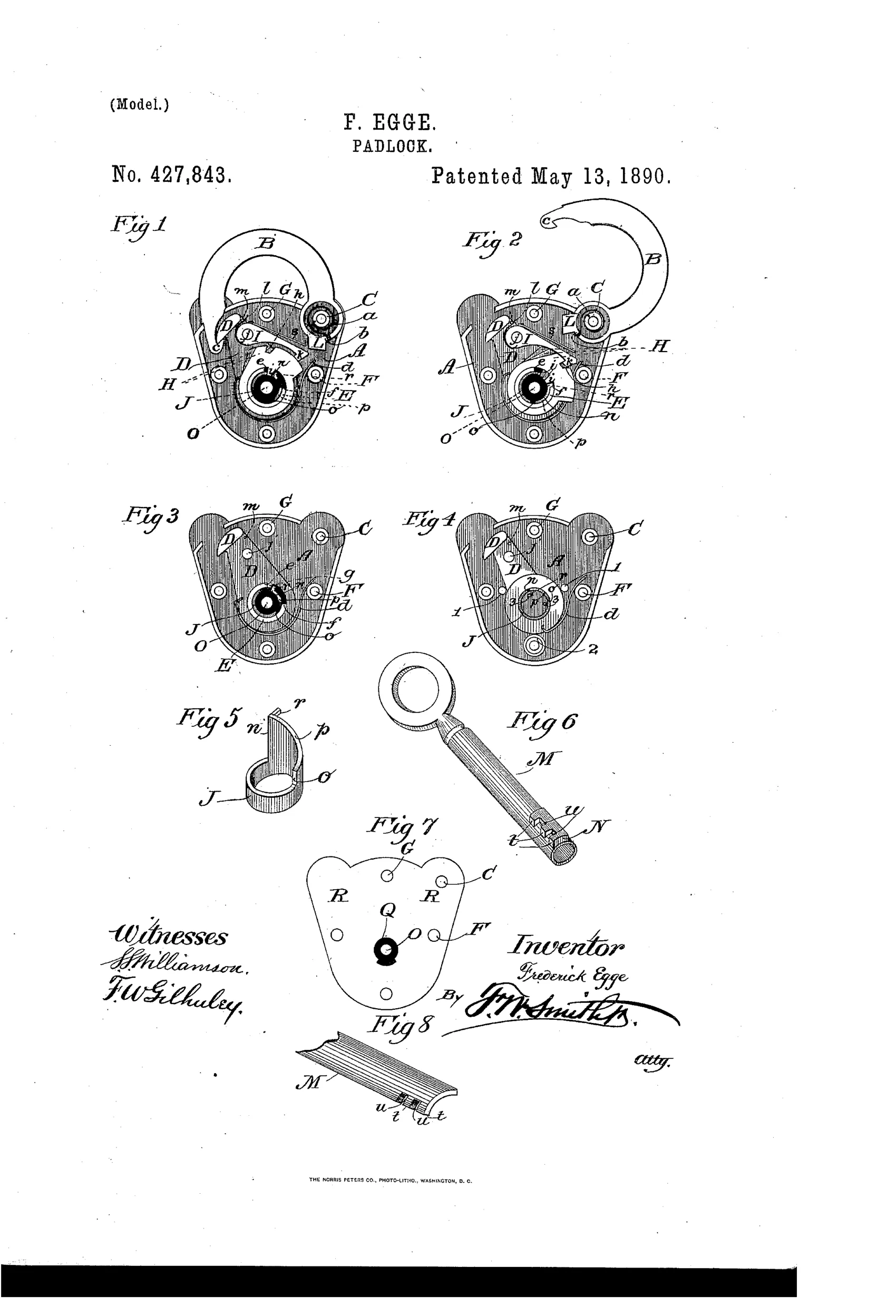
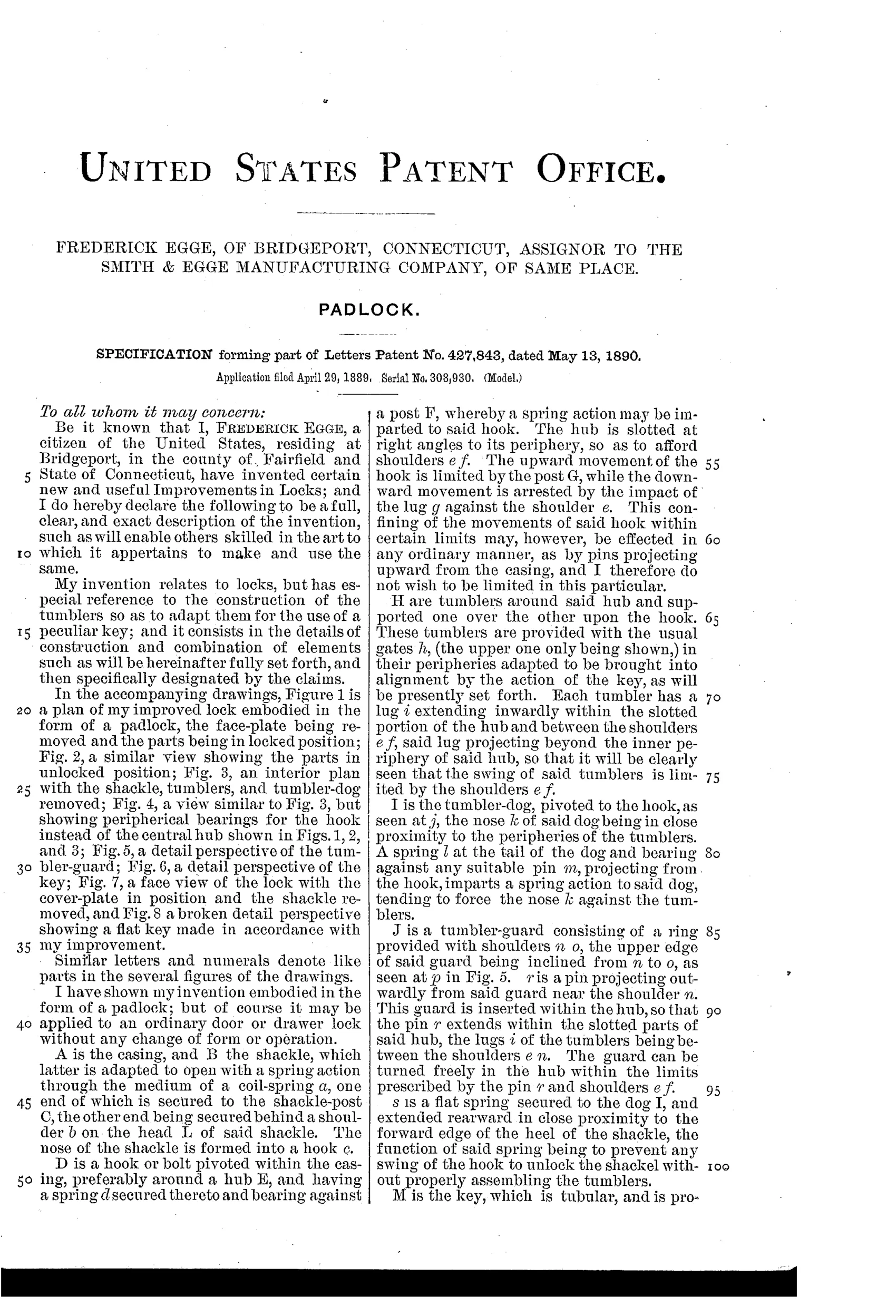
A tumbler padlock with tubular key
⚿ How it works
A spring-actuated hook or bolt is journaled within the lock casing and engages the hooked nose of the spring-loaded shackle. Loose tumblers pivoted around a common hub have gates and lugs; when a tubular key with a concentric bit is inserted and turned, its wards and notches align the tumbler gates so a spring-loaded dog can snap into them, locking the tumblers rigid with the hook. Continued key rotation then raises the hook out of engagement with the shackle nose, allowing the shackle to spring open. A separate tumbler-guard ring prevents tampering by picking tools and resets the tumblers to locked position if disturbed.
⚿ What was claimed
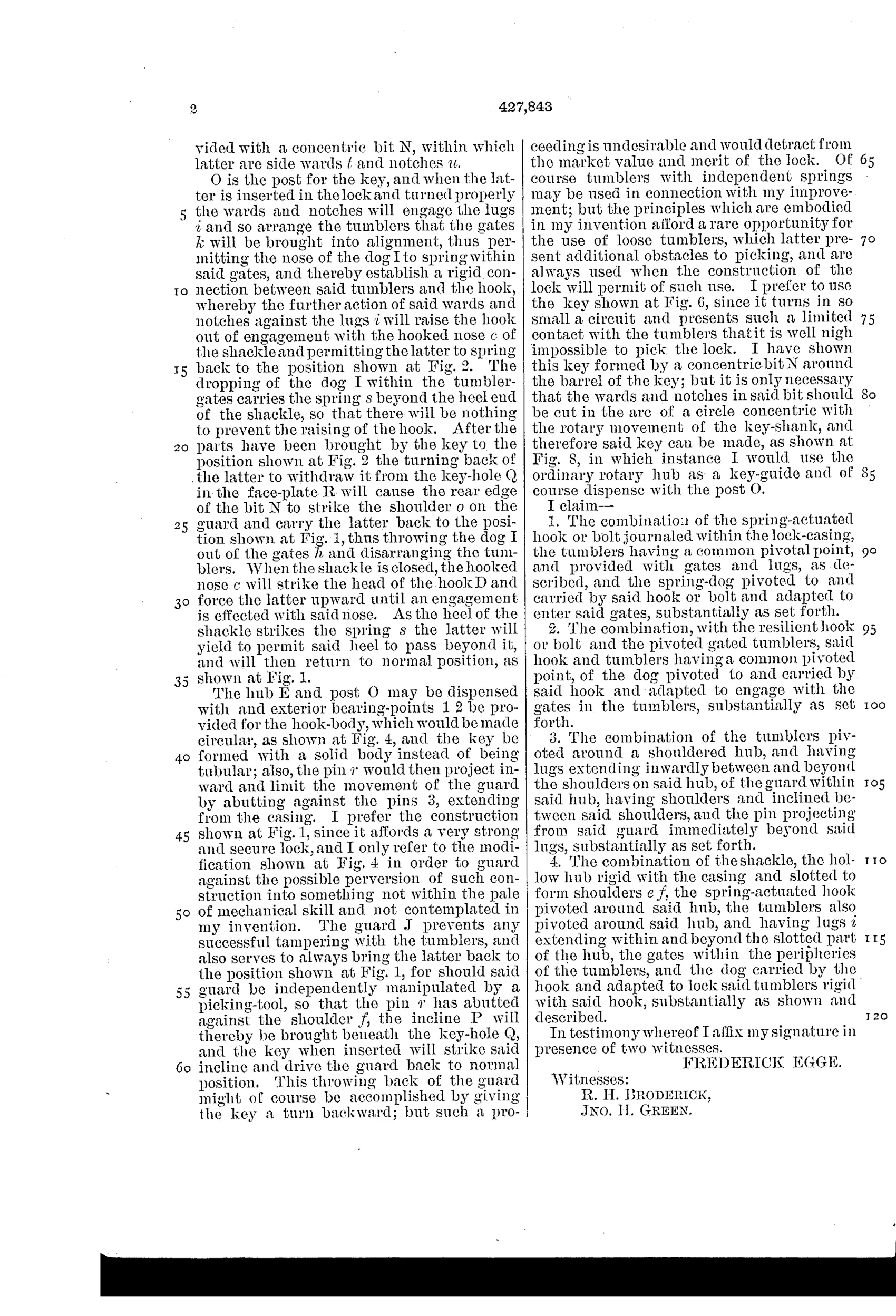
“The combination of the shackle, the hollow hub rigid with the casing and slotted to form shoulders e f, the spring-actuated hook pivoted around said hub, the tumblers also pivoted around said hub, and having lugs i extending within and beyond the slotted part of the hub, the gates within the peripheries of the tumblers, and the dog carried by the hook and adapted to lock said tumblers rigid with said hook, substantially as shown and described.”
In plain English: The lock combines a shackle, a slotted hub fixed to the casing, a spring-loaded hook pivoting on that hub, and loose tumblers with lugs and gates around the same hub, plus a dog on the hook that locks the tumblers rigidly to the hook once their gates align.
⚿ In the inventor’s words
“I prefer to use the key shown at Fig. 6, since it turns in so small a circuit and presents such a limited contact with the tumblers that it is well nigh impossible to pick the lock.”— Frederick Egge, from the specification
Fate unknown
Smith & Egge produced padlocks commercially, which makes production plausible, but a surviving specimen matching this hook-and-dog mechanism would be needed to confirm this specific design was made.
⚿ More by Frederick Egge
- IMPROVEMENT IN PADLOCKS. (1878)
⚿ Commentary
Frederick Egge's design inverts the usual tumbler logic in a way worth pausing over. In most lever locks, the tumblers gate a bolt that slides past them. Here the tumblers ride loose on the same hub as the spring-loaded hook that grips the shackle. The key's job is to swing the tumbler gates into line so a dog on the hook can drop into them — at which moment tumblers and hook become one rigid piece, and continued key rotation carries the whole cluster around, lifting the hook off the shackle nose. Nothing moves the bolt until the tumblers have literally been welded to it by the dog. Compare Figs. 1 and 2 and you can watch this happen.
The anti-picking thinking is layered. The tubular key of Fig. 6 turns, as Egge says, 'in so small a circuit and presents such a limited contact with the tumblers' that feeling gates individually would be hard. Then Fig. 5 shows the tumbler-guard ring, a tamper trip that resets everything to locked if a picking tool disturbs it — an early example of a lock designed to punish probing rather than merely resist it.
Egge was no garret inventor: this is assigned to Smith & Egge Manufacturing of Bridgeport, a real hardware maker with real presses, and the drawing has the compact, stampable geometry of a lock meant for production. It sits in the crowded post-Yale scramble to make lever-style padlocks pick-resistant without paying for pin tumblers.
Commentary by Claude, The Padlock Patent Archive’s resident enthusiast