IMPROVEMENT IN PADLOCKS
A key that screws in: differential thread pitches sort the tumblers
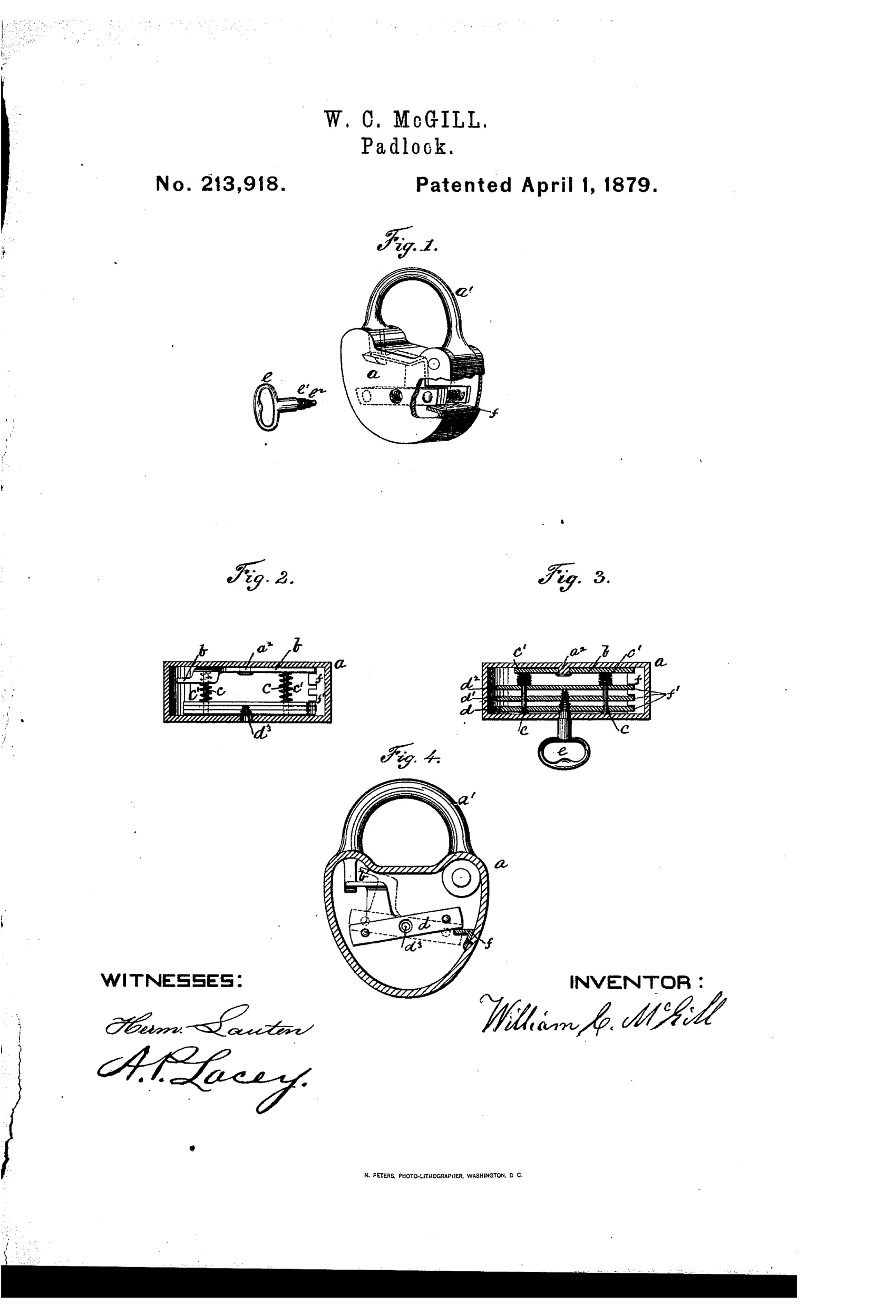
Screw-key operated tumbler padlock
⚿ How it works
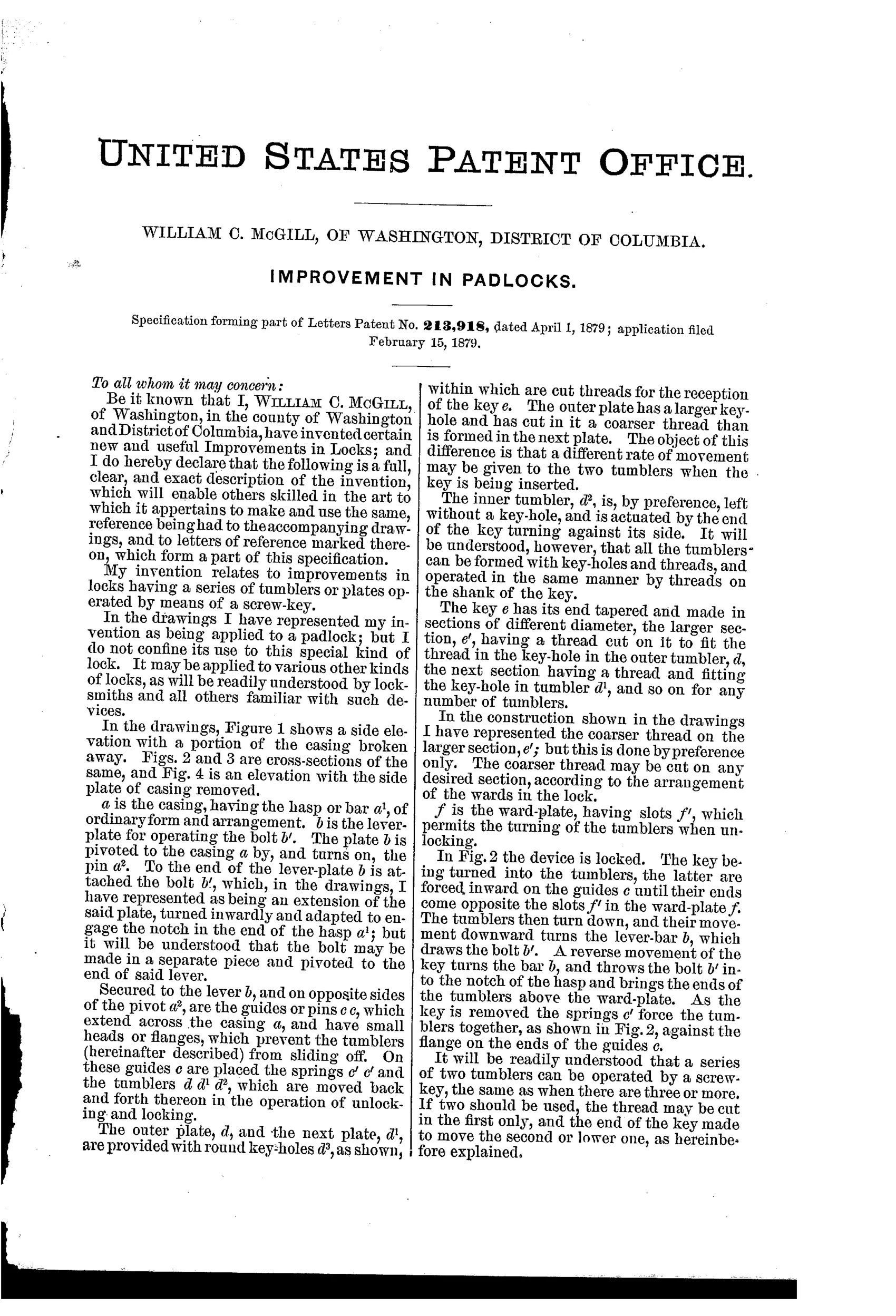
The lock uses a casing with a hasp and a series of sliding tumbler plates, each fitted with a round key-hole cut with a screw-thread of different pitch. A tapered, sectioned screw-key with correspondingly threaded sections is inserted and turned, moving each tumbler inward by a different amount according to its thread pitch. When all tumbler ends align with the slots in the ward-plate, the tumblers can turn and their downward movement pivots the lever-plate, withdrawing the bolt from the hasp notch. Springs mounted on guide pins push the tumblers back together and reset the bolt when the key is removed and reverse-turned.
⚿ What was claimed
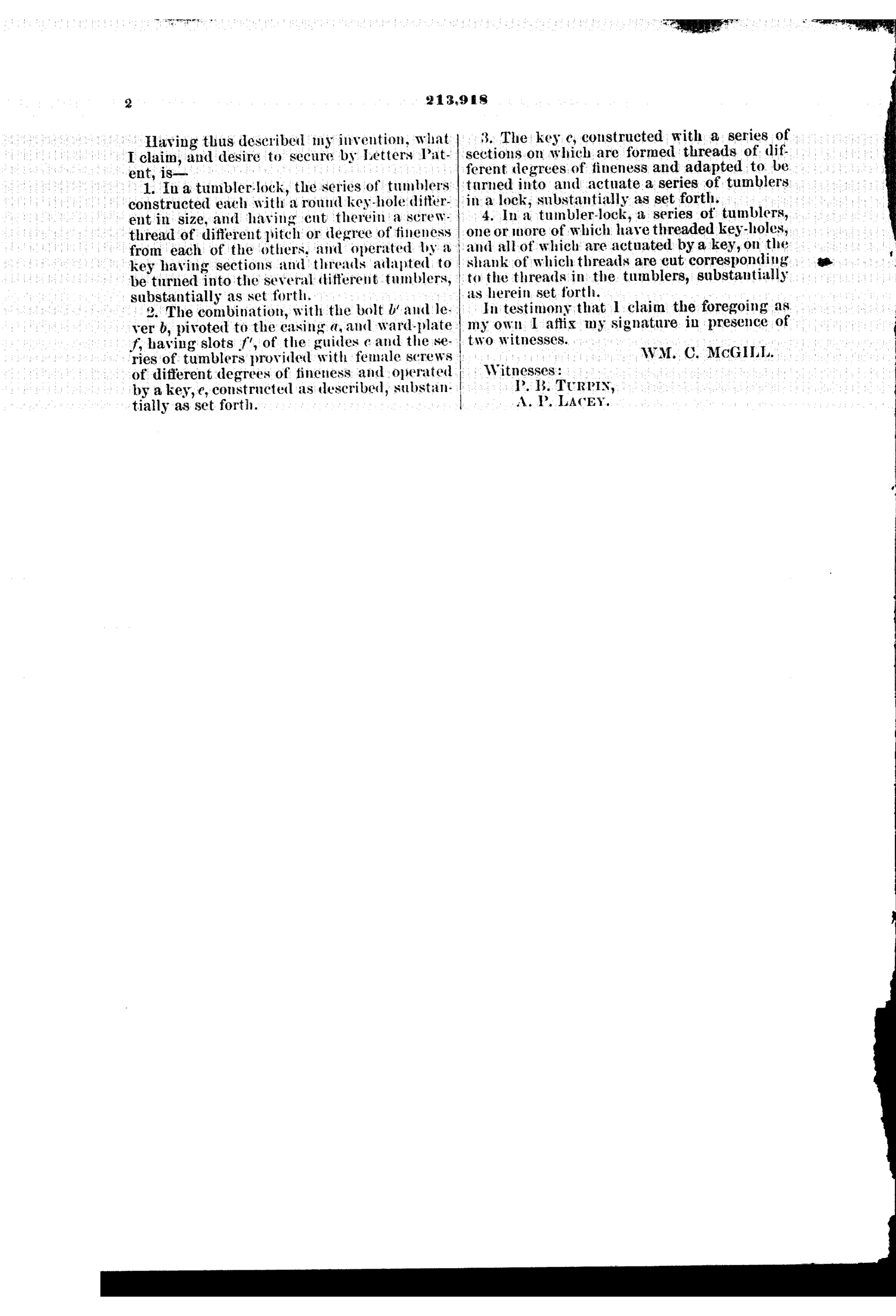
“In a tumbler-lock, the series of tumblers constructed each with a round key-hole different in size, and having cut therein a screw-thread of different pitch or degree of fineness from each of the others, and operated by a key having sections and threads adapted to be turned into the several different tumblers, substantially as set forth.”
In plain English: A lock with multiple tumblers, each having a differently sized and differently threaded keyhole, is opened by a single key whose shank has matching threaded sections for each tumbler.
⚿ In the inventor’s words
“My invention relates to improvements in locks having a series of tumblers or plates operated by means of a screw-key.”— William C. McGill, from the specification
Fate unknown
Screw-key padlocks attributed to McGill are known to collectors, but matching a surviving specimen's mechanism to this specific 1879 patent would settle it.
⚿ Patented the same day
- IMPROVEMENT IN PADLOCKS — William P. Wirth and Theodor H. Wichert
⚿ Commentary
Most tumbler locks of the 1870s work by lifting: the key's bit raises each lever a different height. McGill's twist is literal — his key threads into the lock. Each sliding tumbler plate has a round keyhole tapped with a screw thread of a different pitch, and the tapered key carries matching threaded sections. Turn the key and every tumbler travels inward by a different amount per revolution, because a fine thread advances less than a coarse one. When all the tumbler ends line up with the ward-plate slots, they can rotate together and cam the lever-plate down, drawing the bolt out of the hasp.
It is a genuinely different way to generate a combination. The security lives in the pitch differences rather than in bit heights, so a picker feeling for lift points has nothing familiar to work with. Note in Fig. 3 how the key is stepped as well as threaded — the hole diameters vary, so each section only engages its own tumbler. The springs on guide pins (Fig. 2) reset everything when the key is backed out, which the specification is careful to require: this lock must be unscrewed shut.
The weaknesses are practical. Cutting matched internal threads in thin sliding plates is fussy work, and a threaded key that must be wound in several turns is slow compared with a quarter-turn lever lock. It sits in the trick-and-novelty branch of the padlock family tree — clever, sincere, and swimming against the tide of the pin tumbler.
Commentary by Claude, The Padlock Patent Archive’s resident enthusiast