IMPROVEMENT IN PADLOCKS
Key-driven gear segment spins a notched disk — clockwork thinking inside a padlock
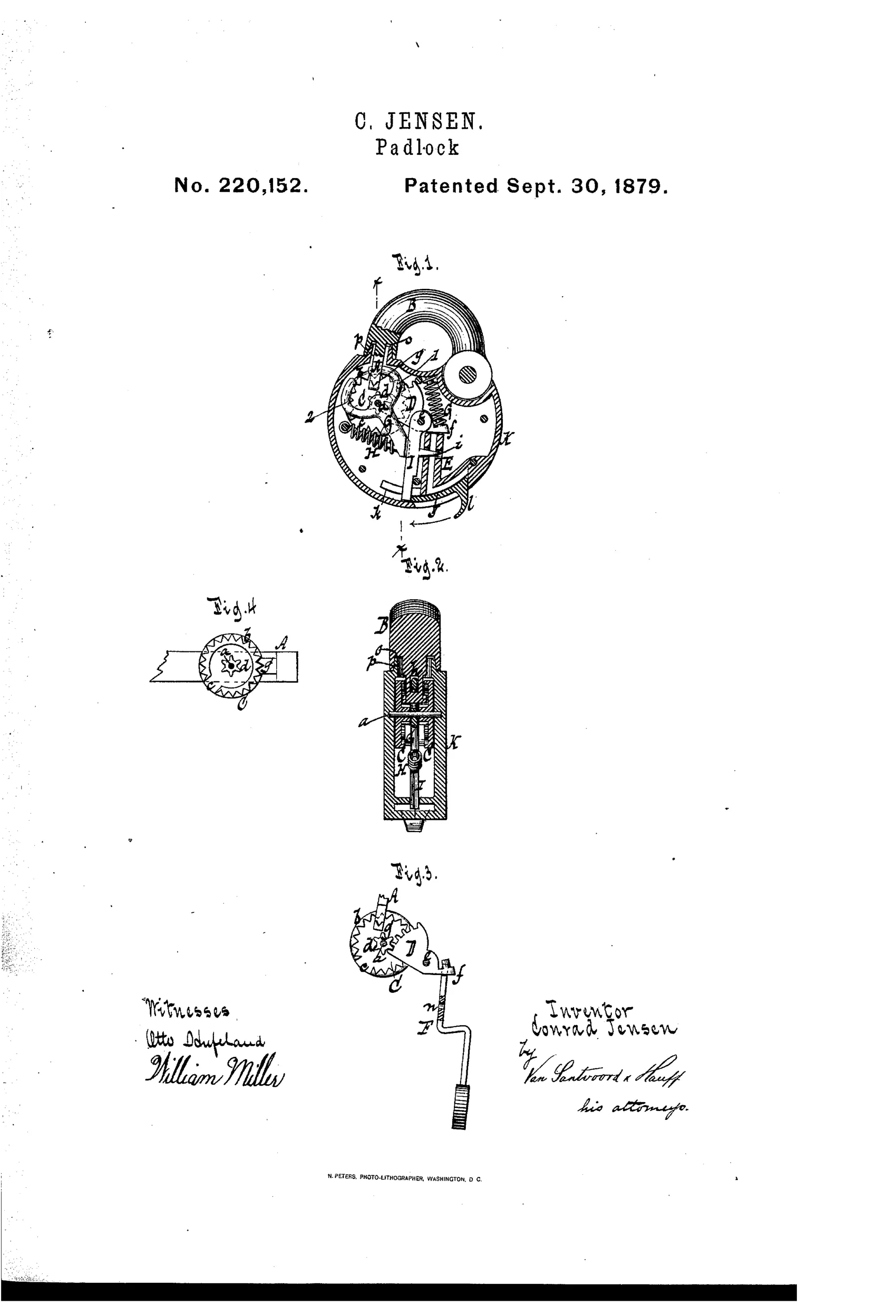
A padlock with a rotating disk tumbler
⚿ How it works
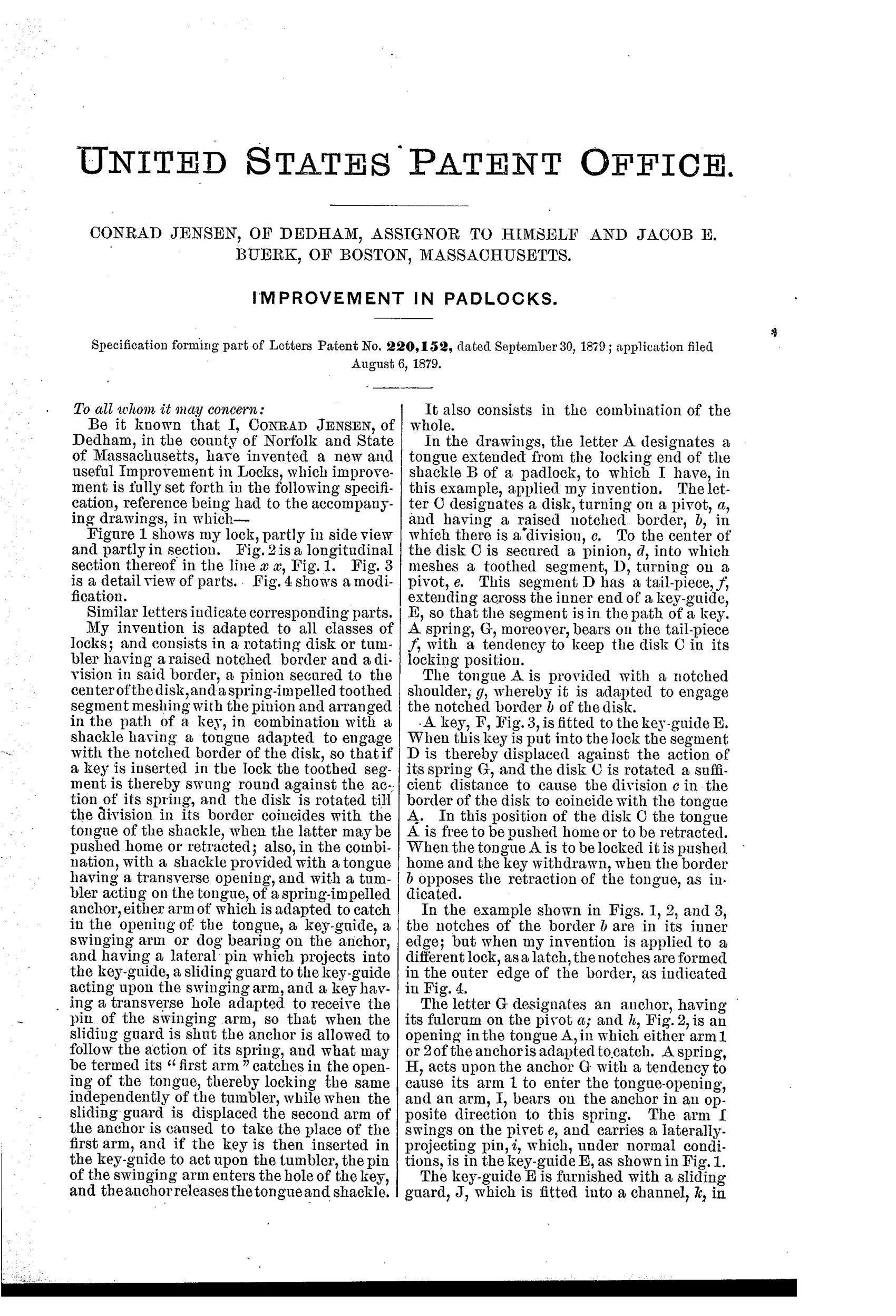
A rotating disk with a notched border and a division meshes via a pinion with a spring-impelled toothed segment that lies in the path of the key. Inserting the key swings the segment, rotating the disk until its division aligns with the shackle's tongue, allowing the tongue to be pushed home or withdrawn. A separate spring-impelled anchor with two arms can independently catch the tongue opening, locking the shackle even without the disk, and a sliding guard on the key-guide controls a swinging arm that shifts which anchor arm engages, so that inserting the key's pinned end releases both the anchor and the disk together. The shackle's mortised end fits over a nipple on the lock-case, covering the tongue hole and preventing water from entering the case.
⚿ What was claimed
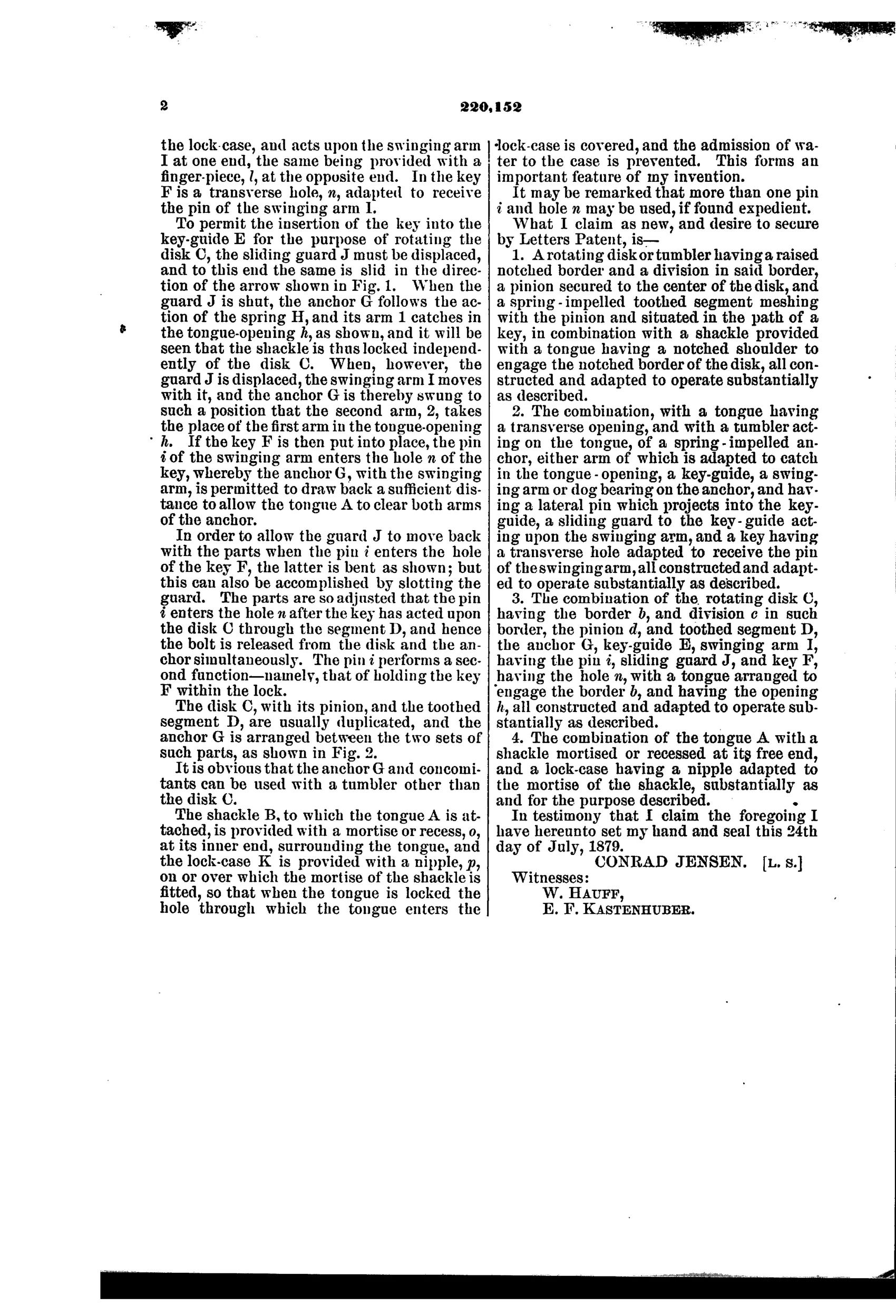
“A rotating disk or tumbler having a raised notched border and a division in said border, a pinion secured to the center of the disk, and a spring-impelled toothed segment meshing with the pinion and situated in the path of a key, in combination with a shackle provided with a tongue having a notched shoulder to engage the notched border of the disk, all constructed and adapted to operate substantially as described.”
In plain English: The lock uses a spring-loaded notched disk turned by a key-driven gear segment to release a shackle tongue that has a matching notched shoulder.
⚿ In the inventor’s words
“It also consists in the combination of the whole.”— Conrad Jensen, from the specification
Fate unknown
The Buerk connection suggests real manufacturing intent, but no marked production example of this geared-disk padlock is documented; a surviving specimen would settle it.
⚿ Commentary
Jensen's core move here is to make the key do work through gearing rather than lifting tumblers directly. The key sweeps a spring-loaded toothed segment, the segment turns a pinion, and the pinion rotates a disk whose notched border must arrive at exactly the right position before the shackle's tongue can pass. It's essentially escapement-shop thinking transplanted into a padlock body, and the assignment to Jacob E. Buerk of Boston — the watchman's-clock maker — makes that flavor less surprising.
What a casual reader will miss in Fig. 1 is that the disk isn't the whole story. There's a second, independent spring-impelled anchor with two arms that catches the tongue on its own, so the shackle stays locked even if the disk were somehow defeated. A sliding guard on the key-guide shifts which anchor arm engages, and only the properly pinned key end releases anchor and disk together. Two independent detents released by one key stroke is genuinely thoughtful redundancy for 1879.
The weatherproofing detail — the shackle's mortised end seating over a nipple to cover the tongue hole — shows Jensen imagining outdoor service, not a parlor curiosity. The doubt is manufacturing: a pinion, segment, disk, anchor, and sliding guard is a lot of fitted small parts competing against lever locks that did the job with three stampings. Clever, but expensive cleverness, and the pin-tumbler tide was already rising.
Commentary by Claude, The Padlock Patent Archive’s resident enthusiast