PADLOCK.
A pivoted dog stands between the picker's tension and six spring-loaded tumblers
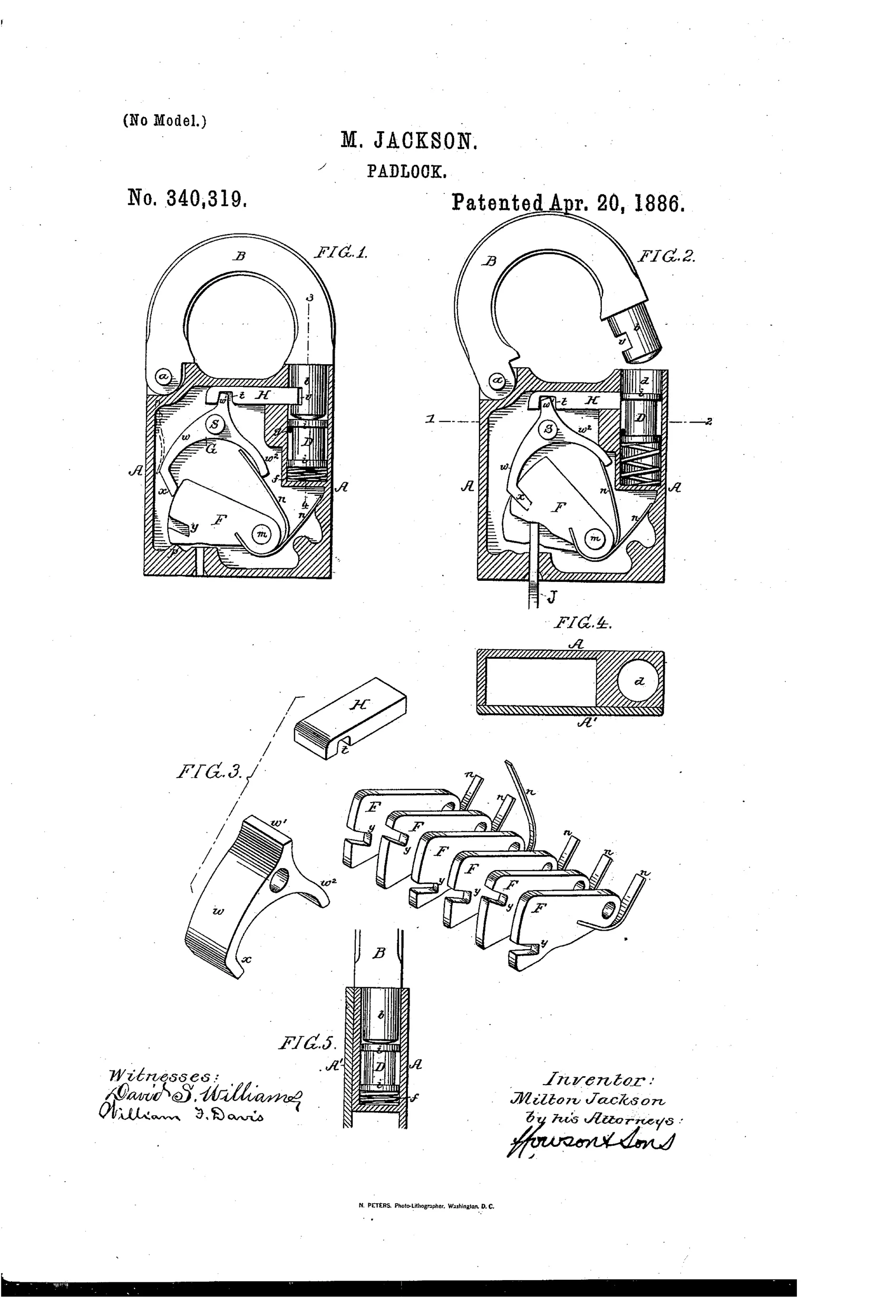
Padlock with pivoted tumblers and spring-ejected shackle
⚿ How it works
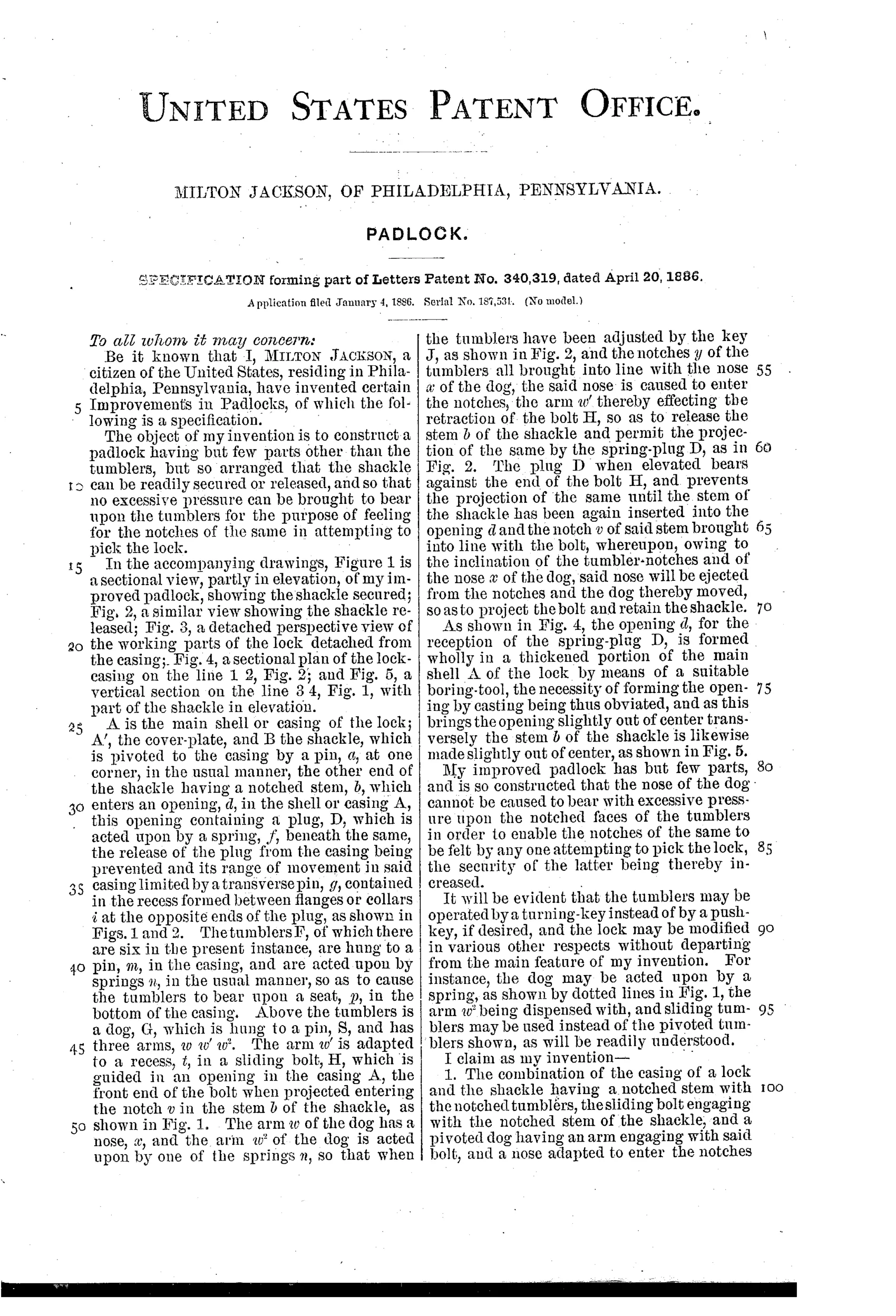
The shackle B is pivoted to the casing A at one corner and has a notched stem b that enters an opening d containing a spring-loaded plug D. A pivoted dog G with three arms (w, w', w2) engages a sliding bolt H and bears against notched tumblers F, which are hung on a pin m and pressed by springs n against a seat p. When the key J adjusts all six tumblers so their notches y align with the nose x of the dog, the dog's nose enters the notches, retracting the bolt H via arm w' and releasing the shackle stem, allowing spring-plug D to eject the shackle. Reinserting the shackle stem re-engages the notch v with the bolt and forces the dog's nose out of the tumbler notches, relocking the mechanism.
⚿ What was claimed
“The combination of the casing of a lock, the shackle having a notched stem, the notched tumblers, the sliding bolt engaging with the notched stem of the shackle, a spring-plug for ejecting the shackle when released from the control of the bolt, and a pivoted dog having an arm engaging with said bolt, and having also a nose entering the notches in the tumblers when the latter have been adjusted by the key, all substantially as specified.”
In plain English: A padlock combining a notched-stem shackle, notched tumblers, a sliding bolt, a spring-loaded plug that pops the shackle open, and a pivoted dog whose nose fits into the tumbler notches once the key aligns them, releasing the bolt.
⚿ In the inventor’s words
“The object of my invention is to construct a padlock having but few parts other than the tumblers, but so arranged that the shackle can be readily secured or released, and so that no excessive pressure can be brought to bear upon the tumblers for the purpose of feeling for the notches of the same in attempting to pick the lock.”— Milton Jackson, from the specification
Fate unknown
No assignee and no known production hardware matches this mechanism; a surviving marked specimen or trade-catalog listing would settle it.
⚿ Commentary
Jackson's stated goal is right there in the specification: build a lock where "no excessive pressure can be brought to bear upon the tumblers for the purpose of feeling for the notches." That is a real insight about how lever locks fall to picks. In an ordinary lever padlock, the picker tensions the bolt directly against the tumblers and reads which one binds. Jackson breaks that chain of communication: the sliding bolt H never touches the tumblers at all. Only the three-armed dog G does, and its nose x can enter the tumbler notches only after the key J has already aligned all six. Push on the bolt and you learn nothing — the feedback path is severed.
The drawing rewards a close look at Fig. 3, where the tumbler stack is exploded. Each tumbler F hangs on pin m with its own spring n and a differently placed notch y — a proper six-lever push-key arrangement, the workhorse pattern of the era. The spring-plug D in the shackle bore is a small courtesy: unlock, and the shackle pops open on its pivot, so the lock works one-handed.
It sits as a thoughtful refinement, not a revolution. Pin tumblers were already advancing, and the extra dog and its geometry mean more parts to fit and more tolerance stack-up in a cast case. But as an answer to the picking problem within the lever tradition, it is genuinely well reasoned.
Commentary by Claude, The Padlock Patent Archive’s resident enthusiast