IMPROVEMENT IN PADLOCKS
One lever pops the shackle, parks the bolt, and blocks bad keys
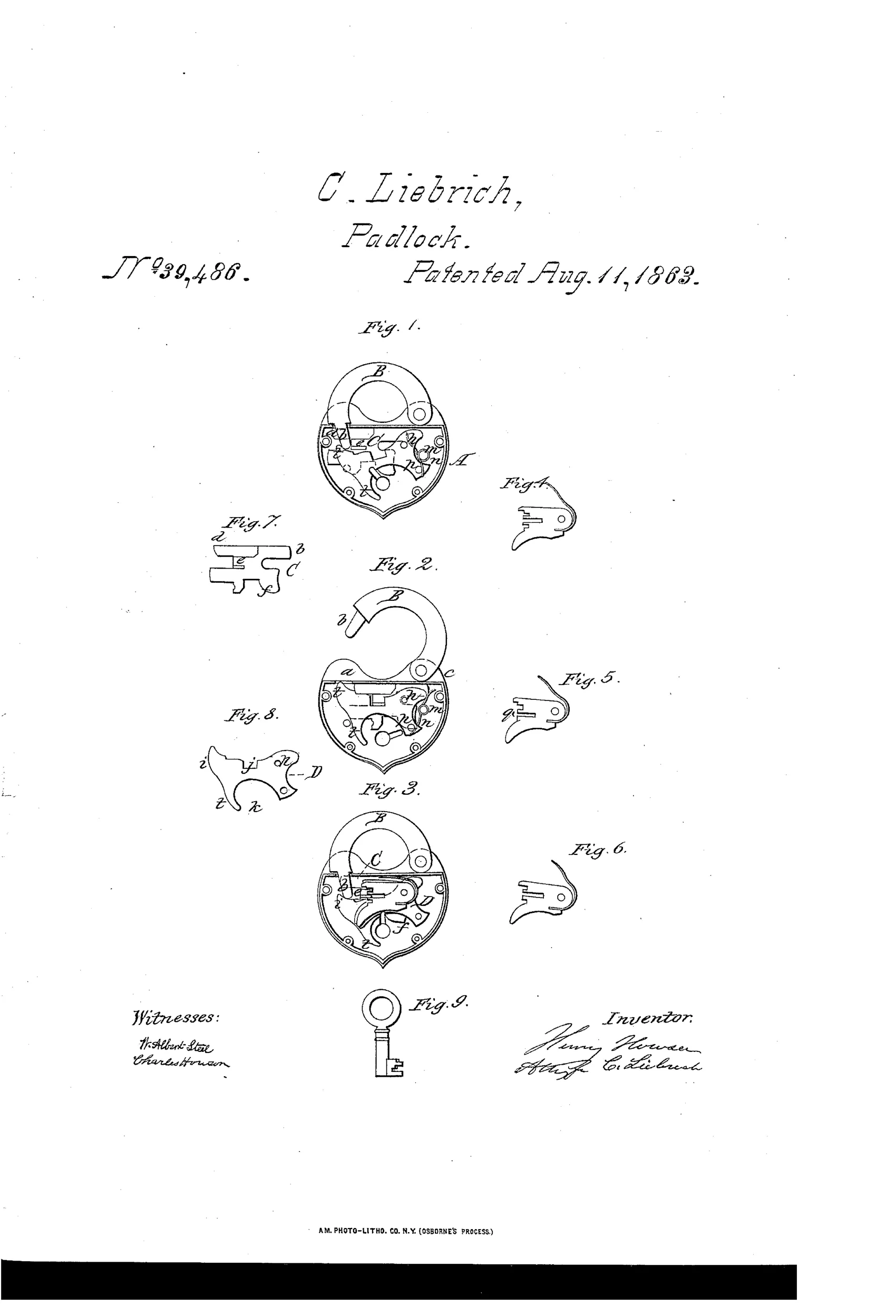
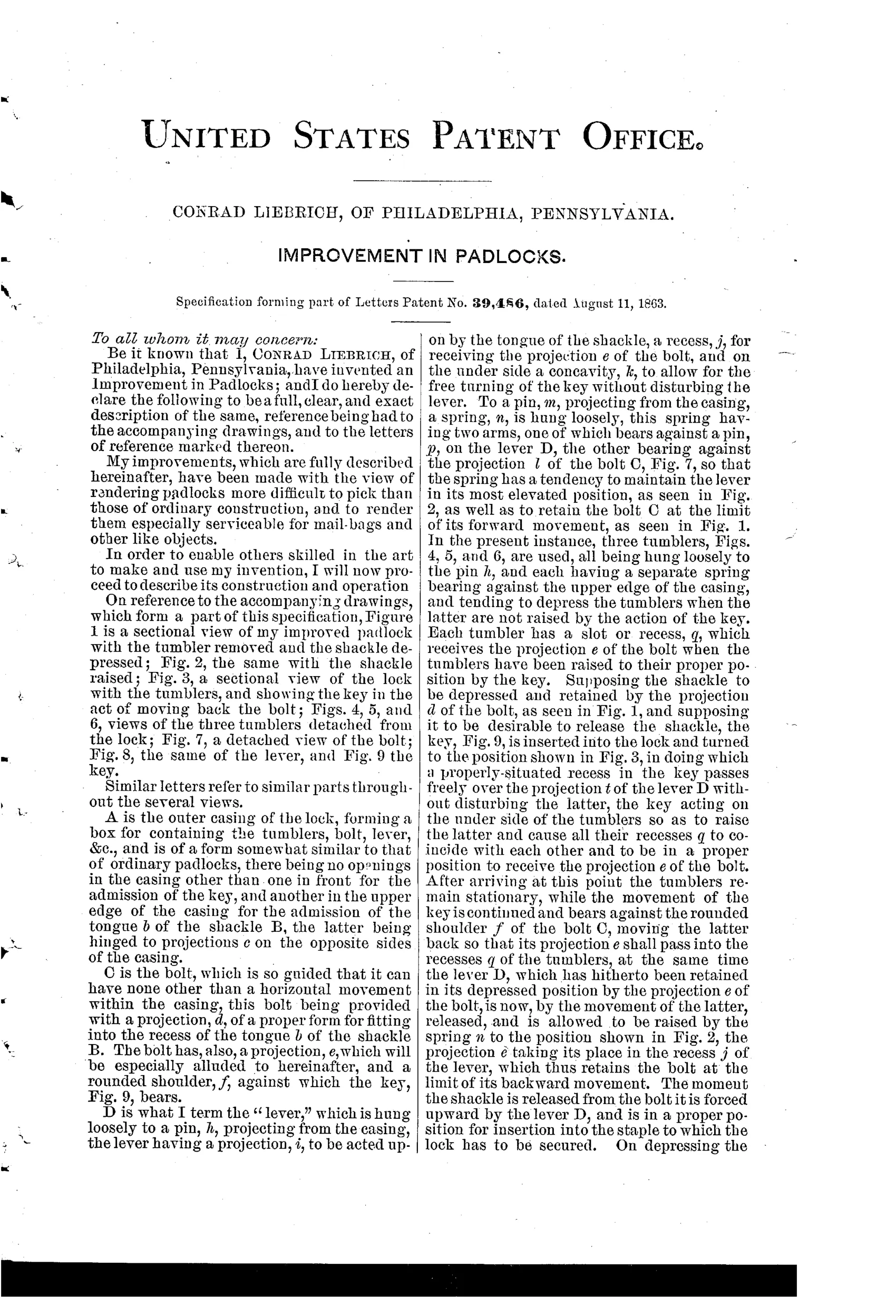
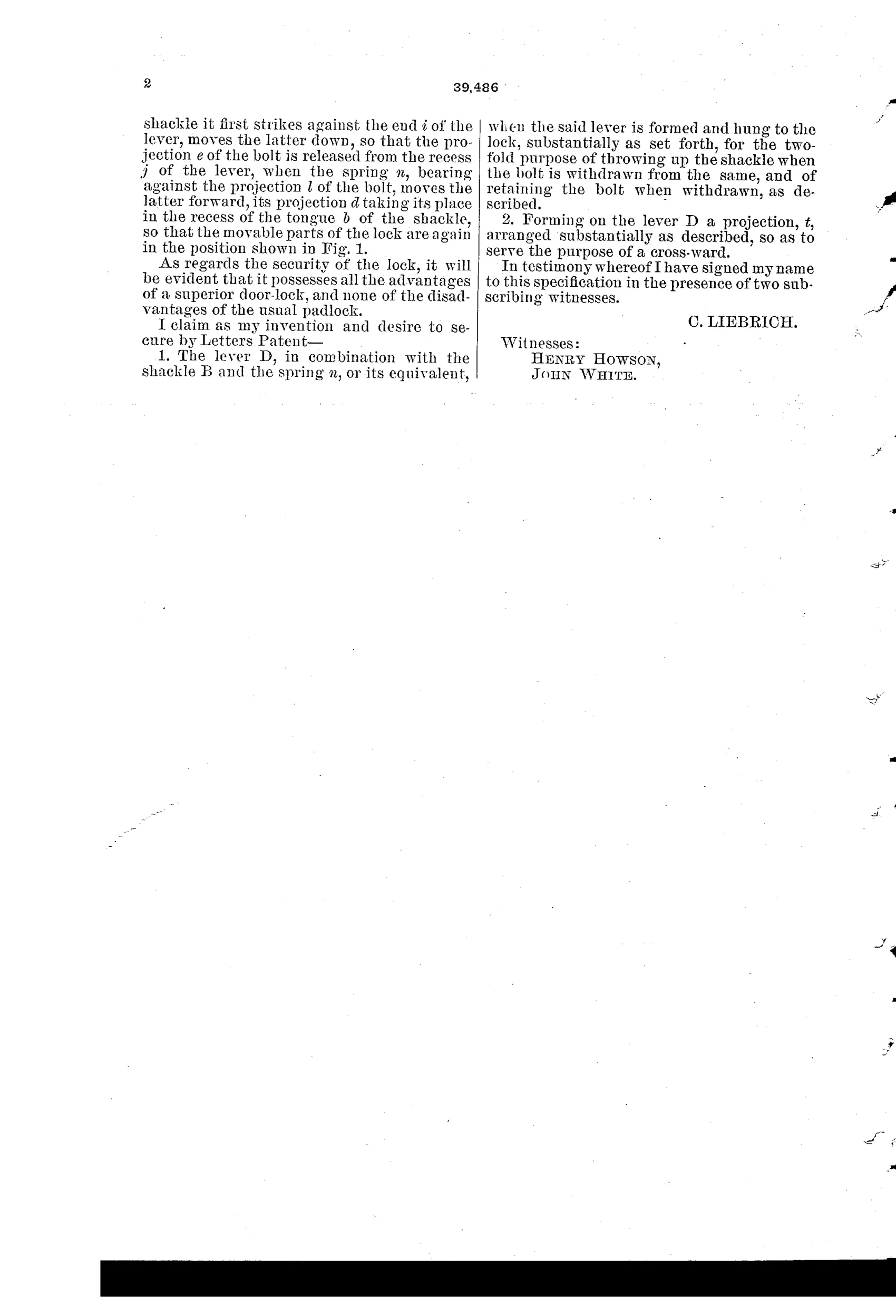
A tumbler-and-lever padlock resistant to picking
⚿ How it works
The lock uses a spring-loaded lever D acting with three tumblers and a horizontally moving bolt C to secure the shackle B. Inserting the proper key raises all tumblers so their recesses align, allowing the key to push back the bolt and release the shackle, which then springs upward via the lever. Withdrawing the shackle depresses the lever, releasing the bolt so it snaps forward again into the shackle's tongue, resetting the lock. A projection on the lever also serves as a cross-ward to block improper keys.
⚿ What was claimed
“1. The lever D, in combination with the shackle B and the spring n, or its equivalent, when the said lever is formed and hung to the lock, substantially as set forth, for the two-fold purpose of throwing up the shackle when the bolt is withdrawn from the same, and of retaining the bolt when withdrawn, as described.”
In plain English: The lever, together with the shackle and spring, both pops the shackle open when unlocked and holds the bolt in its retracted position.
⚿ In the inventor’s words
“As regards the security of the lock, it will be evident that it possesses all the advantages of a superior door-lock, and none of the disadvantages of the usual padlock.”— Conrad Liebrich, from the specification
Fate unknown
The heart-shaped case matches period Philadelphia production styles, but no specimen marked to this patent is documented; one would settle it.
⚿ Commentary
Liebrich's real contribution here isn't the three lever tumblers — Philadelphia in 1863 was awash in those — it's the double-duty lever D. When the key pushes the bolt back, the lever catches and holds it retracted while its spring flips the shackle up and out of the way. Pull the shackle free and the lever drops, releasing the bolt to snap forward again, primed for the shackle's return. That means the padlock relocks itself: press the shackle home and it's secure, no key required. For anything locked and unlocked dozens of times a day — mail bags, freight, gates — that's a genuine convenience, and it's why the self-locking snap shackle became standard on later commercial padlocks.
The drawing rewards a slow look. Figures 1 through 3 show the same heart-shaped case in three states: shackle down, shackle sprung open, and the key mid-throw shoving the bolt back. Figures 4 through 6 lay out the three tumblers individually, each with a differently placed gating, and Figure 8 shows the lever with its odd hooked profile — that projection is doing triple duty as a cross-ward against improper keys.
His boast that it has 'all the advantages of a superior door-lock' overreaches; three levers were pickable then as now. But as an early, tidy statement of the self-relocking padlock idea, it earns its place.
Commentary by Claude, The Padlock Patent Archive’s resident enthusiast