PADLOCK
The shackle throws itself open, courtesy of a spring and a lip
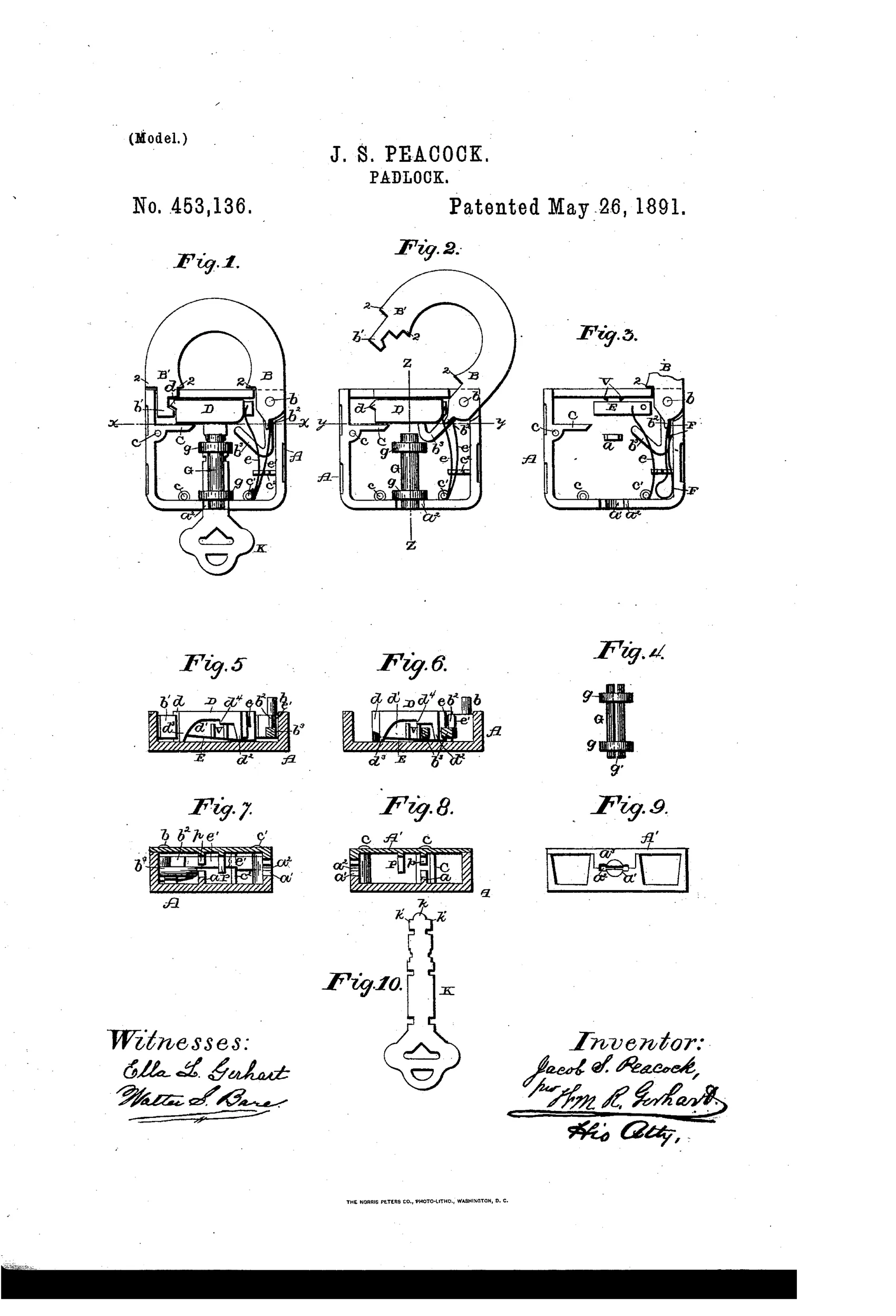
Key-operated shackle padlock with detachable arm
⚿ How it works
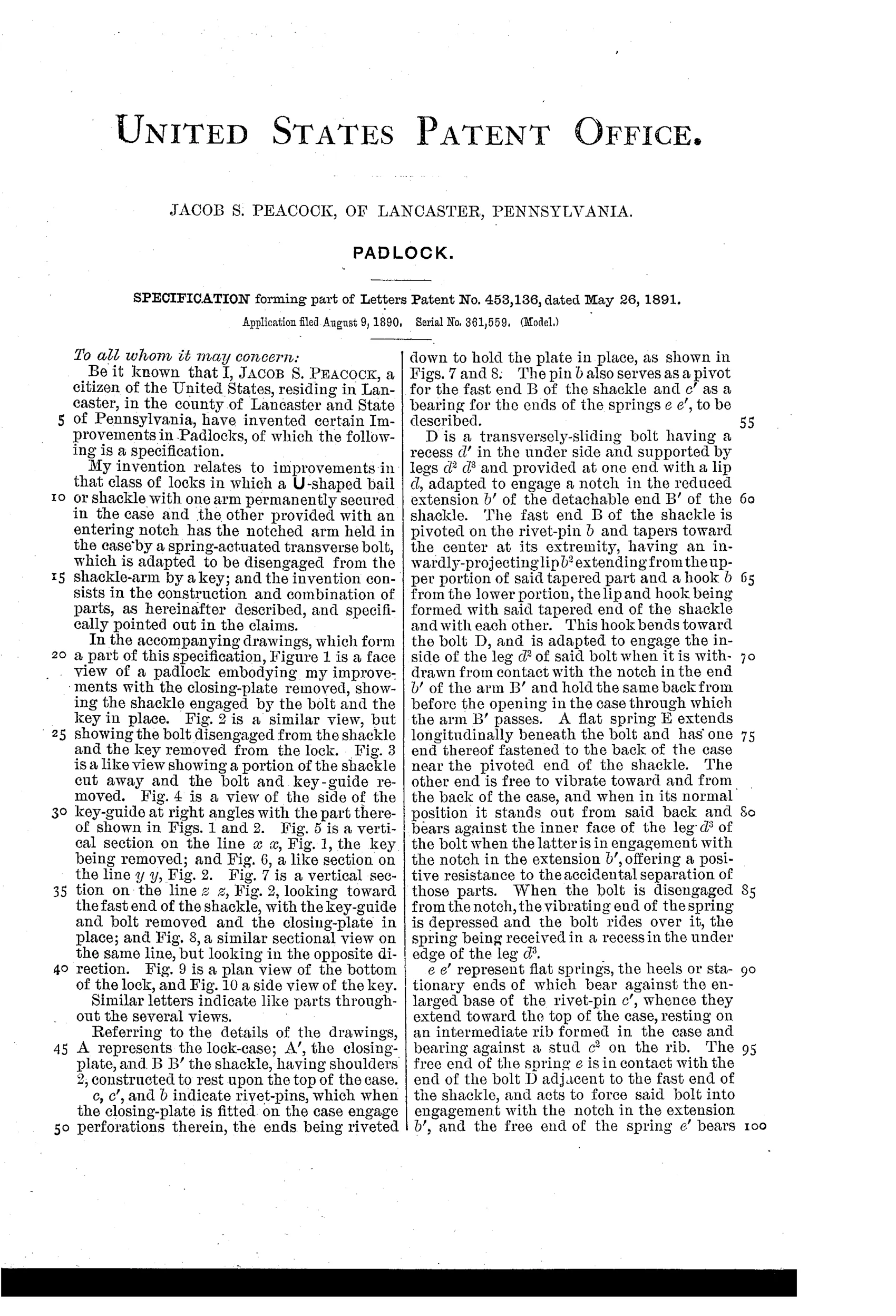
A U-shaped shackle has one arm permanently pivoted in the case and the other arm detachable, ending in a notch. A spring-actuated transversely-sliding bolt engages this notch to hold the shackle closed, and a key inserted into a revoluble slotted key-guide turns to depress the bolt's springs and withdraw it from the notch. A hook on the fast end of the shackle catches a recess in the bolt to hold the shackle open once released, while separate flat springs both force the bolt into engagement and, upon disengagement, push the shackle open automatically via a lip on the shackle.
⚿ What was claimed
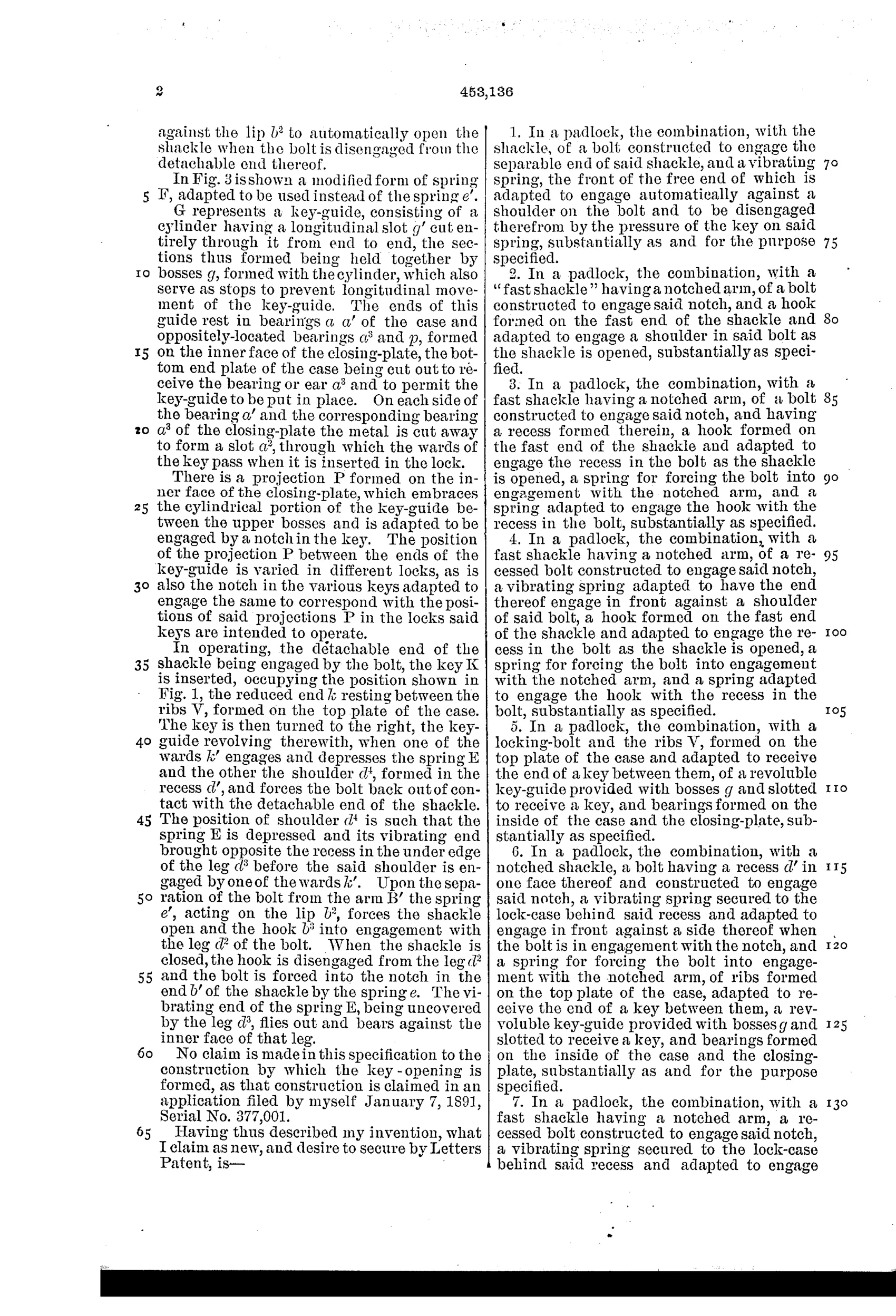
“1. In a padlock, the combination, with the shackle, of a bolt constructed to engage the separable end of said shackle, and a vibrating spring, the front of the free end of which is adapted to engage automatically against a shoulder on the bolt and to be disengaged therefrom by the pressure of the key on said spring, substantially as and for the purpose specified.”
In plain English: The lock combines a shackle, a bolt that catches the shackle's free end, and a spring that automatically locks the bolt in place but is pushed aside by the key to release it.
⚿ In the inventor’s words
“No claim is made in this specification to the construction by which the key-opening is formed, as that construction is claimed in an application filed by myself January 7, 1891, Serial No. 377,001.”— Jacob S. Peacock, from the specification
Fate unknown
Peacock is not among the known Lancaster or national lock makers of the era; a surviving marked specimen matching the drawings would settle it.
⚿ Commentary
Peacock's padlock is a self-opening design: when the key rotates in the guide and depresses the springs behind the transverse bolt, a separate flat spring pressing against a lip on the shackle kicks the free arm up and out of the case. Then a hook on the pivoted end of the shackle catches a recess in the bolt and holds everything open. That's a thoughtful bit of user interface for 1891 — no fumbling to pull the shackle after turning the key, and the lock can't accidentally re-latch while you're threading it through a hasp.
The drawing rewards a close look at Figs. 1 and 2 side by side: same lock, bolt engaged and disengaged, and you can trace how the springs do double duty — forcing the bolt into the shackle notch when closed, then serving as the ejector when released. The revoluble slotted key-guide (Fig. 4) is interesting mainly for what Peacock says about it: he explicitly disclaims that construction here because he'd filed a separate application on it in January 1891. That's a man dividing his invention carefully, which suggests he took the key-guide seriously as its own idea.
Security-wise this is a one-bolt, spring-tension lock — nothing a lever-tumbler or pin-tumbler couldn't beat. It sits in the crowded middle of the field, chasing convenience rather than pick resistance, and the self-opening shackle is its one genuine contribution.
Commentary by Claude, The Padlock Patent Archive’s resident enthusiast