PADLOCK
A switch lock that holds the switchman's key hostage until he relocks it
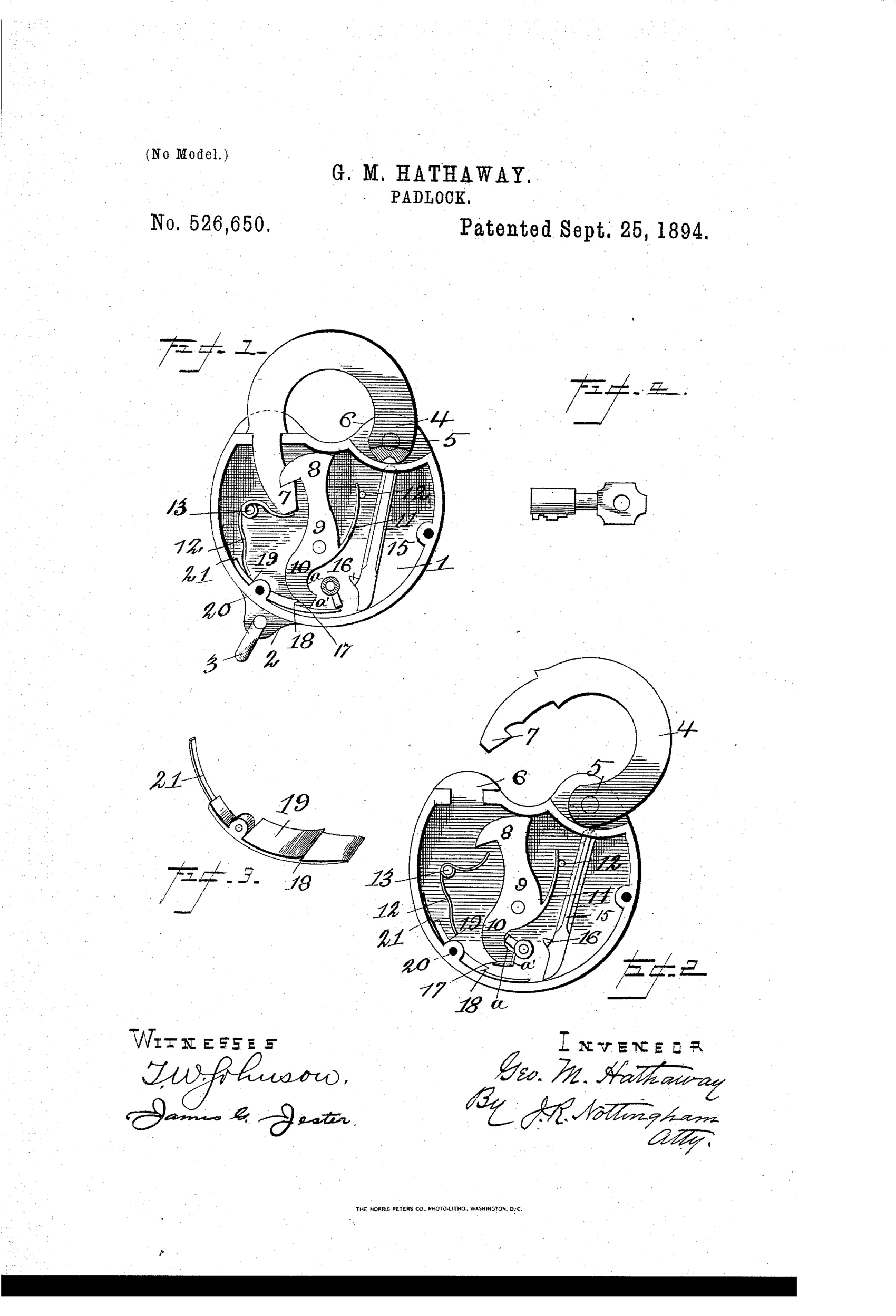
Switch-lock padlock forcing proper switch closure
⚿ How it works
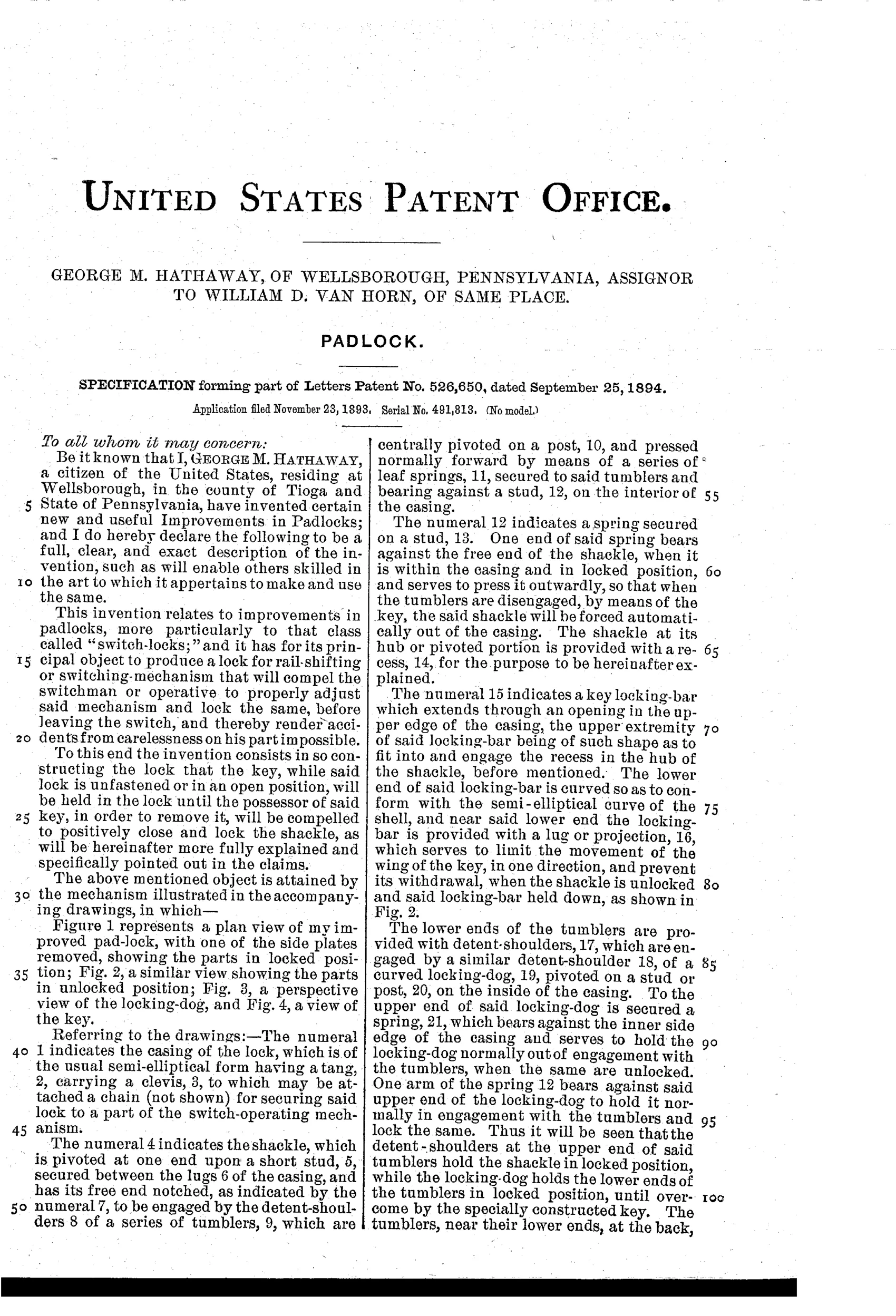
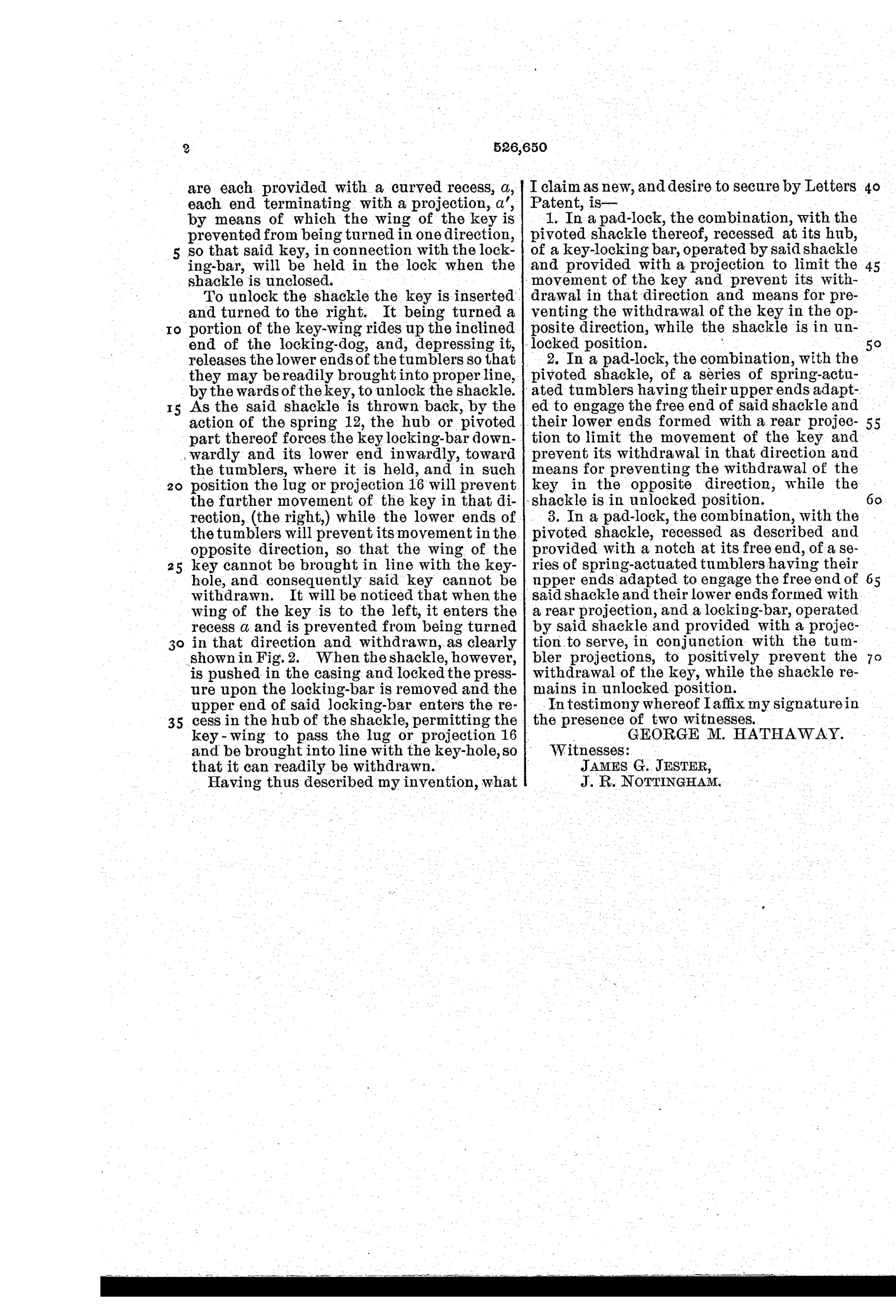
The shackle is spring-actuated so that when the lock is opened it is automatically forced outward from the casing. A key-locking bar, engaged in a recess in the shackle's hub, is held by the shackle in unlocked position and prevents the key from being withdrawn until the shackle is pushed closed. A curved locking-dog engages detent-shoulders on spring-actuated tumblers to hold the shackle locked, and the key must depress this dog to unlock the shackle. The tumblers and locking-bar together restrict the key's wing so it cannot be removed until the shackle is physically relocked.
⚿ What was claimed
“In a pad-lock, the combination, with the pivoted shackle thereof, recessed at its hub, of a key-locking bar, operated by said shackle and provided with a projection to limit the movement of the key and prevent its withdrawal in that direction and means for preventing the withdrawal of the key in the opposite direction, while the shackle is in unlocked position.”
In plain English: The lock combines a pivoted, recessed shackle with a key-locking bar that blocks the key from being removed in either direction unless the shackle is closed and locked.
⚿ In the inventor’s words
“it has for its principal object to produce a lock for rail-shifting or switching-mechanism that will compel the switchman or operative to properly adjust said mechanism and lock the same, before leaving the switch, and thereby render accidents from carelessness on his part impossible.”— George M. Hathaway, from the specification
Fate unknown
The key-retaining feature became common in production switch locks, but no marked Hathaway or Van Horn specimen is documented; a surviving example would settle it.
⚿ Commentary
The problem Hathaway is attacking here is human, not mechanical: a switchman who unlocks a switch, throws it, and walks away without locking it back has just set up a derailment. His answer is a padlock that simply refuses to give the key back. Open the shackle and a key-locking bar, riding in a recess in the shackle's hub, swings into a position that traps the key's bit between itself and the tumbler stack. The only way to get your key — which you need, because your day's work depends on it — is to push the shackle home and relock the switch.
Compare Figs. 1 and 2 and you can watch the interlock work: the spring-thrown shackle pops outward on opening, and that same motion drives the bar that blocks key withdrawal in one direction while the tumblers block it in the other. The curved locking-dog of Fig. 3 handles the ordinary business of holding the shackle against the detent shoulders.
This is the key-retaining principle that railroads eventually demanded as standard on switch locks, and it works for exactly the reason Hathaway states — it converts a rule into a physical impossibility. Whether his particular linkage was the one the trade adopted is another question; the assignment to Van Horn suggests someone thought it had commercial legs.
Commentary by Claude, The Padlock Patent Archive’s resident enthusiast