IMPROVEMENT IN PADLOCKS
A ratchet for the key: Kohout forbids turning it backward
A self-locking padlock with retrograde-preventing key stop
⚿ How it works
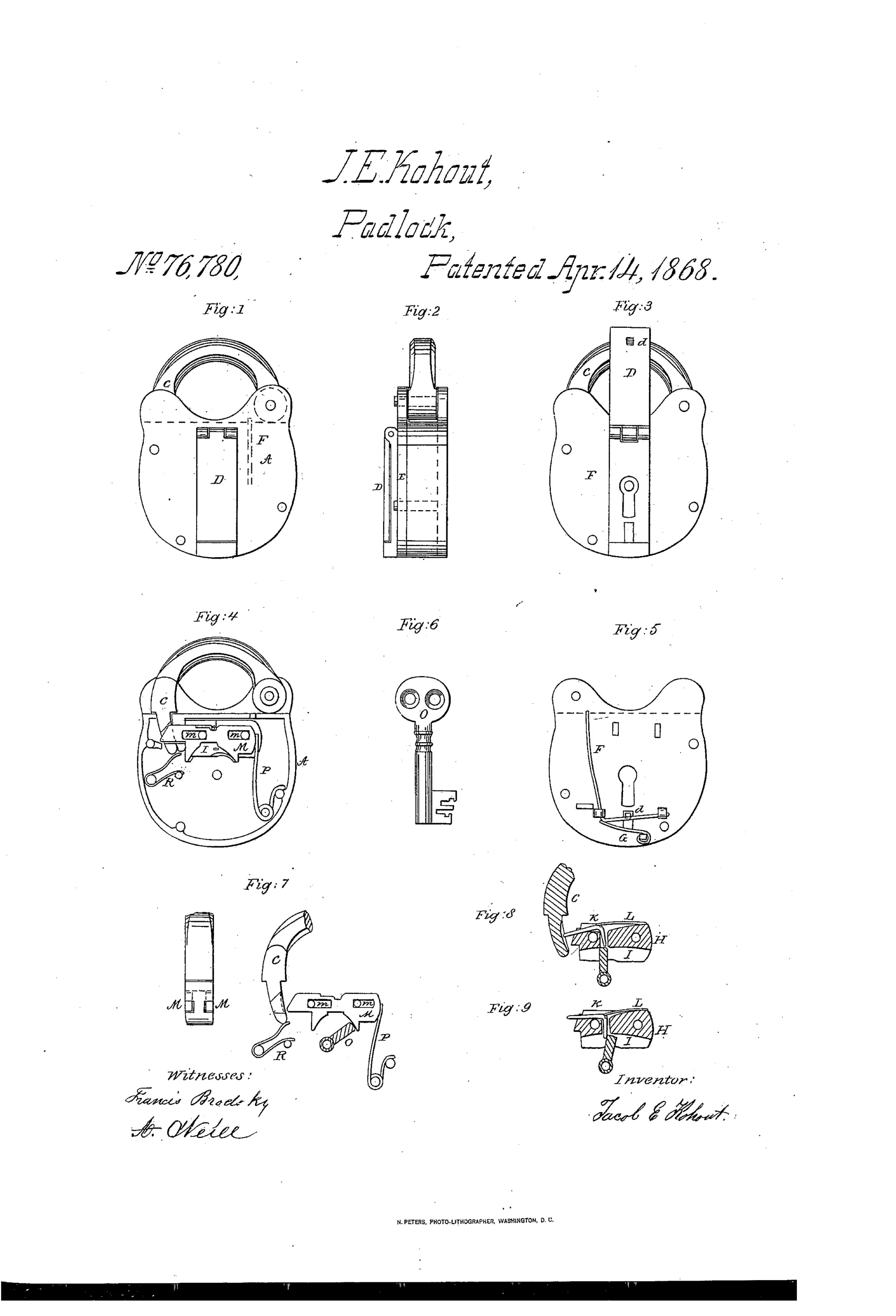
The hasp D is hinged to the front plate E and is held closed by a bent lever F and catch d, which must be pressed down to expose the keyhole. Sliding bolts M M, operated by the key O and springs P P, engage the shackle C to lock it, while a shackle-spring R ejects the shackle when the bolts are withdrawn. A separate stop K and spring L, positioned between the sliding bolts, prevent the key from being turned backward after locking or unlocking, forcing it to move in only one direction for both operations.
⚿ What was claimed
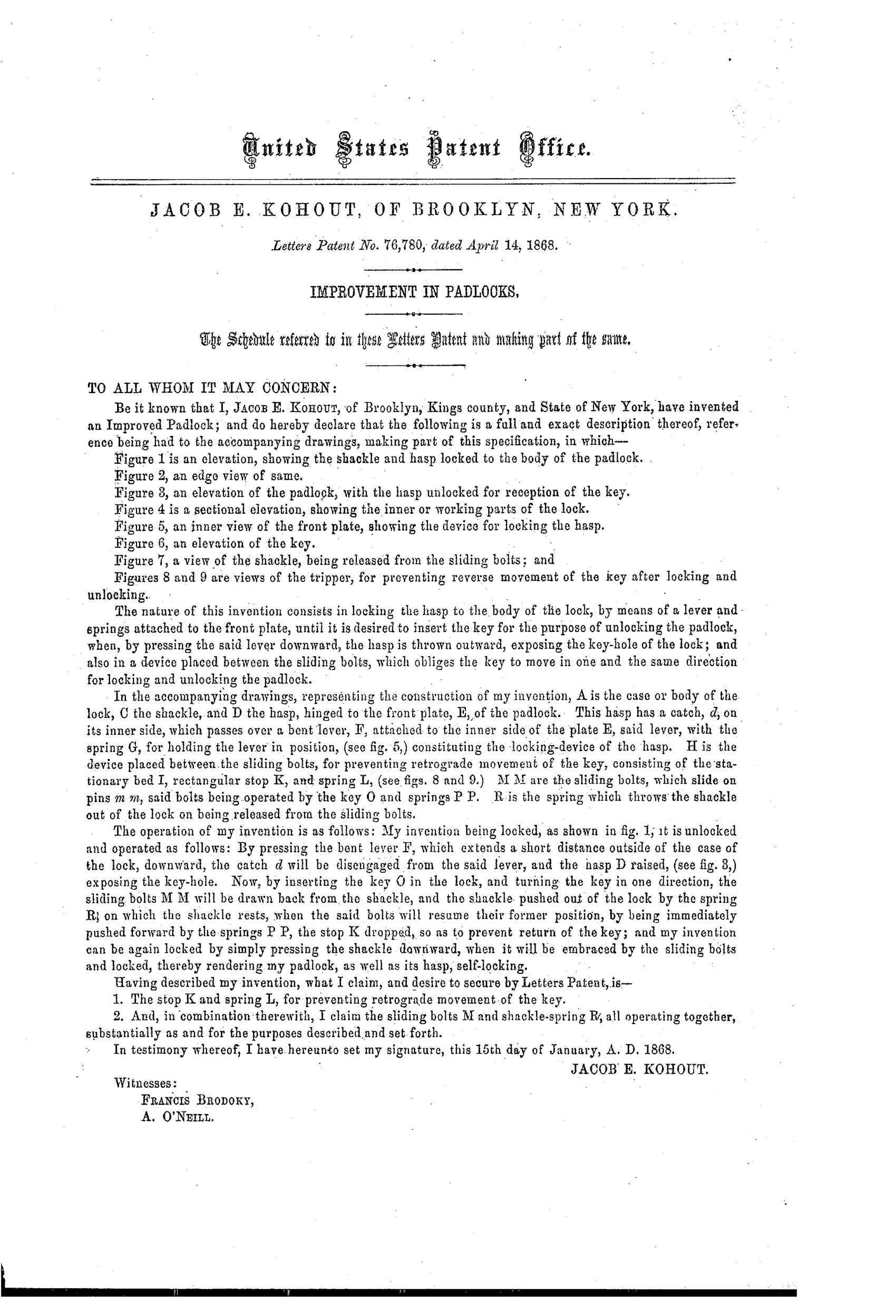
“1. The stop K and spring L, for preventing retrograde movement of the key. 2. And, in combination therewith, I claim the sliding bolts M and shackle-spring R, all operating together, substantially as and for the purposes described and set forth.”
In plain English: The lock uses a stop and spring to keep the key from turning backward, working together with sliding bolts and a shackle spring to lock and eject the shackle.
⚿ In the inventor’s words
“my invention can be again locked by simply pressing the shackle downward, when it will be embraced by the sliding bolts and locked, thereby rendering my padlock, as well as its hasp, self-locking.”— Jacob E. Kohout, from the specification
Fate unknown
No manufactured example attributable to Kohout is documented; a surviving lock with this distinctive one-way key stop would settle it.
⚿ Commentary
Most of this 1868 Brooklyn design is familiar territory — a heart-shaped case, spring-loaded sliding bolts that snap over the shackle when you press it home, a shackle spring that pops it clear when the bolts retract. Self-locking padlocks that need no key to close were the great convenience feature of the era, and Kohout delivers a competent one. But his first claim is the odd, interesting part: a stop K and spring L sitting between the bolts (Figs. 8 and 9) that act as a one-way pawl on the key. Once you commit to a turn, you cannot reverse it; the key travels in a single direction through both locking and unlocking.
Why do that? Partly discipline — it prevents a half-turned key from leaving the bolts in an ambiguous position — and partly it complicates picking, since a probe that dithers back and forth gets caught. It is a modest security dividend for a real cost in parts and fitting.
The hasp arrangement is a second layer worth noticing: the hinged hasp D covers the keyhole and must be pressed down against its catch before the key can even enter (compare Figs. 1 and 3). That's a dust cover and a nuisance to tamperers in one piece. A thoughtful, over-engineered lock in a decade when pin tumblers were about to make this whole school of mechanism obsolete.
Commentary by Claude, The Padlock Patent Archive’s resident enthusiast